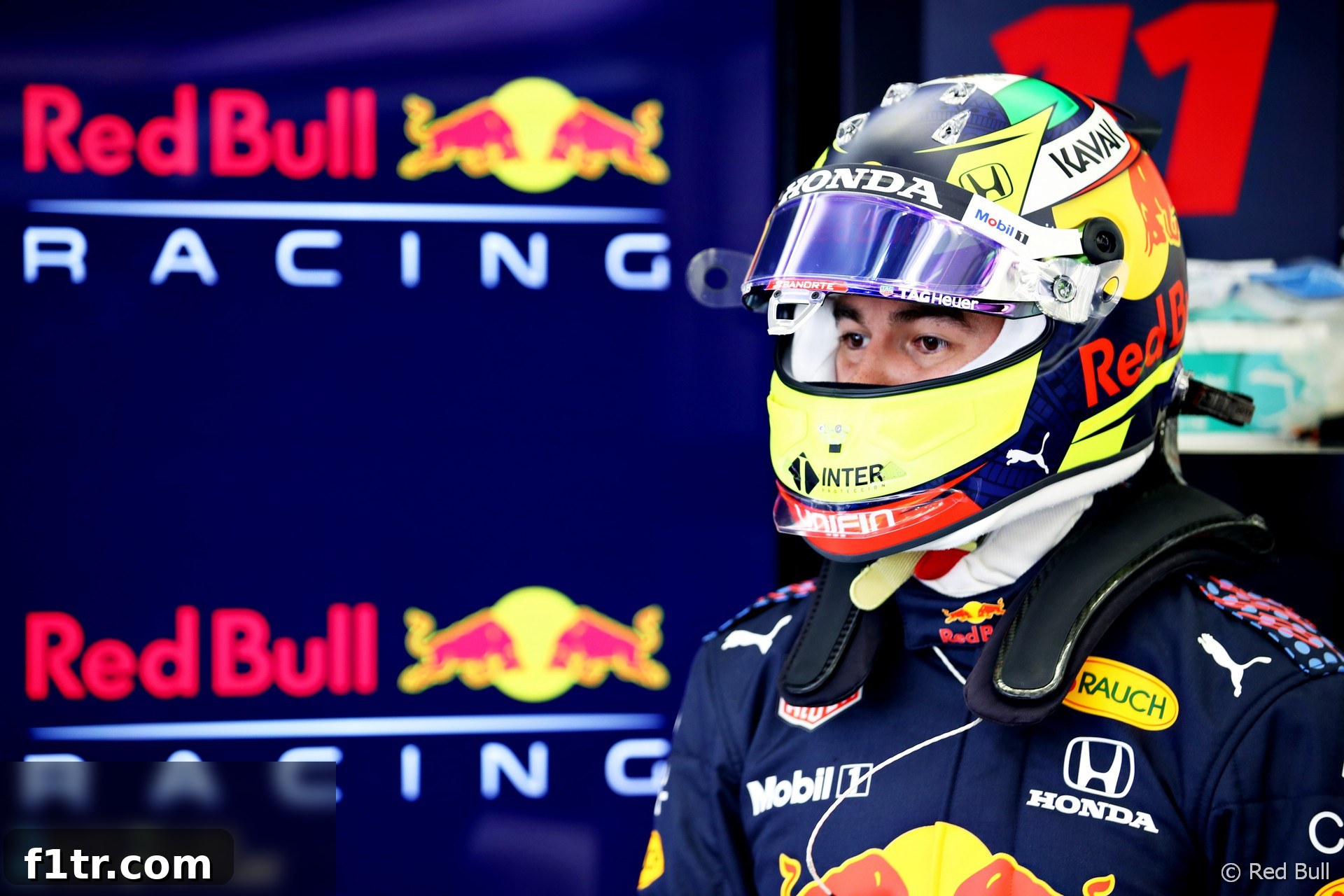
In the dynamic world of Formula 1, where every millisecond and every driver characteristic is scrutinized, veteran racer Sergio Perez has consistently demonstrated a unique approach. His driving style, which former technical director Andrew Green famously dubbed “very extreme,” has not only defined his career but also played a pivotal role in his impressive points tally. As Perez continues to evolve, adapting to new teams and challenges, his distinctive technique remains a cornerstone of his identity on the track.
The ‘Extreme’ Style: Perez’s Perspective and Its Impact
The conversation around Sergio Perez’s driving style gained significant traction following comments from Andrew Green, then technical director at Racing Point (now Aston Martin). Green had described Perez’s approach as “a very extreme driving style that was very difficult to get right at all tracks,” sparking debate among fans and pundits alike. When pressed on these remarks, Perez offered his candid insight, highlighting the efficacy of his methods throughout his journey in motorsport.
Well, I think thanks to a rather extreme driving style we managed to get a lot of points, so in a way, I think it’s helped us a lot in the past.
We just have to keep improving every year, try to make it a bit more complete. With every car you’re going to be adapting yourself so it has to be very specific on which aspect you say, where you pick it up. With ‘extreme’ you can mean a lot of things, but who knows?
Perez’s response underscores a fundamental truth in Formula 1: what might be perceived as “extreme” by one technical observer can be a highly effective, even career-defining, trait for a driver. His ability to extract performance, often in challenging conditions or from cars that might not inherently suit a more conventional setup, has been a hallmark of his resilience. This “extreme” style could refer to a variety of attributes: perhaps an aggressive braking technique, a unique way of carrying speed through specific corners, or a preference for a very particular car balance that pushes the setup envelope. Regardless of the precise definition, it has demonstrably delivered results, solidifying his reputation as a formidable competitor capable of maximizing his machinery.
The comment also reveals Perez’s continuous pursuit of improvement. He acknowledges that adaptability is key in Formula 1, where car characteristics change annually, and a driver must constantly refine their approach. This speaks to the nuanced relationship between driver and machine, where an “extreme” style is not static but rather a dynamic process of adjustment and optimization. For Perez, this self-awareness and willingness to evolve have been crucial to his longevity and success, enabling him to consistently deliver strong performances and contribute significantly to his teams’ constructors’ championship bids over the years.
Quotes: Dieter Rencken
Advert | Become a RaceFans supporter andgo ad-free
Social Media Buzz: A Glimpse into the F1 World
Social media platforms offer a direct window into the lives and thoughts of Formula 1 drivers, teams, and enthusiasts. From candid observations to passionate calls for change, these digital spaces capture the pulse of the sport, fostering engagement and sparking conversations worldwide. Here’s a snapshot of notable posts that recently resonated across the F1 community, providing insight into topics ranging from diversity initiatives to light-hearted banter.
The Hamilton Commission is ongoing. There is so much work happening in the background, to help tackle some serious issues that prevent young Black people getting through into STEM careers. Days like today excite, inspire and motivate me to keep pushing. pic.twitter.com/uSSC07kv37
— Lewis Hamilton (@LewisHamilton) March 20, 2021
Lewis Hamilton’s post highlights his unwavering commitment to the Hamilton Commission, an initiative close to his heart. This commission is dedicated to addressing the underrepresentation of Black individuals in STEM (Science, Technology, Engineering, and Mathematics) careers within motorsport and beyond. Hamilton consistently uses his platform to advocate for greater diversity and inclusion, challenging the status quo and inspiring a new generation. His work extends far beyond the racetrack, demonstrating a profound sense of social responsibility and a desire to create lasting, positive change in society. Such efforts underscore the growing recognition within Formula 1 that the sport has a vital role to play in promoting equity and opening doors for talent from all backgrounds.
Imagine I’m not the first to comment on it 😆 but still not sure how I feel about seeing ALL of Bottas in DTS 🙈
— Daniel Ricciardo (@danielricciardo) March 20, 2021
Known for his infectious personality and humor, Daniel Ricciardo’s tweet provides a lighter moment, poking fun at the candid nature of Netflix’s “Drive to Survive” series. The show has been instrumental in expanding F1’s global audience, offering an unprecedented behind-the-scenes look at the sport’s drama, rivalries, and personalities. Ricciardo’s playful comment about “seeing ALL of Bottas” likely refers to the intimate and often unfiltered portrayal of drivers, showcasing their emotions, struggles, and unguarded moments. While it adds a layer of entertainment for fans, it also raises questions about the balance between authenticity and privacy for the athletes. Ricciardo’s ability to engage with fans through such relatable, humorous observations is a key part of his broad appeal and reinforces the growing connection between F1 stars and their digital following.
- Find more official F1 accounts to follow in the F1 Twitter Directory
Key Developments: Essential Motor Racing Links and Insights
Beyond the immediate headlines, the world of motor racing is constantly buzzing with significant developments, strategic shifts, and compelling narratives. From leadership visions to driver ambitions and the evolution of feeder series, these links offer deeper insights into the sport’s current state and future trajectory. Staying informed about these stories is crucial for anyone passionate about Formula 1 and the broader motorsport landscape.
Advert | Become a Supporter & go ad-free
Stefano’s State of the Nation – F1’s President and CEO on his long to-do list and the season ahead (F1)
“Aston Martin’s arrival is a sign that Formula 1 is the centre of attention for OEMs. The ones that are here with us since a long know that. The installation of the budget cap means teams can be stable and the new car is a good vision for the future.”
Stefano Domenicali, President and CEO of Formula 1, outlines a compelling vision for the sport’s future, emphasizing stability, growth, and renewed manufacturer interest. The entry of brands like Aston Martin as a works team highlights F1’s undeniable appeal to Original Equipment Manufacturers (OEMs), reaffirming its status as a global platform for technological innovation and brand exposure. Domenicali also rightly points to the budget cap as a transformative element, designed to level the playing field, ensure long-term financial sustainability for teams, and encourage more competitive racing. Coupled with the anticipation surrounding new car regulations, F1 aims to foster an era of exciting, unpredictable competition, captivating existing fans while attracting new audiences worldwide.
Ricciardo: ‘I haven’t achieved what I really want – a world title’ (The Guardian)
“With the Merc dominance it would be easy to get frustrated and bitter toward that success, but I try not to be that person. If anything I take my hat off, they are doing a good job and we have to just find a way to match them. That’s a motivation.”
Daniel Ricciardo’s interview with The Guardian offers a candid look into the mindset of a top-tier F1 driver constantly striving for the ultimate prize: a world championship. Despite a stellar career marked by impressive victories and consistent performances, Ricciardo openly admits to an unfulfilled ambition. His perspective on Mercedes’ era of dominance is particularly insightful; rather than succumbing to frustration, he chooses to view their success as a powerful motivator. This positive outlook, coupled with his move to McLaren, signifies a renewed sense of purpose and belief in his ability to challenge for the title. It speaks volumes about the mental fortitude required in F1, where admiration for rivals can fuel one’s own drive to surpass them and achieve greatness.
‘I am ready to send it’ says Stanek ahead of second F3 campaign (F3)
“In F4, we had two long free practices and then qualifying and three races. In F3, you get 45 minutes where you can maybe fit in five push laps and then you’re straight into qualifying. It was quite hard to adjust, but it’s the exact same in F2. It’s something that you have to get used to and a good way to learn.”
Roman Stanek’s reflections on the transition from F4 to F3 highlight the significant challenges and steep learning curve faced by young drivers ascending the motorsport ladder. The compressed schedule of Formula 3, with drastically reduced practice time compared to F4, demands immediate adaptation, precision, and an ability to perform under intense pressure. This format, replicated in Formula 2, serves as a crucial training ground for aspiring F1 talents, preparing them for the relentless demands of the pinnacle of motorsport. Stanek’s “ready to send it” attitude encapsulates the fearless approach required to succeed in these fiercely competitive feeder series, where every session and every lap counts towards demonstrating potential and catching the eye of F1 teams.
Pandemic secrecy pushed Australians towards their premiers (The Age)
“The battle lines were drawn between the commercial and media interests who insisted that the event proceed, and a wide range of independent experts who wanted it cancelled. The federal government and its advisers took the side of the organisers, wishing for it to go ahead, even though this made no public health sense.”
The Australian Grand Prix’s unfortunate cancellation in 2020 served as a stark reminder of the global pandemic’s profound impact on international sporting events. This article from The Age delves into the complex decision-making process, revealing the tension between commercial imperatives and public health concerns. The debate surrounding whether the event should proceed exposed divergent priorities, with organizers and governmental bodies initially leaning towards continuation despite warnings from health experts. This situation underscored the immense logistical and ethical challenges faced by major sports events during the pandemic, highlighting how decisions are influenced by a confluence of economic, political, and public safety considerations. It also prompted broader discussions about event resilience and the need for robust contingency planning in an increasingly uncertain world.
We always endeavour to credit original sources. If you have a tip for a link to feature in the next RaceFans round-up please send it in via the contact form.
Advert | Become a RaceFans supporter andgo ad-free
Fan Perspectives: Debating the Evolution of Junior Formulas
The passionate discussions among Formula 1 fans often extend to the feeder series, particularly Formula 2 (F2) and its predecessor, GP2. These categories are crucial breeding grounds for future F1 stars, yet their evolution, especially with the introduction of new technical regulations and entertainment features, frequently sparks debate. Today, a comment from a long-time observer, Roger, encapsulates a sentiment shared by many regarding the perceived changes in the quality of racing in F2.
I used to love the GP2 series because it produced some of the best pure racing you could see anywhere. But sadly they copied F1 with DRS and the comedy tyre gimmicks and I just don’t feel that the racing in F2 is anywhere near as good as it was before those gimmicks were introduced completely unnecessarily.
Yes fine they can go on about high levels of passing but a lot of it just comes across as fake now due to DRS or extreme levels of tyre degradation. You no longer see that quality racing and mega overtakes down purely to driver skill that you used to see in that series. It’s mostly easier DRS generated or because of huge tyre performance differences created by the degradation.
Hence why I don’t watch that series live anymore, I just catch the shorter highlight clips on F1 TV. It’s a shame as GP2 honestly used to be my favourite of the junior formulas and I used to watch all the races live which says a lot given how I usually am not so keen on spec categories.
@Roger-Ayles
Roger’s detailed critique of F2 highlights a significant point of contention for many purist racing fans: the introduction of “gimmicks” like the Drag Reduction System (DRS) and extreme tire degradation. While these elements were integrated into F1 to promote overtaking and enhance the spectacle, their application in junior categories like F2 has drawn mixed reactions. Roger argues that these features, rather than fostering genuine wheel-to-wheel battles, have diluted the essence of “pure racing” that once defined GP2.
The core of his argument revolves around the perceived artificiality of overtakes. He suggests that many passes are now dictated more by the mechanical advantage of DRS or the dramatic performance cliff of degrading tires, rather than solely by superior driver skill, bravery, and race craft. In the GP2 era, overtakes were often celebrated for being a true testament to a driver’s ability to outwit and outmaneuver their rivals under racing conditions. The current F2 format, in Roger’s view, creates opportunities that are less earned, leading to a diminished sense of achievement and excitement for the discerning viewer.
This sentiment reflects a broader debate within motorsport: how to balance entertainment value with the integrity of competition. While the goal is to create thrilling races, some fear that an over-reliance on artificial aids can detract from the fundamental challenge of racing and the true display of talent. Roger’s decision to only watch F2 highlights, rather than live races, speaks volumes about how these changes have impacted fan engagement. It underscores the importance of maintaining a balance in junior formulas, ensuring they not only serve as a competitive pathway to F1 but also continue to deliver the high-quality, skill-based racing that initially captivated fans.
What does the 2021 F1 season have in store? Answer these 20 questions here, delving into the potential storylines and key challenges awaiting teams and drivers:
- Will Ferrari recover? Can Perez seize his chance? 20 questions for the 2021 F1 season
From the Forum: The Budget Cap and Its Enforcement
The introduction of the budget cap in Formula 1 marks a significant shift towards greater financial sustainability and competitive balance. However, the implementation of such a complex regulation inevitably raises questions and concerns among fans. Our forum has been a hub for engaging discussions on this very topic, exploring the practicalities and potential pitfalls of this new era.
- Will any team break F1’s new budget cap – and will they get caught?
This discussion highlights the natural skepticism and keen interest surrounding financial oversight in a sport notorious for its astronomical spending. Fans are eager to understand how the FIA plans to monitor and enforce the budget cap, and whether teams will find loopholes or, more controversially, attempt to circumvent the rules entirely. The integrity of the budget cap is paramount to its success, as it aims to prevent a repeat of past spending wars that led to a significant performance gap between the top teams and the rest of the grid. The ongoing debate underscores the high stakes involved and the collective hope that this new regulation will indeed lead to a more level playing field and exciting competition for years to come.
Happy Birthday to F1 Enthusiasts!
A special shout-out to members of our community celebrating their birthdays! We extend our warmest wishes to Gary Richardson, Gaz, Thomahawk_93, Thomas Martin and Alec Glen!
If you want a birthday shout-out, please tell us when yours is via the contact form or by adding to the list here. Your participation makes our community vibrant and connected!
On This Day in F1 History: A Look Back
Delving into the annals of Formula 1 history reveals fascinating moments, pioneering innovations, and memorable races that shaped the sport into what it is today. On this day, 50 years ago, a unique event captured the spirit of F1’s experimental and daring past.
- 50 years ago today, Clay Regazzoni triumphed at the non-championship Race of Champions held at Brands Hatch. This particular event was also historically significant for marking the debut of F1’s first turbine-powered car, the revolutionary Lotus 56, piloted by the legendary Emerson Fittipaldi.
The Race of Champions, though not part of the official championship, provided a platform for teams to test new ideas and drivers to compete in a less pressure-filled environment. Regazzoni’s victory highlighted his skill and determination, while the appearance of the Lotus 56, with its distinctive jet engine sound and unconventional design, represented a bold step into uncharted technological territory. Although the turbine concept ultimately didn’t revolutionize F1, it remains a captivating chapter in the sport’s history, showcasing the constant pursuit of innovation and the daring spirit that defines Formula 1.