The Unprecedented Collapse: Recounting the 2020 Australian Grand Prix Cancellation
The dawn of the 2020 Formula 1 season promised exhilarating racing and the customary spectacle of the Australian Grand Prix in Melbourne. However, what unfolded in March 2020 was an unprecedented collapse, a moment that would forever mark the sport’s vulnerability to global events. The cancellation of the season opener, barely hours before cars were set to hit the Albert Park circuit, sent shockwaves through the motorsport world, serving as a stark warning of the burgeoning global pandemic. This wasn’t merely a race postponed; it was a profound illustration of the challenges facing international sports in a rapidly changing health landscape, catalyzed by a positive Covid-19 diagnosis within the McLaren team, following earlier ominous signs like the cancellation of the Chinese Grand Prix.
F1’s Initial Resolve: A Historical Precedent Meets a New Reality
Advert | Become a Supporter & go ad-free
Formula 1, often described as a globe-trotting circus, has historically demonstrated remarkable resilience in the face of adversity. The sport has navigated complex geopolitical landscapes, overcome logistical nightmares, and pushed ahead through various crises, from racing in the USA just weeks after 9/11, managing travel disruptions post-Eyjafjallajökull volcanic ash clouds, to navigating previous epidemics like SARS. This ingrained “show must go on” mentality seemed to dictate F1’s approach to the emerging coronavirus threat. During pre-season testing, despite growing global concern and increasing death tolls, F1 leadership, including CEO and chairman Chase Carey, maintained an optimistic, almost detached, perspective. Carey even made a detour to Vietnam, attempting to salvage the country’s inaugural race, scheduled just three weeks after Australia, rather than acknowledge the escalating crisis. This steadfast determination, once a hallmark of F1’s robust spirit, would ultimately prove insufficient against the scale and nature of Covid-19.
A Cascade of Ignored Warnings and Mounting Concerns
The warning signs were not subtle; they were glaring. While F1 justified the cancellation of its Chinese Grand Prix, the initial epicenter of the outbreak, citing logistical challenges with sea shipments months in advance, it simultaneously pressed on with plans to fly thousands of personnel and hundreds of tonnes of equipment to Melbourne. This contradictory logic underscored a deep misunderstanding or willful disregard of the pandemic’s trajectory. By late February and early March, as Italy entered a national lockdown, and numerous countries issued stringent travel and health warnings, the resolve within F1 appeared to only strengthen. Instead of heeding these critical alerts, the sport seemed to double down on its commitment to the Australian Grand Prix, a decision that would draw significant criticism and expose its personnel to unnecessary risks.
For the uninitiated, the opening race of any Formula 1 season is typically a moment of collective excitement, a vibrant celebration after the long, quiet winter months. Crews eagerly embark on their flights, ready for the challenges of an increasingly demanding calendar. However, the mood surrounding the 2020 Australian Grand Prix was noticeably different. Team members and drivers, acutely aware of the escalating global health crisis and its personal implications, expressed genuine concerns. These individuals are not merely cogs in a machine; they are humans with families, partners, children, and pets awaiting their safe return. The prospect of weeks in quarantine, or worse, contracting a potentially lethal virus far from home, weighed heavily on everyone involved.
Advert | Become a RaceFans supporter andgo ad-free
The World Pauses, F1 Presses On: A Sport Out of Step
As F1 remained committed to Melbourne, other major global events and sporting leagues were already reacting decisively to the pandemic. The prestigious Geneva Motor Show, a cornerstone of the automotive industry, was cancelled, as was its New York counterpart. Germany’s largest classic car event was postponed. Formula E, the electric racing series, cancelled multiple races in quick succession. The World Endurance Championship (WEC) called off its Sebring event, while MotoGP significantly reshuffled its calendar, cancelling races and delaying the season start. Even the iconic 24 Hours of Le Mans motorcycle endurance race was postponed. Yet, F1 continued to cling to its original calendar, with the only notable adjustment being desperate attempts to re-accommodate the postponed Chinese Grand Prix, rather than addressing the broader global implications.
Amidst this backdrop, statements from local officials further fueled the confusion. Andrew Westacott, CEO of the Australian Grand Prix Corporation (AGPC), confidently told a Melbourne radio station that the event would not “ban fans” and proudly announced the arrival of AlphaTauri and Ferrari cars at Avalon Airport. He declared, “The key personnel are on their planes.” While intended to reassure, these pronouncements, made just days before the inevitable cancellation, only served to highlight the disconnect between the unfolding reality and the public rhetoric. The financial stakes were undeniably high, with AGPC relying on significant public funding – estimated at $60 million – to burnish Melbourne’s global image. Similarly, F1 commercial rights holder Liberty Media faced immense pressure to secure its annual $30 million hosting fee, especially as its FWONK share price had plummeted by 60% since the pandemic’s impact on F1 became evident. Every dollar counted, and the prospect of losing tens of millions weighed heavily on all parties.
The Tipping Point: McLaren’s Courageous Withdrawal
The delicate balance, however, was irrevocably shattered by a single, critical development: McLaren’s withdrawal from the event. This pivotal decision came after a team member tested positive for Covid-19, with approximately a dozen more staff members placed on a suspected list. It was a moment of profound clarity that finally jolted F1 out of its prolonged state of denial. Prior to this, Lewis Hamilton, the reigning multiple world champion, had publicly voiced his astonishment, stating he was “very, very surprised that we’re here” and describing it as “shocking that we’re all sitting in this room.” When questioned by the media about the driving force behind the decision to proceed, Hamilton’s succinct and poignant reply – “Cash is King” – resonated deeply, underscored the perceived prioritization of financial gain over safety. While some might deem this sentiment ironic coming from a highly compensated athlete, the raw validity of his emotionally charged words was undeniable.
Advert | Become a RaceFans supporter andgo ad-free
The gravity of the situation prompted several high-profile drivers to take immediate action. Lewis Hamilton departed Melbourne early Friday morning, followed swiftly by Alfa Romeo driver Kimi Raikkonen and Ferrari’s duo Sebastian Vettel and Charles Leclerc. Reports circulated of intense discussions between drivers and their respective teams, with some drivers reportedly threatening to invoke Australia’s strict Health and Occupancy laws, further signaling a breakdown in trust and confidence in the event’s safety protocols.
Zak Brown, McLaren’s CEO, articulated the immense weight of his team’s decision: “As a racer it’s the most difficult decision I’ve ever taken, but as CEO it’s probably the easiest.” This statement was far from flippant; it spoke to the essential dichotomy of leadership, where rational judgment must sometimes override passionate ambition. Brown’s decisive action, prioritizing the health and safety of his personnel above all else, cemented his legacy as a leader who made the right, albeit incredibly tough, call at a critical juncture, setting a precedent for other teams and the sport as a whole.
The Power Play and Government Intervention
Despite McLaren’s withdrawal, F1 initially appeared intent on moving forward, exploring possibilities like a closed-door event. However, a late-night meeting among team principals, held at the upscale Crown Towers, yielded a deadlocked 5-5 vote on whether to proceed. This stalemate, coupled with the alarming news that more McLaren crew members were heading into quarantine (a number that soon reached 14), finally tipped the scales. The narrative shifted from “show must go on” to an agonizing “Who blinks first?” between Liberty Media and the AGPC. Both entities were acutely aware of the financial implications, with the adage “whoever pulls it, pays for it” looming large.
Adding to the complexity, Chase Carey was still en route from Hanoi, leaving F1 Managing Director Ross Brawn effectively in the hot seat. The FIA, motorsport’s governing body, observed from a distance, relaying information to President Jean Todt. However, bound by EU decrees, the FIA was powerless to intervene in what was deemed a purely commercial dispute. Ultimately, the decision-making power lay with the commercial rights holder and the race promoter. This led to a tense, three-hour early morning meeting in Melbourne, attended by F1 and AGPC representatives, local government officials, and Victoria’s Minister for Tourism, Sport and Major Events, Martin Pakula, who faced the unenviable task of deciding whether to write off $60 million in public funds. The pressure from Paul Little, AGPC chairman, for F1 to cancel, was met with resistance from Brawn and his team, pushing for the opposite.
The stalemate was finally broken by an external, authoritative intervention. Victoria’s Chief Medical Officer, Andrew Wilson, supported by Premier Daniel Andrews, issued an unequivocal directive advising against mass gatherings. This decisive public health mandate effectively took the decision out of the hands of F1 and AGPC, compelling the official cancellation of the 2020 Australian Grand Prix. This intervention highlighted the ultimate supremacy of public health over commercial interests, a critical lesson for global sports.
Go ad-free for just £1 per month>> Find out more and sign up
The Immediate Aftermath and Lingering Questions
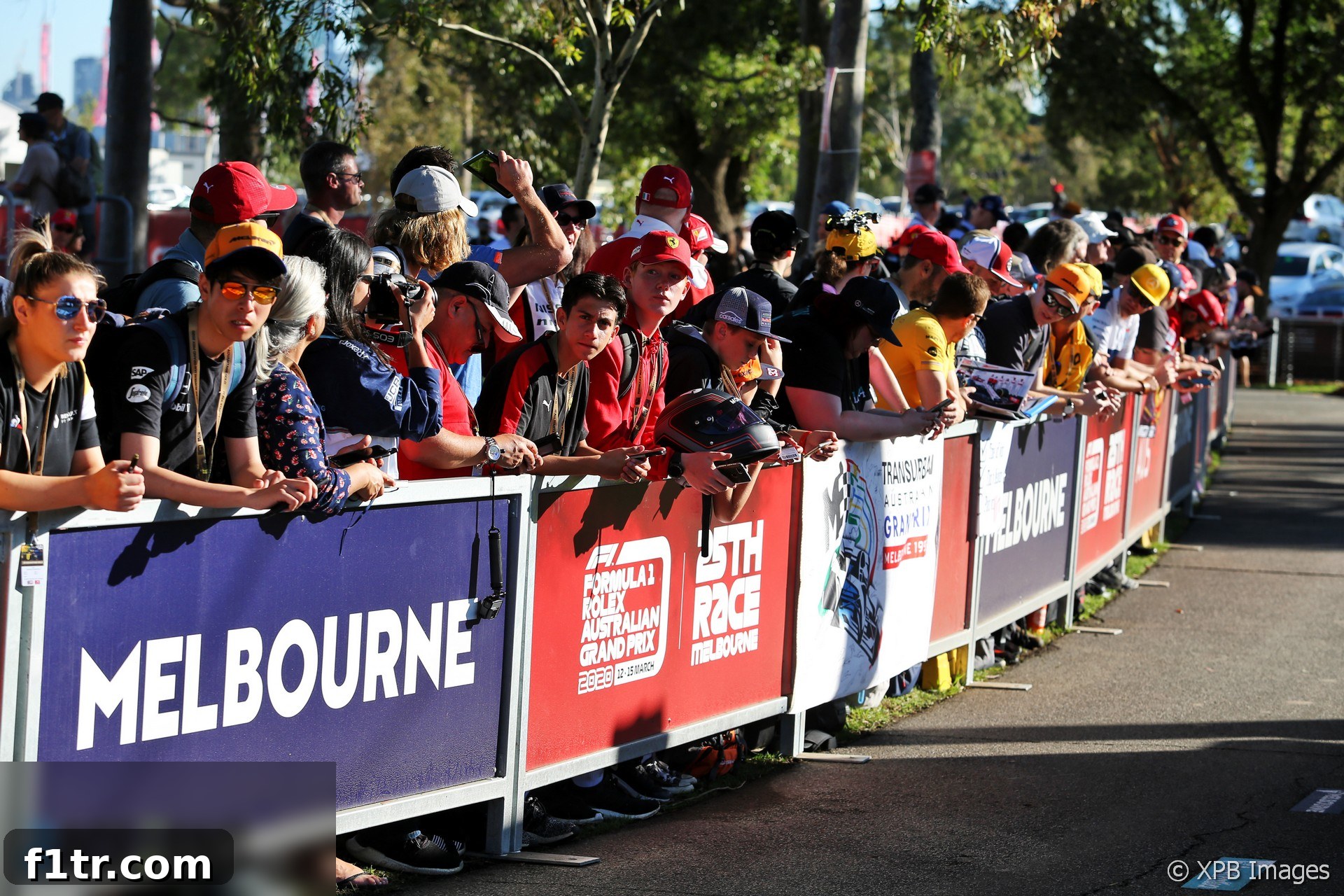
In the chaotic immediate aftermath, team employees, who dedicate their lives to F1 out of pure passion, and the fervent fans, who invest heavily in their support, became unwitting pawns in a high-stakes power struggle between a US-listed media giant and a state-funded Australian organization. Conflicting news reports and a pervasive radio silence from F1, AGPC, and the teams only exacerbated the confusion, allowing misinformation to flourish. Extra police were deployed to manage disappointed fans, who, having arrived at the circuit, were belatedly informed of the cancellation. This communication breakdown was a significant failing for a global sport of F1’s stature.
The cancellation carried substantial financial ramifications. Upwards of 2,000 F1 personnel, along with over 200 tonnes of specialized equipment, had undertaken a costly and carbon-intensive journey to the other side of the world, only for the event to be called off. This represented an incredible waste of human and financial resources, and, ironically, a significant spike in emissions immediately after the sport had pledged to go carbon neutral. The Albert Park street circuit, requiring considerable setup costs, was unlikely to be built twice in one year, meaning Melbourne’s 25th race would likely be deferred to the following season, potentially jeopardizing the long-term relationship between the city and F1. The breakdown in trust during this fiasco posed a real threat to future collaborations.
Looking Ahead: An Uncertain Start to the 2020 Season
With Melbourne cancelled, attention immediately shifted to the remainder of the calendar. Senior F1 figures began to speculate that the season could not realistically begin before the Dutch Grand Prix in early May, with some even suggesting a further delay until the Baku event in June. This meant the swift and inevitable cancellation of the next scheduled race, the Bahrain Grand Prix, and the inaugural Hanoi round in early April. The uncertainty was palpable; for a sport built on precise planning and tight schedules, the sudden lack of clarity was jarring. There was no immediate decision on where F1 would be in seven days’ time, encapsulating the pervasive disarray caused by the pandemic. The 2020 Australian Grand Prix cancellation served as a brutal, yet essential, lesson in humility and adaptability for Formula 1, forcing a re-evaluation of its priorities and its operational model in a world forever changed by a microscopic threat.
2020 F1 Season – Related Articles
- Grosjean to make F1 test return tomorrow for first time since Bahrain horror crash
- Pictures: Wrecked chassis from Grosjean’s Bahrain fireball crash to go on display
- Bottas vs Rosberg: Hamilton’s Mercedes team mates compared after 78 races each
- F1 revenues fell by $877 million in Covid-struck 2020 season
- Hamilton and Mercedes finally announce new deal for 2021 season
Browse all 2020 F1 season article