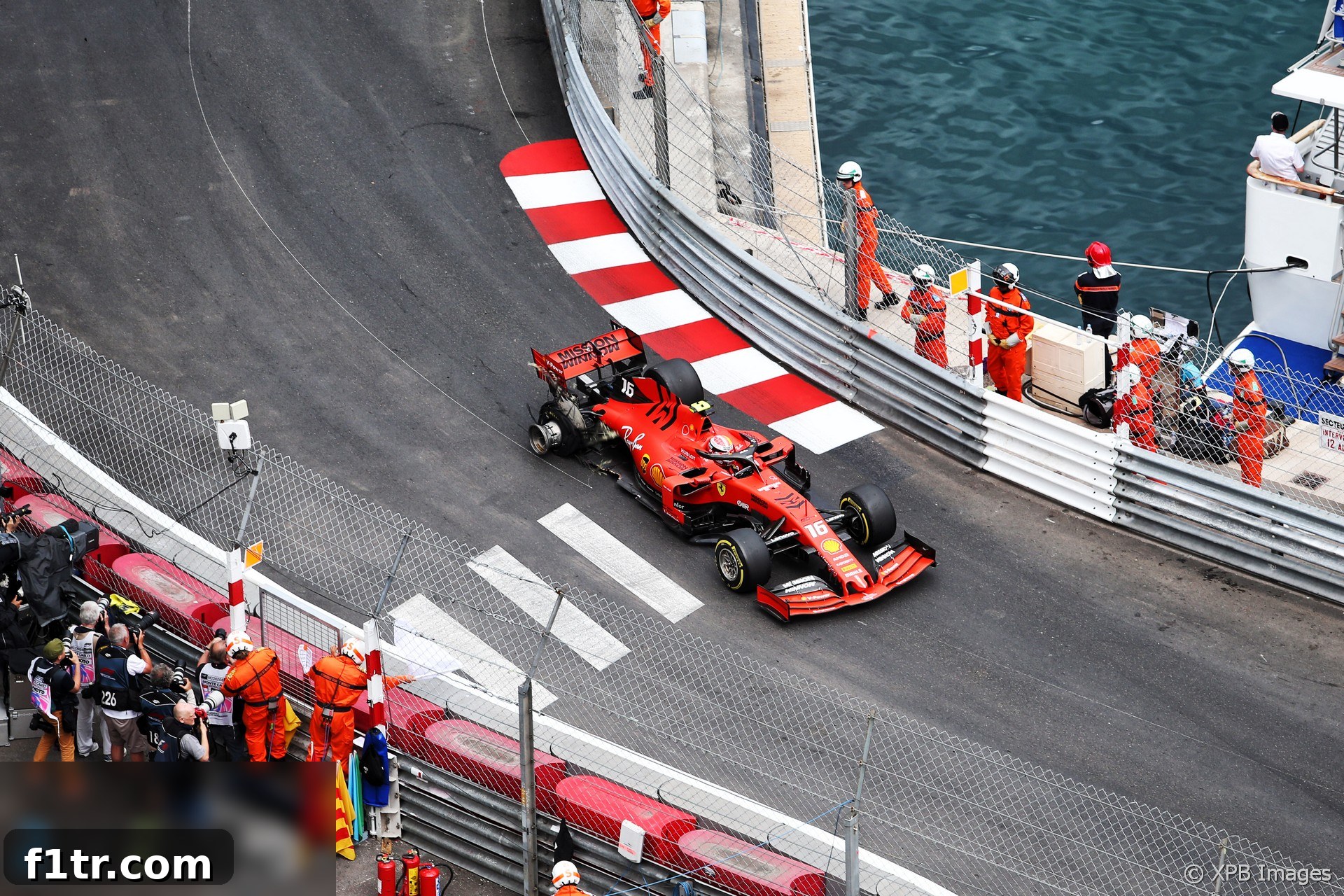
The iconic streets of Monaco, a stage synonymous with Formula 1 glamour and unforgiving challenges, bore witness to a dramatic twist of fate for hometown hero Charles Leclerc during the 2019 Grand Prix. A race brimming with anticipation turned into profound disappointment for the young Ferrari driver, whose desperate attempt to recover from a significant team blunder in qualifying led to a race-ending misjudgment. This unfortunate sequence of events encapsulated the high stakes and razor-thin margins that define Formula 1, especially in the principality.
Formula 1’s motorsport director, Ross Brawn, offered a candid assessment of the incident, attributing Leclerc’s premature exit to an “impetuous” error. “Charles went too far and paid a high price for his impetuousness,” Brawn stated, acknowledging the understandable emotional context behind the driver’s actions. The initial setback stemmed from a critical error by his Ferrari team during the final stages of Q1, where Leclerc was inexplicably left in the pits, resulting in a shocking 15th-place start for his home race. This strategic misstep placed immense pressure on Leclerc, igniting a fervent desire to rectify the situation, perhaps at too great a cost.
Advert | Become a Supporter & go ad-free
The Unforgiving Streets of Monaco and Leclerc’s Quest for Redemption
For any Formula 1 driver, the Monaco Grand Prix is a unique spectacle, but for a local like Charles Leclerc, it carries an unparalleled significance. Making his debut at his home race with a front-running team like Ferrari was meant to be a crowning moment, a special chapter in his burgeoning career. Instead, it unraveled into a narrative of frustration and premature retirement. Starting from 15th on the grid in Monaco, a circuit notorious for its limited overtaking opportunities, presented an almost insurmountable challenge. This dire starting position, a direct consequence of his team’s qualifying oversight, fueled Leclerc’s determination to make swift progress through the field.
The incident itself unfolded when Leclerc, pushing aggressively, attempted to overtake Nico Hulkenberg. In a valiant effort to gain positions, he clipped the inside barrier at Rascasse, a tight, low-speed corner that demands absolute precision. The contact was enough to puncture his right-rear tire, an immediate blow to his race. Compounding the damage, as Leclerc nursed his ailing car back to the pits, the flailing tire and subsequent vibration caused significant damage to his car’s floor. Despite the team’s best efforts, the extent of the damage proved irreparable, ultimately forcing him to retire from the race. This unfortunate sequence of events underscored the brutal reality of Monaco, where even the slightest misjudgment can have catastrophic consequences, particularly when driven by an overwhelming sense of urgency.
Ferrari’s Mixed Fortunes and Underlying Struggles
While Leclerc’s race ended in heartbreak, his teammate Sebastian Vettel managed to secure Ferrari’s best result of the season up to that point, finishing in second place. However, Ross Brawn offered a crucial caveat, suggesting that this podium finish flattered Ferrari’s true performance over the Monaco weekend. According to Brawn, the Scuderia was unequivocally the third strongest team, visibly out-performed not only by Mercedes, who clinched the victory, but also by Red Bull. This assessment highlighted a persistent underlying issue for the Italian outfit, casting a shadow over what might otherwise have been perceived as a positive result.
Vettel’s second place, while valuable in terms of championship points, was achieved in a race where he largely operated in a supporting role, trailing behind [Max] Verstappen for much of the Grand Prix. The opportunity to genuinely challenge the Dutchman for a higher position never truly materialized, indicating a clear deficit in raw pace. “Vettel’s second place came at the end of a race in which he didn’t play a key role, sitting behind Verstappen throughout but unable to really worry the Dutchman,” Brawn noted, emphasizing that the result was more a product of race circumstances and strategic fortune than outright speed.
A Season Drifting Away: The Need for Introspection and Improvement
The Monaco Grand Prix, therefore, served as a stark reminder of Ferrari’s ongoing struggles in the 2019 season. Brawn’s observation that the Scuderia was the third strongest team in Monaco was not an isolated incident but rather a predictable outcome given their performance at the preceding Spanish Grand Prix in Barcelona. There, the Ferrari car notably struggled, particularly in the demanding third sector of the track, which features a mix of high-speed and technical corners. These struggles pointed to fundamental weaknesses in the car’s aerodynamic efficiency and overall balance, issues that Monaco’s tight and twisty layout only exacerbated.
The motorsport director’s somber assessment resonated deeply: “The season seems to be getting away from the Maranello team, but it’s not the time to give up and it must learn from its mistakes if it wants to move forward.” This statement served as a clarion call for Ferrari to undertake serious introspection and implement significant changes. The competitive landscape of Formula 1 leaves no room for complacency, and a team of Ferrari’s stature cannot afford to fall behind its primary rivals consistently. The pressure on the Maranello team to understand their car’s shortcomings, refine their development strategy, and improve their operational execution was immense.
Advert | Become a RaceFans supporter andgo ad-free
The Broader Implications for Ferrari and Leclerc’s Development
For Charles Leclerc, the Monaco incident, though painful, served as a steep learning curve. The understandable desire to perform exceptionally well at home, coupled with the frustration of a team error, led him to push the boundaries perhaps too far. While his impetuousness was called out, it was also acknowledged as a symptom of his immense talent and burning ambition. For a young driver in his first year with Ferrari, these experiences are crucial for development, teaching him the delicate balance between aggression and patience, especially in high-pressure scenarios and on unforgiving circuits like Monaco.
For Ferrari, the Monaco Grand Prix highlighted systemic issues that went beyond a single driver’s error. The qualifying gaffe with Leclerc, the consistent deficit to Mercedes and Red Bull, and the inability of Vettel to truly challenge for victory, all painted a picture of a team struggling to find its footing. The season was indeed slipping away, and the championship aspirations that began with such promise were rapidly diminishing. To reverse this trend, Ferrari needed to demonstrate resilience, innovation, and a rigorous commitment to learning from every setback. Their path forward required not just engineering improvements but also a review of their strategic decision-making processes and an unwavering focus on flawless execution.
The 2019 Monaco Grand Prix will be remembered for its drama and, for Ferrari and Charles Leclerc, as a weekend of profound disappointment tempered by valuable, albeit harsh, lessons. It underscored the relentless demands of Formula 1 and the critical importance of synergy between driver, car, and team to achieve success on the sport’s most challenging stages.
2019 F1 season
- Crying in the Melbourne car park at 2019 grand prix was my career low – Ocon
- McLaren Racing reports reduced £71 million loss in 2019
- Kvyat: Hockenheim podium last year was “my biggest achievement” so far
- How the FIA’s new encrypted fuel flow meter targets Ferrari’s suspected ‘aliasing’ trick
- “He smashed my office door”: 23 must-see moments from ‘Drive to Survive’ season two
Browse all 2019 F1 season articles