The exhilarating world of Formula 1 is often characterized by meticulous engineering, strategic brilliance, and lightning-fast reflexes. Yet, every so often, an unexpected element can throw even the most prepared teams into disarray. At the 2018 Canadian Grand Prix, during a crucial practice session, Haas F1 driver Romain Grosjean found himself in one such bizarre and costly encounter, colliding with an unsuspecting marmot on the Circuit Gilles Villeneuve.
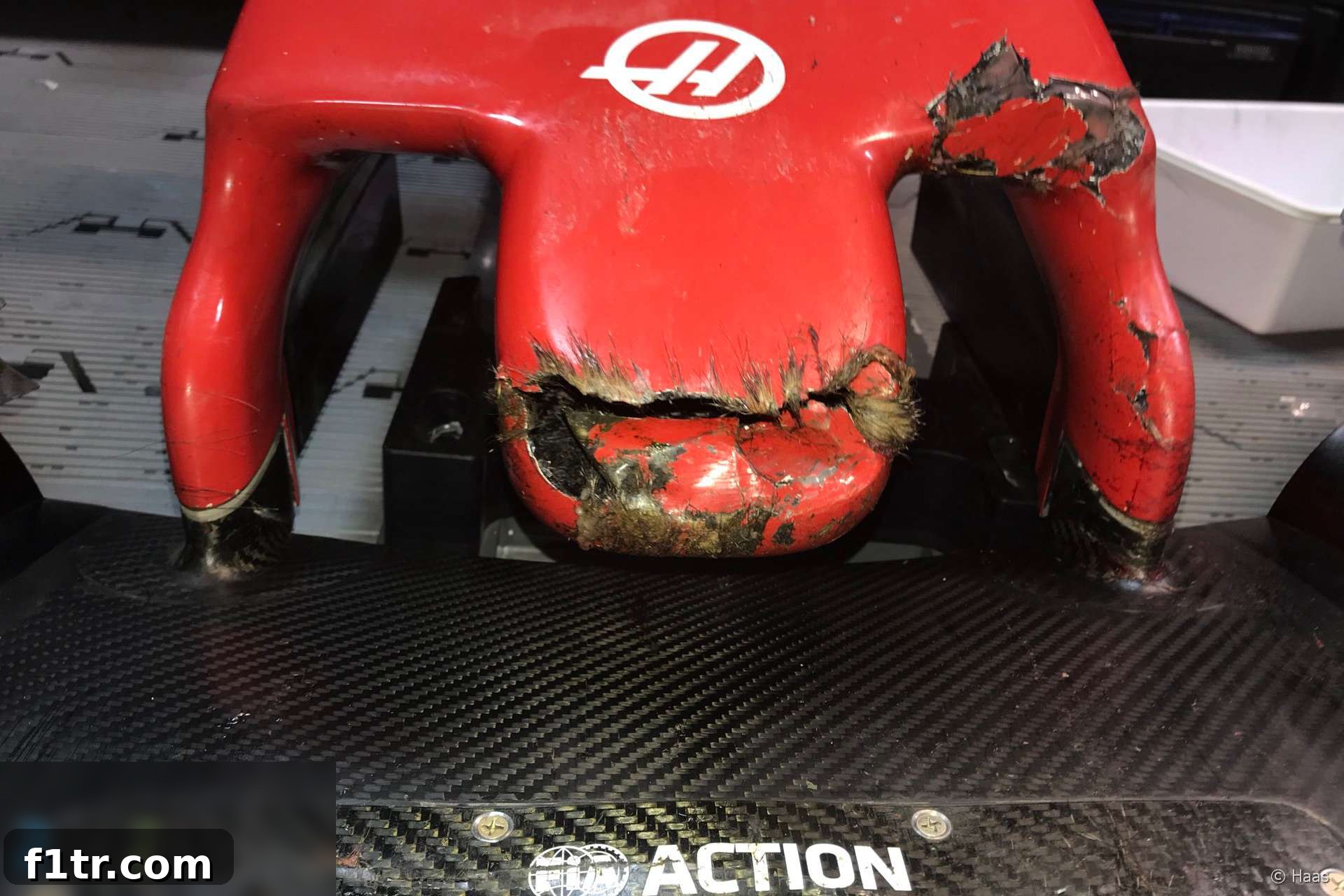
This unusual incident not only provided a moment of comedic disbelief for spectators but also inflicted significant damage to Grosjean’s car, specifically his brand-new front wing – a critical component of Haas’s latest aerodynamic upgrade package. The mishap highlighted the unpredictable nature of street circuits and posed a serious challenge for the team, already operating on a tight margin of spare parts.
An Unwelcome Encounter: Grosjean’s Bizarre Collision
The Friday practice sessions at the Canadian Grand Prix are vital for teams to fine-tune their cars for the demanding Montreal circuit. Drivers push the limits, exploring the track’s nuances and testing new components. It was during one such high-speed run that Romain Grosjean, navigating the challenging corners of the Circuit Gilles Villeneuve, experienced a jarring impact. The source? A marmot, native to the island park where the circuit is situated, had strayed onto the racing line.
Grosjean recounted the incident with a mix of frustration and disbelief. “The nose was quite open and I believe the animal was in there,” he explained, painting a vivid picture of the impact. “It was a big impact. It was quite a big animal.” The collision, though thankfully not leading to a major accident for the driver, caused substantial damage to the front of his Haas VF-18, particularly compromising the integrity of its newly introduced front wing.
Haas’s Aero Upgrade in Jeopardy: A Scarcity of Spares
For a team like Haas, competing against well-funded giants, every new aerodynamic upgrade represents a significant investment in both time and resources. The new front wing, brought to Canada with high hopes, was designed to extract precious tenths of a second, potentially improving their competitive edge in the midfield battle. Team principal Guenther Steiner had already voiced concerns about the limited availability of spare parts for this crucial upgrade even before the weekend commenced. This made Grosjean’s incident particularly ill-timed and impactful.
The damage meant that Grosjean was left with just “one spare one” for the remainder of the race weekend. This stark reality put immense pressure not only on Grosjean but also on the entire Haas engineering and pit crew. Any further damage during Saturday’s final practice or crucial qualifying session would leave them in an extremely precarious position, potentially forcing them to revert to an older specification front wing or, in a worst-case scenario, compromise their ability to compete effectively.
In Formula 1, a front wing is far more than just a decorative piece. It’s a highly sophisticated aerodynamic device responsible for generating a significant portion of a car’s downforce, directing airflow over and around the car, and optimizing cooling. A specific wing design is meticulously crafted to work in harmony with the car’s entire aerodynamic package. Losing a new-spec wing and having only one spare means the team must be incredibly cautious. It restricts experimental setups, limits aggressive driving in practice, and adds a layer of anxiety to every session, knowing that one more mistake could derail their entire weekend’s performance.
Beyond the Incident: Safety and Track Management Concerns
While the focus quickly shifted to the damaged car and the scarcity of spare parts, Grosjean also raised a pertinent safety concern regarding the presence of wildlife on track. He expressed his disappointment, noting, “It’s a bit disappointing because they showed it on TV before the beginning of the session before turn 13, and [that’s exactly] where I hit it. So I’m surprised they didn’t remove it.” This statement highlighted a potential lapse in track management, especially given that the animal had been identified as a potential hazard prior to the session.
Motorsport circuits, particularly those situated in natural environments or public parks like the Circuit Gilles Villeneuve, occasionally face challenges with wildlife. Incidents involving birds, deer, or even smaller animals like marmots, squirrels, or rabbits, though rare at high-speed tracks, can pose significant risks. At Formula 1 speeds, even a small object can cause substantial damage, leading to dangerous debris on track or, as in Grosjean’s case, critical damage to a highly sensitive component. The responsibility lies with circuit marshals and safety officials to ensure the track is clear of all foreign objects, animate or inanimate, before cars are allowed to run.
The Circuit Gilles Villeneuve, located on an island in the Saint Lawrence River, is particularly known for its blend of natural surroundings and racing asphalt. Marmots are a common sight in the park surrounding the track, making their occasional appearance on the circuit a well-known, albeit unfortunate, characteristic of the Canadian Grand Prix weekend. This incident served as a stark reminder that even in the most technologically advanced sport, nature can still throw a curveball, demanding constant vigilance from all involved in ensuring driver and track safety.
Resilience and Performance: Grosjean’s Midfield Prowess
Despite the highly unusual and frustrating setback, Romain Grosjean demonstrated remarkable resilience and pace throughout the practice sessions. By the end of Friday’s running, he managed to secure the fastest time among all midfield drivers, a testament to his skill and the underlying potential of the Haas VF-18. His performance, just 1.4 seconds off the blistering pace set by Max Verstappen, underscored the competitive nature of the 2018 season and Haas’s ambition to consistently challenge for points.
This impressive showing, especially in the face of an aero-damaging incident, was a morale booster for the team. It proved that despite the mechanical woes, Grosjean could still extract significant performance from the car. However, the shadow of the limited spare parts loomed large, injecting an additional layer of pressure for Saturday’s critical qualifying session. Drivers often push the car to its absolute limits during qualifying, risking minor scrapes or errors that might be acceptable with ample spares, but become catastrophic with only one remaining critical component.
The 2018 F1 Season: A Context of Innovation and Challenge
The 2018 Formula 1 season was a particularly competitive one, with teams constantly pushing the boundaries of aerodynamic development and engine performance. Haas, as a customer team of Ferrari, aimed to maximize its strong powertrain and chassis combination. The new front wing introduced in Canada was part of this ongoing development push, crucial for maintaining their position in a tight midfield fight that included teams like Renault, Force India, and McLaren.
Understanding the context of the 2018 season helps to further appreciate the significance of this incident. It was a year where every upgrade, every detail, and every point mattered immensely. From power unit developments like those seen with Honda’s improvements and the role of their jet division in solving engine problems, to team strategies and the ongoing financial pressures reflected in McLaren Racing’s losses after their Honda split, the technical and strategic stakes were incredibly high.
The discussions around the “death knell” for ‘Drive to Survive’ after Ferrari and Mercedes snubs, or the skepticism McLaren staff showed towards Honda engines back in 2018, all paint a picture of an intensely competitive and sometimes volatile environment. In this context, a seemingly minor incident like hitting a marmot could have disproportionately large consequences for a team like Haas.
- F1 feared “death knell” for Drive to Survive after Ferrari and Mercedes snub
- McLaren staff told us we were “totally crazy” to take Honda engines in 2018 – Tost
- ‘It doesn’t matter if we start last’: How Red Bull’s junior team aided Honda’s leap forward
- Honda’s jet division helped F1 engineers solve power unit problem
- McLaren Racing losses rise after Honda split
Browse all 2018 F1 season articles
Looking Ahead: Implications for the Weekend and Beyond
As the Canadian Grand Prix weekend progressed, the marmot incident remained a talking point, reminding everyone of the unique challenges and unexpected variables that can emerge in Formula 1. For Romain Grosjean and the Haas team, the focus immediately shifted to preserving their last remaining new-spec front wing. This meant a more conservative approach in subsequent practice sessions and potentially a slightly less aggressive attack during qualifying, balancing outright pace with the crucial need for car preservation.
Ultimately, the incident served as a quirky yet significant footnote in the 2018 season, highlighting the fine margins and unpredictable elements that make Formula 1 such a captivating sport. It underscored the importance of comprehensive track safety measures, the fragility of cutting-edge F1 components, and the resilience required by drivers and teams to overcome unforeseen obstacles, whether mechanical, environmental, or even zoological. The story of Grosjean, the Haas F1 team, and the persistent marmots of Circuit Gilles Villeneuve became another memorable chapter in the rich tapestry of Formula 1 history, showcasing that sometimes, the biggest challenges come in the smallest, furriest packages.
Don’t miss anything new from RaceFans
Follow RaceFans on social media:
- Join RaceFans on Facebook
- Follow RaceFans on Twitter
- Get daily email updates from RaceFans