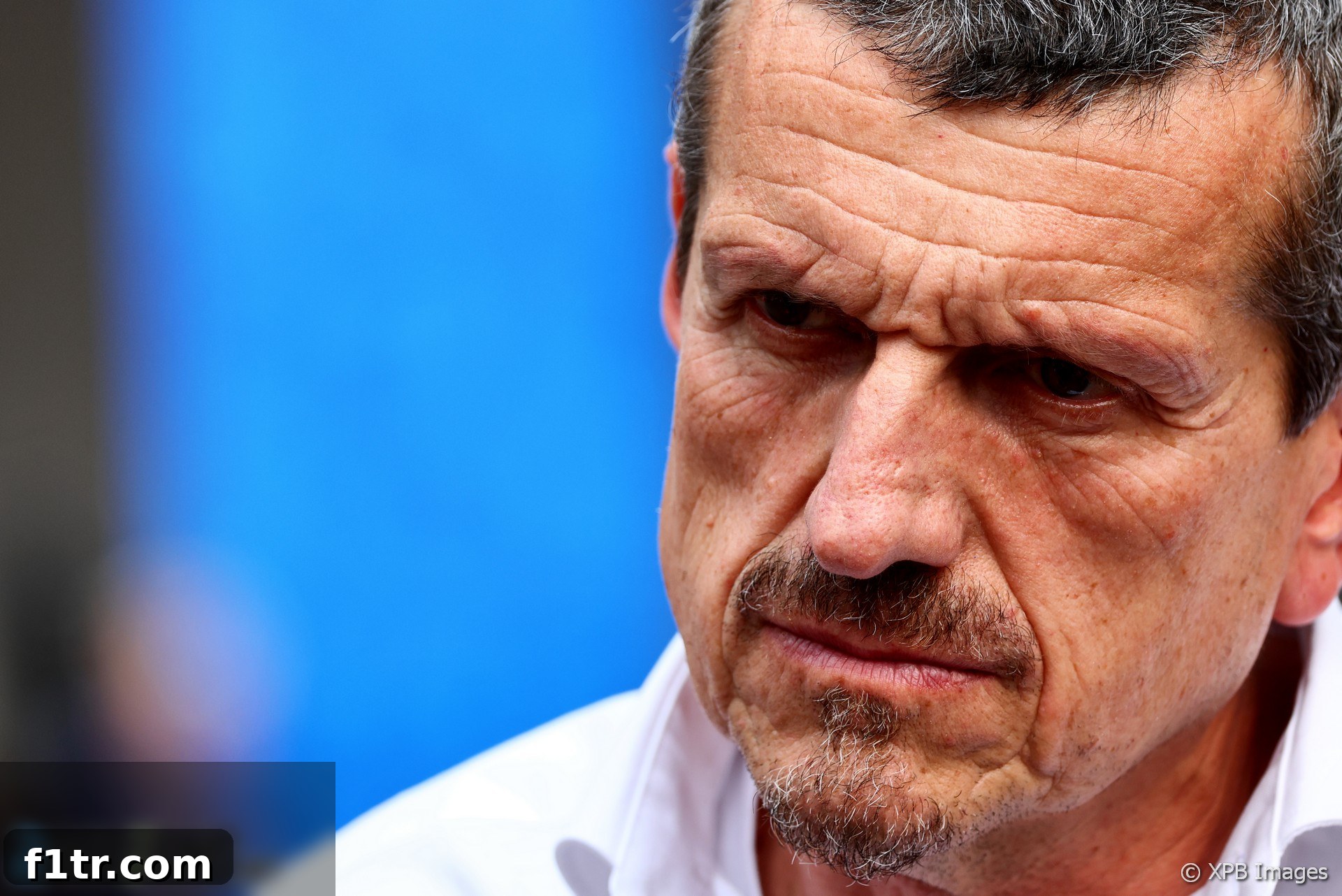
Guenther Steiner Questions F1 Team Expansion: No Upside for an 11th Team
The exhilarating world of Formula 1 is experiencing unprecedented growth, captivating new audiences globally. This surge in popularity has prompted motorsport’s governing body, the FIA, to open a formal application process for prospective new teams looking to join the pinnacle of racing from the 2025 season onwards. However, this potential expansion is not met with universal enthusiasm within the paddock. Guenther Steiner, the outspoken team principal of Haas F1 Team, the most recent entrant to the grid in 2016, has expressed significant reservations about introducing an 11th team, emphasizing the financial risks and the lack of tangible benefits for current participants.

Haas F1 Team Principal Guenther Steiner believes an 11th team offers no significant upside to Formula 1.
The Lure of the Grid: FIA’s Call for New Entrants
Last week, the Fédération Internationale de l’Automobile (FIA) formally announced its intention to consider applications for new Formula 1 teams. This move reflects the sport’s burgeoning appeal, driven by factors such as the success of Netflix’s ‘Drive to Survive’ documentary series and a strategic push into key markets like the United States. The prospect of joining the elite 10-team roster, which has remained unchanged since Manor Racing folded at the end of 2016, has naturally drawn considerable interest from various motorsport entities.
The application process set forth by the FIA is rigorous, requiring potential entrants to demonstrate not only robust financial backing but also technical capability, a detailed business plan, and a commitment to sustainability. Successful applicants would need dual approval from both the FIA, which governs the sporting and technical regulations, and Formula One Management (FOM), which oversees the commercial aspects of the championship. This dual vetting ensures any new team aligns with both the sporting integrity and the commercial viability of the sport.
Haas’s Perspective: A Voice of Caution from the Most Recent Entrant
As the last team to successfully navigate the complex entry process and establish itself on the Formula 1 grid, Guenther Steiner and Haas F1 offer a unique and pertinent perspective. Having joined in 2016, Steiner has first-hand experience of the immense challenges involved in building and sustaining a competitive F1 operation from scratch. His concerns are deeply rooted in the financial health and long-term stability of the sport as a whole, and particularly for the established teams.
Steiner articulated his views, recalling a recent past where the landscape was starkly different: “Five years ago you could get teams for nothing. You could pick it up, nobody wanted them, they went out of business. Now all of a sudden everybody wants a team.” This historical context underscores his skepticism, suggesting that the current wave of interest might be opportunistic rather than a reflection of sustainable long-term viability for an expanded grid.
The Financial Equation: Risk vs. Reward for Current Teams
At the heart of Steiner’s argument is the delicate financial ecosystem of Formula 1. He highlights that the current 10 teams are “all financially stable, they are all well set up. It’s a very good environment in the moment. Nobody’s struggling.” This financial equilibrium is a relatively new phenomenon in F1, a sport historically plagued by teams teetering on the brink of collapse. The significant improvement in team finances can be attributed to the sport’s revenue distribution model and the substantial budget cap implemented in recent years, which has fostered greater competitive balance and financial predictability.
Steiner’s primary concern revolves around revenue dilution. F1’s commercial agreements distribute a significant portion of the sport’s earnings among the competing teams. Introducing an 11th team would, by default, mean splitting the existing revenue pie into smaller slices, potentially jeopardizing the newfound financial stability of the current entrants. “So if you put an 11th team in and if you get a little bit a dip in the economy or something, all of a sudden it’s all there. People maybe struggle to survive. So why take that risk if there is no upside?” he pondered.
This “risk” extends beyond mere revenue sharing. A global economic downturn could exacerbate the financial strain on teams, making it harder for all participants to maintain competitiveness. The anti-dilution fee, a substantial payment often debated for new entrants to compensate existing teams for the reduced revenue share, is intended to mitigate this risk. However, the exact figure and its effectiveness in truly offsetting the long-term financial impact remain contentious topics among existing teams.
The Andretti Global Ambition: An American Dream Meets F1 Reality
Among the various prospective entrants, Michael Andretti’s organization, Andretti Global, has undoubtedly been the most vocal and persistent in its bid to join Formula 1. The multi-discipline motorsports giant is already constructing a major new facility in Indianapolis, a clear demonstration of their commitment and infrastructure. Their F1 aspirations received a significant boost with the backing of American automotive giant General Motors, through its Cadillac brand, adding considerable weight and credibility to their application.
The prospect of an American-led team with robust American automotive manufacturer support holds immense appeal for F1, especially given the sport’s burgeoning popularity in the United States. It promises to further galvanize the American fanbase, potentially attracting new sponsors and increasing broadcast viewership. However, even with such formidable backing, Andretti Global faces the same formidable hurdles and skepticism from established teams regarding their integration into the current financial and competitive framework. The preference among some existing teams has historically been for new entrants to purchase an existing operation rather than adding a completely new slot, thereby avoiding revenue dilution.
Beyond the Money: Sporting and Commercial Implications
While Steiner’s concerns are predominantly financial, the debate surrounding F1 expansion touches upon broader sporting and commercial implications. Proponents of expansion argue that more teams could lead to a larger grid, increased competitive diversity, and more opportunities for drivers and engineers. It could also open doors to new markets or deepen engagement in existing ones, potentially bringing new title sponsors or technological partners to the sport.
However, the practicalities of an 11th team also raise questions about pit lane infrastructure, logistical demands on circuits, and the overall management of a larger field. From a sporting perspective, simply adding more cars doesn’t automatically guarantee better racing; the new team must be competitive enough to truly enhance the spectacle rather than merely filling space at the back of the grid. Steiner concisely summarized the sentiment among many team principals, stating: “An 11th team, what upside is it bringing? There is no upside in the moment for an 11th team to come for the other teams. So there is just risk, no benefit.”
Navigating the Future: A Complex Decision for Formula 1
The decision to expand the Formula 1 grid is a multi-faceted one, requiring a careful balance between growth, financial stability, and competitive integrity. The FIA, as the sport’s regulator, is keen on fostering development and opening pathways for new talent and investment. FOM, as the commercial rights holder, seeks to maximize the sport’s value and global appeal. Meanwhile, the existing teams, represented by voices like Guenther Steiner, are primarily focused on protecting their hard-won financial security and the stability of the current competitive environment.
As the application process unfolds, the onus will be on any prospective entrant, particularly Andretti Global, to not only meet the stringent technical and financial criteria but also to present a compelling case that clearly demonstrates the “upside” for all stakeholders, beyond just their own ambitions. The future of the Formula 1 grid hangs in the balance, with the sport’s leaders facing a pivotal choice that will shape its trajectory for years to come.