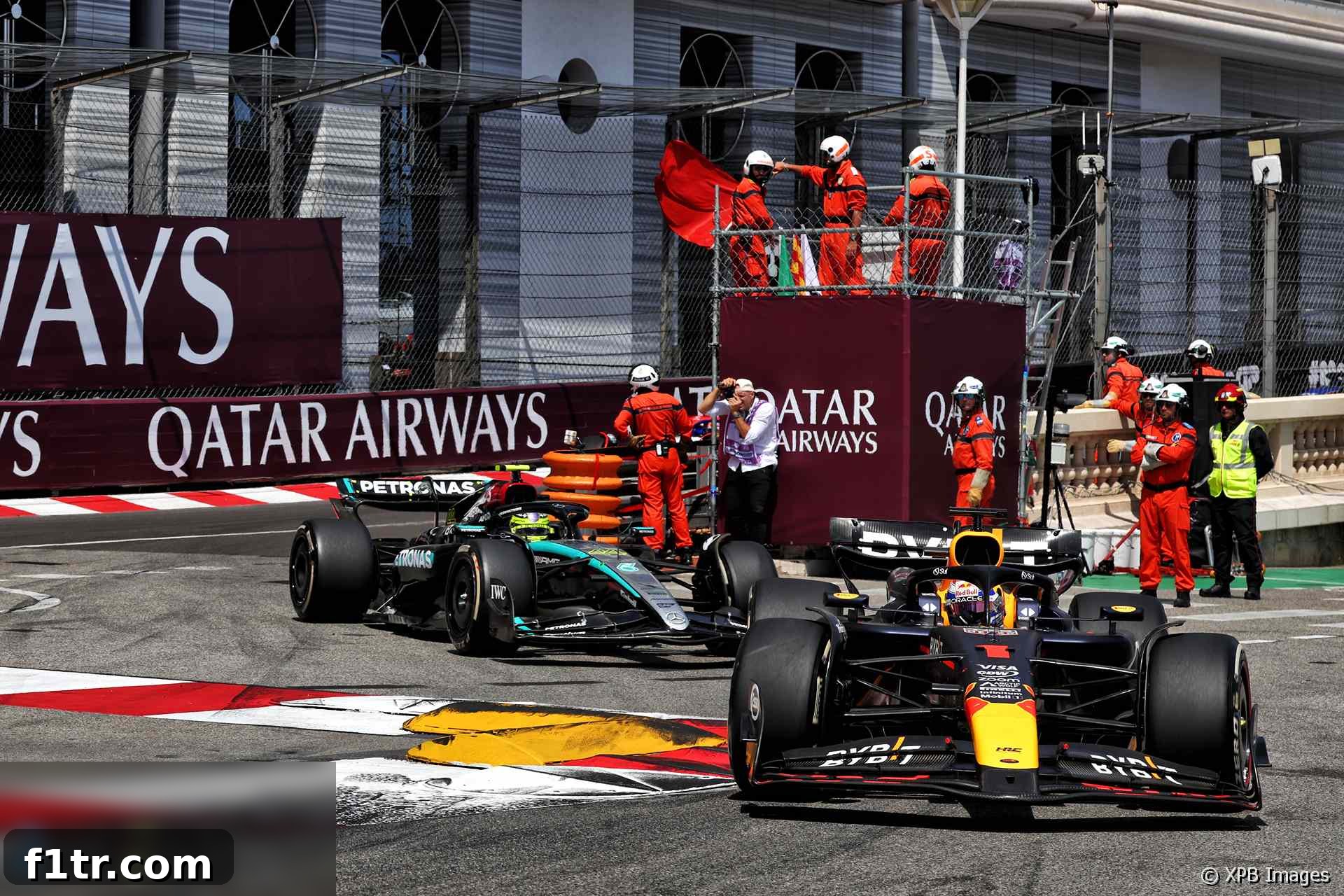
Monaco Grand Prix Blunder: Mercedes Admits Critical Out-Lap Error with Lewis Hamilton
Advert | Become a Supporter & Go Ad-Free
The high-stakes world of Formula 1 often sees championships decided by fractions of a second and strategic masterstrokes. Yet, sometimes, it’s the seemingly minor oversights that cost dearly. Such was the case for the Mercedes-AMG Petronas F1 Team during the recent Monaco Grand Prix, where a pivotal communication error regarding Lewis Hamilton’s out-lap pace inadvertently handed a tactical advantage to rival Max Verstappen and Red Bull Racing. Mercedes has since publicly admitted their mistake, shedding light on the intricate decisions and razor-thin margins that define modern Grand Prix racing.
The Strategic Rationale: An Unconventional Pit Stop
The Monaco Grand Prix is notorious for its challenging circuit, where overtaking is almost impossible, and track position reigns supreme. Consequently, strategy plays an even more critical role than usual. On lap 51 of the race, with the field settled and tire wear becoming a factor, Mercedes opted to bring Lewis Hamilton in for a pit stop. At this point, Hamilton was running seventh, behind his teammate George Russell in fifth, with Max Verstappen positioned strategically between the two Mercedes cars.
According to Andrew Shovlin, Mercedes’ Head of Trackside Operations, the pit stop was not born out of immediate necessity for fresh tires for either driver. Neither Hamilton nor Russell was in desperate need of new rubber, which made the timing of the stop somewhat unusual. The primary objective was twofold: to apply strategic pressure on Verstappen and to create an “insurance policy” for George Russell, whose tires might have been struggling towards the very end of the long and arduous race. Shovlin clarified the team’s initial expectations in a debrief video, highlighting the intricacies of their thought process.
“We never thought we’d be able to undercut Max,” Shovlin explained, directly addressing the common tactic of pitting early to gain track position on a competitor. He underlined the understanding that a direct undercut on a rival with clear track ahead, as Verstappen had, is exceedingly difficult to execute successfully. “The reality is if we stop because there was no one behind us and we had clear track, they are not going to stop if they don’t have the window to drop out ahead of us.”
The real intention behind pitting Hamilton was to deploy him on a fresh set of tires, allowing him to rapidly close the gap to Verstappen, who would theoretically remain on his older, more degraded set. This scenario would have placed immense pressure on Verstappen, forcing him to manage his pace more carefully, potentially impacting his overall race rhythm and even opening up an opportunity for Hamilton to challenge if the circumstances were to shift. Additionally, in the unlikely event George Russell faced significant tire degradation in the closing laps, Hamilton on fresh rubber would serve as a vital buffer, protecting the team’s overall track position and preventing rivals from gaining.
The Crucial Communication Breakdown
The success of this meticulously planned strategy hinged entirely on Lewis Hamilton maximizing his pace during the out-lap – the first lap immediately after exiting the pits. This lap is often the most critical lap of a pit stop sequence in Formula 1, as drivers aim to rapidly generate heat in their new tires and put down the fastest possible time to minimize the ground lost during the stationary pit stop. However, this critical instruction, vital for the strategic play, was conspicuously absent from Hamilton’s race engineer, Peter Bonnington, affectionately known as “Bono.”
Prior to his pit stop, Hamilton had been consistently instructed to manage his tire pace, a standard procedure to ensure tire longevity in a long Grand Prix. This conservative approach, while necessary for the preceding stints, proved to be detrimental immediately after the pit stop. Following the tire change, Bonnington’s message to Hamilton was a confusing mix of directives: “we can push now” was immediately followed by the crucial instruction, “out-lap normal.” This contradictory guidance failed to convey the urgent and absolute need for a “flat out” effort, a standard requirement when an out-lap is strategically critical.
Andrew Shovlin candidly admitted to this operational oversight, taking full responsibility on behalf of the team. “The bit that didn’t go well was because we didn’t tell Lewis to go flat out on that out-lap,” Shovlin confessed. The implication was immediate and severe. By not pushing to his absolute limit, Hamilton’s out-lap was not fast enough to prevent what transpired next, creating a ripple effect that ultimately undermined their carefully constructed plan.
Verstappen’s Timely Counter-Attack
As Hamilton completed his out-lap at a sub-optimal pace, Max Verstappen, who had been meticulously managing his own tires and pace, suddenly found himself with an unexpected window of opportunity. The gap that Mercedes had intended to shrink with Hamilton’s fresh tires, instead, widened just enough to facilitate a tactical response from Red Bull Racing. Seeing this slight but crucial opening, Red Bull’s strategists immediately capitalized on the situation.
Verstappen was called into the pits for his own tire change, a decision made possible by Hamilton’s comparatively slower out-lap. His swift pit stop, combined with Hamilton’s less-than-critical out-lap, allowed him to emerge from the pit lane not only ahead of Hamilton but crucially, still ahead of him, and now on a fresh set of tires himself. This decisive move entirely negated Mercedes’ initial strategy and turned their intended advantage into a disadvantage for themselves.
Shovlin articulated the unintended and costly consequence: “Max actually had the gap to make the pit stop. So he was able – because he wasn’t going as fast as he could to start with – he could push up behind George, so he gained time against himself because he was managing, he was able to do that stop, get out in front.”
Instead of Hamilton on new tires putting pressure on Verstappen on old tires, Mercedes inadvertently created a situation where Verstappen was now on new tires, behind George Russell, with Hamilton further back. “What we inadvertently ended up with was Max on a new set [of tyres] behind George,” Shovlin noted. “Which wasn’t ideal, but as you saw, it didn’t really look like George was at risk of losing that position. He’d managed the tyres well and he had good rubber at the end.” While Russell admirably defended his position and managed his tires effectively to the finish, the strategic blunder essentially gifted Verstappen a free pit stop and a competitive tire advantage he would not have otherwise received, changing the dynamic of that part of the race.
Advert | Become a RaceFans Supporter andGo Ad-Free
Hamilton’s Frustration and the Team’s Accountability
The immediate aftermath of Verstappen’s perfectly executed counter-strategy saw a visibly frustrated Lewis Hamilton take to the team radio. His pertinent question echoed the sentiment of many observers: “Why didn’t you tell me out-lap was critical?” This direct query from a seven-time world champion underscores the significance of the missed communication and the profound impact it had on his race perspective and opportunities.
Andrew Shovlin readily accepted the team’s culpability, demonstrating Mercedes’ commitment to transparency and self-assessment. He described the episode as “certainly one area of the race that we should have been a bit tidier. We could have been a bit clearer with the messaging.” While the ultimate outcome for the front of the race wasn’t drastically altered – George Russell held his ground and secured a valuable finish – the missed opportunity for Hamilton was clear. Had he been properly informed to push flat out, he would have secured a faster lap time, potentially gaining a crucial fastest lap bonus point and, critically, maintained the intended pressure on Verstappen. The incident deprived Hamilton of a chance to influence the race outcome more significantly and pursue a higher finish.
This incident vividly highlights the razor-thin margins in Formula 1, especially on a circuit like Monaco where track position is paramount and overtaking is a rarity. Every instruction, every lap, and every second counts. The nuanced difference between “out-lap normal” and “push flat out” became the pivotal factor, transforming an intended strategic advantage for Mercedes into an inadvertent benefit for their fiercest competitor.
Radio Messages: A Closer Look at the Communication
The following transcript provides a detailed insight into the radio communications between Lewis Hamilton, his race engineer Peter Bonnington, Max Verstappen, and his race engineer Gianpiero Lambiase, surrounding the critical pit stop period. These messages reveal the real-time dialogue and the exact wording that led to the strategic miscue.
| Lap: 48/78 VER: 1’18.337, HAM: 1’17.831 | |||||||||||||||||||||||||||||||||||||||||||||||||||
| Bonnington | So Lewis we’re going to start getting the traffic now so start using tyres a bit more. | ||||||||||||||||||||||||||||||||||||||||||||||||||
| Lap: 51/78 VER: 1’18.142, HAM: 1’35.209 | |||||||||||||||||||||||||||||||||||||||||||||||||||
| Lambiase | How are the tyres, Max? | Bonnington | Lewis gives us a balance check. | ||||||||||||||||||||||||||||||||||||||||||||||||
| Verstappen | Not too bad. | Hamilton | Balance is good, mate. | ||||||||||||||||||||||||||||||||||||||||||||||||
| Lambiase | Understood. | Bonnington | And box opposite Verstappen, box opposite Verstappen. | ||||||||||||||||||||||||||||||||||||||||||||||||
| Lap: 52/78 VER: 1’33.905, HAM: 1’19.702 | |||||||||||||||||||||||||||||||||||||||||||||||||||
| Lambiase | Okay so Hamilton in, Max. Push up for the moment. Push up to Russell. | Bonnington | So you’re going to be all clear on exit. | ||||||||||||||||||||||||||||||||||||||||||||||||
| Verstappen | You want me to push? | Bonnington | So we can push now. So this is out-lap normal but lap time should just come to you. We’re going to target 16.0s. | ||||||||||||||||||||||||||||||||||||||||||||||||
| Verstappen | Yeah, just this lap for now. I don’t think there’s too much drama either way, Max. | Hamilton | How hard you want to push? | ||||||||||||||||||||||||||||||||||||||||||||||||
| Verstappen | Box and pit confirm Max. Box, pit confirm. Strat 12 in pit lane. Strat nine and yellow line on the exit. Strat nine, yellow line on the exit. Could be close with Hamilton, although I don’t think so. Could be close though. Yellow line on the exit. | Bonnington | Just push, yep. This is like Suzuka. So Verstappen in pit lane. | ||||||||||||||||||||||||||||||||||||||||||||||||
| Lap: 53/78 VER: 1’18.724, HAM: 1’16.458 | |||||||||||||||||||||||||||||||||||||||||||||||||||
| Lambiase | No, nice lap Max, well done. So let’s push on now. Push on. | Hamilton | Why didn’t you tell me out-lap was critical? | ||||||||||||||||||||||||||||||||||||||||||||||||
| Lap: 55/78 VER: 1’15.398, HAM: 1’16.492 | |||||||||||||||||||||||||||||||||||||||||||||||||||
| Bonnington | And Verstappen a 15.8, George 18.2. | ||||||||||||||||||||||||||||||||||||||||||||||||||
Lessons Learned: The Margins of Modern F1
The Monaco Grand Prix strategic miscue serves as a stark reminder of the intense pressures and minute details that govern success and failure in Formula 1. Even a top-tier team like Mercedes, renowned for its precision and strategic prowess, can fall victim to ambiguous communication, especially when operating at the absolute limit of performance and decision-making. While the direct consequences for Mercedes’ overall race result in Monaco were somewhat mitigated by George Russell’s strong defense and tire management, the incident undoubtedly provided Red Bull with a psychological boost and a tactical advantage they wouldn’t have otherwise received.
For Mercedes, the takeaway is clear: clarity and precision in communication are paramount, especially during critical moments like an out-lap where every tenth of a second can redefine strategic outcomes. The team’s open admission of error is commendable and indicative of their self-analytical culture, which has been a cornerstone of their past successes. However, it also underscores that even the best teams are constantly learning and refining their processes in the relentless pursuit of perfection on the track, where no detail is too small to overlook.
Advert | Become a RaceFans Supporter andGo Ad-Free
Become a RaceFans Supporter
RaceFans thrives on the generous contributions of its readers. By supporting us with a small monthly or annual contribution, you play a crucial role in covering the operational costs, ongoing development, and creation of high-quality content for RaceFans, both now and in the future.
Join the RaceFans Supporter community today to enjoy an ad-free browsing experience. Discover more or sign up via the links below:
- Become a RaceFans Supporter
- RaceFans Supporter FAQ
2024 Monaco Grand Prix: Further Reading
Dive deeper into the events of the 2024 Monaco Grand Prix with these related articles:
- Formula 1 will fix red flag rule loophole which ruined Monaco GP – Domenicali
- Magnussen ‘could have backed off but didn’t’ in Monaco crash, says team boss
- Ocon defends his driving after ‘hurtful abuse’ over Monaco GP crash with Gasly
- How the midfield’s hottest team mate rivalry boiled over
- “He’s really dangerous”: Unheard driver radio from F1’s slow show in Monaco
Browse all 2024 Monaco Grand Prix articles