2020 F1 Season Review: Ferrari’s Historic Decline, Verstappen’s Rise, and the Battle for P3
The 2020 Formula 1 season will undoubtedly be remembered for many reasons, not least the astounding accomplishments of Lewis Hamilton, who cemented his status as statistically the most successful driver of all time. However, beneath the headlines of Mercedes’ continued dominance and Hamilton’s record-breaking feats, the season unfolded with a series of dramatic shifts and unexpected storylines. While some teams soared, others plummeted, setting the stage for an intriguing future. This comprehensive review delves into the highs and lows, focusing particularly on Ferrari’s unprecedented struggles, Red Bull’s strong finish, Max Verstappen’s commanding performance, and the thrilling battle for third place in the constructors’ championship.
Ferrari’s Unprecedented Struggles: A Season to Forget
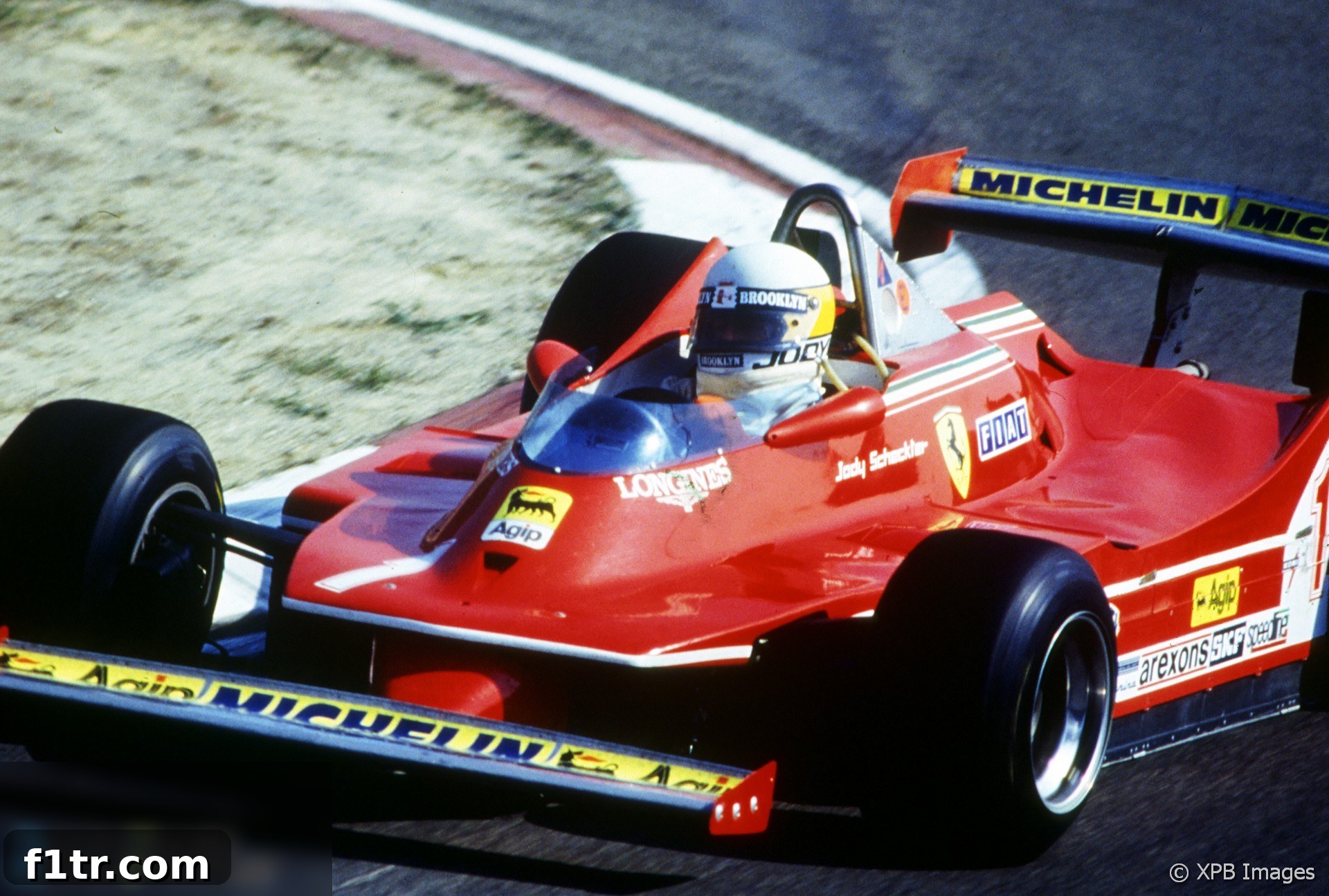
For a team as legendary as Ferrari, arguably the most famous name in motorsport, the 2020 season was nothing short of a catastrophe. They endured their worst performance in four decades, finishing a dismal sixth in the Constructors’ Championship. This result marks their lowest position since 1980, which was the only previous occasion since the championship’s inception in 1958 that Ferrari found themselves outside the top six. The stark contrast between 2020 and that brief dip in 1980, when Ferrari won the constructors’ title the year before and bounced back within two seasons, highlights the depth of their current predicament. With 15 constructors’ championships to their name – more than any other team – Ferrari is now experiencing its 12th consecutive year without a title. The looming question is whether they can break this barren spell before equalling their longest drought of 15 years.
While many smaller teams would covet the problem of gaps between multiple championship wins, Ferrari’s current performance reflects poorly on an outfit possessing immense resources and enjoying uniquely generous financial remuneration from the sport. The Scuderia’s inability to deliver competitive machinery raises serious questions about their strategic direction and technical capabilities.
For the third time in the seven-year V6 hybrid turbo era, Ferrari concluded the season without a single victory. More alarmingly, they failed to lead a lap throughout the entire season, a performance nadir not seen since 1992. This abysmal record stands in stark contrast to a Formula 1 season that, by recent standards, was remarkably competitive. Nine different drivers from five different teams led races in 2020, marking the highest figures for both counts in six years. Ferrari’s inability to contend for victories or even pole positions highlighted the severe limitations of their SF1000 chassis and power unit. For the first time since 2016, a Ferrari car did not feature on the front row of the grid all year. Their highest qualifying position achieved was fourth, courtesy of Charles Leclerc. Intriguingly, Leclerc’s average qualifying position of 8.29 was identical to that of his incoming 2021 teammate, Carlos Sainz Jnr, hinting at a consistent baseline performance despite the car’s shortcomings.
Sebastian Vettel’s Bittersweet Farewell to Ferrari
The 2020 season also marked the end of an era, as Sebastian Vettel departed Ferrari after six years and 119 appearances. While he completed more races with the Scuderia than he did with Red Bull (where he raced 113 times), his win tally tells a different story: 38 victories at Red Bull compared to 14 at Ferrari. Vettel leaves Ferrari as its fourth longest-serving driver in terms of starts and its third most successful in terms of wins, trailing only the legendary Michael Schumacher and Niki Lauda (who secured 15 wins). His tenure at Maranello, though yielding numerous memorable moments and fierce championship battles, ultimately fell short of the ultimate prize – a world championship title – which both he and the Tifosi desperately craved.
| Driver | Ferrari starts | Ferrari wins |
|---|---|---|
| Michael Schumacher | 179 | 72 |
| Kimi Raikkonen | 151 | 10 |
| Felipe Massa | 139 | 11 |
| Sebastian Vettel | 118 | 14 |
| Rubens Barrichello | 102 | 9 |
| Fernando Alonso | 96 | 11 |
| Gerhard Berger | 96 | 5 |
| Michele Alboreto | 80 | 3 |
| Jean Alesi | 79 | 1 |
| Eddie Irvine | 65 | 4 |
Ferrari’s struggles were further underscored by their failure to score points in five races during 2020, representing their worst performance under the current points system. The last time they recorded five point-less races was in 2009, a season during which points were awarded only down to eighth place, and the team had to replace the injured Felipe Massa mid-season. The 2020 scenario, occurring in a season with a broader points structure, illustrates the profound depth of their competitive slump.
Red Bull’s Powerful Finale and Max Verstappen’s Abu Dhabi Domination
In stark contrast to Ferrari’s woes, Red Bull Racing ended the year on a significant high, securing their biggest points haul in a single race at the Abu Dhabi Grand Prix. Indeed, they remarkably out-scored Mercedes in each of the final three races of the season, a highly encouraging sign for a potentially more competitive 2021 F1 season. This late-season surge demonstrated Red Bull’s ability to develop their car and extract maximum performance when it mattered most, injecting much-needed excitement into the championship narrative.
Max Verstappen delivered the 10th victory of his career in commanding fashion at Abu Dhabi. He led the race from start to finish, a feat he had only achieved once before at the 2017 Mexican Grand Prix. This triumph elevated Verstappen to an elite club as the 34th driver in F1 history to reach double-digits in wins, now standing alongside revered names such as James Hunt, Ronnie Peterson, Jody Scheckter, and Gerhard Berger. His performance underscored his growing maturity and unparalleled talent, reaffirming his position as a future world champion contender.
Surprisingly, this dominant pole position was only the third of Verstappen’s career, although he was quick to highlight a pole he lost due to a penalty in Mexico the previous year. He clinched pole by a mere 0.025 seconds over Valtteri Bottas, a margin one thousandth of a second smaller than Bottas’s advantage over George Russell in the preceding race. Verstappen’s success decisively ended Mercedes’ reign of domination at Abu Dhabi in the V6 hybrid turbo era. Since 2014, Mercedes had claimed every single win and pole position at the Yas Marina circuit, making Verstappen’s victory a significant symbolic shift.
Adding another layer of drama to the season’s finale, Daniel Ricciardo denied Verstappen the first ‘grand slam’ of his career on the very last lap of the race. The Renault driver beat Verstappen’s fastest lap time by a scant 32 thousandths of a second. This marked Ricciardo’s 15th career fastest lap, placing him level with illustrious figures such as Jackie Stewart, Clay Regazzoni, Felipe Massa, and Valtteri Bottas, showcasing his raw speed even in his final race with Renault.
McLaren’s Resurgence: Securing Third in the Constructors’ Championship
Ferrari’s poor season opened the door for another team to break into the championship top three for the first time in five years – a position typically monopolized by Mercedes, Red Bull, and Ferrari. McLaren emerged victorious from a thrilling year-long battle with Racing Point and Renault, securing third place in the constructors’ standings. They ultimately prevailed over Racing Point by a slender margin of just seven points. This outcome meant that the unique 15-point penalty Racing Point received earlier in the year, due to the brake duct controversy, played a pivotal role, potentially impacting prize money worth several million pounds for both teams. McLaren’s achievement marked a significant milestone in their rebuilding process, demonstrating clear progress and solidifying their ambition to return to the front of the grid.
Williams’ Enduring Challenge: A Season Without Points
The last team to break into the championship top three, before McLaren’s 2020 success, was Williams. However, the venerable British team continued to face immense challenges in 2020. Despite enjoying a season that, qualitatively, was more competitive than their disastrous 2019 campaign, they still finished 10th and last in the constructors’ standings for the third consecutive year. More significantly, Williams failed to score a single point throughout the entire season, a stark reality not seen since 1977, when their single-car team did not participate in every round of the championship. This points-less season underscores the deep-seated issues that Williams, now under new ownership, continues to battle, as they strive to reclaim their former glory and climb back up the grid.
Key Statistics from the 2020 F1 Season
For those eager to delve deeper into the numbers that defined the year, a comprehensive statistical review of the 2020 F1 season is available through the following detailed sections:
- 2020 F1 championship points
- 2020 F1 season records
- 2020 F1 race data
- 2020 F1 qualifying data
- 2020 F1 retirements and penalties
- 2020 F1 strategy and pit stops
Looking Ahead: Hopes and Challenges for 2021
The 2020 F1 season, while dominated by Mercedes and Lewis Hamilton, was far from predictable in its subplots. Ferrari’s historic decline served as a sobering reminder of the sport’s unforgiving nature, while Red Bull’s late-season form and Max Verstappen’s prowess offered a tantalizing glimpse of a potentially closer championship fight in 2021. McLaren’s well-deserved third place signified a changing of the guard among the midfield, bringing renewed excitement to the battle behind the front-runners. As the teams prepare for the next chapter, the lessons learned and the momentum gained (or lost) in 2020 will undoubtedly shape their fortunes. The stage is set for an exhilarating new season where rivalries will intensify, and the pursuit of glory will continue unabated.
Have you spotted any other interesting statistics, facts, or observations from the Abu Dhabi Grand Prix or the broader 2020 F1 season? We invite you to share your insights and comments below, contributing to the ongoing discussion about this memorable year in Formula 1 history!
Join the RaceFans Supporters Drive!
If you’ve enjoyed RaceFans’ comprehensive motor sport coverage during 2020, including detailed analyses like this one, please take a moment to find out more about our Supporter Drive. Your support is crucial for independent journalism in motorsport.
We’re aiming to welcome 3,000 new Supporters to help fund RaceFans so we can continue to produce quality, original, independent motorsport coverage. Here’s what we’re asking for and why – and how you can sign up to become a vital part of our community:
- Join the RaceFans Supporters Drive!
Further Reading: 2020 Abu Dhabi Grand Prix Insights
For more in-depth articles and perspectives on the season-ending race, explore our collection of articles specifically covering the 2020 Abu Dhabi Grand Prix:
- Mercedes also had MGU-K concerns over Russell’s car
- Ferrari hail “outstanding professional” Vettel after his final drive for team
- 2020 Abu Dhabi Grand Prix Star Performers
- Driver line-up confirmed for Yas Marina test, two teams won’t attend
- Paddock Diary: Abu Dhabi Grand Prix
Browse all 2020 Abu Dhabi Grand Prix articles