2018 Canadian Grand Prix: The Final Starting Grid and Qualifying Analysis
The Circuit Gilles Villeneuve, a challenging and iconic track in Montreal, was set to host the seventh round of the 2018 Formula 1 World Championship. The qualifying session for the 2018 Canadian Grand Prix delivered a thrilling spectacle, culminating in a grid that promised high-octane action and intense strategic battles on race day. Drivers pushed their machines to the absolute limit around the high-speed layout, characterized by its long straights and chicanes, where precision and power are paramount. Fans eagerly anticipated the starting order, which would play a crucial role in determining the outcome of this prestigious event, often a turning point in the championship narrative.
Qualifying Highlights and Pole Position Battle
The qualifying session on Saturday was a testament to the fierce competition in the 2018 Formula 1 season. From the outset, the usual contenders for pole position—Mercedes, Ferrari, and Red Bull—showcased their blistering pace. Q1 saw an intense struggle as teams vied for every millisecond, with the midfield teams particularly close. Q2 brought more drama, as several strong drivers narrowly missed out on a spot in the top ten shootout. However, it was in Q3 where the true battle for supremacy unfolded, with each lap pushing the boundaries of grip and courage.
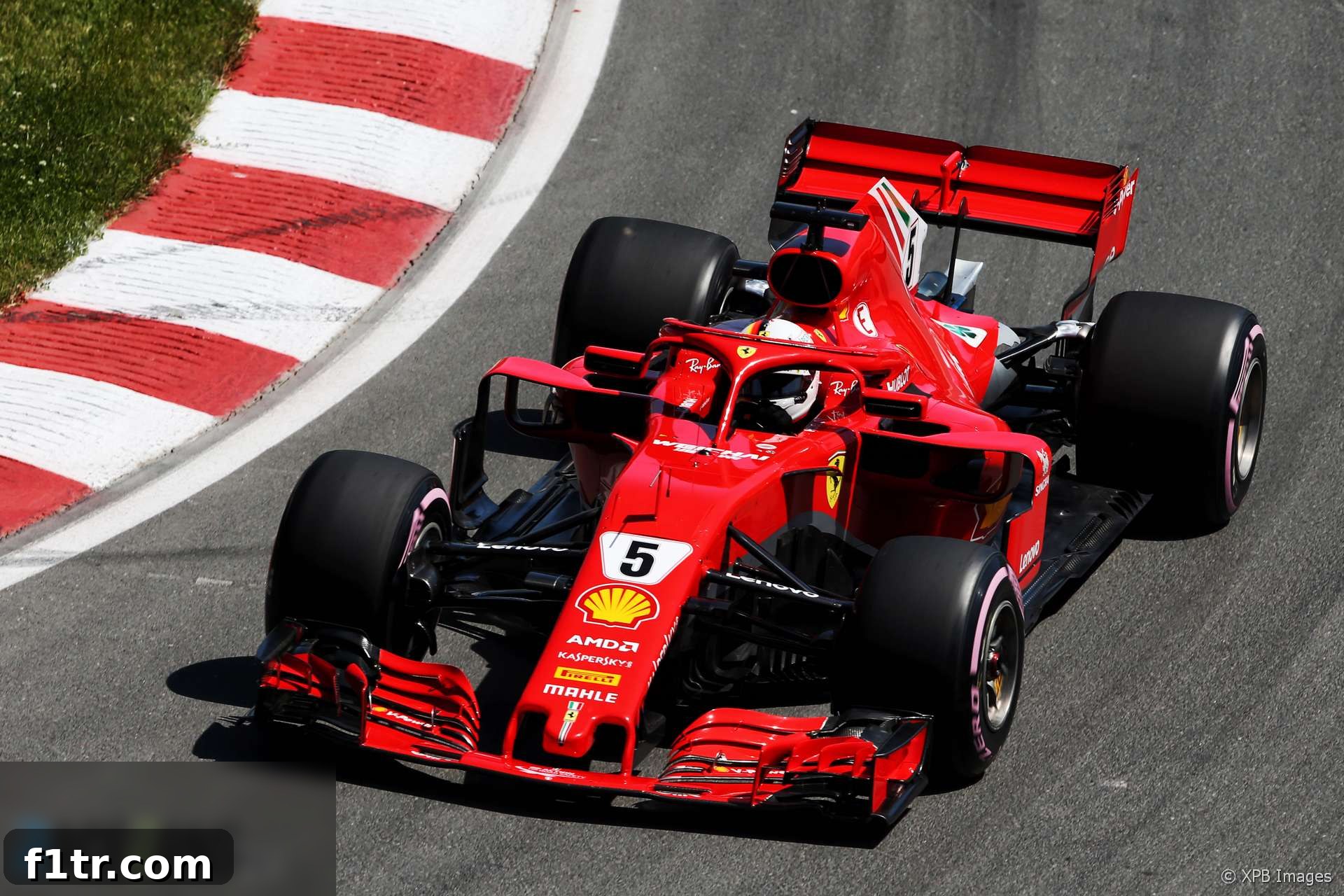
Ultimately, it was Sebastian Vettel who emerged victorious, snatching pole position for Ferrari with a phenomenal lap time of 1’10.764. This achievement marked a significant moment for both Vettel and Ferrari, underscoring their championship aspirations and demonstrating the strong performance of the SF71H chassis on a power-sensitive circuit. His precision through the chicanes and speed on the straights were unmatched, setting him up perfectly for the race. Hot on his heels was Valtteri Bottas in the Mercedes, just 0.093 seconds shy, proving that Mercedes would be a formidable challenger.
The Front Row: Vettel’s Dominance and Bottas’s Close Challenge
The first row of the grid for the 2018 Canadian Grand Prix set the stage for an electrifying start. Sebastian Vettel’s pole position, his 54th career pole, not only gave Ferrari a crucial advantage but also evoked memories of their past successes at the Circuit Gilles Villeneuve. His lap was executed with perfection, showcasing the fine balance and raw power of his Ferrari. Starting alongside him, Valtteri Bottas in the Mercedes W09 demonstrated excellent pace, proving that the Silver Arrows were still very much in contention. His near miss for pole highlighted the extreme competitiveness at the front, suggesting that the race would likely feature a direct battle between these two titans from the very first corner.
The Second Row: Verstappen’s Promise vs. Hamilton’s Pursuit
Row 2 featured an intriguing matchup, with Max Verstappen in third place for Red Bull, followed by championship leader Lewis Hamilton in the second Mercedes. Verstappen’s strong qualifying performance underscored Red Bull’s potential, especially considering the circuit’s demands where a powerful engine is crucial. His ability to extract maximum performance, particularly through the technical sections, positioned him well to challenge the front-runners. Hamilton, a multiple winner in Canada and often dominant here, found himself in fourth, an uncharacteristic position for him at this track. This suggested a more challenging qualifying session for the Briton, but also set the scene for an exciting charge through the field if he could find his rhythm early on race day.
Midfield Intensity and Notable Performances
The midfield grid positions were, as always, incredibly tight, showcasing the intense competition among several teams. Row 3 saw Kimi Räikkönen in the second Ferrari and Daniel Ricciardo in the second Red Bull. Räikkönen’s fifth place meant Ferrari had both cars in the top five, a strong position for team strategy, while Ricciardo, despite his Q3 effort, couldn’t quite match his teammate’s pace. The Renaults of Nico Hülkenberg and Carlos Sainz Jnr secured respectable seventh and ninth positions, respectively, sandwiching Esteban Ocon of Force India. Ocon’s eighth place was a solid result, highlighting the consistent performance of the Force India team. Sergio Pérez rounded out the top ten for Force India, ensuring both their cars started from strong scoring positions. This dense midfield promised a hard-fought race with overtakes and strategic gambles.
The Complete 2018 Canadian Grand Prix Starting Grid
Below is the final starting grid for the 2018 Canadian Grand Prix, detailing each driver’s position, name, team, and their best qualifying time from the Q3 session (or Q2/Q1 if they did not advance to Q3, or “No time” where applicable). This comprehensive list provides a snapshot of the intense competition that unfolded during the qualifying sessions at the iconic Circuit Gilles Villeneuve.
| Grid Row | Left Side of the Grid | Right Side of the Grid | ||||
|---|---|---|---|---|---|---|
| Pos. | Driver & Team | Qualifying Time | Pos. | Driver & Team | Qualifying Time | |
| Row 1 | 1. | Sebastian Vettel Ferrari |
1’10.764 | 2. | Valtteri Bottas Mercedes |
1’10.857 |
| Row 2 | 3. | Max Verstappen Red Bull |
1’10.937 | 4. | Lewis Hamilton Mercedes |
1’10.996 |
| Row 3 | 5. | Kimi Raikkonen Ferrari |
1’11.095 | 6. | Daniel Ricciardo Red Bull |
1’11.116 |
| Row 4 | 7. | Nico Hulkenberg Renault |
1’11.973 | 8. | Esteban Ocon Force India |
1’12.084 |
| Row 5 | 9. | Carlos Sainz Jnr Renault |
1’12.168 | 10. | Sergio Perez Force India |
1’12.671 |
| Row 6 | 11. | Kevin Magnussen Haas |
1’12.606 | 12. | Brendon Hartley Toro Rosso |
1’12.635 |
| Row 7 | 13. | Charles Leclerc Sauber |
1’12.661 | 14. | Fernando Alonso McLaren |
1’12.856 |
| Row 8 | 15. | Stoffel Vandoorne McLaren |
1’12.865 | 16. | Lance Stroll Williams |
1’13.590 |
| Row 9 | 17. | Sergey Sirotkin Williams |
1’13.643 | 18. | Marcus Ericsson Sauber |
1’14.593 |
| Row 10 | 19. | Pierre Gasly Toro Rosso |
1’13.047 | 20. | Romain Grosjean Haas |
No time |
Grid Penalties and Special Notes
Two drivers faced specific circumstances that affected their final starting positions, despite their qualifying times:
- Pierre Gasly: Although Pierre Gasly qualified in a respectable position, he was required to start from the back of the grid. This penalty was imposed due to changes in power unit components that exceeded the season’s allocation limits. Such strategic component changes often aim to ensure reliability for future races, but come at the cost of a grid drop in the immediate event.
- Romain Grosjean: Romain Grosjean did not set a time in Q1. This was a significant setback for the Haas driver. However, he was granted special permission by the stewards to start the race, allowing him to compete despite not meeting the 107% rule. This leniency is typically granted when a driver has demonstrated sufficient pace in practice sessions and the failure to qualify is due to unforeseen circumstances or technical issues.
Lower Grid Battles and Challenges
Further down the grid, the fight for every position remained fierce. Drivers like Kevin Magnussen (Haas) and Brendon Hartley (Toro Rosso) found themselves starting just outside the top ten, hoping to make up ground. Rookie sensation Charles Leclerc continued to impress for Sauber, placing 13th and consistently outperforming his machinery. McLaren’s Fernando Alonso and Stoffel Vandoorne qualified in 14th and 15th, reflecting the team’s ongoing struggles to find competitive pace. The Williams drivers, Lance Stroll and Sergey Sirotkin, qualified towards the back, highlighting a challenging season for the iconic British team. Rounding out the grid was Marcus Ericsson in the second Sauber, demonstrating the spread of performance across the 20-car field.
Anticipation for Race Day
With the grid now set, anticipation for the 2018 Canadian Grand Prix reached fever pitch. The Circuit Gilles Villeneuve is renowned for producing unpredictable races, often featuring safety cars, strategic gambles, and unexpected outcomes due to its high-speed nature and the infamous “Wall of Champions.” The combination of Sebastian Vettel’s pole position, the close proximity of Valtteri Bottas, and the determined pursuit from Max Verstappen and Lewis Hamilton promised a thrilling battle at the front. The midfield, packed with competitive cars and skilled drivers, was also expected to deliver plenty of action and overtakes. Fans looked forward to a strategic showdown where tire management, pit stop timing, and driver skill would all play vital roles in determining who would claim victory in Montreal.
The stage was perfectly set for a memorable race, with championship points and bragging rights on the line. Every team and driver would be pushing for maximum performance, hoping to capitalize on their qualifying positions or recover from any setbacks. The 2018 Canadian Grand Prix was poised to be a classic, filled with drama, speed, and the relentless pursuit of victory.
More from the 2018 Canadian Grand Prix
Dive deeper into the events and analysis surrounding the 2018 Canadian Grand Prix with these related articles:
- Hamilton stays ahead but Bottas hits trouble in second practice – A look back at the practice sessions and initial pace.
- False flags: F1’s three other chequered flag blunders – A historical perspective on unusual race finishes, relevant to the Canadian GP.
- 2018 Canadian Grand Prix Star Performers – An analysis of the drivers who shone brightest during the event.
- Top ten pictures from the 2018 Canadian Grand Prix – A visual recap of the most memorable moments.
- Vettel evokes memories of Villeneuve by ending Ferrari’s wait for Canada win – The race report focusing on the eventual winner and its significance.
Browse all 2018 Canadian Grand Prix articles
Explore 2018 F1 Grids
Access comprehensive starting grid information for all races in the 2018 Formula 1 season. From pole positions to penalties, find all the details here:
- 2018 Australian Grand Prix Grid
- 2018 Bahrain Grand Prix Grid
- 2018 Chinese Grand Prix Grid
- 2018 Azerbaijan Grand Prix Grid
- 2018 Spanish Grand Prix Grid
- 2018 Monaco Grand Prix Grid
- 2018 French Grand Prix Grid
Browse all 2018 F1 grids