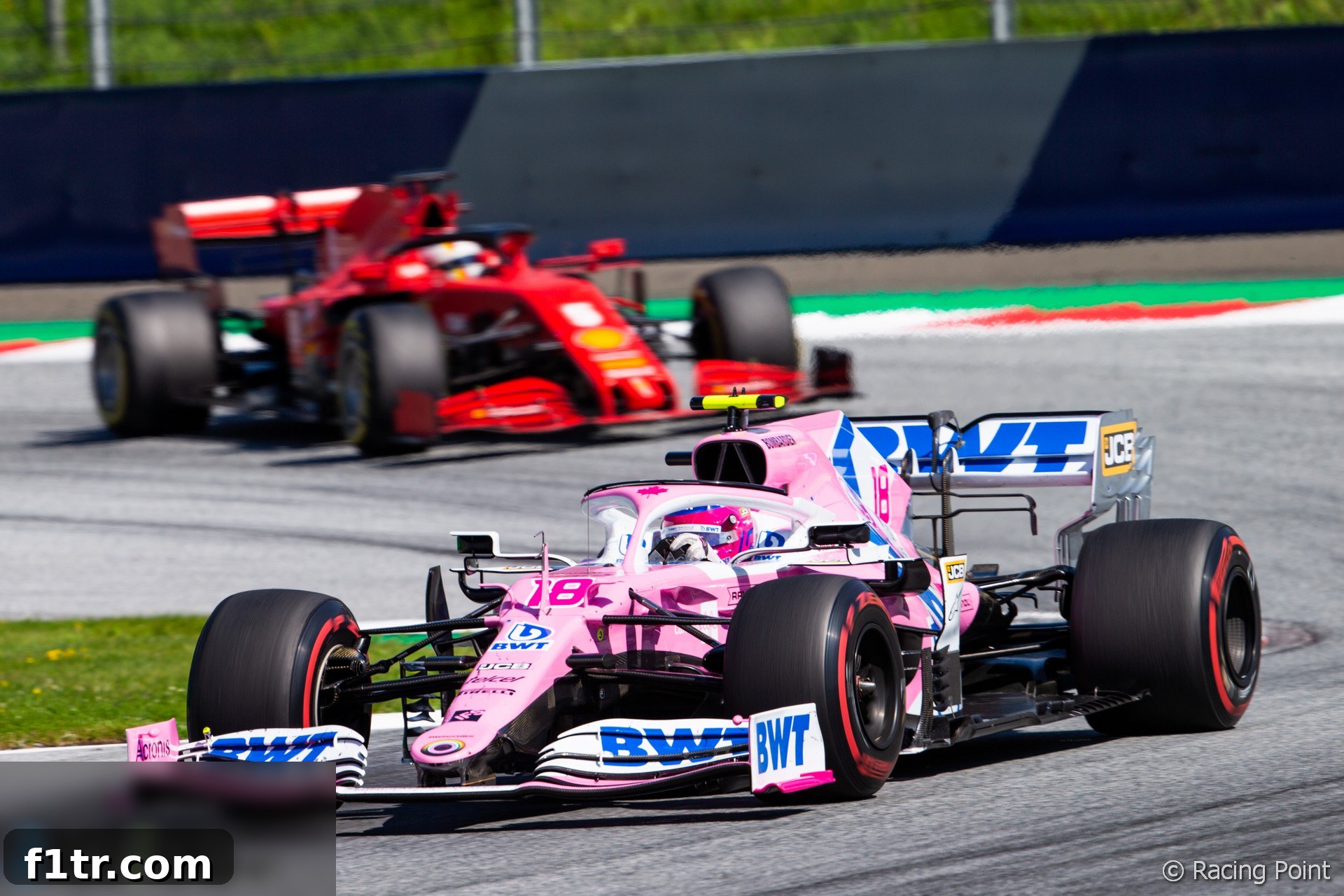
The highly contentious dispute surrounding Racing Point’s 2020 Formula 1 challenger, widely dubbed the “Pink Mercedes,” has escalated with a significant intervention from Scuderia Ferrari. The Italian powerhouse has formally requested Formula 1 and the sport’s governing body, the FIA, to provide explicit clarification on a fundamental aspect of the technical and sporting regulations. This move signals a deeper engagement from rival teams in a saga that threatens to reshape perceptions of competitive integrity and intellectual property within the pinnacle of motorsport.
At the core of this escalating controversy lies Racing Point’s brake duct design. A crucial hearing is scheduled for Wednesday to address the protest initially lodged by the Renault F1 Team against Racing Point following the Styrian Grand Prix in June. Renault’s detailed complaint centers on the assertion that Racing Point’s brake ducts are not an independent design but rather direct, illicit copies of those employed by Mercedes on their championship-winning W10 car from the 2019 season. This accusation has ignited a fiery debate about the boundaries of design inspiration versus outright replication in Formula 1.
Ferrari, which has openly expressed its support for Renault’s protest, has now taken a proactive step by seeking a definitive interpretation of specific clauses within the Formula 1 Sporting Regulations. These clauses are not merely technical minutiae but are central to Renault’s entire legal argument. The Italian team’s formal request underscores the gravity of the situation and the potential far-reaching implications for all competitors.
Appendix Six of the Formula 1 Sporting Regulations explicitly outlines the rules governing “listed parts” – components that teams are mandated to design themselves to ensure each constructor operates as an independent entity. This appendix states unequivocally: “A competitor shall, in respect of the listed parts to be used in its cars in Formula 1, only use listed parts which are designed by it.” It further adds a provision for outsourcing: “the obligation to design and use listed parts shall not prevent a competitor from outsourcing the design and/or manufacture of any listed parts to a third party […] provided that […] it retains the exclusive right to use the listed parts in Formula 1 so long as it competes in Formula 1.”
A spokesperson for Ferrari articulated the team’s precise concern to RaceFans, questioning how Racing Point can genuinely claim to have “designed” the brake ducts in question when the team itself has conceded that these components were modeled directly on the Mercedes W10’s design. This semantic and legal distinction between “designing” a part and “modeling it on” an existing, rival design is the crux of Ferrari’s challenge, seeking clarity on the acceptable limits of reverse engineering and intellectual property in a fiercely competitive environment.
The FIA’s head of single-seater matters, Nikolas Tombazis, previously addressed this very issue during an interview at the Hungarian Grand Prix weekend. He recounted a pre-season visit by governing body representatives to Racing Point’s factory specifically to inspect their car. Tombazis stated, “We were convinced by what we saw that what Racing Point had been saying as their process, of taking photographs and going to a detailed reverse-engineering from the photos, was very plausible.” He further elaborated, “I would say even more than that, just look, they showed us how they’ve done everything. And we are satisfied that was the process they had indeed followed.” This initial assessment from the FIA provides a complex backdrop to the current protests, as it suggests the governing body was, at one point, satisfied with Racing Point’s methodology. However, Ferrari’s intervention indicates that the plausibility of the process does not necessarily equate to compliance with the specific wording and spirit of the “listed parts” regulations.