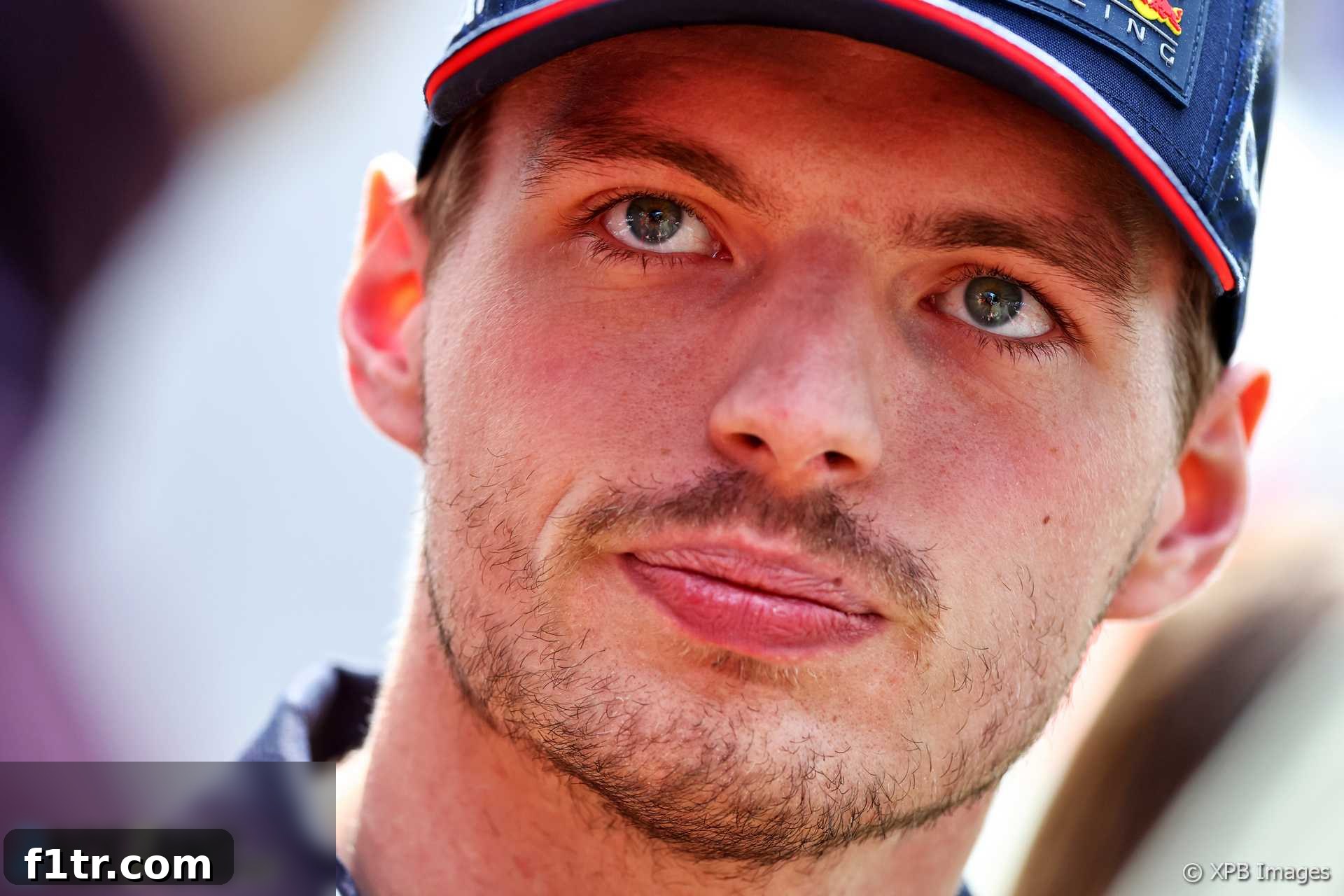
Two-time Formula 1 World Champion Max Verstappen has issued a stark warning regarding the future of the sport’s experimental race weekend formats. The Red Bull Racing driver suggested that an overabundance of changes to the established Grand Prix structure could ultimately lead him to reconsider his commitment to Formula 1, raising questions about driver satisfaction amidst the sport’s ongoing pursuit of enhanced entertainment.
Formula 1 introduced its sprint race format in 2021, a concept designed to inject more competitive action into race weekends. Initially implemented at three select rounds, the calendar for the upcoming season sees a significant expansion, with six of the 23 championship events now scheduled to feature sprint races. This strategic increase underscores F1’s desire to broaden its appeal and offer fans more high-stakes racing across the weekend.
The sport’s leadership is not resting on its laurels, actively exploring further modifications to the sprint format. Discussions are currently underway regarding potential changes that could be introduced as early as the first sprint weekend of the season in Baku, just weeks away. Haas F1 team principal Guenther Steiner recently confirmed these deliberations, indicating that Formula 1 is contemplating the addition of a dedicated qualifying session for the sprint race. This adjustment would aim to provide clearer separation and increased significance for the sprint event, potentially addressing some of the criticisms leveled against the current intertwined format.
This push for format evolution aligns with F1 CEO Stefano Domenicali’s broader vision for the sport. Domenicali has consistently articulated a desire to reduce the amount of free practice time available to teams and drivers over a Grand Prix weekend, advocating instead for an increase in the number of competitive sessions. The rationale behind this approach is rooted in the belief that more meaningful racing action translates to greater spectacle and fan engagement. However, this philosophy stands in direct contrast to the preferences of key figures like Max Verstappen, who has consistently expressed a strong affinity for the traditional Grand Prix weekend structure.
Verstappen articulated his preference unequivocally in an interview with Portuguese television channel Sport TV, stating, “I’m happy with just the main race. I think that’s way better for the excitement.” His comments highlight a fundamental tension within Formula 1: the balance between preserving the sport’s historic format, cherished by many purists and drivers, and innovating to attract new audiences and maximize commercial opportunities. For Verstappen, the sanctity and singular focus of the Sunday Grand Prix are paramount to the sport’s appeal and inherent excitement.
The sentiment from the reigning world champion extended beyond mere preference, venturing into a cautious warning about his future involvement in the sport. “I naturally, of course, hope that there won’t be too many changes otherwise I won’t be around for too long,” Verstappen added, sending ripples through the Formula 1 community. This statement is particularly significant given his status as one of the sport’s most dominant and popular figures. While it might be interpreted as a strong negotiating stance, it also reflects a deeper concern among some drivers that the core essence of Formula 1 could be diluted by an relentless pursuit of format experimentation.
Verstappen’s vocal opposition to the sprint race format is not a recent development. The two-time world champion has been a consistent critic since its inception. As early as last year, he made his feelings clear, stating, “I’m not a fan of the sprint. It is what it is. Some like it, some don’t.” His argument often centers on the idea that sprint races introduce unnecessary risk, can compromise the strategy and excitement of the main Grand Prix, and diminish the unique prestige associated with a full-length Sunday race and its traditional qualifying build-up. For drivers, the limited practice time available in sprint weekends also poses a significant challenge for fine-tuning car setups, adding another layer of pressure and potential for error.
The implications of Verstappen’s comments are amplified by his current contractual situation. Ahead of the 2022 season, he signed a long-term contract extension with Red Bull Racing, a deal that binds him to the team until the end of the 2028 season. Such a lengthy commitment is rare in Formula 1 and underscores his value to Red Bull. His recent remarks, therefore, are unlikely to be taken lightly by the sport’s governing bodies or team principals. A threat, even a veiled one, from a driver of Verstappen’s caliber carries significant weight and could influence future decisions regarding the sport’s structural evolution.
While Formula 1 is clearly evaluating changes to its sprint format, no definitive decisions have been finalized. The sport faces the delicate task of balancing the desires of its commercial rights holders and new fan demographics with the established traditions and the preferences of its key stakeholders, including its star drivers. Christian Horner, Verstappen’s team principal at Red Bull, echoed the sentiment for refinement, stating today that F1 needs to “tidy up the format for the sprint races coming up” to make them “a bit more dynamic.” Horner’s comments suggest a recognition within the teams that while the sprint concept might have potential, its current iteration requires careful revision to maximize its impact without detracting from the main event.
“I know that the sporting director has been working hard on that and hopefully we can get that finalised,” Horner added, signaling that discussions are advanced and a refined sprint format could indeed be on the horizon. The goal for many, including team principals, is to create a sprint weekend that offers genuine excitement and competitive racing without feeling contrived or undermining the prestige of the traditional Sunday Grand Prix. The challenge lies in finding a sweet spot that satisfies diverse expectations.
The debate around F1 weekend formats extends beyond just sprint races. The concept of reducing practice sessions speaks to a broader strategy by Formula 1 management to make every session a spectacle. The traditional Friday practice sessions, often used by teams for extensive data gathering and setup experimentation, are perceived by some as less engaging for television audiences. By replacing these with more qualifying-like sessions or additional races, F1 aims to create a continuous narrative of competition throughout the entire weekend, theoretically boosting viewership and commercial interest.
However, this shift has significant implications for teams and drivers. Less practice time means less opportunity to dial in the car, potentially leading to more unpredictable outcomes but also increasing the chances of mistakes or sub-optimal performance. For younger drivers, practice sessions are invaluable for gaining experience and understanding the nuances of an F1 car and track. Reducing these opportunities could impact driver development. Furthermore, the increased competitive load puts additional strain on mechanics and engineers, who must prepare cars for multiple high-intensity sessions in a shorter timeframe, all while operating under stringent budget caps. The mental and physical toll on drivers also becomes a factor, as they are constantly under pressure to perform in competitive environments.
The Evolving Landscape of Formula 1: Tradition vs. Innovation
The tension between maintaining Formula 1’s rich heritage and adapting to a rapidly changing global sports landscape is a constant undercurrent in these discussions. For decades, the Grand Prix weekend followed a largely consistent structure, culminating in the revered Sunday race. This format built anticipation and emphasized the pinnacle event. The introduction of sprint races, and the ongoing proposals for further changes, represent a significant departure from this tradition, driven largely by commercial interests seeking to diversify revenue streams and broaden the sport’s demographic appeal. While some fans embrace the added racing, others lament what they see as a move away from the purity and prestige of Formula 1.
Finding a harmonious balance remains the ultimate challenge. The sport needs to innovate to stay relevant and attract new generations of fans, but it also risks alienating its loyal fanbase and, critically, its star performers if changes are perceived as detrimental to the sport’s integrity or the drivers’ enjoyment. Max Verstappen’s recent comments serve as a powerful reminder that the drivers, as the protagonists of the sport, have a vital voice in shaping its future. Their satisfaction and enthusiasm are integral to Formula 1’s continued success and appeal, making their input on format changes a critical component of any future decision-making process.
2023 Australian Grand Prix: Related Discussions and Insights
The discussions surrounding F1’s format changes often intersect with specific event experiences, such as the Australian Grand Prix. Insights from past events help illustrate the broader context of how rule changes and format shifts impact the racing, driver sentiment, and fan experience. The continued evolution of the sport means that every Grand Prix weekend becomes a potential proving ground for new ideas and a source of valuable feedback for F1’s leadership.
- Australian GP to forbid fans from entering track at end of this year’s race
- I only missed one chance to score points this year – Albon
- Formula 1’s stewards should listen to drivers less, not more
- Mercedes unsure whether gains seen in Melbourne were ‘track-specific’
- Why Ferrari saw a ‘real step forward in pure performance’ in point-less Australian GP
Browse all 2023 Australian Grand Prix articles