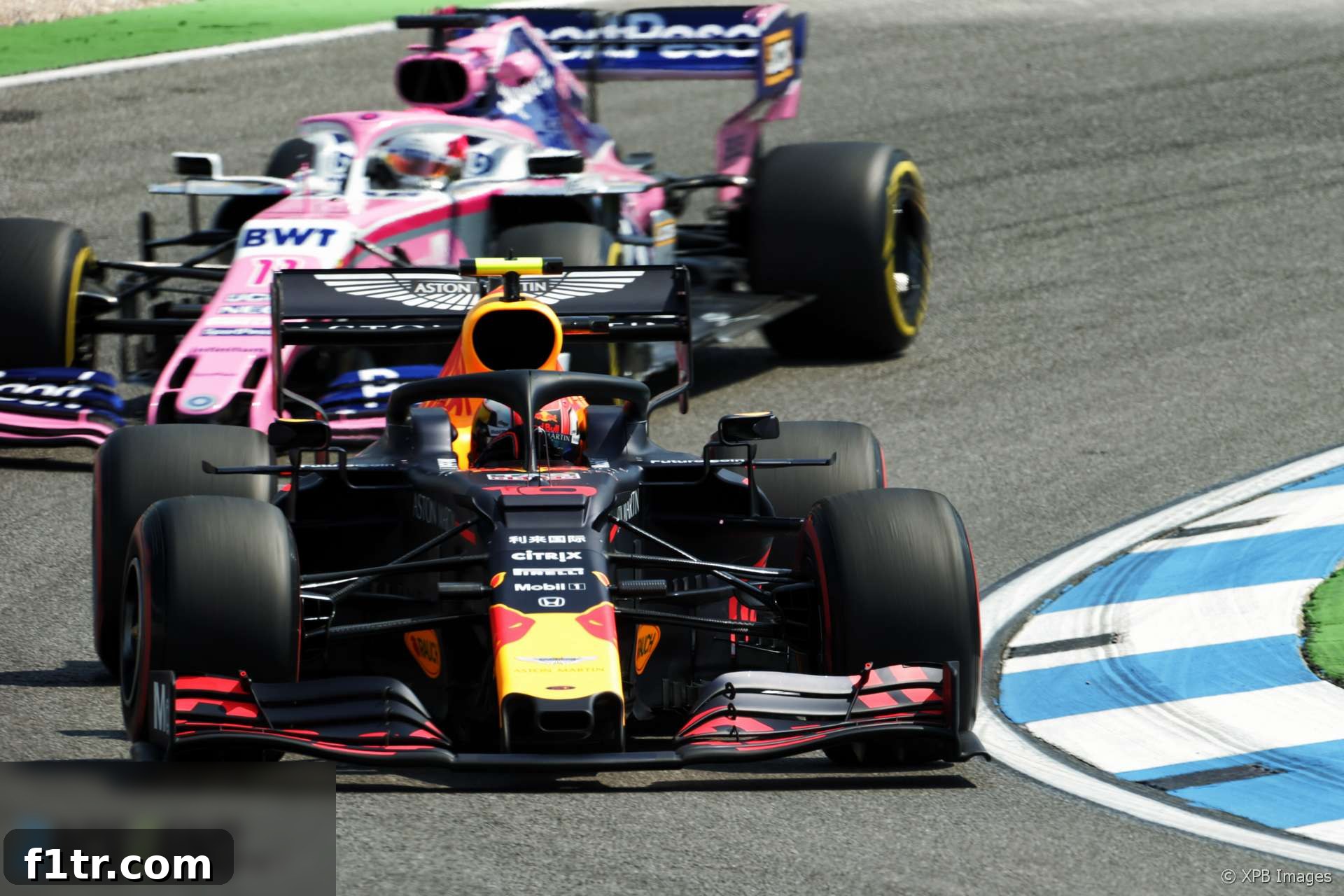
Pierre Gasly, a name synonymous with resilience and raw talent in the competitive world of Formula 1, has openly shared his profound sense of rediscovery following his return to Toro Rosso (now known as AlphaTauri, and more recently, RB Formula One Team) after a challenging stint with Red Bull Racing. His candid reflections highlight a crucial period in his burgeoning F1 career, marked by immense pressure and a subsequent triumphant comeback that firmly re-established his credentials as a top-tier driver capable of fighting at the sharp end of the grid.
Advert | Become a Supporter & go ad-free
Gasly’s highly anticipated promotion to Red Bull Racing at the start of the 2019 Formula 1 season was met with considerable excitement. However, his tenure alongside the formidable Max Verstappen proved to be a trial by fire. He completed just twelve races for the senior team before a mid-season swap saw him revert to Toro Rosso, a team where he had previously showcased impressive potential. Reflecting on his time driving the RB15, Gasly admitted he struggled to extract the car’s maximum performance, leading to a period of self-doubt and underperformance relative to his established capabilities.
The transition back to Toro Rosso, initiated after the Hungarian Grand Prix, provided Gasly with an immediate shift in perspective and performance. “As a driver, you never forget how to drive within a couple of weeks, a couple of months,” Gasly stated in an interview leading up to the Brazilian Grand Prix. He emphasized the brevity of the period between his Red Bull departure and his return to Toro Rosso, underscoring that his driving abilities hadn’t simply vanished. “Between Budapest and Spa, I think there were four weeks. You don’t learn to drive again within four weeks.” This sentiment powerfully asserts that his struggles at Red Bull were not a fundamental flaw in his driving, but rather a complex interplay of factors that hindered his ability to perform at his peak.
To further contextualize his argument, Gasly referenced his impressive junior career and early Formula 1 successes. His track record speaks volumes: victories in Formula Renault 2.0, a runner-up finish in Formula Renault 3.5, clinching the GP2 Series title, and another second-place finish in Super Formula. Furthermore, his rookie year with Toro Rosso in 2018 demonstrated flashes of brilliance, including a memorable fourth-place finish in Bahrain. “In my career, it’s been only these six months that we were not competitive,” he asserted, highlighting the stark contrast between his consistent high performance across various categories and the challenging spell at Red Bull. This historical perspective reinforces the idea that his talent was always present, merely obscured during his time with the senior team.
This challenging period at Red Bull led to a significant realization for Gasly regarding the intricate nature of motorsport. He shared, “That’s why I said I realised how much of a team sport Formula 1 is over the last couple of months.” This statement is particularly insightful, suggesting that his struggles were not solely about raw driving skill but rather about the synergy and support within the team environment. The demanding nature of Red Bull Racing, with its intense focus on challenging for championships, coupled with the pressure of matching a driver of Verstappen’s caliber, might have created an environment where Gasly found it difficult to thrive. The more nurturing and familiar atmosphere at Toro Rosso, where expectations might have been slightly different, seemingly allowed him to reset and rediscover his rhythm.
The underlying sentiment from Gasly was one of regret that the partnership with Red Bull didn’t yield the expected results. He felt that the team, including himself, was “far from the full potential that we had.” This implies a belief that both driver and team had the capability to achieve much more, but for various reasons – perhaps related to car setup, communication, or adapting to a new high-pressure environment – they couldn’t unlock that potential. “It’s just a shame that we didn’t make this work because I think we had, if we wanted, all the things we needed to make it work.” This suggests a degree of frustration, a feeling that a significant opportunity was missed despite the inherent talent and resources available.
However, the disappointment of his Red Bull tenure has not diminished Gasly’s ultimate ambition. Quite the opposite, his experience at the beginning of the year, although difficult, has reaffirmed his desire to compete at the very pinnacle of Formula 1. His career-best second-place finish behind Max Verstappen’s Red Bull at Interlagos during the Brazilian Grand Prix of 2019 stands as a powerful testament to his renewed form and unwavering ambition. This podium finish, secured through a thrilling last-lap battle, was not just a personal triumph but a clear message to the paddock: Pierre Gasly belongs at the front.
The contrast in his performance between the two teams was stark and evident. “As a driver, you always want to be in the fastest car possible and fight as high up on the grid possible,” he articulated, expressing the fundamental desire of any competitive racing driver. Yet, he observed a critical difference in his effectiveness. “But in Red Bull, it feels like we were 80 percent of the potential we had most of the races, for different reasons.” This “80 percent” figure is telling, indicating a significant margin where performance could have been improved, hinting at a lack of harmony between driver and machine, or perhaps even the team’s approach to optimizing his specific driving style. The RB15, known to be a particularly pointy and challenging car to drive, especially on the limit, seemed to align more naturally with Verstappen’s aggressive style, leaving Gasly struggling to find his rhythm.
Upon his return to Toro Rosso, the change was almost immediate and palpable. “Since I joined Toro Rosso, this has changed a bit and every weekend, I feel I’m able to put stronger performances. This is of course more enjoyable. But ultimately as a driver, you always want to be the fastest car possible.” This profound shift underscores the importance of a driver feeling comfortable and confident within their environment. At Toro Rosso, Gasly found a car that, while not as fast as the Red Bull, allowed him to drive instinctively and extract its maximum potential. The reduced pressure, familiar team members, and a car that perhaps better suited his driving style all contributed to this resurgence. This renewed sense of comfort translated directly into stronger, more consistent performances, culminating in that memorable podium in Brazil.
The 2019 season ultimately became a narrative of redemption for Pierre Gasly. His journey from the intense scrutiny and underperformance at Red Bull to the joyful exuberance of a podium finish with Toro Rosso encapsulated the volatile nature of Formula 1. It showcased how a driver’s environment, team support, and mental state can profoundly impact their on-track results, even for someone with an undeniable wealth of talent. His experience serves as a powerful reminder that raw speed is just one component of success in F1; the intricate dance between driver, car, and team is equally, if not more, critical.
Looking ahead, Gasly’s aspirations remain firmly set on competing for victories and championships. His time at Toro Rosso, particularly the back half of the 2019 season, provided irrefutable proof of his capabilities when placed in a supportive and suitable setting. While the door to Red Bull Racing may have closed for him for a significant period, his strong performances subsequently with AlphaTauri (including a sensational victory at the 2020 Italian Grand Prix) have continued to affirm his status as one of Formula 1’s most exciting talents. The lessons learned from 2019 have undoubtedly forged a stronger, more resilient driver, ready to seize future opportunities at the highest level of motorsport.
Advert | Become a RaceFans supporter andgo ad-free
2019 F1 season
- Crying in the Melbourne car park at 2019 grand prix was my career low – Ocon
- McLaren Racing reports reduced £71 million loss in 2019
- Kvyat: Hockenheim podium last year was “my biggest achievement” so far
- How the FIA’s new encrypted fuel flow meter targets Ferrari’s suspected ‘aliasing’ trick
- “He smashed my office door”: 23 must-see moments from ‘Drive to Survive’ season two
Browse all 2019 F1 season articles