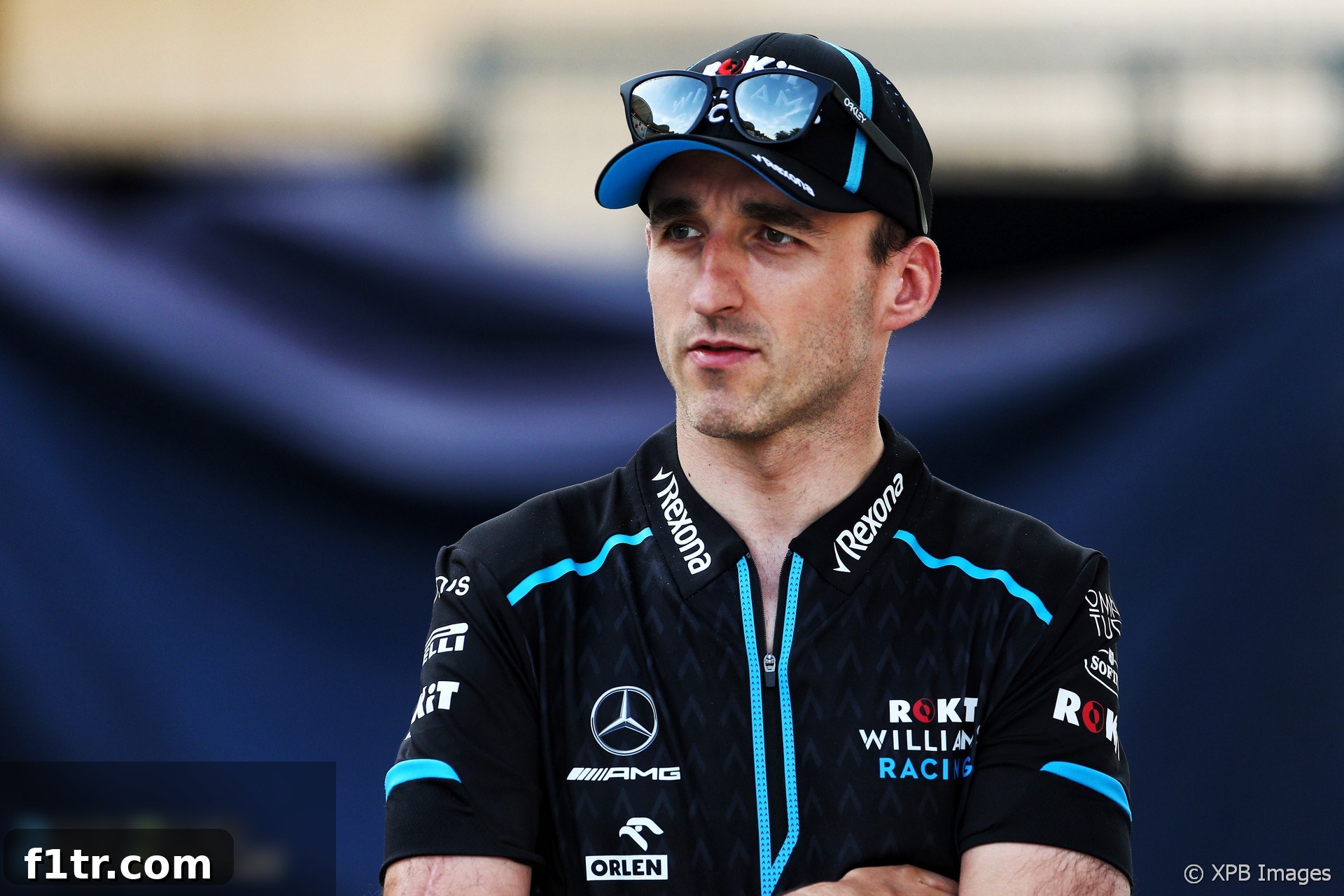
The highly anticipated return of Robert Kubica to Formula 1 in 2019 was a story of immense courage and determination. After a severe rallying accident that sidelined him for years, his comeback with Williams Racing was met with both excitement and trepidation. However, the season quickly proved to be a harsh reality check, particularly for Kubica, as the Williams FW42 chassis was fundamentally flawed. One of the most persistent and debilitating issues, as Kubica himself highlighted following the 2019 Bahrain Grand Prix, was a critical lack of grip – a problem he deemed impossible to remedy, even through the most radical of engineering solutions.
Kubica’s comeback was set against the backdrop of Williams’s most challenging period in its illustrious history. The team arrived late to pre-season testing, their car still unready, and the FW42 proved to be an underdeveloped machine severely lacking in performance and burdened by a shortage of crucial spare parts. This grim reality meant that Kubica, a driver renowned for his technical feedback and sensitivity, was thrust into a predicament where his skills were severely hampered by the machinery beneath him. The Bahrain Grand Prix offered a stark illustration of these profound difficulties, where Kubica was the sole driver on the grid to start the race on the medium compound tyres, while the rest of the field opted for the softer, grippier option. His assessment of the situation was direct and unambiguous: he “just had no grip.”
Advert | Become a Supporter & go ad-ad-free
The early stages of any Grand Prix are often characterized by chaos and improvisation, especially for drivers starting further down the order. Kubica acknowledged that the opening laps in Bahrain provided a brief illusion of competitiveness. “It looked like in the beginning of the race I could somehow hide [it],” he explained. “Opening laps are more about improvisation, especially when you are far behind, it’s survival.” He suggested that his initial feeling for the car and the challenging windy conditions might have given him a slight edge, allowing him to navigate the initial melee. However, once the field settled into a rhythm and drivers established their true pace, the inherent limitations of his car became painfully apparent. “Probably I just got better feeling with the wind and stuff like this but once everything was settled everybody took their own pace and I knew I didn’t have it.”
From that point onwards, Kubica’s race transformed into a desperate battle for survival, a testament to his enduring fighting spirit rather than any genuine performance potential. He articulated the profound struggle: “So it was kind of survival and trying to bring it home. I was so slow in some corners to try to protect the rear tyres but I was still sliding and still overheating them so I just really struggled with the grip.” This vivid description paints a picture of a driver caught in a vicious cycle. The very act of attempting to conserve tyre life by driving cautiously led to further complications. By slowing down, the tyres weren’t operating in their optimal temperature window, causing them to slide more, which in turn generated excessive heat, paradoxically accelerating degradation and reducing grip even further. The windy conditions, while challenging for all competitors, simply amplified an already critical problem for the unstable Williams. “Everybody was struggling, definitely, with these windy conditions. But when you have no stability in steady conditions if you add the wind and used tyres then the game is over for you,” Kubica stated, underlining the insurmountable nature of the challenge.
Kubica further elaborated on this detrimental feedback loop, explaining how the team was caught in a “vicious cycle of poor tyre performance.” The decision to start on harder compound tyres, often a strategic choice for longevity, became a detrimental factor for the Williams FW42. “I think we could [have gone] longer but I started degrading quite a lot also in the first stint in order to stay in touch with George [Russell],” he noted, referring to his teammate. The fundamental issue lay in the car’s inability to generate and maintain optimal tyre temperature. “When you are starting on harder tyres you have worse warm-up so you slide more.” This initial lack of grip and increased sliding had a cascading effect, initiating the self-perpetuating problem: “By sliding more you create more temperature, by creating more temperature you have less grip, so you slide even more and it is a snowball.” This “snowball effect” meant that any attempt to manage tyre wear or gain performance was thwarted by the car’s inherent instability, leading to an endless spiral of diminished grip and overheating, ultimately compromising both pace and durability.
The severity of the situation, according to Kubica, was such that the car’s performance was overwhelmingly “dominated” by this profound lack of grip. This wasn’t a problem that could be solved with minor adjustments or clever strategies; it was deeply embedded in the car’s design and aerodynamic characteristics. Kubica’s frustration was palpable as he conveyed the futility of even the most extreme theoretical solutions. “You [could] do whatever you want: you could put rear tyres on the front, it would be dominated by the effect we are having.” This hyperbolic statement powerfully illustrates the extent to which the car’s fundamental deficiency overshadowed every other aspect of its performance. It wasn’t about finding the perfect setup or a magical tire compound; the problem was structural and overwhelming. The intricate balance required in Formula 1, where aerodynamics, mechanical grip, and tyre performance must work in perfect harmony, was fundamentally broken for the FW42.
For a driver of Kubica’s caliber, with his extensive experience and analytical mind, this realization must have been incredibly disheartening. He acknowledged the role of a driver’s tools in fine-tuning a car, but stressed their limitations in the face of such a monumental flaw. “I can only try to help it with the tools but it’s so big that it’s impossible to turn it around.” This sentiment encapsulates the helplessness faced by both drivers and engineers when a car is born with such inherent weaknesses. While driver input and setup changes can optimize performance within a certain window, they cannot fundamentally alter the car’s core characteristics when they are so far off the competitive pace. The FW42’s struggle with grip meant that it was constantly operating outside its optimal performance envelope, regardless of the driver’s efforts or the team’s setup adjustments.
The 2019 season would continue to be an arduous journey for Williams and Kubica, with similar stories emerging from various race weekends. The issues highlighted in Bahrain were not isolated incidents but rather symptomatic of a deeper, systemic problem with the car’s design and development process. While George Russell, his talented young teammate, managed to extract slightly more performance at times, he too publicly acknowledged the car’s severe limitations, reinforcing that the problem was with the machinery, not the drivers. Kubica’s detailed feedback, though often disheartening, was crucial for the team’s understanding and future development, even if immediate improvements were out of reach. His candid explanations provided invaluable insight into the sheer difficulty of competing at the pinnacle of motorsport with a car so fundamentally compromised in its most basic requirement: grip.
In conclusion, Robert Kubica’s reflections on the 2019 Bahrain Grand Prix paint a vivid and sobering picture of the challenges faced by Williams Racing and himself during his F1 comeback. The profound and incurable lack of grip in the FW42 created a “snowball effect” of tyre degradation and instability, transforming races into mere exercises in survival. His insights underscore how fundamental aerodynamic and mechanical issues can render even the most sophisticated engineering adjustments futile, highlighting the immense complexity and unforgiving nature of Formula 1. Kubica’s honesty about the insurmountable nature of the car’s problems serves as a powerful reminder of the delicate balance required for success in motorsport and the sheer resilience demanded of those who compete against such overwhelming odds.
Advert | Become a RaceFans supporter andgo ad-ad-free
2019 F1 season
- Crying in the Melbourne car park at 2019 grand prix was my career low – Ocon
- McLaren Racing reports reduced £71 million loss in 2019
- Kvyat: Hockenheim podium last year was “my biggest achievement” so far
- How the FIA’s new encrypted fuel flow meter targets Ferrari’s suspected ‘aliasing’ trick
- “He smashed my office door”: 23 must-see moments from ‘Drive to Survive’ season two
Browse all 2019 F1 season articles