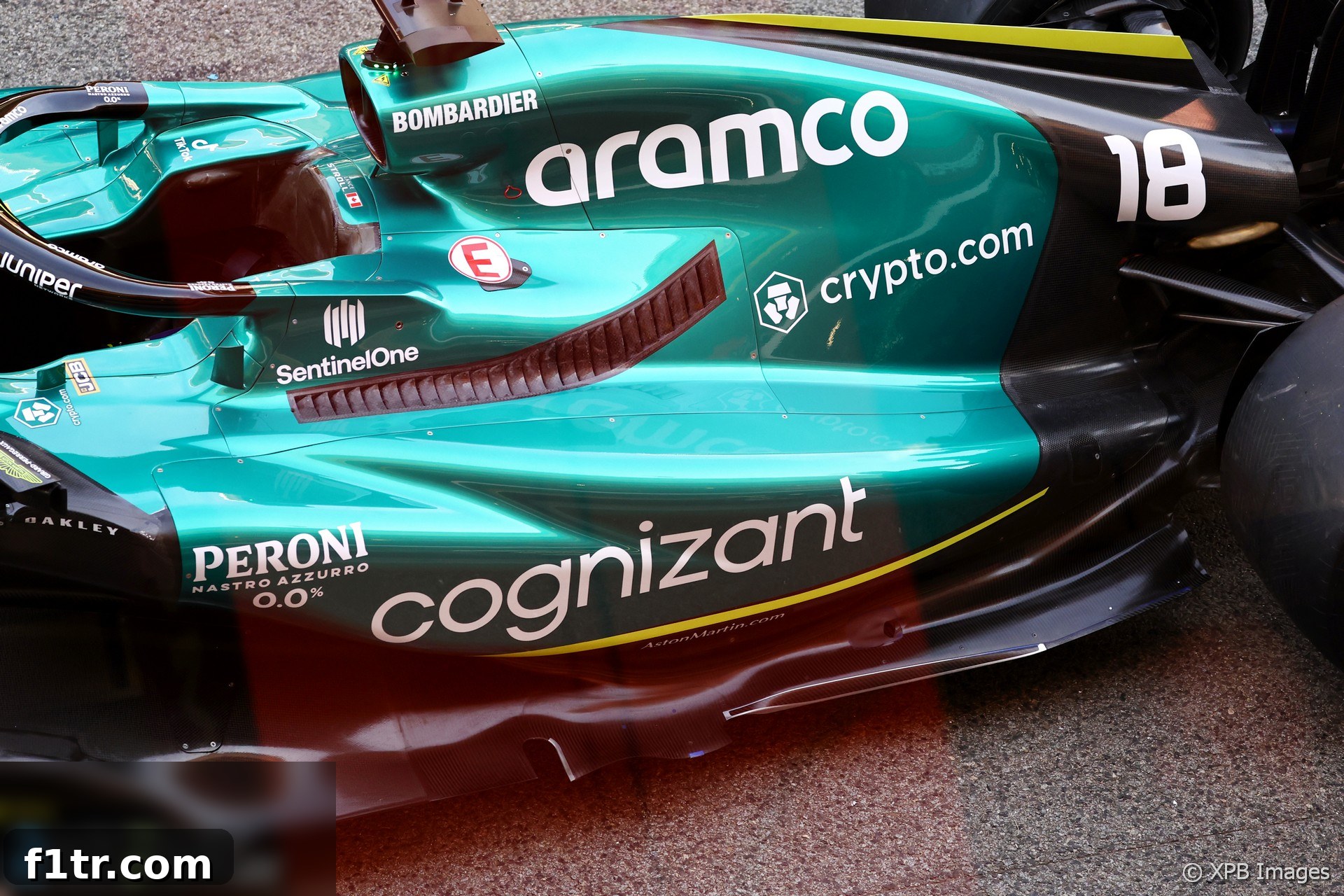
Formula 1 often witnesses teams drawing inspiration from successful concepts, but few moments capture the motorsport world’s attention quite like Aston Martin’s significant upgrade package for its AMR22 challenger, unveiled ahead of the Spanish Grand Prix. The overhaul was immediately striking, bearing an undeniable and potent resemblance to the dominant Red Bull RB18, leading many to affectionately — or controversially — dub it the ‘green Red Bull’. This drastic mid-season evolution highlights the fierce competition in F1’s current regulatory era and Aston Martin’s determined effort to climb the competitive ladder.
Aston Martin’s AMR22 Upgrade: Unveiling the ‘Green Red Bull’ at the Spanish Grand Prix
The core of Aston Martin’s revised design, and the source of most discussion, lies in its completely re-sculpted sidepods. Gone are the original, more conventional sidepod structures, replaced by a dramatically undercut profile that mirrors the philosophy pioneered by Red Bull Racing’s Adrian Newey and his design team. This aggressive undercut creates a larger surface area on the car’s floor, maximizing the ground effect that is central to the 2022 regulations. The aim is to generate superior downforce from the underbody, improving grip and stability, particularly through high-speed corners, while minimizing drag. This design choice speaks volumes about Aston Martin’s urgency to rectify its early-season struggles and tap into a proven aerodynamic blueprint.
A Season of Struggle and Strategic Evolution
The 2022 Formula 1 season marked a radical shift in technical regulations, ushering in a new era focused on ground effect aerodynamics. Aston Martin was among the first teams to present and run a genuine 2022 specification car, introducing the AMR22 on February 10th. However, the team’s initial interpretation of the new rules proved challenging. Throughout the opening races, the AMR22 struggled with various issues, most notably the dreaded ‘porpoising’ – an aerodynamic phenomenon causing the car to bounce violently at high speeds. This instability severely impacted driver confidence and the car’s overall performance, often leaving the team fighting at the back of the midfield.
The team’s struggle for pace was evident in their qualifying results; despite ten attempts in the early part of the season, the AMR22 only managed to reach the final Q3 session twice. This performance deficit, coupled with a lack of consistent points finishes, placed immense pressure on the Silverstone-based squad. Team principal Mike Krack had previously hinted at a significant upgrade package, expressing confidence that once introduced, the team would be “in better shape.” The Spanish Grand Prix, with its familiar Circuit de Catalunya layout offering a clear benchmark, was strategically chosen as the perfect venue for this crucial debut.
The Red Bull Inspiration: A Deep Dive into Aerodynamic Philosophy
Red Bull’s RB18 debuted its distinctive sidepod design during a pre-season filming day at Silverstone, just prior to official testing at the Circuit de Catalunya. Its revolutionary sidepods quickly became a focal point of discussion among engineers and fans alike. The steep undercut and tightly packaged components around the power unit allowed for a more expansive and efficient airflow path towards the rear of the car, particularly benefiting the diffuser and rear wing. This design choice contributed significantly to the RB18’s impressive straight-line speed and excellent balance, making it a formidable contender from the outset.
Aston Martin’s adoption of such a visibly similar concept immediately sparked debate regarding the legality and ethics of ‘copying’ in Formula 1. While teams are permitted to develop their own non-listed parts, the extent of the visual similarity led to questions. The FIA confirmed that they had investigated the new AMR22 design and were satisfied that it was developed independently, perhaps in parallel with Red Bull, or through legitimate reverse engineering based on publicly available data and imagery. This ruling underscores the fine line teams walk between inspiration and imitation, especially in a sport where aerodynamic innovation is paramount.
Echoes of the Past: The ‘Pink Mercedes’ Controversy
This isn’t the first time an Aston Martin-branded team has found itself at the center of a ‘copying’ controversy. Following Lawrence Stroll’s takeover of Force India in 2018, which subsequently became Racing Point, the team developed a close design relationship with its power unit supplier, Mercedes. In the 2020 season, their Racing Point RP20 car was so closely modeled on the world championship-winning Mercedes W10 that rivals quickly dubbed it the ‘pink Mercedes’.
The resemblance was not merely superficial; it led to a formal protest from competitors, specifically Renault. The FIA investigated and ultimately found Racing Point guilty of breaching sporting regulations concerning the design of its rear brake ducts. While the brake ducts themselves were not a ‘listed part’ that had to be designed by the team, the FIA ruled that Racing Point had effectively used intellectual property from Mercedes to design them, leading to a significant fine and a 15-point deduction in the Constructors’ Championship. This historical precedent adds another layer of intrigue to the current ‘green Red Bull’ saga, although the FIA’s initial stance on the AMR22’s legality appears to be more lenient.
Anticipating the Impact: A Turning Point for Aston Martin?
The introduction of such a comprehensive upgrade package mid-season represents a substantial investment of resources, both financial and technical, for Aston Martin. It signals the team’s unwavering ambition and commitment under Lawrence Stroll’s leadership to transform Aston Martin into a front-running F1 outfit. The new sidepod design, in theory, should provide a more aerodynamically efficient platform, potentially mitigating the porpoising issues and offering a more stable base for drivers Sebastian Vettel and Lance Stroll to extract maximum performance.
However, F1 car development is rarely as simple as copying a successful design. Integrating new aerodynamic concepts requires meticulous fine-tuning, and often, an upgrade package can introduce new problems even as it solves old ones. The team will need to thoroughly understand how the new airflow structures interact with the rest of the car, including the floor, diffuser, and rear wing, to fully unlock its potential. The effectiveness of the upgrade will be crucial for Aston Martin’s championship aspirations, as they aim to move away from the back of the grid and consistently challenge for points. A positive performance turnaround at the Spanish Grand Prix and subsequent races could reignite their season and set the stage for stronger future developments.
The ‘green Red Bull’ upgrade is more than just a visual change; it’s a statement of intent from Aston Martin. It highlights the brutal efficiency required in modern Formula 1 car development and the constant quest for marginal gains that can define a season. Whether this bold move will translate into a genuine performance boost and propel Aston Martin up the grid remains to be seen, but it has certainly injected an extra layer of drama and intrigue into the ongoing 2022 Formula 1 narrative.
Related Articles: 2022 Spanish Grand Prix Insights
- Q&A: Kubica ‘shocked’ by ‘completely different’ Alfa Romeo in Spain
- How heat and traffic trouble left F1 fans fuming after the Spanish Grand Prix
- Mercedes not yet certain their porpoising problem has “disappeared”
- Sticking to budget cap “pretty much impossible” due to rising costs – McLaren
- Ricciardo hoping to find an explanation for Spanish GP pace deficit to Norris
Browse all 2022 Spanish Grand Prix articles for more updates.