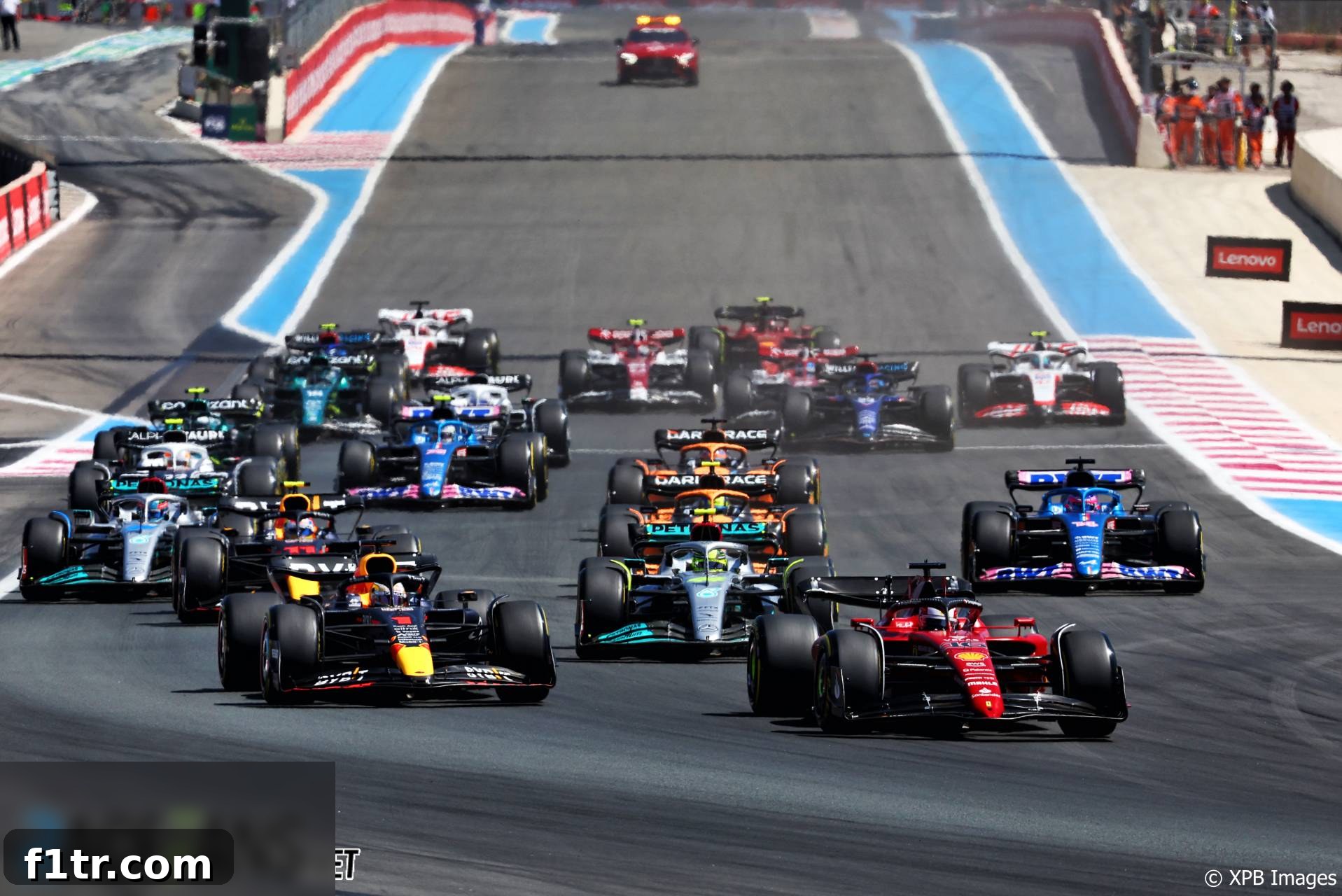
The iconic French Grand Prix will not feature on the highly anticipated 2023 Formula 1 calendar, marking a significant change for the sport. While this news may disappoint many motorsport enthusiasts, the event’s promoters remain optimistic, expressing strong hopes for its potential return in subsequent seasons, possibly through an innovative rotational system.
Advert | Become a Supporter & Go Ad-Free
A Temporary Farewell: French Grand Prix’s 2023 Absence Explained
The event, held at the historic Paul Ricard circuit in Le Castellet, made a celebrated return to the Formula 1 calendar in 2018 after a considerable 28-year hiatus. Its comeback was met with excitement, re-establishing France’s connection to the pinnacle of motorsport. However, the Grand Prix’s position on the upcoming year’s schedule has been under intense scrutiny and doubt for several months. This uncertainty stems primarily from Formula 1’s aggressive global expansion strategy, which has seen the addition of new marquee races. The 2023 calendar will welcome fresh events in dynamic locations such as Las Vegas and Qatar, while discussions are also well underway for a potential new Grand Prix in South Africa, further intensifying competition for limited slots.
Formula 1’s Vision: Investment and Rotational Future
Formula 1 CEO, Stefano Domenicali, recently engaged in extensive discussions with various media outlets, including RaceFans, shedding light on the evolving landscape of the 2023 schedule and beyond. During these conversations, Domenicali clearly indicated that the French Grand Prix would regrettably not be a part of next year’s racing calendar. He emphasized F1’s forward-looking approach, highlighting the sport’s increasing expectation for host nations and promoters to view Grand Prix events as strategic investments.
“We are actively engaging in dialogue with the French Federation and with the government because, as you know, more and more the future of Formula 1 is intricately linked to promoters who perceive these events as significant investments for their respective countries and communities,” Domenicali stated, underscoring the shift towards a mutually beneficial economic model. “Therefore, these discussions are very transparent and open, aimed at forging a great future together.”
Domenicali also hinted at a revolutionary concept that could reshape how traditional European races are integrated into an expanding global calendar. “As you know, a distinct possibility – perhaps not for next year but certainly for the future – could involve exploring a kind of rotational proposition. This system could effectively enable everyone to maintain a presence within the calendar, because I strongly believe it’s a matter of respect for the heritage and contributions of all stakeholders,” he elaborated, offering a lifeline to circuits that might otherwise be permanently sidelined.
The Promoter’s Response: Acknowledgment and Openness to Rotation
Following Domenicali’s candid remarks, the French Grand Prix promoter promptly issued a statement, acknowledging the Formula 1 president’s comments. “The Formula 1 French Grand Prix takes careful note of the recent statements made by Stefano Domenicali, President of Formula 1, regarding its planned absence from the calendar for the forthcoming 2023 season,” the statement read. This measured response indicated not a resignation, but rather a strategic acceptance of the current situation while looking ahead.
Crucially, the promoter signaled its profound openness to participating in a shared calendar slot arrangement, potentially involving a rotational system with other esteemed races. This progressive stance suggests a willingness to adapt to Formula 1’s evolving demands and commercial realities. Such a system could see the French Grand Prix alternate its appearance on the calendar with other historic European events. Notably, both the prestigious Monaco Grand Prix and the iconic Belgian Grand Prix, held at Spa-Francorchamps, are also in the process of renewing their contracts. Their futures, much like France’s, could be influenced by these emerging rotational models, ensuring the survival of classic venues amidst stiff global competition.
The promoter’s statement further affirmed their ongoing commitment to the sport: “After the resounding success of its 2022 edition, the French Grand Prix, Formula 1, and all the dedicated stakeholders involved in the grand prix continue to work collaboratively on securing the enduring presence of this event in the calendar in the years to come, with particular focus on establishing an equitable rotation system.” This proactive approach highlights a dedication to finding sustainable solutions for the French Grand Prix’s long-term future in Formula 1.
In a gesture of appreciation, the Formula 1 French Grand Prix also extended its gratitude: “The Formula 1 French Grand Prix would like to sincerely thank its loyal clients, all the administrators of its Grand Prix, the dedicated team at Circuit Paul Ricard, and all its valued partners, for their unwavering support throughout this journey.”
The Paul Ricard Circuit: A Brief History and Future Prospects
The Circuit Paul Ricard, located near Le Castellet in the south of France, has a rich history in Formula 1. Opened in 1970, it quickly became a staple on the F1 calendar, known for its innovative safety features and extensive run-off areas. While some purists have criticized its modern iteration for being too sterile or lacking the “classic” feel of older tracks, it has consistently offered excellent facilities and weather conditions. Its 2018 return after nearly three decades was a significant moment for French motorsport, bringing Grand Prix racing back to its roots.
However, Paul Ricard has faced challenges, including criticisms regarding traffic management and a perceived lack of atmosphere compared to other venues. These factors, combined with potentially higher hosting fees and competition from emerging markets, likely played a role in F1’s decision to temporarily remove it from the 2023 schedule. Yet, its modern infrastructure and capacity make it a viable candidate for a rotational system, allowing it to share the spotlight with other classic tracks and ensure its place in F1’s future, even if not annually.
The Expanding F1 Calendar: Commercial Ambitions vs. Tradition
Formula 1’s calendar has been steadily expanding, driven by Liberty Media’s commercial ambitions to grow the sport globally. New markets, particularly in the United States and the Middle East, offer lucrative hosting fees and broad appeal, leading to a crowded schedule. This expansion inevitably puts pressure on traditional European venues, many of which have been mainstays of the sport for decades. The debate between securing new, financially rewarding races and preserving the historical essence of F1 by maintaining classic tracks is ongoing.
The concept of a rotational calendar, as hinted by Domenicali, represents a potential compromise. It acknowledges the need for new revenue streams and global reach while attempting to respect the heritage of races like the French, Belgian, and Monaco Grands Prix. This system could allow these cherished events to remain part of the F1 fabric without requiring an unsustainable annual commitment from Formula 1’s ever-growing itinerary. The goal is to strike a delicate balance that satisfies both commercial imperatives and the deep-seated traditions of the sport.
Looking Ahead: What Does This Mean for Other European GPs?
The situation with the French Grand Prix serves as a precedent for other European races currently negotiating their futures. Both the Monaco Grand Prix, a jewel in F1’s crown, and the Belgian Grand Prix, famous for its Spa-Francorchamps circuit, have expiring contracts. Like Paul Ricard, these legendary venues could find themselves subject to similar rotational discussions. While their historical significance is immense, Formula 1’s commercial demands are equally pressing.
A rotational system could be the key to preserving these heritage races. It would ensure that F1 continues to visit these iconic locations, albeit not every year, thus maintaining their connection to the sport without overburdening the calendar or compromising F1’s expansion plans. This strategy would be a testament to Formula 1’s respect for its roots while embracing a more dynamic and globally inclusive future.
Advert | Become a RaceFans supporter andgo ad-free
More on the 2023 F1 Season
- FIA president cleared of alleged interference in two 2023 races
- First week viewing figures for new Drive to Survive season fall again
- Max who? Drive to Survive season six prefers its favourite faces
- RaceFans’ complete 2023 season review
- The F1 drivers who pulled off the 10 biggest charges through the field in 2023
Browse all 2023 F1 season articles