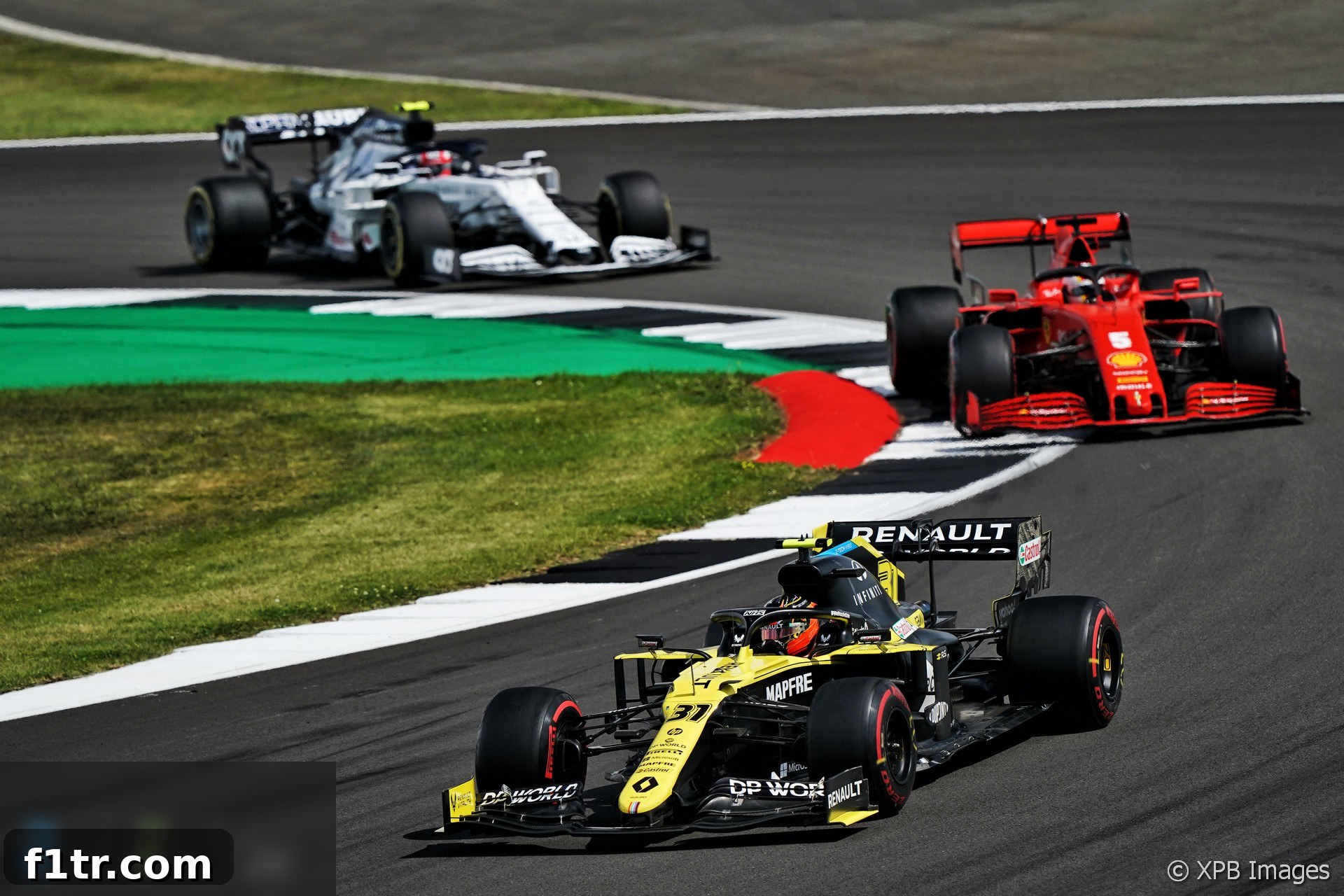
The 2020 British Grand Prix at Silverstone proved to be a pivotal moment for the Renault F1 Team, delivering one of their most impressive performances since their official return to Formula 1 as a constructor in 2016. Amidst a season characterized by unprecedented challenges and fierce competition, Renault’s strong showing provided a much-needed boost, demonstrating the team’s unwavering commitment to progress and their continuous efforts to climb the competitive ladder in the highly demanding world of Formula 1.
Following a dramatic race conclusion marked by late-race punctures affecting several front-running contenders, Daniel Ricciardo masterfully piloted his Renault R.S.20 to a commendable fourth-place finish. His teammate, Esteban Ocon, was not far behind, securing a valuable sixth position. This double points finish was a significant achievement, elevating the team’s morale and providing tangible evidence of their improving pace and strategic acumen on one of F1’s most iconic tracks.
Cyril Abiteboul, then Managing Director of the Renault F1 Team, was effusive in his praise for the team’s exceptional performance, acknowledging it as a benchmark moment for their renewed F1 journey. “It was a very good result from a team perspective and one of our strongest since our return to Formula 1,” Abiteboul stated, reflecting on the magnitude of the accomplishment. This result surpassed their previous best of fourth and fifth places achieved at the Italian Grand Prix in the preceding year, signaling a clear upward trend in their competitive capabilities and overall team development.
While acknowledging the role of fortune in the final standings, Abiteboul was quick to emphasize that the underlying performance was a testament to the team’s hard work throughout the entire weekend. “Clearly, there was a bit of help towards the end to gain positions, but that should not take away from the very strong performance that the team has put in throughout the weekend,” he added. This balanced perspective underscored the confidence within the team, recognizing that while external factors can influence outcomes, the true foundation of success in Formula 1 is built upon consistent, strong execution and a well-developed car.
The path to this success at Silverstone had not been without its hurdles for the Renault F1 Team. The early stages of the 2020 F1 season presented a particularly challenging scenario, especially concerning reliability issues. The team faced a frustrating setback in consecutive races in Austria, where they encountered recurring radiator problems. These early-season mechanical failures raised significant concerns and put immense pressure on the engineering departments to swiftly identify and rectify the issues, highlighting the relentless nature of F1 development.
Abiteboul expressed immense satisfaction with the team’s ability to overcome these initial technical difficulties, highlighting the crucial improvements in car reliability. “We had strong reliability and that’s so important when we have eventful races like this one,” he remarked. The British Grand Prix itself was a demanding race, testing not just driver skill but also the resilience and endurance of the machinery. The fact that both Renault cars finished strongly, particularly after previous reliability woes, was a significant validation of the team’s concerted efforts to bolster their mechanical integrity and engineering processes.
Advert | Become a Supporter & go ad-free
The Silverstone circuit, known for its high-speed corners, sweeping curves, and demanding layout, served as an excellent proving ground for the Renault R.S.20. Abiteboul noted that the circuit’s characteristics provided valuable insights into the car’s inherent strengths and weaknesses, offering a clearer diagnostic than some of the preceding tracks on the revised 2020 calendar. “After tracks where the car struggled, Silverstone’s layout confirmed the strengths and weaknesses of the car,” he explained, giving an honest assessment of their machine.
Specifically, the team identified performance in high-speed corners as an area requiring further development. While the car demonstrated robust performance in other aspects, its relative deficiency in these crucial, high-aerodynamic load sections was evident when compared against their direct rivals in the highly competitive midfield. “In particular, we must keep working on high-speed corners as that’s our weakness compared to direct rivals,” Abiteboul emphasized, outlining a clear focus area for future aerodynamic and chassis development. This candid assessment underscored Renault’s commitment to continuous improvement and their meticulous approach to car development, aiming to iron out every imperfection to gain a competitive edge in Formula 1.
Despite pinpointing areas for improvement, the overall sentiment within the Renault camp was one of cautious optimism. The team recognized that significant strides had been made, bringing them closer to their ambitious long-term goals. However, Abiteboul also stressed the importance of remaining realistic about the broader competitive landscape of Formula 1. “We have made progress but we should not lose sight of our direct competitors nor of the competitiveness level of Mercedes in all circumstances,” he cautioned. This statement highlighted the formidable challenge posed by front-running teams like Mercedes, whose sustained dominance in the hybrid era set a very high bar for all competitors aspiring to F1 glory.
The British Grand Prix result solidified Renault’s position as a serious contender in the midfield battle, a highly contested segment of the grid where every point and every position matters immensely for constructor standings. Daniel Ricciardo’s leadership and consistent performance, coupled with Esteban Ocon’s growing confidence and speed, formed a formidable driver pairing. Their ability to extract the maximum from the car, even under pressure, was instrumental in converting promising qualifying performances into tangible race results. The synergy between the drivers and the engineering team demonstrated a maturing understanding of the R.S.20 and its operational window.
The strategic acumen displayed by the pit wall also played a crucial role at Silverstone. Making the right calls under pressure, especially in a race with unpredictable elements like the late-race punctures, can be the difference between a strong points finish and leaving empty-handed. The team’s collective effort, from the advanced facilities at the factory in Enstone to the agile trackside operations, showcased a cohesive and well-drilled unit capable of performing under the intense scrutiny and high stakes of Formula 1 racing.
Looking beyond Silverstone, the British Grand Prix performance injected renewed confidence into Renault’s long-term vision in Formula 1. The team’s stated goal since re-entering the sport was to challenge for championships, a lofty ambition that requires consistent development, strategic investments, and a relentless pursuit of perfection. Results like those achieved at Silverstone served as vital milestones, validating the significant resources and efforts poured into their F1 project and reassuring stakeholders of their commitment.
The 2020 F1 season itself was a testament to adaptability and resilience, significantly disrupted by the global pandemic. Operating under strict health protocols and a heavily revised calendar, teams faced unique pressures and logistical challenges. Renault’s ability to not only adapt but also deliver one of their best results in such a challenging environment speaks volumes about their internal strength and organizational fortitude. It underscored their capacity to overcome adversity and maintain laser-sharp focus on their performance objectives despite the turbulent circumstances.
In conclusion, the 2020 British Grand Prix was more than just a good race result for the Renault F1 Team; it was a powerful statement of intent. It demonstrated their capability to compete at the sharp end of the midfield, their commitment to resolving technical issues, and their strategic depth under pressure. While the road to championship contention remains long and arduous, the Silverstone performance provided a compelling glimpse into the potential of the Renault F1 project, reinforcing the belief that the team was on the right trajectory for sustained success in the highly competitive and demanding world of Formula 1.
Advert | Become a RaceFans supporter andgo ad-free
2020 F1 Season Insights
Delve deeper into the dynamics and key events of the challenging 2020 Formula 1 season. From unexpected race winners to incredible comebacks and the unique circumstances imposed by a global pandemic, this season provided ample drama and reshaped the competitive landscape. Understanding Renault’s performance requires appreciating the broader context of this extraordinary year.
Browse all 2020 F1 season articles