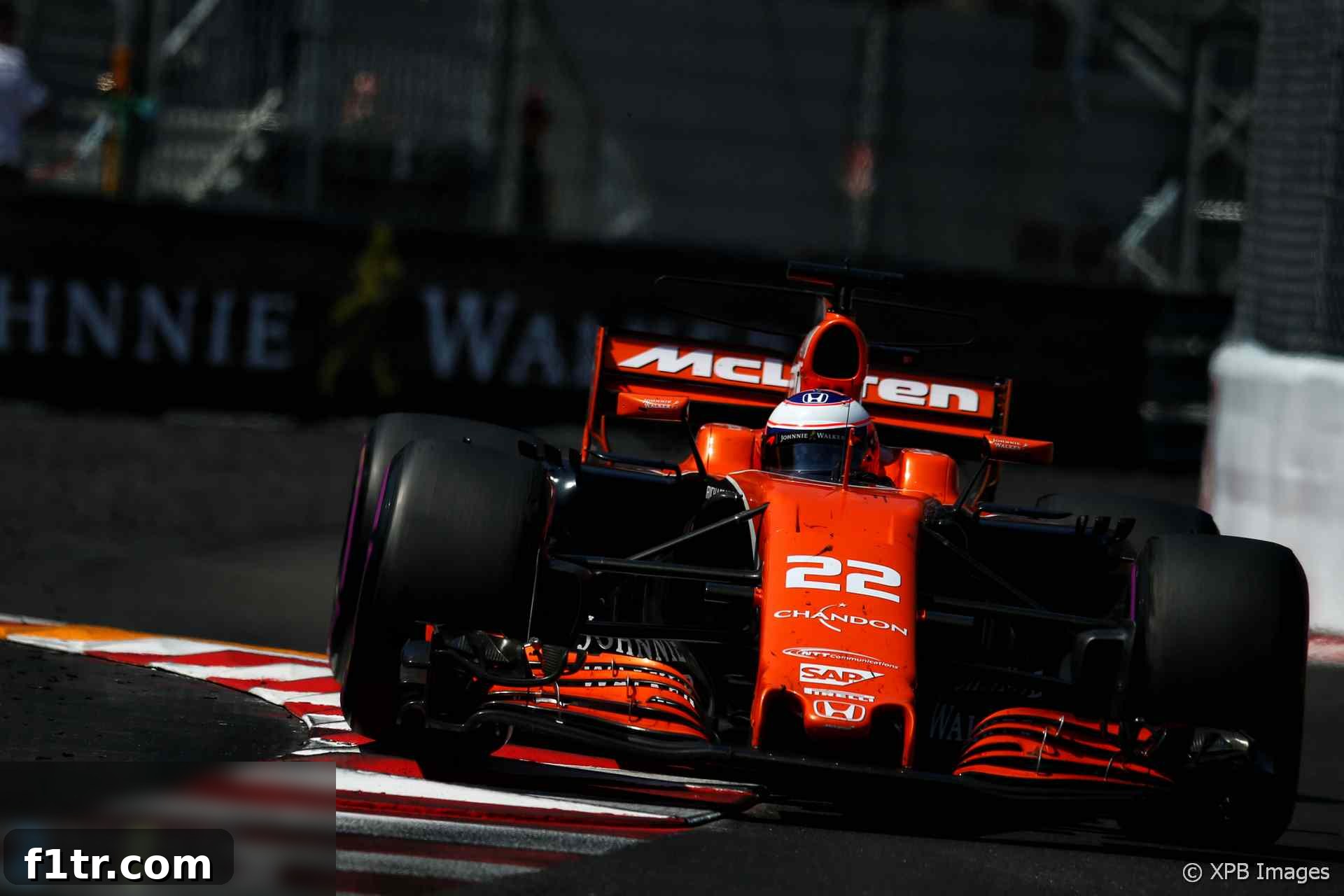
Jenson Button’s Illustrious Formula 1 Career Concludes with an Unserved Grid Penalty
The curtain fell on Jenson Button’s remarkable Formula 1 career in an altogether unusual fashion, leaving him with a three-place grid penalty that will, paradoxically, never be served. This peculiar twist stems from a collision with Pascal Wehrlein during his one-off return at the iconic Monaco Grand Prix, a race that proved to be a fittingly dramatic, if somewhat frustrating, swansong for the 2009 World Champion.
Stewards handed Button the penalty along with two superlicense penalty points for the incident. However, given Button’s unequivocal stance that he has no intention of returning to the sport after this weekend’s cameo appearance, the former champion’s career effectively concludes with this grid penalty forever hanging in limbo, a unique footnote in an otherwise stellar racing record. The ruling explicitly states that the penalty applies to the driver, not the car, ensuring that Fernando Alonso will not be burdened with serving this penalty upon his return to F1 for the Canadian Grand Prix.
The Monaco Comeback: A Bittersweet Return to the Grid
Jenson Button’s return to Formula 1 for the Monaco Grand Prix was an unexpected treat for fans. Stepping in for Fernando Alonso, who was competing in the Indianapolis 500, Button’s presence added a nostalgic flair to one of F1’s most glamorous events. It was a chance for a beloved veteran to once again tackle the narrow, unforgiving streets of Monte Carlo, a circuit he knows intimately. While qualifying showcased Button’s enduring talent, placing his McLaren-Honda in a respectable ninth position, a grid penalty from power unit changes meant he started the race from the very back, setting the stage for a challenging afternoon.
For a driver who had formally retired at the end of the previous season, this cameo was always going to be a unique experience. Button, known for his smooth driving style and strategic prowess, found himself in a car that was struggling for pace, particularly compared to the front-runners. Being at the back of the grid on a circuit where overtaking is notoriously difficult meant that any progress would require aggressive driving and seizing every available opportunity. This context is crucial to understanding the incident that ultimately defined his final F1 appearance.
The Incident: Taking a Chance at Portier with Pascal Wehrlein
The pivotal moment of Button’s race, and ultimately his career, occurred when he attempted a pass on Sauber’s Pascal Wehrlein at the challenging Portier corner. Reflecting on the accident and the subsequent penalty, Button explained his rationale, believing the move was viable at the time. “I knew that Pascal’s tyres were going,” Button explained, detailing his strategic assessment. “I had the same set of tyres on from the start of the race. I had a lot of traction off the previous corner, because when these tyres go on the marbles, they have no grip.”
Button’s decision to commit to the overtake was rooted in his extensive experience and his reading of the race. “I went up the inside and I thought I was a long way up the inside,” he recounted. However, the unique challenges of Monaco, particularly visibility, played a critical role. “Then I looked across and saw that he hadn’t seen me so I tried to back out, but it’s obviously too late then. The problem is I don’t think you can really see much with the mirrors, but in a racing move you don’t think ‘oh, he’s not going to see me because of the mirrors’.” This highlights the split-second decisions and inherent risks drivers face, especially on a circuit like Monaco where margins are incredibly fine.
Safety First: The Aftermath of the Collision
The collision resulted in Wehrlein’s car being tipped onto its side, a sight that always sends a ripple of concern through the motorsport community. While racing incidents are part of Formula 1, a car ending up on its side raises immediate safety questions. Button’s immediate reaction underscored this paramount concern. “I gave it a go and thought it was a fair enough judgement. But the worst thing is that you never like seeing a car tip over, you never know if his head’s going to hit something. So the most important thing is that Pascal’s okay. I saw him a minute ago and he seemed to be okay.” This statement reflects the true sportsmanship and camaraderie among drivers, where competitive drive is always balanced with a deep concern for a fellow competitor’s well-being. Thankfully, Wehrlein emerged from the incident unharmed, a testament to the safety advancements in modern Formula 1.
The Unserved Penalty: A Unique F1 Legacy
The three-place grid penalty, combined with two superlicense points, would typically be carried over to the next race the driver competes in. However, with Jenson Button having firmly stepped away from full-time Formula 1 racing, and his Monaco appearance being a singular fill-in role, this penalty becomes a peculiar part of his F1 story. It’s a sanction imposed but with no future race for it to apply to, effectively making it a symbolic gesture rather than a practical impediment.
This situation also clarifies an important aspect of Formula 1 regulations: penalties are issued to the driver, not the team or the specific car. This rule is why Fernando Alonso, despite driving the same McLaren-Honda chassis that Button used in Monaco, will not inherit or be forced to serve Button’s penalty at the subsequent Canadian Grand Prix. This distinction ensures fairness, as a driver’s actions should not directly penalize another driver who was not involved in the infraction. While logical, the unserved nature of Button’s final penalty highlights a rare edge case in F1’s elaborate rulebook, making his career exit truly one-of-a-kind.
Button’s Reflections: No Regrets, No Return
The accident and the subsequent penalty undoubtedly capped off a return to forget in terms of race results for Button, who, despite his strong qualifying, was forced to start from the back of the grid due to prior power unit changes. He spent the majority of the race stuck at the back, illustrating the brutal reality of Monaco racing from a disadvantaged position. Yet, despite the disappointing outcome, Button’s veteran perspective shone through.
“I enjoyed yesterday, I enjoyed some laps today,” Button stated, summarizing his feelings. “Obviously I never want to damage the car. It’s not something I do very often. I’m sorry to the team for doing that. But the thing is, it’s tricky. You’re in a race, you’re right at the back. If you think there’s a move, you have to take it.” This sentiment perfectly encapsulates the racer’s mindset: the constant push for position, the calculated risks, and the understanding that sometimes, despite best intentions, incidents happen.
Perhaps the most definitive moment post-race was when Button was directly asked if his Monaco cameo had made him reconsider his retirement from Formula 1. His response was immediate and unequivocal: “No. No, definitely not.” This firm declaration puts to rest any speculation about a full-time return, solidifying Monaco 2017 as his definitive farewell to the grid, albeit one with a memorable, unserved penalty.
The Enduring Legacy of Jenson Button in Formula 1
While his final F1 appearance ended with an incident and an unserved penalty, it’s crucial to remember that this solitary event does not define Jenson Button’s extensive and illustrious career. Button is celebrated for his smooth driving, intelligent race craft, and particularly his ability to manage tires, often extracting performance where others struggled. His 2009 World Championship triumph with Brawn GP remains one of the sport’s most compelling underdog stories, a testament to his adaptability and resilience.
Beyond his championship, Button’s career spanned 17 seasons, starting in 2000, making him one of the most experienced drivers in F1 history. He competed in over 300 Grand Prix races, securing 15 victories and 50 podium finishes. His calm demeanor, articulate insights, and approachable personality made him a favorite among fans and media alike. His final, unserved penalty from Monaco serves as a quirky, almost poetic, bookend to a career filled with highs, lows, and unforgettable moments, but ultimately underscores his passion for racing until the very last lap.
Related Articles from the 2017 Monaco Grand Prix
- 2017 Monaco Grand Prix Predictions Championship results
- Sainz takes first Driver of the Weekend win
- 2017 Monaco Grand Prix team radio transcript
- Boring or unique? Monaco GP rating hits ten-year low
- 2017 Monaco Grand Prix Star Performers
Browse all 2017 Monaco Grand Prix articles