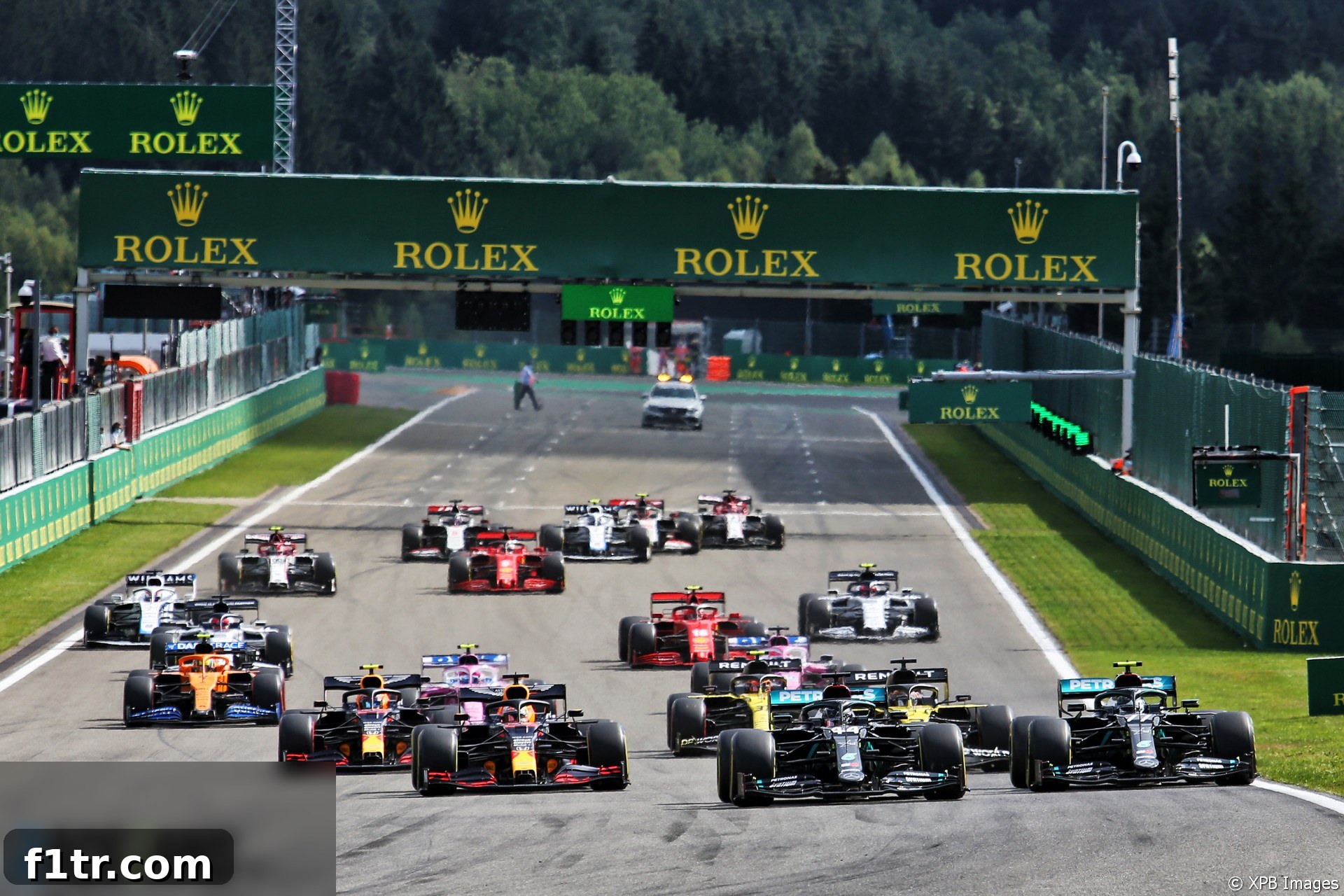
The legendary Belgian Grand Prix, a cornerstone of the Formula 1 calendar for decades, currently faces an uncertain future. Despite widespread speculation and fervent fan wishes, its inclusion on the highly anticipated 2023 Formula 1 calendar remains unconfirmed, fueling intense discussions across the motorsport world.
Advert | Become a Supporter & go ad-free
Your Ad Here
In a crucial update, F1 CEO Stefano Domenicali recently affirmed that “discussions are still on” regarding the venerable race’s destiny. Speaking from the iconic Spa-Francorchamps circuit, he added, “We are in Spa this weekend so you will see them a lot of time in my office,” highlighting the direct and active negotiations taking place with the event organizers. This statement offers a glimmer of hope to fans and promoters alike, suggesting that a final decision has yet to be made on one of the sport’s most beloved venues.
The Belgian Grand Prix is one of several traditional European races feeling the immense pressure from Formula 1’s aggressive global expansion strategy. New, high-profile additions to the calendar, such as the glamorous Las Vegas Grand Prix, the technologically advanced Qatar Grand Prix, and the potential return to South Africa next year, are reshaping the sport’s geographical footprint. These new venues often offer substantial hosting fees, a critical factor for F1 as it seeks to maximize commercial revenue and expand its global market reach.
However, Domenicali acknowledged the unique value of heritage tracks like Spa-Francorchamps. He indicated that the sport is prepared to make certain concessions for these historic venues, particularly those that may not be able to match the exorbitant hosting fees commanded by newer, government-backed circuits. This balancing act underscores F1’s complex challenge: how to embrace global commercial opportunities without alienating its traditional fanbase and abandoning its rich history.
F1’s Strategic Calendar Balance: Bridging Tradition and Expansion
Elaborating on F1’s strategic vision for its racing calendar, Domenicali outlined a desired geographical balance. “It’s true that we are working and discussing with other promoters to see if they’re ready for a full commitment already this year or next year,” he stated. “But I would say the balance, that has been always a point that we have discussed, is to find the mix of the races where we’re going to have at least one-third in Europe, one-third in the Far East area, and the other one in America and the Middle East. So we want to be balanced.” This distribution aims to ensure F1 maintains a presence in its established European heartland while aggressively expanding into lucrative new markets in Asia, the Americas, and the Middle East, thereby growing its global audience and commercial appeal.
The F1 CEO was candid about the financial realities driving many of these decisions. “Of course, we are talking about a business where investments, financial contributions, are very important,” he conceded. The modern era of Formula 1 demands significant capital, both from promoters to host races and from the sport itself to deliver a world-class spectacle. However, Domenicali was quick to reiterate a commitment to the sport’s roots: “But we have always said that the traditional races, the races that we know cannot bring the money that the others are bringing, have full respect from us. So you will see that this will be respected also not only this year, but also in the future.” This statement provides a lifeline for circuits like Spa and Monza, suggesting that their historical significance will continue to be a factor in their calendar considerations, even if they cannot compete financially with emerging venues.
Advert | Become a RaceFans supporter andgo ad-free
Your Ad Here
Heritage Is Not Enough: The Call for Investment and Modernization
Despite the respect for traditional venues, Domenicali issued a clear warning: a rich heritage alone is insufficient to guarantee a permanent spot on the F1 calendar. “There is a lot of respect for these places. But if you recall Belgium, there were some periods where it was not in the calendar and they came back again. So the memory sometimes is short. It’s a great place, no doubt about it, and that’s why we are discussing.” This historical perspective serves as a poignant reminder that even beloved tracks have faced exclusion in the past, underscoring the dynamic nature of the F1 schedule.
He used the example of the iconic Monza circuit, home to the Italian Grand Prix, to drive home this point. “At Monza there will be the celebration this year of the 100th year of the Italian Grand Prix. That will be a terrific event. But as an Italian I always said to them you need to make sure that the history is not enough. We need to invest for a great future.” Domenicali emphasized the need for continuous evolution and investment, even for the most historic venues. “So Monza needs to do its job because they need to update the structure, they need to update the place that is iconic. There’s the need to look ahead.” This means modernizing facilities, enhancing spectator experience, improving infrastructure, and adapting to the evolving demands of a global sporting spectacle. Simply resting on past glories is no longer an option.
“So you can be assured that these places will be always part of the discussion of the future because it’s the right thing to do. But this is something that also on their side can be given for granted, that if you don’t do anything, you will be always there. Because that’s not right, not correct in this moment.” This stern message highlights F1’s expectation for mutual commitment; while the sport values its heritage, circuit promoters must demonstrate a proactive approach to maintain relevance and appeal in a highly competitive landscape.
Fan Power: UK Survey Reveals Strong Support for Belgian Grand Prix
Amidst these commercial and strategic considerations, the voice of the fans remains a powerful factor. A recent survey conducted by Opinium among Formula 1 viewers in the United Kingdom revealed an overwhelming public desire for the Belgian Grand Prix to retain its place on the calendar. Opinium polled over 1,300 people about F1 tracks and the calendar, uncovering significant insights into fan sentiment.
The research found that a remarkable 80% of participants believe the Belgian race should continue to feature in 2023, while a mere 3% expressed a preference for its removal. This strong endorsement from a key European market clearly demonstrates the deep affection and importance fans attach to the Spa-Francorchamps circuit. Opinium’s press statement further broke down the reasons for this unwavering support: “A third (35%) of F1 fans who believe the Belgian GP deserves a place say so because it’s exciting to watch, while 32% think that as it is a historic track it should be included, and 28% say it’s part of F1’s DNA.” These reasons collectively highlight the unique blend of thrilling racing action and profound historical significance that defines the Belgian Grand Prix.
The survey also provided valuable demographic insights. “Almost a fifth (17%) of young F1 fans (those aged 18-34) who want Belgium to stay on the calendar would want to attend a race there, compared to 11% of 35 – 54 year olds, and 7% of those aged over 55.” This data suggests that Spa-Francorchamps continues to attract a younger generation of fans, indicating its enduring appeal and potential for future audience engagement. Retaining such a circuit is vital for F1’s long-term strategy of cultivating new, younger fan bases.
Perhaps most critically, Opinium’s research delivered a stark warning about the commercial implications of removing the Belgian Grand Prix. “Opinium’s research also reveals that the sport risks losing millions of viewers if Belgium is removed from the calendar, with 20% saying they would be less likely to watch the rest of the 2023 season, or that they would stop watching altogether if this happens.” This represents a significant commercial threat; losing a fifth of viewers from a major market like the UK could have substantial ramifications for broadcasting revenues, sponsorship deals, and the overall appeal of the sport. Such a statistic adds considerable weight to the argument for preserving traditional races, demonstrating that fan sentiment directly translates into tangible business value.
Advert | Become a RaceFans supporter andgo ad-free
Your Ad Here
The Road Ahead for the 2023 F1 Season and Beyond
The fate of the Belgian Grand Prix remains a microcosm of Formula 1’s broader strategic dilemma: how to effectively balance rapid global expansion and commercial interests with the preservation of its historical essence and the satisfaction of its most dedicated fans. Stefano Domenicali’s ongoing discussions with Spa-Francorchamps officials signal that the battle for its place on the 2023 calendar is far from over. The immense public support, as highlighted by the Opinium survey, underscores the emotional and commercial importance of iconic circuits to the sport’s identity and viewership.
As the Formula 1 calendar evolves, the emphasis on investment and modernization for traditional venues will only intensify. Circuits like Spa and Monza are being challenged to demonstrate their long-term viability and commitment to delivering a world-class event, even as they face competition from financially robust new markets. The decision regarding the Belgian Grand Prix will not only determine the shape of the 2023 season but will also send a powerful message about F1’s priorities as it navigates its exciting, yet complex, future.
Related Articles: Exploring the 2023 F1 Season
- FIA president cleared of alleged interference in two 2023 races
- First week viewing figures for new Drive to Survive season fall again
- Max who? Drive to Survive season six prefers its favourite faces
- RaceFans’ complete 2023 season review
- The F1 drivers who pulled off the 10 biggest charges through the field in 2023
Browse all 2023 F1 season articles