The Belgian Grand Prix Fiasco: F1 Fans’ Outcry Over Spa-Francorchamps Washout
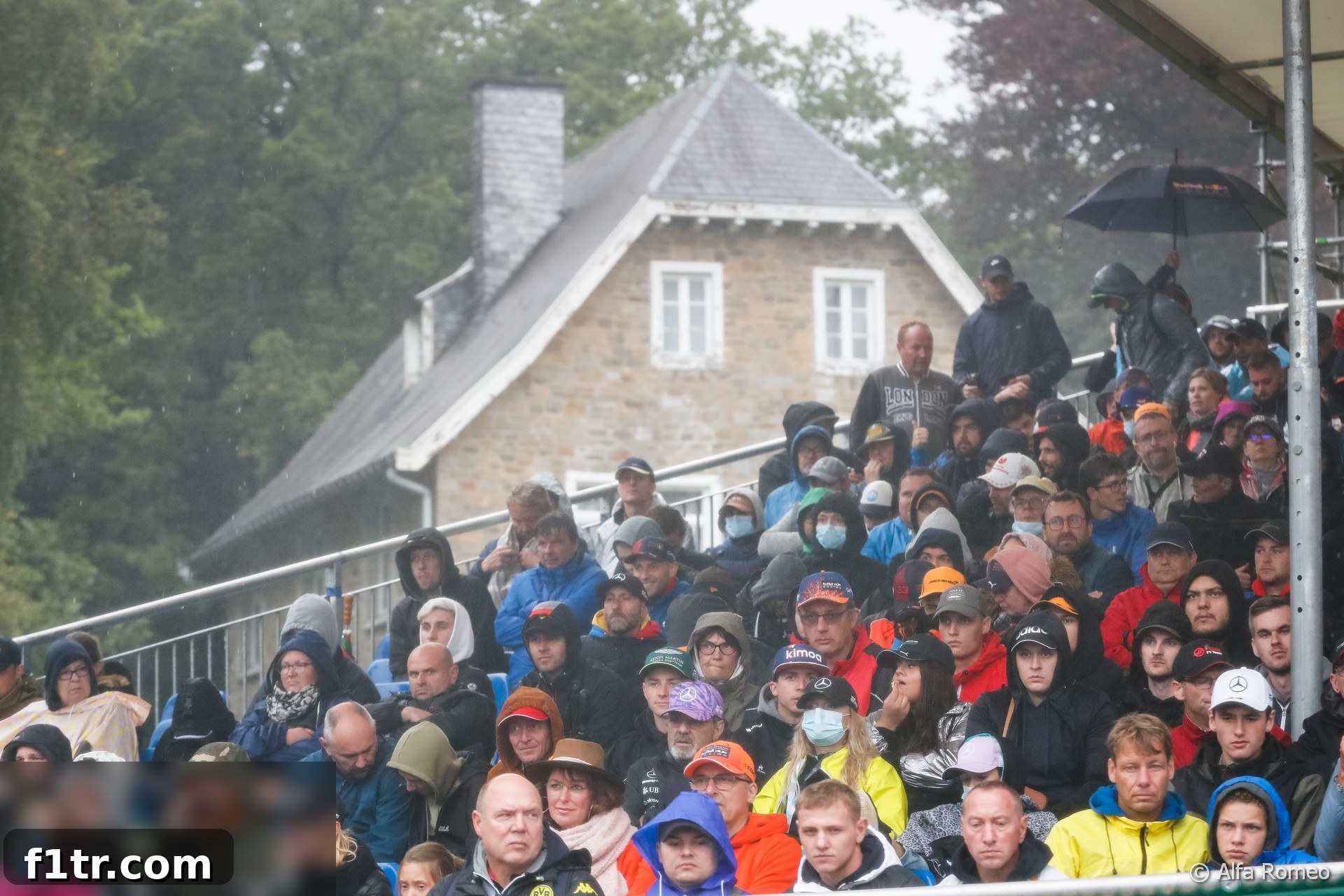
Last weekend, a scene of profound disappointment unfolded at the legendary Spa-Francorchamps circuit, where tens of thousands of dedicated Formula 1 fans left soaked, disillusioned, and without witnessing a single racing lap of the Belgian Grand Prix. The relentless downpour rendered the track unsafe for competitive racing, forcing organizers to abandon the event after prolonged delays. This article delves into the fan experience, exploring their frustration with how Formula 1 and the event organizers handled what many are calling a “farce,” highlighting the growing call for greater accountability and improved fan engagement.
Advert | Become a Supporter & go ad-free
A Weekend Drenched in Disappointment at Spa
For hours, spectators braved dreadful weather conditions, clinging to the hope of seeing their heroes in action. Their patience was ultimately rewarded with a brief, anticlimactic parade behind the Safety Car, followed by a bewildering podium ceremony. This left many feeling cheated, with passionate fans expressing their deep dissatisfaction with the organization’s communication and actions throughout the challenging day.
RaceFans had the opportunity to speak with two spectators who endured the chaos of the weekend. While both fully supported the decision to prioritize driver safety by not starting the race, their consensus was clear: the handling of the situation by Formula 1 and the local organizers was deeply unimpressive, bordering on disrespectful to the fans who had invested so much in attending.
The High Cost of Unfulfilled Promises: Isabelle’s Story
Isabelle Rémond-Tiedrez and her partner journeyed from Luxembourg to Spa, making it a significant post-pandemic birthday celebration for their British-based son. The family collectively spent over €1,500 on tickets, travel, and accommodation, envisioning an unforgettable experience for their youngest. “It was supposed to be an unforgettable and great day for our youngest kid as a gift for his 20th birthday, which is at Christmas,” Isabelle shared with RaceFans. “As he goes back soon to the UK for his studies, the timing was perfect for this special trip.”

Isabelle detailed the financial and emotional investment: “We paid €500 each to watch the GP ‘farce,’ as Lewis Hamilton himself aptly described it. We wholeheartedly agree that the safety of the drivers is paramount, but the organizers deliberately made us wait three hours for those two symbolic laps.” The outcome was heart-wrenching for her family. “As a result, our son Gabriel was so disappointed, and we feel like we failed to make him happy. Of course, it will be an unforgettable day for him, but not for the good reasons we had intended.” This sentiment resonates with countless families who had saved and planned meticulously for what should have been a joyous occasion.
János’s Perspective: Safety, Strategy, and Sarcasm
János Henkelmann, who drove approximately 70 kilometers from Stolberg in Germany with his 10 and 13-year-old nephews, echoed Isabelle’s sentiments. He recognized the inherent dangers of racing in such treacherous conditions. “As all the drivers pointed out, the conditions were lousy throughout the afternoon, and I don’t think the race would have been longer than a few laps had it eventually been started,” he told RaceFans. “I guess it’s just not in a racing driver’s DNA to go slowly, even in the pouring rain, and at some point, there would have been a big shunt, surely. Safety is obviously paramount, and as a fan, I’m in no position to expect the drivers to risk their lives.”
János singled out FIA Medical Car driver Alan van der Merwe for praise. “Alan van der Merwe was the real hero on Sunday as he gave it full beans on the straight every time he went out to see if the conditions had improved,” he remarked, highlighting the visible efforts made to assess the track’s safety.
Advert | Become a RaceFans supporter andgo ad-free

He genuinely believed that FIA Formula 1 race director Michael Masi saw a legitimate window of opportunity for a restart as conditions appeared to improve slightly later in the afternoon. “The rain had indeed eased a little bit for about 10 minutes when they tried to finally start the race at about six o’clock. It was the first time since the early afternoon that you could see the forest on the opposite side of the track behind Blanchimont and not just clouds and mist,” János recounted. “I genuinely believe that Masi wanted the cars to race and that he saw a legitimate chance of finally getting the grand prix under way. At that point, that was the maximum he could do.”
The Mockery of a Podium and F1’s Disconnect
Despite Masi’s best intentions, the second and final attempt to start the race was swiftly abandoned. With no competitive racing having taken place, János found the subsequent podium ceremony profoundly strange and insulting. “We left the track after the race had finally been suspended for good, and as we walked past Eau Rouge, the iconic overture from Carmen was playing over the public address system. It felt like pure mockery that they even bothered to stage a podium ceremony for a race that never happened.” This sentiment highlights a significant disconnect between the F1 spectacle and the reality of the fan experience on that day.
His frustration deepened upon returning home. “When we came home, I visited the promoter’s website to see if there was any news or communication on the situation from their side, and I was stunned to see that they had already put their terms and conditions on their start page, as if they subtly wanted to tell everyone: ‘Fuck you! We had a race and you’re not getting a penny back.’” This perceived lack of empathy and proactive communication further fueled the resentment among fans.
Advert | Become a RaceFans supporter andgo ad-free

An Elite Sport Under Scrutiny
The experience led János to a sobering reflection on the nature of Formula 1 itself. “While freezing in the rain next to the Kemmel straight and seeing the cheering crowds in the grandstand at the start/finish line, I realised that while F1 is and always will be the sport I love the most, it’s also a sport for the elites, i.e., for people who are able to pay over €500 for a ticket and have a dry seat,” he observed. “I’m too young to tell if that has always been the case, but it certainly shouldn’t be now and even less so in the future.” This critical assessment highlights a growing concern among the fanbase: that F1 is pricing out its loyal grassroots supporters in favor of a more affluent audience, potentially jeopardizing its long-term appeal and accessibility.
The Call for Accountability and Genuine Fan Engagement
János Henkelmann firmly believes that Formula 1’s future hinges on its ability to reconnect with and care for the “normal fan.” “In my opinion, F1 cannot continue to thrive if it doesn’t take care of the ‘normal fan’,” he stated emphatically. He pondered alternative approaches that could have salvaged some goodwill. “What if – instead of repeatedly saying how sorry everyone was for the fans – they had sent out the cars to do some demonstration laps after suspending the race? My nephews were so excited when they finally saw the cars, albeit only for a couple of laps behind the safety car. It would have made their day (and helped them forget about waiting three hours in the rain) to see some more track action at least.” This simple suggestion underscores a missed opportunity for F1 to engage with its audience beyond the competitive aspect.
The profound disappointment felt by spectators like Isabelle and János leads to a clear demand for redress. “So, as a result of what we saw – or rather didn’t see – on Sunday, I hope the most prominent voices in F1 (drivers, team bosses, commentators) make their voices heard on behalf of the fans and somehow convince the promoter or the management or both to refund us or to give us free tickets for next year. Because after all, we paid to see a race, and there was none.” This call for concrete action, rather than just apologies, resonates with the tens of thousands who left Spa-Francorchamps feeling unheard and undervalued.
The Road Ahead for Formula 1
The 2021 Belgian Grand Prix debacle serves as a crucial wake-up call for Formula 1. While driver safety is non-negotiable, the sport must find a way to manage unforeseen circumstances like extreme weather with greater transparency, empathy, and a clear plan for fan compensation or engagement. The financial and emotional investment of fans cannot be taken for granted. Moving forward, F1 needs to critically assess its event management protocols, communication strategies, and refund policies to ensure that such a widespread feeling of betrayal is never repeated. The sport’s long-term health depends on its ability to retain and value its most ardent supporters, proving that the thrilling spectacle extends beyond the track, encompassing a truly inclusive and respectful experience for every fan.
Read an in-depth analysis of what went wrong during last weekend’s farcical Belgian Grand Prix in today’s edition of the RacingLines column later today on RaceFans.
2021 Belgian Grand Prix Coverage
- Spa spectators who saw no racing offered prize draw for 2022 tickets
- ‘Wrong to award points for a couple of laps behind the Safety Car’ – Horner
- Hamilton offers “exclusive gift” to fans who attended Belgian GP wash-out
- Change rules to give points for qualifying if race can’t happen – Seidl
- “I apologised to the entire team for my mistake” – Perez
Browse all 2021 Belgian Grand Prix articles