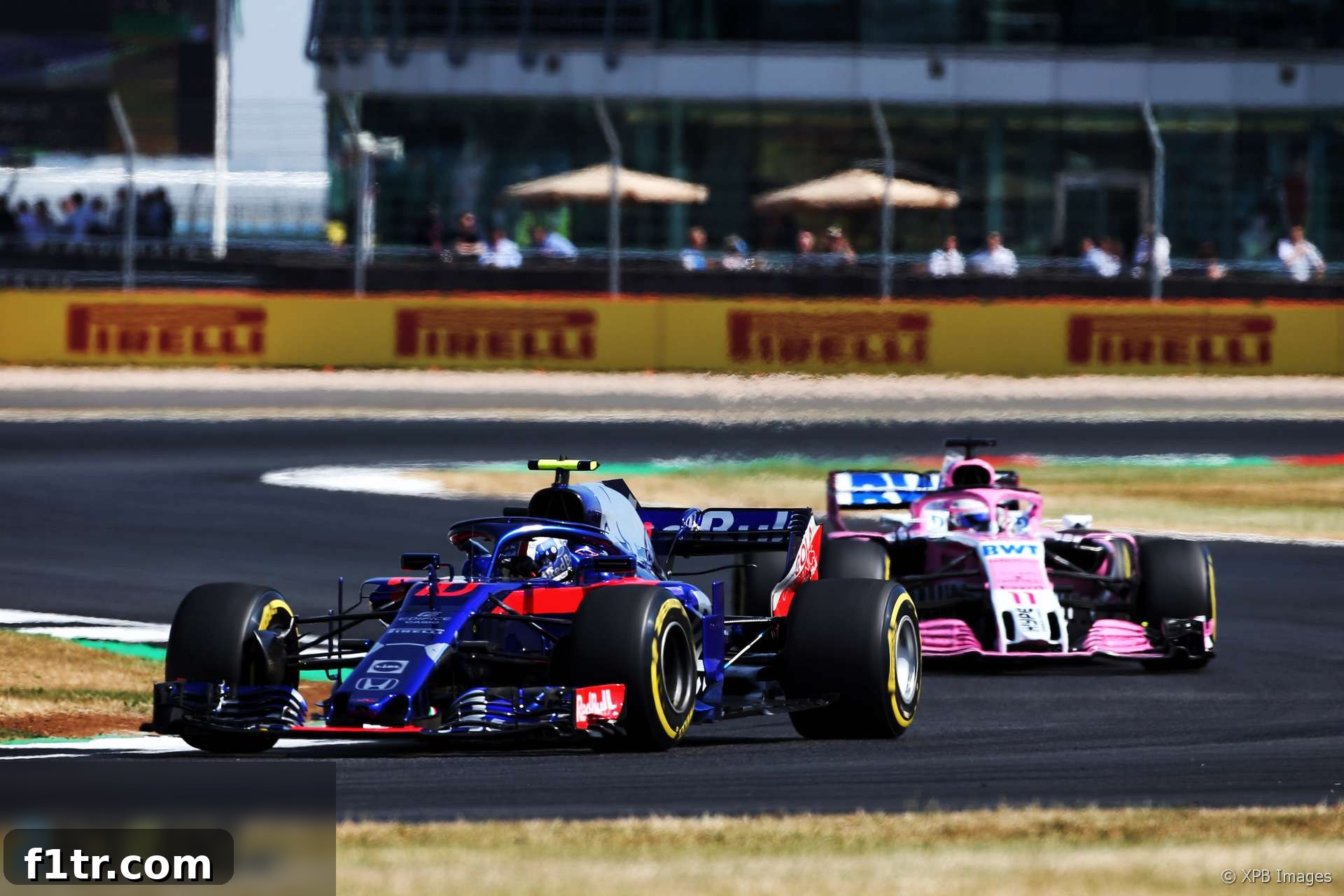
In the high-stakes world of Formula 1, where every tenth of a second and every championship point is fiercely contested, controversial penalties can ignite strong reactions. Few incidents encapsulate this tension better than the post-race sanction imposed on then-Toro Rosso driver Pierre Gasly. His vocal disapproval of what he termed “bullshit penalties” after a clash with Sergio Perez not only cost him a valuable points finish but also reignited a long-standing debate within the motorsport community regarding the consistency and philosophy of F1 stewarding.
Pierre Gasly’s Outcry: Unpacking the “Bullshit Penalties” Debate in Formula 1
The incident that sparked Gasly’s frustration occurred during a fiercely contested race, where the young Frenchman found himself battling for a coveted top-ten position. Following contact with Sergio Perez, Gasly was subsequently handed a five-second time penalty and points on his Super Licence. This seemingly minor sanction had significant ramifications, demoting him from a hard-fought 10th place to a disheartening 13th, thereby stripping him of a crucial championship point. Conversely, the penalty elevated Perez into the points-paying positions, highlighting the fine margins that define success and failure in elite motorsport.
The Controversial Incident: Gasly vs. Perez on Track
The specifics of the on-track battle between Pierre Gasly and Sergio Perez were typical of a midfield skirmish in Formula 1 – intense, close-quarters racing where drivers push the limits of both their machinery and the regulations. Gasly, in pursuit of a better position, made an overtaking maneuver that ultimately resulted in contact with Perez. The stewards, after reviewing the footage, determined that Gasly was responsible for the collision, which forced Perez momentarily off the racing line. While such incidents are often deemed “racing incidents” by fans and commentators, the FIA stewards’ verdict was clear: Gasly’s actions constituted an infringement worthy of penalty.
The decision to penalize Gasly post-race underscores the increasing scrutiny on driver conduct during wheel-to-wheel combat. In a sport striving for both safety and fair competition, the line between aggressive, exciting racing and an illegal maneuver is constantly deliberated. For drivers, this fine line can be agonizingly difficult to navigate in the heat of the moment, leading to the kind of frustration expressed by Gasly when a judgment goes against them.
Gasly’s Fiery Reaction: “Just Let Us Race”
Pierre Gasly’s immediate reaction to the penalty was unreservedly critical, articulated through a powerful social media post that quickly resonated with fans and fellow drivers alike. “Five-second penalty, ridiculous,” he wrote, his words echoing the sentiment of many who advocate for more leniency in racing incidents. He continued, “Every weekend there are contacts with no further action, that’s part of racing and what makes it exciting! Was close battle, I enjoyed it. Just let us race and stop all this bullshit with penalties! Will keep fighting.”
Gasly’s impassioned plea, particularly his use of the phrase “bullshit penalties,” laid bare the deep-seated frustration many drivers feel about the perceived inconsistency in stewarding. His argument highlighted a common complaint: what constitutes a punishable offense one weekend might be overlooked the next, leading to confusion and a sense of injustice among competitors. This desire to “just let us race” is not new; it’s a perennial call from drivers who believe that the essence of Formula 1 lies in bold overtakes and daring maneuvers, even if they occasionally result in minor contact. Such moments, they argue, are what make the sport thrilling and differentiate a true racing driver from one who is overly cautious.
The Stewards’ Rationale: A Difficult Balancing Act
While Gasly’s frustration was palpable, the FIA stewards operate under a strict mandate to uphold the sporting regulations and ensure fair play. In their official verdict on the collision, the stewards acknowledged the nuances of the situation: “Gasly’s manoeuvres were generally reasonable, and that he was attempting to make a good racing pass.” This recognition suggests that they did not view Gasly’s actions as malicious or overtly reckless. However, despite this understanding, they ultimately concluded that he was indeed “responsible for the collision which forced Perez off the track and allowed Gasly through.”
This decision underscores the stewards’ challenging role. They must meticulously review incidents, often frame-by-frame, considering multiple camera angles, telemetry data, and the specific wording of the FIA’s International Sporting Code. The regulations are designed to prevent dangerous driving and maintain a level playing field, but interpreting intent and consequence in the blink of an eye is inherently subjective. The stewards’ responsibility is to draw a line, however fine, between acceptable racing aggression and actions that unfairly impede a competitor or create an undue risk. Their job is not to appease drivers but to enforce the rules, even when those decisions are unpopular or lead to passionate outbursts.
Perez’s Perspective: Defending His Position and Supporting the Penalty
On the receiving end of the contact, Sergio Perez naturally held a different view of the incident and the subsequent penalty. The Force India driver firmly believed that Gasly had exceeded the boundaries of fair racing. “Gasly pushed me off track,” said Perez, emphasizing his interpretation of the events. “I gave him enough space but that was not enough. We still made contact and I lost the place.”
Perez’s stance highlights the crucial aspect of track etiquette and the right of a driver to defend their position without being unfairly compromised. In his eyes, he had provided ample room for Gasly to complete his overtake safely, and the resulting contact, which led to him losing a position, was a direct consequence of Gasly’s overly aggressive driving. Therefore, he supported the stewards’ intervention: “I believe it was an unfair move. I’m pleased that the FIA took action after the race to penalise Gasly, which gave me back the final point.” For a midfield team like Force India (now Aston Martin), every single championship point is invaluable, potentially impacting constructor standings and prize money, making the recovery of that point even more significant for Perez and his team.
The contrasting views of Gasly and Perez perfectly illustrate the dichotomy often present in racing incidents: one driver seeing a spirited battle, the other feeling unfairly disadvantaged. It is precisely this subjective nature of on-track disputes that makes stewarding one of the most scrutinized and debated aspects of Formula 1.
The Broader Conversation: Consistency in F1 Stewarding
Pierre Gasly’s outburst resonated so strongly because it tapped into a larger, ongoing discussion about consistency in Formula 1 stewarding. Over the years, both fans and participants have frequently pointed to seemingly similar incidents receiving different penalties, or in some cases, no penalty at all. This perceived inconsistency creates confusion and can lead to a sense of arbitrary decision-making, fueling frustrations like Gasly’s.
The challenge for the FIA lies in creating a framework that is both robust enough to ensure fair play and flexible enough to account for the unique dynamics of each racing scenario. Factors such as track conditions, speed differentials, prior incidents, and even the immediate aftermath of contact can influence a steward’s judgment. While guidelines exist, the final decision often involves a degree of interpretation, leading to the subjective element that is so often criticized. Calls for more transparent decision-making, clearer precedent setting, and potentially even driver involvement in advisory roles for stewarding panels have been mooted as potential ways to address this complex issue.
Ultimately, the “spirit of racing” versus the “letter of the law” is a perpetual tension in Formula 1. On one hand, overly strict enforcement risks sanitizing the sport, discouraging the bold, aggressive driving that fans crave. On the other hand, a lack of clear rules and enforcement could lead to chaos and unsafe conditions. Striking the right balance is an art, not a science, and it’s a balance that F1 stewards continually strive to achieve under intense pressure and public scrutiny.
Impact and Implications: More Than Just Five Seconds
For a driver like Pierre Gasly, particularly early in his Formula 1 career, a five-second penalty represents far more than just a minor time adjustment. It’s a blow to morale, a loss of championship points crucial for both driver and constructor standings, and a source of significant frustration. Every point gained in Formula 1 can impact a team’s position in the Constructors’ Championship, which in turn affects prize money and future development budgets. For a driver, points demonstrate performance, build confidence, and are vital for career progression.
Moreover, such penalties can subtly influence a driver’s approach to future races. Will they be more cautious in wheel-to-wheel battles, fearing another penalty? Or will they double down on their aggressive style, believing it to be the “true” way to race? This psychological impact can be as significant as the direct loss of points. For Gasly, who has always been known for his aggressive and tenacious driving style, this incident likely served as a stark reminder of the tightrope walk required in modern F1 – balancing pure racing instinct with the ever-present threat of a steward’s judgment.
Looking Ahead: The Evolving Landscape of F1 Stewarding
The debate sparked by Pierre Gasly’s “bullshit penalties” comment is a microcosm of the ongoing evolution in Formula 1 stewarding. The sport continues to seek greater clarity, consistency, and fairness in its officiating, employing advanced technologies, clearer guidelines, and continuous training for stewards. While outright perfect consistency may be an elusive goal due to the inherent subjectivity of judging high-speed racing incidents, the push for improvement remains constant.
As Formula 1 embraces new generations of drivers and ever-faster cars, the discussions around what constitutes acceptable racing will undoubtedly continue. The passionate calls from drivers like Gasly serve as a vital reminder to the governing bodies that the spirit of competition and the thrill of aggressive racing must always be carefully considered alongside the imperative for safety and fair play. It’s a delicate equilibrium that defines the very essence of Formula 1.
Pierre Gasly’s outspoken frustration with penalties brought a crucial conversation back into the spotlight: the delicate balance between allowing drivers to race fiercely and enforcing the rules to ensure safety and fairness. While the stewards made their decision based on established regulations, Gasly’s reaction highlighted the persistent demand from drivers and fans alike for greater consistency and a more nuanced understanding of the intense, split-second decisions made in the heat of a Formula 1 battle. As the sport continues to evolve, so too will the debate over how best to officiate the pinnacle of motorsport.
Stay Connected with Formula 1 Discussions
- Join Formula 1 Fans on Facebook
- Follow F1 News on Twitter
- Get the Latest F1 Updates via Email
Explore More from the 2018 F1 Season
- F1 feared “death knell” for Drive to Survive after Ferrari and Mercedes snub
- McLaren staff told us we were “totally crazy” to take Honda engines in 2018 – Tost
- ‘It doesn’t matter if we start last’: How Red Bull’s junior team aided Honda’s leap forward
- Honda’s jet division helped F1 engineers solve power unit problem
- McLaren Racing losses rise after Honda split
Browse all 2018 F1 season articles