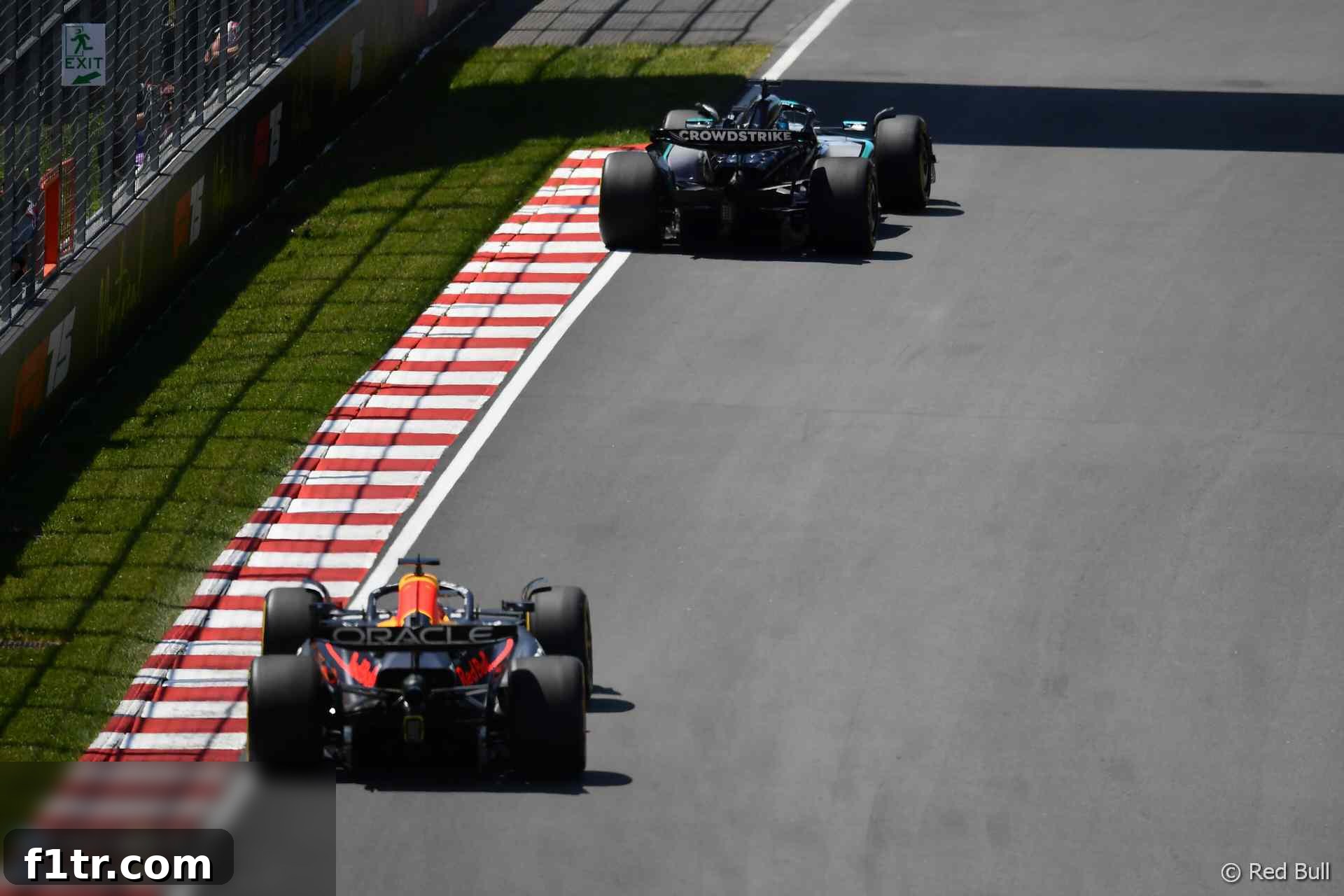
Max Verstappen found himself embroiled in a significant post-race controversy, repeatedly accusing George Russell of violating crucial Safety Car regulations during the intense closing stages of a recent Formula 1 Grand Prix. Verstappen’s strong claims centered on Russell deliberately creating an excessive gap behind the Safety Car, an action for which the Mercedes driver had previously been penalized. However, the race stewards ultimately cleared Russell, revealing a critical nuance in Formula 1’s intricate rulebook that underscored the complexity of racing under safety car conditions.
This contentious incident brought into sharp focus the challenging interplay of high-speed racing dynamics, instantaneous driver interpretations, and the stringent regulations governing Safety Car deployments. More than just a simple rule infringement, the dispute touched upon the very understanding of how F1’s continuously evolving rules are applied and perceived under immense pressure. Verstappen’s frustration was evident, stemming from a belief that a clear breach of protocol had occurred, potentially altering the race outcome and costing him a valuable victory.
Advert | Become a Supporter & go ad-free
Verstappen’s Grievances and Red Bull’s Formal Protest
The sequence of events that ignited Verstappen’s vehement complaints occurred during a pivotal Safety Car period. The Red Bull driver’s mindset was undoubtedly influenced by a precedent from the previous year’s Qatar Grand Prix, where Russell had indeed received a five-second time penalty for falling too far behind the Safety Car. With this recent history in mind, Verstappen likely anticipated a similar punitive outcome for Russell in the current race. Had such a penalty been imposed, it would have significantly reshaped the final standings, quite possibly elevating Verstappen to the top step of the podium. This prior incident undeniably strengthened his conviction that Russell had once again strayed beyond the permissible limits.
Following the race, Red Bull Racing, Verstappen’s team, formally lodged a protest against Russell’s victory. However, it’s crucial to note that according to the stewards’ official findings, Verstappen’s specific assertions about Russell’s perceived excessive distance behind the Safety Car did not constitute the core of Red Bull’s official challenge. This distinction is paramount, highlighting a fundamental misunderstanding on Verstappen’s part – a misunderstanding deeply embedded in the detailed and often counter-intuitive specifics of F1’s constantly updated regulations. It would become clear that Russell, far from breaking the rules, was meticulously adhering to a lesser-known but equally binding safety protocol, despite the seemingly large gap he created.
The heart of the controversy unfolded over multiple laps while the Safety Car was deployed. Verstappen’s initial outburst came after a moment where Russell dramatically reduced his speed, causing Verstappen to briefly overtake him before having to immediately drop back into position. This specific maneuver, interpreted as erratic and potentially illegal by Verstappen, formed a key part of the initial discussion within the Red Bull camp and contributed to the subsequent protest. The radio conversations between Verstappen and his seasoned race engineer, Gianpiero Lambiase, vividly captured the Red Bull driver’s escalating frustration and confusion:
| Lap: 68/70 VER: 2’05.276 | |||||||||||||||||||||||||||||||||||||||||||||||||||
| Lambiase | So just keep on top of the tyres at the moment Max, I’d be surprised if it restarts, so just keep on top of the tyres. | ||||||||||||||||||||||||||||||||||||||||||||||||||
| Verstappen | After turn 10 The Safety Car is driving really slow, what is he doing? |
||||||||||||||||||||||||||||||||||||||||||||||||||
| Verstappen | Russell slows and Verstappen briefly passes him before dropping behind again George suddenly just aggressively braked. |
||||||||||||||||||||||||||||||||||||||||||||||||||
| Lambiase | Understood, thank you. We will check for any erratic driving. | ||||||||||||||||||||||||||||||||||||||||||||||||||
| Lap: 69/70 VER: 2’03.745 | |||||||||||||||||||||||||||||||||||||||||||||||||||
| Lambiase | We can see that on our data stream as well, Max. Thank you for the info. | ||||||||||||||||||||||||||||||||||||||||||||||||||
| Verstappen | Russell drops back from the Safety Car, then accelerates That’s more than 10 car lengths also, there. |
||||||||||||||||||||||||||||||||||||||||||||||||||
| Lambiase | Okay, we will check that as well, thank you. | ||||||||||||||||||||||||||||||||||||||||||||||||||
| Lambiase | Yeah, that incident with Russell now being shown on the feeds Max. So, pretty blatant. Just don’t fall for the gamesmanship, okay? Thank you. | ||||||||||||||||||||||||||||||||||||||||||||||||||
| Lambiase | Safety Car through the pit lane, Max. | ||||||||||||||||||||||||||||||||||||||||||||||||||
| Lap: 70/70 VER: 2’06.683 | |||||||||||||||||||||||||||||||||||||||||||||||||||
| Verstappen | Russell drops back from the Safety Car, then accelerates Again, more than 10 car lengths, what is he doing? |
||||||||||||||||||||||||||||||||||||||||||||||||||
| Lambiase | Thank you. | ||||||||||||||||||||||||||||||||||||||||||||||||||
| Verstappen | Way more than 10, look at this! | ||||||||||||||||||||||||||||||||||||||||||||||||||
| Lambiase | Yes, thank you Max. We’ll have a look. Cheers mate. | ||||||||||||||||||||||||||||||||||||||||||||||||||
| Lambiase | Ah, this is final lap, Max. Well done for keeping your head for the moment. | ||||||||||||||||||||||||||||||||||||||||||||||||||
Advert | Become a RaceFans supporter andgo ad-free
The Yellow Flag Delta Rule: A Critical Nuance in F1 Regulations
While Max Verstappen fixated on the visible gaps Russell created, seemingly falling foul of the widely understood “10-car length” rule behind the Safety Car, Russell’s actions were, in fact, dictated by a different, yet equally crucial, Formula 1 regulation. Onboard camera footage from Russell’s car provided unequivocal evidence of at least two instances where he deliberately dropped back from the Safety Car before rapidly closing the gap again. Crucially, on both occasions, he proactively informed his Mercedes team that his “delta time” had been adjusted due to the specific sector they were navigating being under double waved yellow flag conditions.
The broader context for this intricate scenario was the Safety Car’s deployment following Lando Norris’s dramatic and impactful crash on the pit straight. To ensure the safety of all drivers and to steer clear of the accident debris, Race Control made the strategic decision to route the entire field through the pit lane. As a consequence, drivers did not encounter any yellow flags directly pertaining to Norris’s incident until they reached the pit lane exit. This particular section of the track, designated as a double waved yellow flag zone, became the epicenter of the ensuing controversy.
It was precisely within this mandated zone that Russell consciously slowed down, inevitably causing the space between his car and the Safety Car to expand considerably. This action, while compliant, naturally provoked Verstappen’s repeated and vociferous complaints. However, Russell’s clear communication with his own team confirmed his strict adherence to the regulations. He was not, as Verstappen erroneously believed, flouting the rules, but rather diligently complying with a very specific and overriding safety protocol designed to protect both drivers and marshals:
| Lap: 68/70 RUS: 2’06.769 | |||||||||||||||||||||||||||||||||||||||||||||||||||
| Russell | Russell slows and Verstappen briefly passes him before dropping behind again Verstappen just overtook me under the Safety Car. |
||||||||||||||||||||||||||||||||||||||||||||||||||
| Dudley | Understood, we’ll look. So following the safety car into the pit lane. So reminder of 10 car lengths, pit limiter on. | ||||||||||||||||||||||||||||||||||||||||||||||||||
| Lap: 69/70 RUS: 2’03.817 | |||||||||||||||||||||||||||||||||||||||||||||||||||
| Russell | Russell drops back from the Safety Car, then accelerates I was following the delta. It was negative. |
||||||||||||||||||||||||||||||||||||||||||||||||||
| Dudley | So you push to catch the Safety Car now. | ||||||||||||||||||||||||||||||||||||||||||||||||||
| Russell | Yeah, yeah, yeah. | ||||||||||||||||||||||||||||||||||||||||||||||||||
| Dudley | Trying to keep the tyres where they are. So the queue still hasn’t formed behind the Safety Car here. | ||||||||||||||||||||||||||||||||||||||||||||||||||
| Dudley | So we’re following the Safety Car. Passing through the pit lane again, so follow the Safety Car through the pit lane, stay in the fast lane, pit limiter off. This is the final lap. | ||||||||||||||||||||||||||||||||||||||||||||||||||
| Lap: 70/70 RUS: 2’07.536 | |||||||||||||||||||||||||||||||||||||||||||||||||||
| Dudley | Russell drops back from the Safety Car, then accelerates Safety Car delta. |
||||||||||||||||||||||||||||||||||||||||||||||||||
| Russell | Yellow flag delta again on my, yeah, just following the delta, the Safety Car is pulling away from the delta. That was a yellow flag delta. | ||||||||||||||||||||||||||||||||||||||||||||||||||
| Russell | Is this the last lap? | ||||||||||||||||||||||||||||||||||||||||||||||||||
| Dudley | Affirm, this is the last lap. | ||||||||||||||||||||||||||||||||||||||||||||||||||
| Russell | Yeah, I don’t know what Verstappen was doing when I was behind the Safety Car. | ||||||||||||||||||||||||||||||||||||||||||||||||||
Advert | Become a RaceFans supporter andgo ad-free
Understanding the 2023 Regulation Change: Enhancing Safety
The specific regulation that George Russell was rigorously adhering to, and which ultimately proved decisive in the stewards’ judgment, was a significant amendment introduced to the Formula 1 sporting regulations in 2023. This rule unequivocally states that “any driver passing through a double waved yellow flag marshalling sector during a Safety Car […] must stay above the minimum time set by the FIA ECU in each marshalling sector concerned.” This critical regulation was specifically designed to significantly enhance safety for both drivers and trackside personnel by ensuring that competitors reduce their speed sufficiently in clearly defined hazardous zones, even during a Safety Car period where the natural inclination might be to maintain close proximity to the car ahead to be ready for the restart.
The incident perfectly encapsulated the rule’s intended purpose and practical impact. By entering a double yellow flag zone (specifically, the pit lane exit immediately after Lando Norris’s crash), Russell was under a mandatory obligation to decelerate to maintain a positive delta time. This directive superseded the general requirement to stay within 10 car lengths of the Safety Car, illustrating a hierarchical application of rules in complex scenarios. The FIA’s sophisticated ECU (Electronic Control Unit) provides drivers with a precise, real-time minimum time to adhere to, thereby ensuring consistent and objective safety measures are applied uniformly across all competitors on the track. Russell’s proactive and clear communication with his race engineer confirmed his acute awareness and diligent compliance with this paramount safety directive, proving his actions were not arbitrary but calculated and mandated.
The Near-Miss: A Testament to the Rule’s Necessity
Further emphasizing the vital importance, and indeed the potential for confusion, surrounding this yellow flag delta rule was a separate, critical near-miss incident that unfolded further down the field, behind the race leaders. Esteban Ocon, upon recognizing that he was entering a double waved yellow flag zone, braked so suddenly and forcefully that Carlos Sainz Jnr was compelled to take evasive action, running off track to avoid a high-speed collision with the Haas driver. The stewards subsequently investigated Ocon for potentially erratic driving but, after careful deliberation, ultimately cleared him of any wrongdoing.
Their official findings detailed that Ocon “explained that he braked where he did because he heard an audible warning of a double yellow zone and a double yellow delta warning appeared on his wheel.” Furthermore, objective “positioning data confirmed that the area between turns one and two was a double yellow sector.” This incident serves as a stark and compelling testament to the rule’s fundamental necessity in preventing potentially catastrophic high-speed accidents in dangerous areas. Even if its immediate application can lead to unexpected and abrupt braking, creating unsettling moments for following drivers, the rule’s primary objective is safety. It vividly highlights the precarious fine balance F1 drivers must continuously strike between their innate competitive instincts and the unwavering, strict adherence to complex safety regulations.
The Race Engineer’s Role and the Nuances of Competitive Dynamics
A particularly intriguing aspect of the entire post-race saga was the measured response (or subtle lack thereof) from Max Verstappen’s highly experienced race engineer, Gianpiero Lambiase. Despite Verstappen’s persistent accusations and visible frustration regarding Russell allegedly exceeding the 10-car length rule, Lambiase did not explicitly or immediately correct his driver’s assessment over the team radio. This strategic omission could be interpreted in several ways, each offering insight into the high-pressure world of Formula 1.
One perspective suggests that Red Bull’s pit wall understood that broadcasting a message openly affirming a rival’s compliance with the rules would offer no strategic advantage in the heat of the moment. In the fiercely competitive and secretive environment of Formula 1, every word communicated over team radio is meticulously considered for its potential impact, both internally and externally. Alternatively, Lambiase might have consciously chosen to avoid further antagonizing an already intensely frustrated Verstappen, prioritizing driver psychology over an immediate technical correction. He may have opted to acknowledge Verstappen’s concerns, validate his perspective to a degree, while subtly managing the complex regulatory situation and fact-finding processes behind the scenes. This incident profoundly underscores the intense scrutiny under which all F1 drivers operate and emphasizes the critical, multifaceted role race engineers play, not only in executing race strategy but also in expertly managing driver psychology and interpreting complex, dynamic regulations in real-time amidst the chaos of a Grand Prix.
Miss nothing from RaceFans
Get a daily email with all our latest stories – and nothing else. No marketing, no ads. Sign up here:
Conclusion: The Intricate Nuances of F1 Regulations Define the Sport
The captivating post-race saga involving Max Verstappen and George Russell provided a compelling, real-world illustration of the intricate and frequently misunderstood nature of Formula 1’s sporting regulations. What initially presented itself to Verstappen as a blatant breach of established Safety Car rules was, in reality, Russell’s diligent and necessary compliance with a separate, yet equally critical, safety directive – the yellow flag delta time rule. This incident served as a potent reminder that in the hyper-competitive, high-speed world of F1, every fraction of a second, every line of the rulebook, and every subtle nuance in interpretation can profoundly influence race outcomes, shape public perception, and impact driver reputations.
The stewards’ thorough investigation and swift, clear dismissal of Red Bull’s protest ultimately served to vindicate Russell and, more broadly, highlighted the FIA’s unwavering commitment to both ensuring the highest standards of safety and upholding the principles of fair play within the sport. Beyond the immediate controversy, it also functioned as an invaluable educational moment, reminding everyone involved – from drivers and teams to ardent fans – that a deep and comprehensive understanding of the regulations, particularly those governing dynamic and perilous race conditions such as Safety Car periods and yellow flags, is absolutely paramount. Such controversies, while undeniably intense and often emotional in the moment, frequently contribute to a deeper appreciation for the nuanced complexities and demanding technicalities that truly define the pinnacle of motorsport.
2025 Canadian Grand Prix
The kind of drama and strategic battles witnessed in this incident often find their echoes in the intensity of events like the Canadian Grand Prix. Known for its unpredictable nature, demanding track conditions, and often dramatic weather, the Circuit Gilles-Villeneuve frequently features pivotal Safety Car deployments and high-stakes strategic decisions made under immense pressure. This makes it a fitting parallel to the complex regulatory and competitive challenges observed in the Russell-Verstappen controversy.
- Canada was my most obvious missed opportunity to score more points – Norris
- Norris names China and Canada as biggest missed opportunities this year
- Don’t boo Piastri, Norris tells British Grand Prix fans
- Fine teams for “long shot” protests like Red Bull’s in Canada, says Wolff
- Verstappen refuses to say whether he supported Red Bull’s latest Russell protests
Browse all 2025 Canadian Grand Prix articles