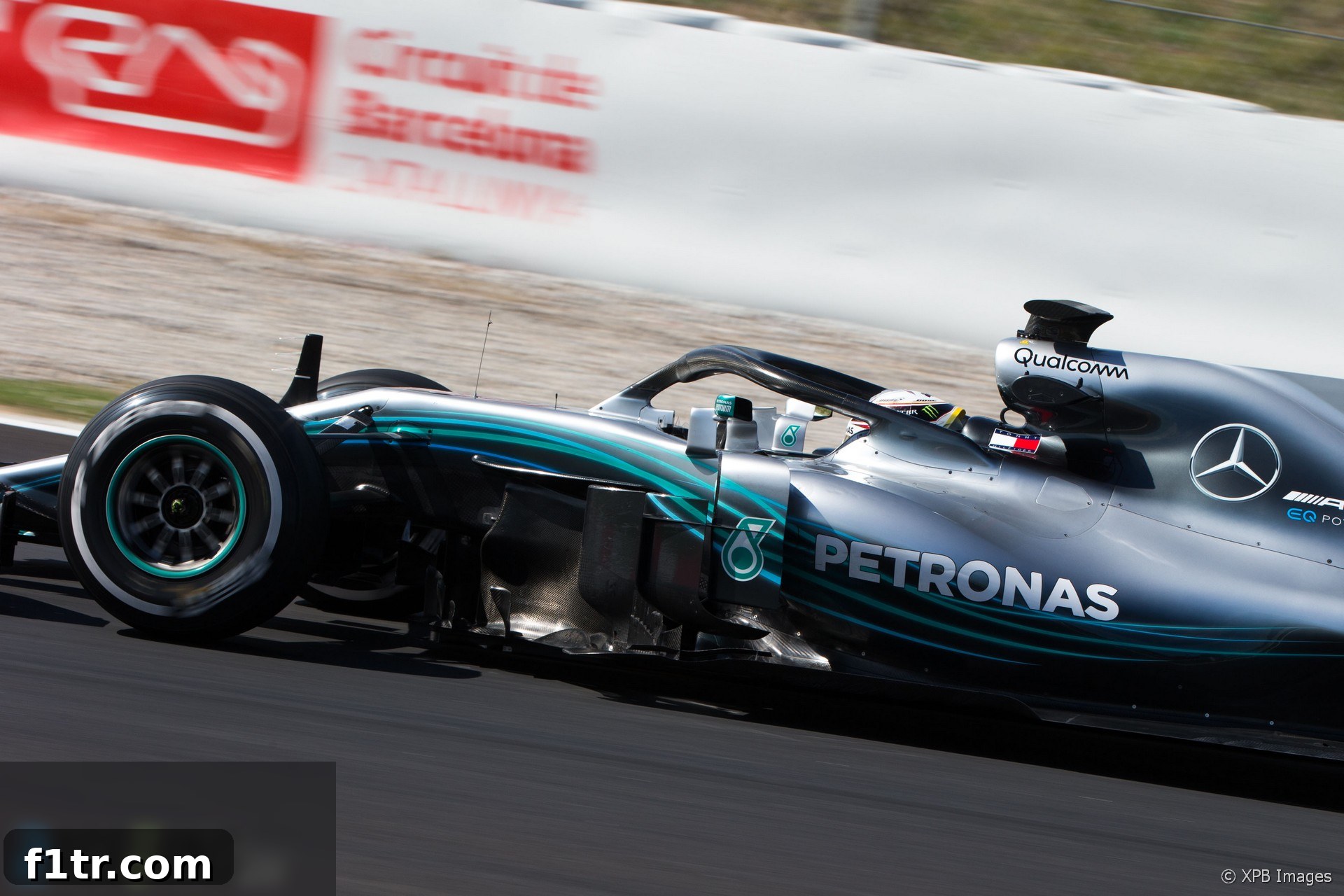
In the high-octane world of Formula 1, engineers and drivers relentlessly push the boundaries of speed and performance. The 2018 season offered a particularly stunning example of this relentless pursuit, showcasing cars capable of delivering unprecedented levels of downforce and grip. At the heart of this narrative was the formidable Mercedes W09, a machine that redefined what was thought possible at iconic circuits like the Circuit de Catalunya. Pre-season testing at the Spanish track revealed a staggering leap in performance, with the W09 demonstrating an ability to tackle corners that previously demanded a lift of the throttle, now taken flat-out by its elite drivers. This wasn’t merely an incremental improvement; it was a testament to sophisticated aerodynamic design, cutting-edge tyre technology, and the sheer bravery required to pilot these magnificent beasts.
The Mercedes W09: Mastering Catalunya’s Challenging Corners
The Circuit de Catalunya has long been a benchmark for Formula 1 car performance, with its diverse range of corners testing every aspect of a car’s chassis and aerodynamics. Among its most demanding sections are Turn Three, a long, sweeping right-hander, and Turn Nine, a rapid downhill left-hander. Historically, these corners necessitated a momentary lift from the accelerator pedal, even for the most seasoned F1 drivers, to maintain control and prevent the car from exceeding its grip limits. However, the Mercedes W09, during its inaugural test sessions, demonstrated a groundbreaking capability: both Lewis Hamilton, the reigning world champion, and his teammate Valtteri Bottas, confirmed they had taken these notoriously challenging corners without lifting, achieving what is known as ‘flat-out’ cornering.
This achievement sent ripples of excitement and awe through the paddock. Valtteri Bottas, reflecting on the experience, struggled to articulate the sensation. “It is something really special,” he remarked. “It is so difficult to describe though.” His struggle to find words underscored the extraordinary nature of the W09’s performance, hinting at a driving experience unlike anything encountered before. He elaborated on the immense forces at play: “We are going nearly 5Gs lateral in Turn Three and Turn Nine. And you can just feel it.” For context, 5G lateral force means the drivers are experiencing a sideways force five times their body weight, pushing them firmly against the side of the cockpit and testing the limits of human endurance and the car’s structural integrity.
The Physics of Flat-Out: Downforce, Grip, and Driver Trust
The ability to sustain 5G lateral forces through such high-speed corners is a direct consequence of the immense downforce generated by modern F1 cars, particularly the aerodynamically advanced W09. Downforce is essentially aerodynamic force that presses the car onto the track, increasing the grip available from the tyres. At high speeds, this force becomes so significant that, as Bottas vividly described, “The cars, there’s so much downforce in those speeds, you can really feel the whole car starting to bend and flex and still you have the grip and you need to trust the grip.” This sensation of the car flexing under extreme load, yet maintaining unwavering traction, highlights the intricate engineering and material science that goes into an F1 chassis. Drivers aren’t just steering; they are managing a finely tuned aerodynamic platform that is dynamically responding to colossal forces. The element of “trusting the grip” is paramount, requiring an almost supernatural connection between man and machine, pushing the car to its absolute limits while relying implicitly on its capabilities. “Sliding the car in those speeds is a good feeling, there’s a smile on my face every time,” Bottas added, conveying the pure exhilaration of mastering such extreme conditions.
Lewis Hamilton, a driver with over a decade of experience at the pinnacle of motorsport, echoed his teammate’s astonishment. “I’ve never experienced this kind of cornering performance in an F1 car before,” he stated, a significant declaration from a multiple world champion. He further emphasized the unprecedented nature of the W09: “We’re finding, because we have a lot more downforce, you’re flat through Turn Three. Yesterday I was flat through Turn Nine which I’ve never been in the whole 10, 12 years I’ve been racing. It’s awesome.” Hamilton’s perspective, rooted in extensive F1 history, underscores that this was not merely an incremental gain but a paradigm shift in cornering capability. The sheer joy and excitement conveyed by both drivers were palpable, reflecting the profound impact this level of performance had on their driving experience and perception of what was achievable.
Track Modifications vs. Pure Car Performance: A Nuanced View
While the W09’s performance was undeniably spectacular, Hamilton offered a more nuanced perspective on the dramatic speed gains observed at the Circuit de Catalunya. He suggested that recent modifications to the track itself might also be contributing to the quicker lap times. The circuit had undergone resurfacing and other changes, which could have provided additional grip and smoother driving lines, making it easier for cars to carry more speed through corners. “I don’t think we’re going to be three, four seconds faster at the first race,” Hamilton cautioned, tempering expectations for the season opener. “I think it’ll be more like a second or two, maybe.” This realistic assessment is crucial, as pre-season testing conditions and specific track layouts can sometimes exaggerate performance differentials. Nevertheless, even a one or two-second advantage per lap in Formula 1 is a monumental gain, underscoring the intrinsic brilliance of the W09 and its aero package.
Pirelli’s Perspective: The Physical Demands on Drivers and Tyres
The remarkable increase in cornering speeds and G-forces was not exclusive to Mercedes. Pirelli’s sporting director, Mario Isola, revealed that drivers from other teams also reported similar experiences, highlighting a widespread increase in F1 car performance across the grid in 2018. Isola shared an amusing yet telling anecdote from Daniel Ricciardo, then driving for Red Bull Racing, who described the intensity of Turn Nine: “It was funny the description from [Daniel] Ricciardo saying I’m losing my head in Turn Nine because of the lateral forces.” This vivid description paints a clear picture of the physical toll these speeds take on drivers, pushing their bodies and minds to the absolute limits.
Isola further elaborated on the driving dynamics at Catalunya: “But it is true, it’s quite impressive, they brake in Turn One, full throttle until Turn Four. So they do One, Two, Three all full throttle and the speed is really high.” This sequence, taking multiple corners entirely flat-out, demonstrates a fundamental shift in how drivers attack the circuit. The Pirelli chief noted a significant increase in speed compared to the previous year. “Last year we found 32, 35kph quicker in Turn Three, Turn Nine. I have to check the data but we have an additional step in speed in these corners.” This substantial speed increase, measured in tens of kilometers per hour, is a testament to the engineering prowess of the teams and the evolving capabilities of F1 tyres to withstand and transmit these colossal forces. The consequence of these advancements, Isola stressed, is that “the cars are becoming also really physical to drive because of the acceleration on the body of the driver.” This underscores the immense athleticism and mental fortitude required to compete at the elite level of Formula 1, as drivers must not only manage complex machinery but also endure extraordinary physical strain lap after lap.
The 2018 Formula 1 season thus began with a clear message: the cars were faster, more demanding, and more spectacular than ever. The Mercedes W09, with its pioneering ability to conquer Catalunya’s challenging corners flat-out, stood as a beacon of this new era of performance. It highlighted the relentless innovation in F1 design, the critical role of tyre technology, and the unwavering courage of the drivers who pilot these magnificent machines on the very edge of what is humanly and mechanically possible. This pursuit of speed, downforce, and unwavering grip continues to define Formula 1, captivating audiences and challenging the brightest minds in engineering and motorsport.
Go ad-free for just £1 per month>> Find out more and sign up
2018 F1 season
- F1 feared “death knell” for Drive to Survive after Ferrari and Mercedes snub
- McLaren staff told us we were “totally crazy” to take Honda engines in 2018 – Tost
- ‘It doesn’t matter if we start last’: How Red Bull’s junior team aided Honda’s leap forward
- Honda’s jet division helped F1 engineers solve power unit problem
- McLaren Racing losses rise after Honda split
Browse all 2018 F1 season articles