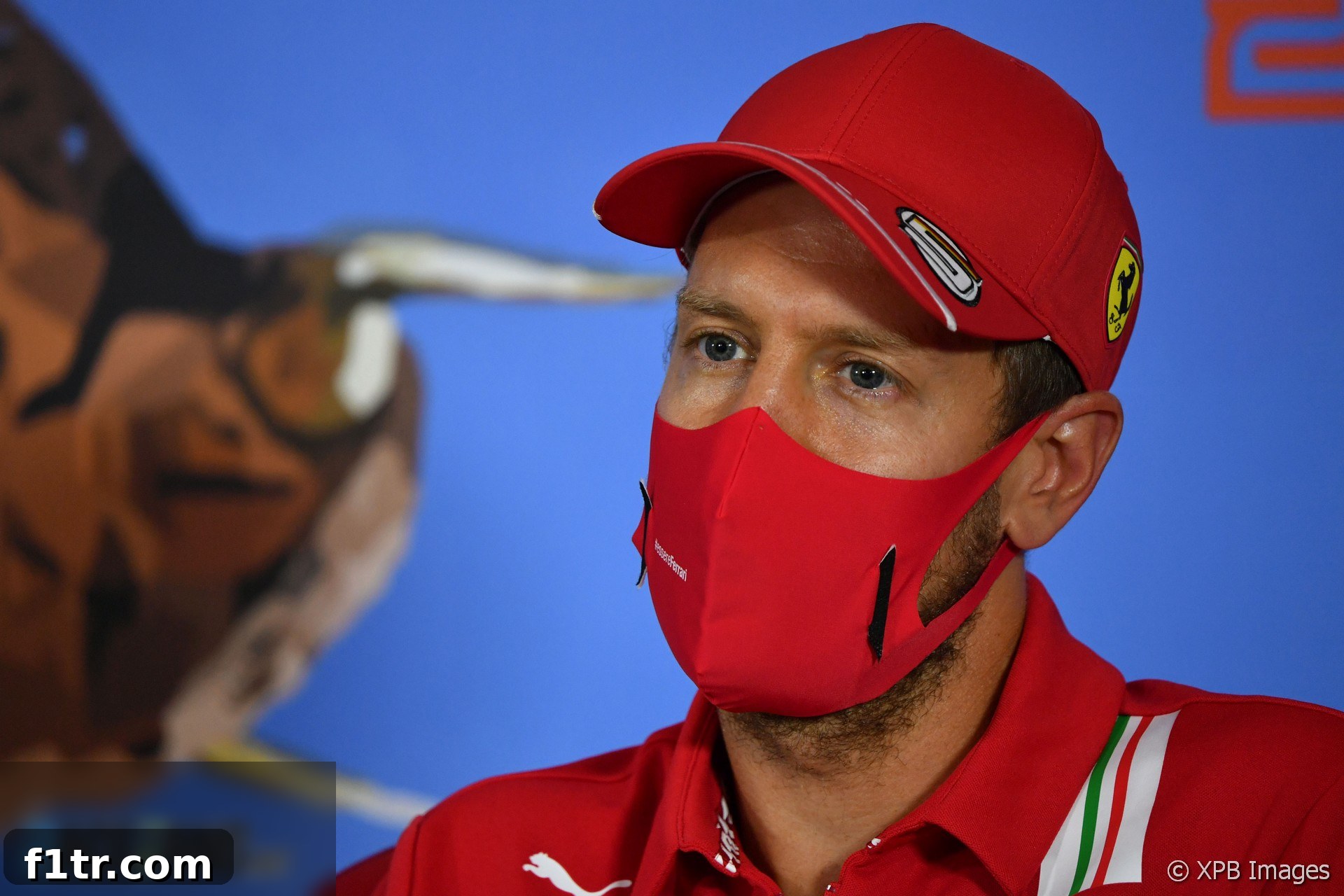
The murmurs of a potential reunion between four-time Formula 1 World Champion Sebastian Vettel and his former powerhouse team, Red Bull Racing, briefly ignited the motorsport world. However, the hopes of many fans for such a comeback have been definitively quashed by Red Bull Team Principal Christian Horner. Despite the romantic appeal of Vettel returning to the squad with whom he achieved unprecedented success, Horner has made it unequivocally clear that a 2021 drive for Vettel at Red Bull is not on the cards. This firm stance underscores Red Bull’s unwavering commitment to their existing driver lineup, a strategy they believe holds the key to future championship aspirations.
The speculation surrounding Vettel’s future intensified significantly following the bombshell announcement earlier in the year that he would be departing Ferrari at the end of the 2020 season. Suddenly, one of the sport’s most decorated drivers found himself without a confirmed seat for the subsequent year, triggering widespread debate and conjecture across the paddock and among fans. Given his illustrious history with Red Bull – where he clinched four consecutive drivers’ titles between 2010 and 2013 – a return to the Milton Keynes-based outfit naturally emerged as a compelling, albeit ambitious, possibility. For a brief period, the idea of Vettel once again donning the blue and yellow of Red Bull, potentially alongside Max Verstappen, captivated the imagination, promising a dream team scenario for many enthusiasts.
Christian Horner, in an interview with Sky, addressed these swirling rumors head-on, acknowledging that the “subject has been raised” internally. However, he quickly moved to dismiss any notion of an imminent return for Vettel, stating, “Our commitment is to our existing drivers. We think we’ve got a great pairing in Max and Alex and we think that that has great potential for the future as well.” This statement firmly positions Red Bull’s current strategy, prioritizing stability and the continued development of their present talent pool over a nostalgic reunion. The decision highlights the team’s long-term vision, which centers around nurturing their current lineup to challenge for titles in the coming seasons.
The foundation of Red Bull’s current driver strategy is built significantly around Max Verstappen. The Dutch sensation extended his contract with the team until 2023, signaling Red Bull’s dedication to building their future around his exceptional talent and championship-winning potential. Verstappen has consistently proven himself to be one of the fastest and most aggressive drivers on the grid, capable of challenging Mercedes’ dominance on any given Sunday. Pairing such a formidable talent with a four-time world champion like Vettel, while potentially thrilling, could also introduce complex team dynamics and rivalries that Red Bull may prefer to avoid. Horner’s comments suggest a preference for a more harmonious and clear-cut team structure, where Verstappen operates as the undisputed lead driver.
Alongside Verstappen, Red Bull’s other commitment is to Alexander Albon. The Anglo-Thai driver, who was promoted from AlphaTauri, has shown glimpses of promise and continues to develop within the demanding environment of a top-tier F1 team. While Albon’s performance has been scrutinized, particularly compared to Verstappen, Red Bull’s continued backing of him reflects their philosophy of nurturing talent from their robust junior program. The team has invested significantly in Albon’s development, providing him with the resources and support needed to adapt to the challenging RB16. Replacing him with a driver of Vettel’s caliber, even a former champion, would contradict this developmental approach and potentially disrupt the progress Albon has been making. Horner emphasized this point, stating, “Unfortunately it’s not something we’re going to be able to accommodate. That is a definite no I’m afraid. Sebastian is aware of that.” This leaves no room for ambiguity regarding Red Bull’s stance for the 2021 season.
Sebastian Vettel himself had expressed an openness to the idea of rejoining his former team, indicating that he would “respond positively to an approach” from Red Bull. Such a statement underscores the extraordinary circumstances a driver of his stature finds himself in – a multiple world champion actively seeking a competitive drive. For Vettel, a return to the environment where he achieved his greatest triumphs might have offered a sense of familiarity and an opportunity to reignite his career after a challenging final period with Ferrari. However, Red Bull’s definitive rejection means Vettel must now look elsewhere to secure his future in Formula 1.
Horner also offered his perspective on Vettel’s limited options for 2021. “It’s unusual for a four-time world champ to be out of a drive at this point of the year,” he commented, acknowledging the rare predicament. He speculated on Vettel’s most likely choices: “I assume either Racing Point or a year out and re-evaluate the options in a year’s time.” The Racing Point team, which will rebrand as Aston Martin Racing in 2021, has emerged as a front-runner for Vettel’s services. Led by billionaire Lawrence Stroll, the team presents an ambitious project with significant investment and a clear aim to compete at the sharp end of the grid. Joining Aston Martin could offer Vettel a multi-year deal, a leadership role in developing a new manufacturer team, and the opportunity to rebuild his confidence away from the intense pressure cooker of Ferrari.
A sabbatical year, as suggested by Horner, also remains a strong possibility for Vettel. Taking a year out would allow him to step back from the sport, recharge, and carefully consider his long-term future without the immediate pressure of securing a seat. This could also position him strategically for potential openings at top teams in 2022, when the driver market might look very different, particularly with a major regulation change expected. Such a move would allow him to avoid taking a less competitive seat simply to remain on the grid, preserving his legacy and ensuring he only returns if a truly compelling opportunity arises.
Beyond the main Red Bull Racing team, there was also a brief discussion surrounding Vettel’s potential return to the broader Red Bull family, specifically their junior F1 team, AlphaTauri. Franz Tost, AlphaTauri’s team principal, confirmed that any decision regarding Vettel rejoining their operation would ultimately rest with Red Bull owner Dietrich Mateschitz. While Mateschitz holds the ultimate say in all Red Bull motorsport matters, a move to AlphaTauri for Vettel would be a significant step down for a driver of his pedigree. AlphaTauri serves primarily as a proving ground for Red Bull’s young talent, making it an unlikely destination for a four-time world champion looking to contend for race wins and championships. Therefore, while theoretically possible from an ownership perspective, a return via AlphaTauri was never truly a serious consideration for Vettel’s immediate F1 future.
The Red Bull team’s resolute decision regarding Sebastian Vettel for the 2021 season sends a clear message about their current strategic priorities. Their commitment to Max Verstappen as the spearhead of their championship challenge, coupled with their investment in Alexander Albon’s development, forms the cornerstone of their future ambitions. While the idea of a legendary comeback was enticing, Red Bull has opted for stability and continuity. This leaves Sebastian Vettel to chart a new course, with the Aston Martin project or a temporary hiatus appearing as the most plausible avenues for the next chapter in his distinguished Formula 1 career. The 2021 driver market, already one of the most intriguing in recent memory, will undoubtedly continue to evolve, but one chapter – the Red Bull return – has now definitively closed.
Related F1 Insights and Driver Market Analysis
- Exploring the intricate dynamics of top-tier Formula 1 driver pairings.
- Understanding team strategies for long-term championship aspirations.
- Analyzing the impact of driver market movements on team performance.
- The challenges and opportunities facing a four-time world champion seeking a new F1 home.
- How F1 teams balance experience with emerging talent in their driver lineups.
Browse all F1 Driver Market Articles