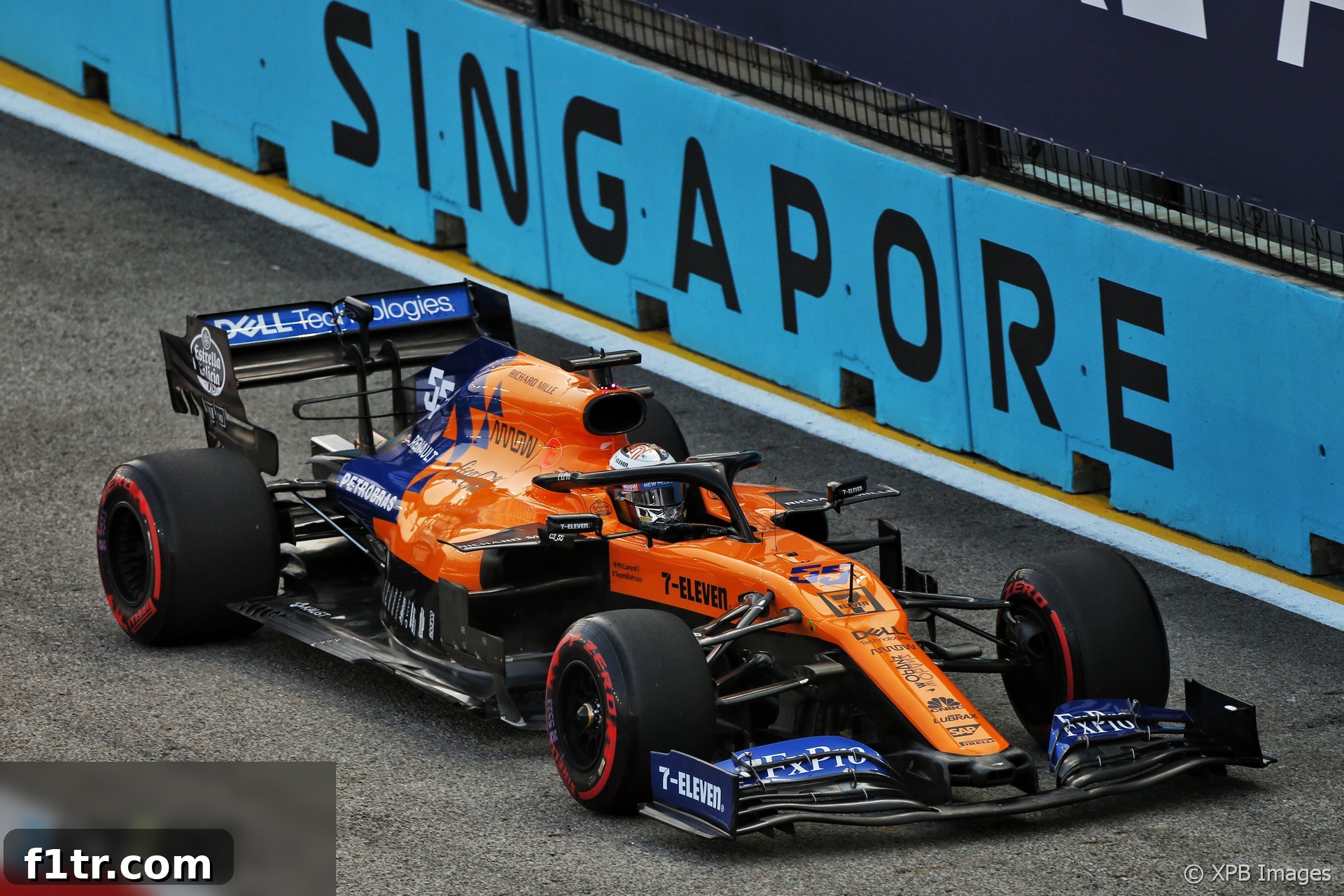
McLaren made significant strides in their car’s performance, particularly since the Singapore Grand Prix, a breakthrough highlighted by driver Carlos Sainz Jnr. This resurgence culminated in the team’s most impressive qualifying display of the year at the United States Grand Prix in Austin, marking a pivotal moment in their 2019 Formula 1 season.
At the Circuit of the Americas, McLaren demonstrated their enhanced pace by lapping within a mere 0.9% of the fastest car during qualifying. This represented their best competitive performance margin of the entire season up to that point, signalling a genuine improvement in their aerodynamic package and overall setup philosophy. Sainz himself shed light on the origins of this newfound speed, pinpointing a specific shift in the team’s approach.
“In my personal opinion, looking at qualifying pace, it appears that ever since Singapore, we’ve managed to uncover something fundamental with the car that truly unlocks its potential in qualifying trim,” Sainz explained. “Over these last few qualifying sessions, we’ve enjoyed a respectable and consistent advantage over our direct competitors, which is incredibly encouraging for the entire team.” This statement underscores a strategic success for McLaren, as finding an ‘on-switch’ for peak performance in crucial Saturday sessions can dramatically influence race outcomes by securing better starting positions.
However, the journey towards consistent top-tier performance is often fraught with challenges. Sainz openly acknowledged that the team had not yet been able to consistently translate their strong Saturday qualifying pace into equally dominant Sunday race performance. “Unfortunately, in race pace, that consistent performance has not been the case, as we witnessed in Mexico and in several other races throughout the season,” Sainz admitted. This discrepancy highlights a common hurdle for Formula 1 teams: optimizing a car for a single qualifying lap often requires different characteristics and compromises compared to a full-distance race where tyre management, fuel loads, and long-run stability become paramount.
Adding another layer of complexity to their Austin weekend, changes in wind direction further complicated the team’s understanding and setup. Formula 1 cars are exquisitely sensitive to external conditions, and wind direction shifts can significantly alter a car’s aerodynamic balance and driver feel. “As soon as we put the car on track with slightly different conditions on Saturday, the car responded much more positively to our inputs,” Sainz noted. This immediate feedback was crucial for the team.
“We hadn’t implemented any major setup changes, so we knew instantly that this improved response was primarily related to the track conditions themselves,” Sainz elaborated. “Consequently, the car immediately felt significantly better and more predictable to drive.” This observation suggests that McLaren’s car, post-Singapore updates, might have a narrower operating window or a particular sensitivity to environmental factors that, when aligned, unlocks exceptional performance, particularly over a single lap. Understanding and replicating these optimal conditions consistently across different circuits and weather scenarios remains a key area for development.
Throughout the 2019 season, McLaren had increasingly shown flashes of brilliance, often able to challenge and even overtake cars from the leading three teams during the opening stages of races. This aggressive start, fueled by strong qualifying positions, brought excitement and hope to the team and its fans. Yet, maintaining those positions proved to be a persistent struggle. “I’m always incredibly happy to overtake them and put them under pressure for a while,” Sainz remarked, reflecting on these early race battles. “But then, I’m equally frustrated by the inability to hold onto those positions for a sustained period.” This sentiment perfectly encapsulates the mixed emotions of a team on the cusp of true competitiveness but still grappling with underlying performance deficits.
The gap observed in qualifying—typically around eight tenths to a full second off the absolute fastest cars—translated into a more significant disadvantage during the actual races. “In race pace, that gap tends to increase due to factors like worse tyre management and a less confident feeling with the car over long stints,” Sainz explained. Tyre degradation is a critical aspect of modern Formula 1, and a car that is harder on its tyres or less stable over a race distance will inevitably lose ground to more efficient competitors. This insight precisely pinpoints where McLaren needed to focus their engineering efforts.
“It just goes to show that we must continue pushing hard in this direction and keep strengthening the car, predominantly for race pace,” Sainz concluded. “Because ultimately, that’s what will enable us to genuinely compete with and hold onto the front-running teams consistently.” The clear objective was to transform their Saturday speed into Sunday resilience, turning potential into tangible results and solidifying their position as a genuine challenger in the constructors’ standings.
Analysis: McLaren’s Qualifying Performance Trajectory in 2019
The data unequivocally supports Carlos Sainz’s observations regarding McLaren’s enhanced qualifying performance in the latter half of the 2019 season. Prior to the Singapore Grand Prix, across the initial 14 races, McLaren’s average qualifying pace put them approximately 1.7% slower than the fastest car on the grid. This percentage represents a significant deficit in the hyper-competitive world of Formula 1, translating to lap times that often placed them firmly in the upper midfield, sometimes struggling to break into Q3.
However, a noticeable and statistically significant improvement occurred following the Singapore race. Over the subsequent five races, McLaren managed to reduce this performance gap considerably, achieving an average qualifying deficit of just 1.48% relative to the fastest car. This reduction of 0.22% might appear marginal on paper, but in Formula 1, such a gain represents a substantial step forward in terms of car development and competitive standing. It demonstrates the effectiveness of the team’s updates, improved understanding of their car, or perhaps a more optimized setup philosophy that allowed them to extract more raw speed over a single lap.
This quantifiable improvement in qualifying trim meant that McLaren was not only closer to the front but also consistently outperforming their traditional midfield rivals. This period saw them regularly challenging for ‘best of the rest’ honors and occasionally mixing it with cars from the top three teams, particularly in Q3. The ability to start higher up the grid is inherently advantageous, providing cleaner air, reducing the risk of incidents in the midfield mêlée, and offering better strategic options during the race.
The ‘breakthrough’ identified by Sainz was therefore not merely anecdotal but firmly rooted in empirical data, reflecting a concentrated effort by the Woking-based team to unlock more performance from their MCL34 chassis. While the challenge of converting this raw qualifying pace into equally strong race-day consistency remained, the clear upward trend in their Saturday performance was a highly positive indicator of McLaren’s renewed technical capabilities and strategic direction for the seasons to come. It signaled a team that was learning, adapting, and successfully implementing developmental changes, moving them closer to their ultimate goal of returning to the sport’s pinnacle.
The 2019 season as a whole represented a crucial turning point for McLaren. After several challenging years marked by underperformance and leadership changes, the team began to show tangible signs of recovery under the new management structure and technical direction. The synergy between Carlos Sainz and his teammate Lando Norris, combined with a more reliable and competitive car, allowed McLaren to consistently score points and establish themselves as the clear leaders of the midfield. The performance improvements seen post-Singapore were a testament to the hard work at the factory and trackside, culminating in their best constructors’ championship finish in years, solidifying their position as a team on the rise. Their focus on understanding and optimizing both qualifying and race performance laid the groundwork for future successes.
2019 F1 Season Insights
- Ocon Reflects on His Career Low at the 2019 Melbourne Grand Prix
- McLaren Racing Reports Reduced £71 Million Loss in 2019
- Kvyat Hails 2019 Hockenheim Podium as Career Highlight
- FIA’s New Fuel Flow Meter Targets Suspected Ferrari Aliasing Trick
- Key Moments from ‘Drive to Survive’ Season Two: A Look Back at 2019 F1 Drama
Browse all 2019 F1 season articles