Formula 1 Singapore Grand Prix: Navigating the Tropical Storm – A Detailed Weather Outlook
The exhilarating spectacle of Formula 1 consistently delivers drama and unpredictable moments. While recent rounds have witnessed a string of rain-affected weekends, the upcoming Singapore Grand Prix at the iconic Marina Bay Street Circuit promises to uphold this trend, presenting an entirely unique set of challenges. As the pinnacle of motorsport returns to the Lion City, all eyes are on the skies, with forecasts suggesting a high probability of tropical downpours adding another layer of complexity to an already demanding event.
The Unforgiving Embrace of Marina Bay: Heat, Humidity, and High Stakes
The Singapore Grand Prix is renowned not just for its breathtaking night racing under floodlights but also for its exceptionally harsh environmental conditions. Nestled in a tropical climate, the Marina Bay Street Circuit consistently subjects drivers, teams, and machinery to extreme heat and oppressive humidity. This intense combination creates a physically grueling environment for the athletes and a significant engineering test for the sophisticated F1 cars.
Drivers face the daunting task of maintaining peak concentration and physical performance for nearly two hours in cockpit temperatures that can soar well above 50°C (122°F), coupled with humidity levels often exceeding 80%. Dehydration is a constant threat, and every muscle is strained as they navigate the circuit’s 23 demanding corners. For the cars, the lack of cool, dense air poses a formidable challenge to engine cooling systems, brakes, and even tire management, as the hot tarmac and humid atmosphere contribute to faster thermal degradation.
Advert | Become a Supporter & go ad-free
Decoding the Weekend Forecast: A Rising Tide of Rain Potential
The official weather forecast for the Singapore Grand Prix weekend indicates a progressively increasing chance of rain across all three days of track action. This evolving weather pattern could transform the strategic landscape of the race weekend, forcing teams to adapt their setups and tactics on the fly.
Friday: Practice Under Potentially Damp Skies
The opening day, featuring the crucial first and second practice sessions, currently holds a 20% probability of rainfall during daylight hours. While the initial Formula 1 session, FP1, doesn’t commence until 5:30 PM local time, and FP2 extends late into the night, any earlier showers could leave the track damp or create standing water. Fortunately, two support series are scheduled to run before the F1 cars, which will help sweep away any residual moisture, gradually rubbering in the track and providing a clearer picture for the F1 teams. Drivers are expected to face ambient temperatures of approximately 32°C (90°F) during FP1, dipping slightly to a still-warm 29°C (84°F) by 9:00 PM as the floodlights illuminate the circuit for FP2. These sessions are vital for car setup and driver acclimatization to the unique challenges of the Marina Bay layout, and any unexpected rain could compress valuable dry-track running time.
Saturday: Qualifying on the Edge with Increasing Rain Chances
Saturday brings a notable increase in the likelihood of rain, with a 40% chance predicted for daytime hours. The session timings for Formula 1 remain identical to Friday, with the final practice (FP3) and the all-important qualifying session unfolding under the evening sky. Forecasts project temperatures around 30°C (86°F) for FP3 and a consistent 29°C (84°F) for qualifying. A wet or mixed-condition qualifying session on a street circuit like Marina Bay is a truly high-stakes affair. The unforgiving concrete barriers leave zero margin for error, and a damp track can catch even the most experienced drivers off guard. Teams will meticulously monitor radar and track conditions, making split-second decisions on tire choices – whether to use intermediate tires, full wet tires, or brave it out on slicks if the track dries quickly. Grid position is paramount here, making a challenging qualifying session potentially race-defining.
Sunday: Race Day – The Ultimate Test of Strategy and Skill
The highest probability of rain is reserved for Sunday, with forecasts indicating a 60% chance of showers, some of which could be heavy and thundery. The pivotal question revolves around the timing and intensity of these potential downpours in relation to the 8:00 PM race start. Temperatures are expected to hover around 30°C (86°F) during the race, which, combined with the track’s tropical environment, would aid in drying the circuit relatively quickly if the rain ceases before or during the event. However, the sheer volume of water from tropical thunderstorms can overwhelm drainage systems, leading to standing water and prolonged periods of wet racing.
A wet Singapore Grand Prix is arguably one of the most demanding races on the calendar. Reduced visibility from spray, increased braking distances, and the ever-present threat of aquaplaning on a narrow street circuit elevate the risk factor exponentially. Race strategy becomes a complex tapestry of tire management, pit stop timing, and anticipating safety car deployments, which are almost a certainty in such conditions. Teams must be prepared for every eventuality, from a fully wet start to a dry race that gets interrupted by a sudden downpour, or vice-versa.
Advert | Become a RaceFans supporter andgo ad-free
A Look Back: Rain-Affected Singapore Grand Prix History
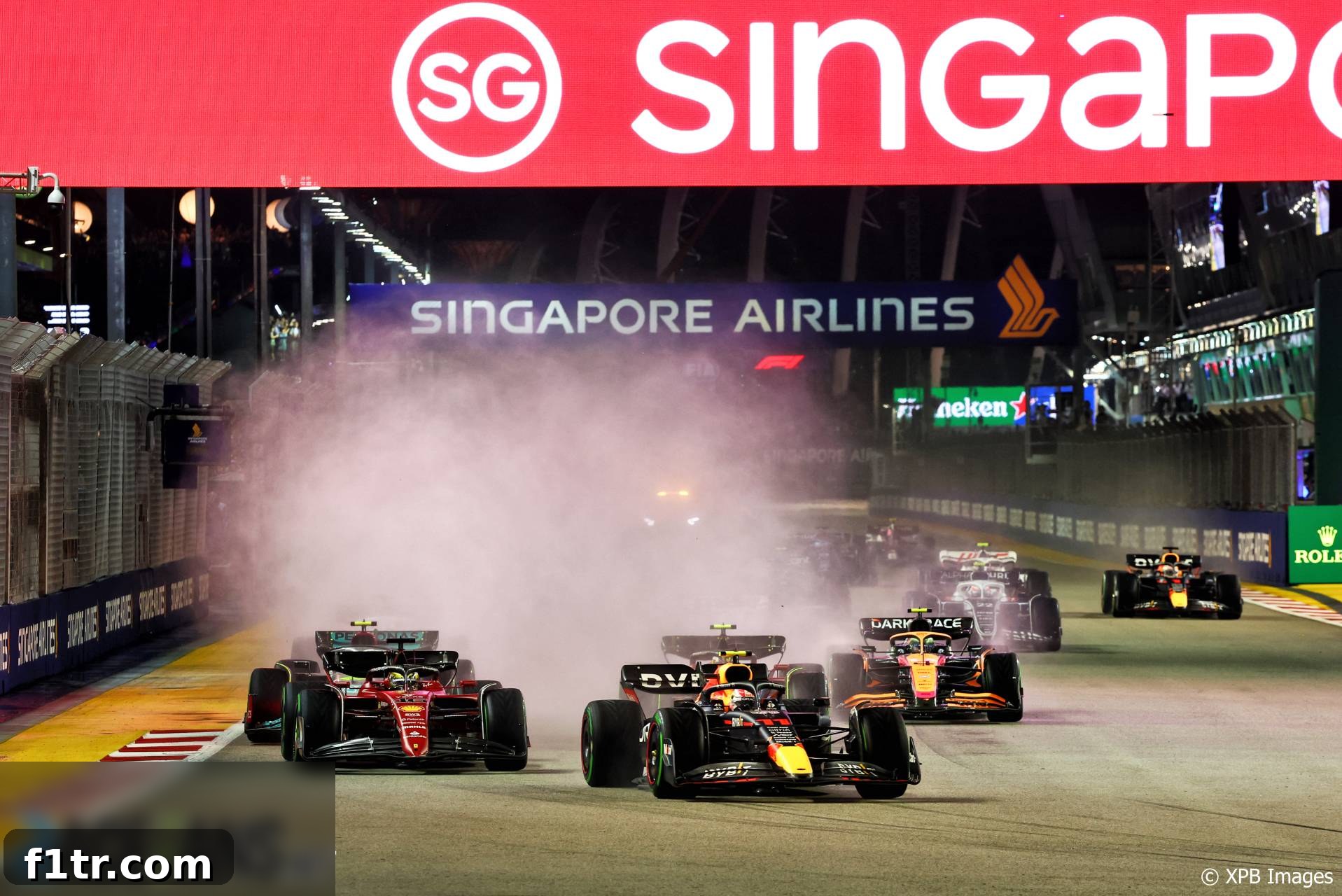
The precedent for a wet Singapore Grand Prix is firmly established. Two of the last four editions of this thrilling event have been significantly impacted by rain – notably in 2017 and again in 2022. The 2017 race, in particular, saw a chaotic start in torrential rain, leading to a multi-car pile-up involving front-runners and dramatically reshaping the championship battle. Last year’s race also featured challenging damp conditions, testing the drivers’ prowess and the teams’ strategic acumen. It’s worth noting that the event was absent from the calendar in 2020 and 2021 due to the global Covid-19 pandemic, meaning valuable recent dry-weather data might be less comprehensive than for other circuits.
Beyond the Driver: The Car’s Battle Against the Elements
Singapore’s unique climate doesn’t just push drivers to their physical limits; it also places immense stress on the intricate machinery of a Formula 1 car. The combination of high ambient temperatures and stifling humidity significantly impacts engine performance and reliability. Hot, humid air is less dense, meaning there’s less oxygen available for combustion within the engine, slightly reducing power output. Crucially, the less dense air also reduces the efficiency of the cooling systems, making it harder for radiators to dissipate heat from the engine, gearbox, and brakes. This can lead to components operating at higher temperatures, increasing the risk of overheating and potential failures.
However, the nature of the Marina Bay Street Circuit offers a slight reprieve. With its numerous tight corners and short straights, it has one of the lowest percentages of the lap spent at full throttle compared to any other circuit on the calendar. This characteristic helps ease the continuous strain on engine components, as they are not constantly operating at maximum power output, allowing for brief periods of reduced thermal load. Nonetheless, managing engine and brake temperatures remains a critical aspect of setup and race management in Singapore.
Strategic Implications and Fan Experience
For the teams, the threat of rain transforms race strategy into a dynamic, real-time puzzle. Tire choices become paramount, with the delicate balance between intermediate and full wet compounds needing constant evaluation. Safety car periods, highly probable in wet street races, can completely reshuffle the order and open up new strategic windows for pit stops. The race engineers and strategists on the pit wall will be working overtime, interpreting live weather radar, track conditions, and competitor strategies to make split-second decisions that could mean the difference between victory and defeat.
For the fans, whether watching trackside or from home, a wet Singapore Grand Prix promises to be an unforgettable spectacle. The challenging conditions amplify the drama, highlight driver skill, and often lead to unexpected results and thrilling overtakes. The combination of the floodlit circuit, the tropical downpour, and the raw speed of Formula 1 cars creates an atmosphere unlike any other race on the calendar.
For more real-time updates on track conditions, weather changes, and live race commentary throughout the weekend, keep a close eye on RaceFans Live and the official RaceFans Twitter account.
Explore More from the 2023 Singapore Grand Prix
- Sainz’s Singapore win made Leclerc focus on improving his race pace – Clear
- Singapore and Austin retirements cost me top 10 championship place – Ocon
- How Ocon’s “extreme” height for an F1 driver is helping other tall racers
- Steward’s admission Verstappen should have had penalty frustrates his rivals
- Drivers back Singapore qualifying tweak as rule changes again for Japanese GP
Browse all 2023 Singapore Grand Prix articles