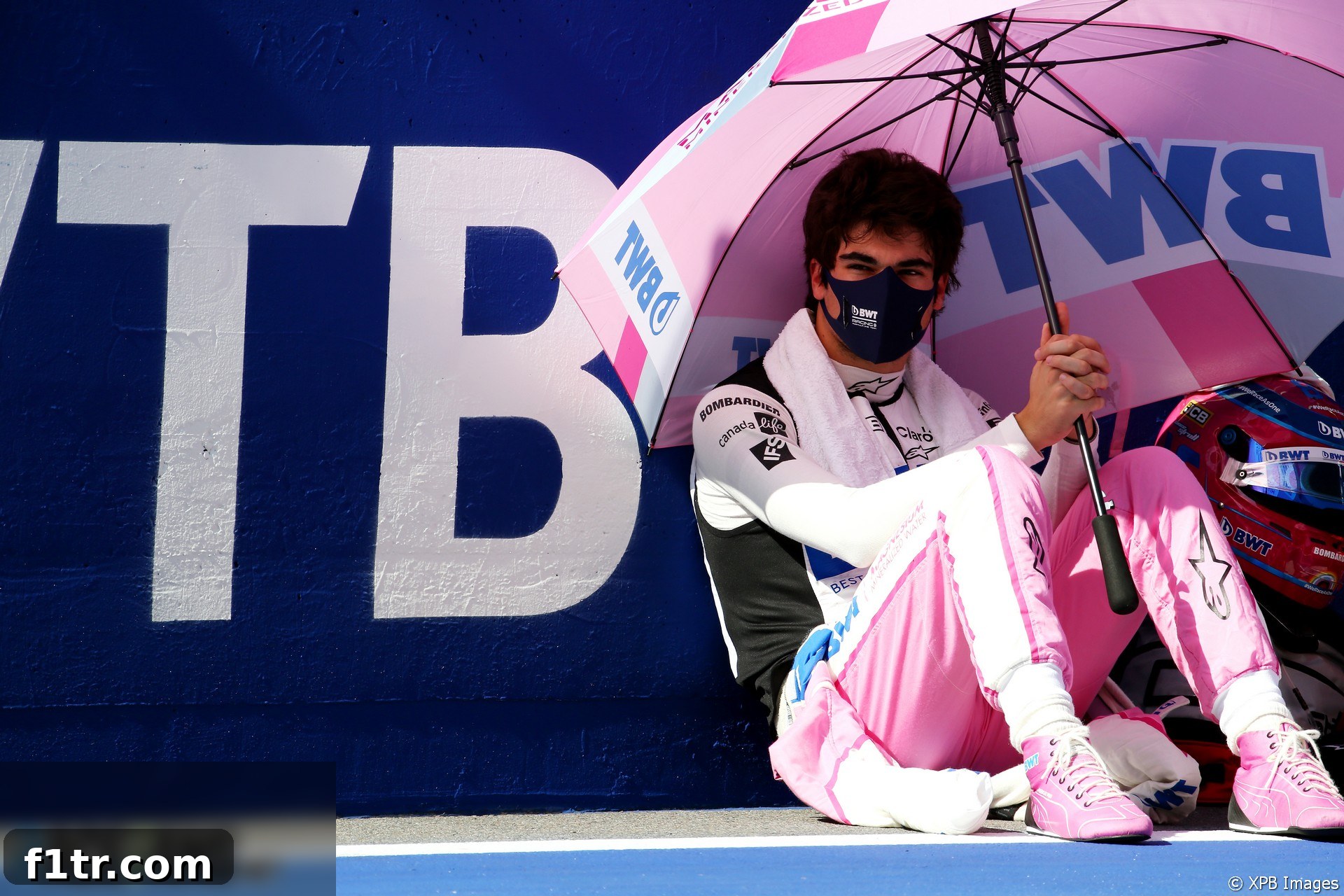
Lance Stroll’s 2020 F1 Season: A Deep Dive into Untapped Potential and Lingering Questions
The 2020 Formula 1 season presented a unique set of circumstances for all teams and drivers, yet for Racing Point, it was a year of remarkable highs and perplexing inconsistencies. Possessing what was arguably the third-quickest car on average throughout the championship, the team, now known as Aston Martin, should have seen both its drivers finish comfortably within the top ten of the drivers’ standings. While Sergio Perez, in a career-defining season, achieved this feat, Lance Stroll found himself outside this elite group, securing 11th place with a points tally surprisingly similar to drivers in significantly less competitive machinery. This discrepancy immediately raises questions about consistency, performance extraction, and the impact of mitigating factors that plagued Stroll’s campaign.
Advert | Become a Supporter & go ad-free
Indeed, Stroll’s 2020 journey was a turbulent one, marked by a frustrating blend of genuine misfortune, puzzling errors, and flashes of undeniable brilliance. Despite having a car capable of regularly challenging for top-six finishes, Stroll managed this achievement on only five occasions. This statistical anomaly underscores a season where the Canadian driver struggled to consistently convert the potential of the formidable ‘Pink Panther’ into championship points, prompting a closer examination of the various elements that shaped his year.
Navigating a Season of Challenges: Illness, Incidents, and Bad Luck
One of the most significant interruptions to Stroll’s 2020 season came in the form of Covid-19, which forced him to miss a race and undoubtedly impacted his physical and mental preparedness upon his return. His comeback, arguably premature, seemed to coincide with some of his least impressive performances of the year. The races immediately following his recovery were particularly challenging, suggesting a possible lack of full fitness or rhythm. At the Autodromo do Algarve, for instance, Stroll was involved in two separate collisions – first with Max Verstappen in a controversial practice incident, then with Lando Norris during the race itself. The following round saw another first-lap entanglement, this time with Esteban Ocon, which effectively ruined his afternoon and further curtailed his points-scoring opportunities. These incidents, while some might attribute to race craft, also highlighted a potential struggle to regain his optimal form after illness, raising questions about the timing of his return and whether he should have allowed himself more time to recover fully.
Beyond self-inflicted incidents and the effects of illness, Stroll also endured a considerable amount of pure misfortune that robbed him of valuable championship points. A prime example occurred at the Russian Grand Prix in Sochi, where Charles Leclerc collided with him on the opening lap, sending Stroll into the barriers and out of the race. Bizarrely, this incident went unpunished by the stewards, a decision that mirrored the controversy surrounding Stroll’s own overtly illegal overtake on Daniel Ricciardo at the Styrian Grand Prix earlier in the season, which the stewards later acknowledged was incorrectly judged. Such inconsistencies in stewarding decisions certainly added to the frustration of a season already fraught with challenges. Furthermore, Stroll was involved in a massive shunt at Mugello due to a dramatic tire failure, an unpredictable technical issue completely beyond his control, which resulted in yet another missed opportunity for points and a substantial repair bill for the team.
Stroll vs. Perez: A Tale of Two Seasons
Even when accounting for all these mitigating circumstances – the Covid-19 absence, the racing incidents, and the sheer bad luck – Lance Stroll’s overall contribution to Racing Point’s Constructors’ Championship aspirations fell significantly short of his teammate, Sergio Perez. Perez, who was ultimately shown the door at the season’s end, consistently out-performed Stroll, demonstrating a superior ability to extract the maximum potential from the RP20. This performance disparity was not merely anecdotal but was starkly reflected in their final points tally, with a substantial 50-point gap separating the two drivers. This margin, in fact, somewhat flattered Stroll, given that Perez missed one more race than his teammate due to his own bout with Covid-19, making his consistent outperformance even more remarkable.
Advert | Become a RaceFans supporter andgo ad-free
There were specific instances where Stroll arguably benefited from strokes of good fortune, such as at Monza, where the timing of a red flag and subsequent race suspension played into his hands, effectively promoting him ahead of his teammate without a direct on-track battle. This particular event led to the first of his two podium finishes in 2020. However, even on these occasions of success, questions lingered about his ultimate performance. At Monza, despite being in a strong position at the restart, Stroll was ultimately overtaken by both Pierre Gasly and Carlos Sainz Jnr, who went on to secure a sensational first and second place respectively, leaving Stroll to settle for third. Later in the season, at the Sakhir Grand Prix, Stroll again found himself on the podium, yet it was Perez who delivered a truly heroic drive, recovering from last place on lap one to take a stunning victory, even overtaking Stroll along the way. These examples highlight a recurring theme: while Stroll could occasionally find himself in strong positions, Perez often demonstrated a superior ability to convert those opportunities into maximum results, or to recover from adversity with greater efficacy.
Perez’s reputation has long been built on his exceptional race pace and tire management, often overshadowing his qualifying speed. Yet, in 2020, he consistently out-qualified Stroll with remarkable ease, a pattern that continued even after his return from illness. In the 11 races they contested together after Perez’s recovery, Stroll managed to out-qualify him only once. This comprehensive dominance in both qualifying and race conditions by Perez paints a clear picture of his superior performance throughout the season, further amplifying the scrutiny on Stroll’s overall consistency and raw pace.
Lance Stroll: 2020 Season Snapshot |
|
|---|---|
| Beat team mate in qualifying | 5/16 |
| Beat team mate in race | 5/9 |
| Races finished | 11/16 |
| Laps spent ahead of team mate | 378/685 |
| Qualifying margin (vs Perez) | +0.26s |
| Points | 75 |
The accompanying statistical snapshot further underscores these points. Stroll’s record of beating his teammate in qualifying (5 out of 16 races) and in races (5 out of 9 completed races where both finished) reveals a significant imbalance. The qualifying margin of +0.26s against Perez is a substantial deficit in Formula 1 terms, highlighting a consistent struggle for one-lap performance. While he finished 11 out of 16 races, the laps spent ahead of his teammate (378 out of 685) also show that even within races, Perez often held the upper hand. These figures, combined with the 75 points Stroll accumulated, tell a story of a season where potential was often hinted at but rarely fully realized.
The Glimmer of Brilliance: Stroll in Tricky Conditions
Amidst the challenges and inconsistencies, there were undeniable moments where Stroll truly shone, particularly in unpredictable and tricky conditions. The Turkish Grand Prix at Istanbul Park stands out as the absolute highlight of his season. In a chaotic, rain-hit qualifying session on a notoriously low-grip surface, Racing Point’s gamble on intermediate tires proved inspired, and it was Stroll who seized the opportunity. After Antonio Giovinazzi inadvertently held up Perez, Stroll navigated the treacherous conditions with remarkable skill to secure a sensational pole position – his first in Formula 1. His impressive run continued into the rain-affected race, where he led for a significant period. While he ultimately dropped down the order to finish ninth, apparently due to front wing damage that severely affected his car’s handling, this performance was a powerful testament to his ability to excel when conditions are at their most challenging.
This prowess in adverse weather or mixed conditions has been a recurring theme throughout Stroll’s career, consistently earning him praise. From his maiden podium at the 2017 Azerbaijan Grand Prix to strong drives in other wet races, his natural feel for a car on a slippery track is a genuine asset. This inherent strength makes him a fascinating, albeit difficult, driver to rate amongst Formula 1’s elite. The paradox of Stroll’s career is precisely this: he can produce exceptional performances when the variables are high, yet he often struggles to consistently match the pace of his teammate under more conventional, stable conditions. This inconsistency in optimal conditions remains the central question mark over his potential to be a consistent front-runner in the sport.
The Hulkenberg Factor: A Telling Benchmark
Further compounding the narrative of Stroll’s challenging 2020 season was the performance of Racing Point’s substitute driver, Nico Hulkenberg. Hulkenberg, stepping in unexpectedly on two separate occasions due to driver illnesses, provided an illuminating benchmark. Notably, in their second race together at Silverstone, Hulkenberg, with minimal preparation and having been out of a competitive F1 seat, managed to out-qualify Stroll. This impressive feat by a driver making a last-minute return raised significant questions about Stroll’s raw speed and consistency, particularly compared to a proven F1 veteran. The fact that an emergency stand-in could immediately challenge, and in some instances surpass, Stroll’s performance, underscored the persistent queries about his benchmark pace.
This naturally leads to a provocative question: when Nico Hulkenberg returned as a substitute for Stroll at the Nürburgring later in the season, did Racing Point, for that brief period, inadvertently field their strongest driver line-up of the entire year? This thought experiment, while hypothetical, starkly highlights the perception of Stroll’s relative performance. While Stroll undoubtedly possesses talent, particularly in specific conditions, the comparison to both his full-time teammate Sergio Perez and the experienced substitute Nico Hulkenberg often placed him on the back foot, suggesting a need for greater consistency and an ability to extract more performance from the package in all scenarios.
Advert | Become a RaceFans supporter andgo ad-free
Conclusion: A Season of Unfulfilled Promise and Enduring Debate
Lance Stroll’s 2020 Formula 1 season with Racing Point was a complex tapestry of highs and lows. On one hand, he demonstrated flashes of exceptional talent, most notably his pole position at Istanbul and his two podium finishes, proving his capability to deliver under pressure and in challenging circumstances. He also faced genuine setbacks, including illness, unlucky collisions, and technical failures that undoubtedly impacted his championship standing. However, the overarching narrative of the season was one of unfulfilled potential, particularly when juxtaposed against the consistent excellence of Sergio Perez in the same machinery.
The statistical data and direct comparisons reveal a consistent deficit in both qualifying and race pace against his teammate, a pattern that extends to his performances against even a last-minute substitute. While his ability to impress in the wet or in chaotic races is a genuine strength, his struggle for consistent front-running pace in normal conditions remains the biggest hurdle to his ascension among Formula 1’s top echelon. The 2020 season, therefore, solidified Stroll’s reputation as a driver with bursts of brilliance but also highlighted the persistent questions surrounding his consistency and overall pace extraction. As he moved into the Aston Martin era, the lessons from this tumultuous yet illuminating season would undoubtedly be crucial for his continued development and quest to convert raw talent into sustained, top-tier performance.
2020 F1 season review: In-depth Driver Rankings and Analysis
- 2020 F1 season driver rankings #1: Lewis Hamilton
- 2020 F1 driver rankings #2: Max Verstappen
- 2020 F1 driver rankings #3: Charles Leclerc
- 2020 F1 driver rankings #4: Carlos Sainz Jnr
- 2020 F1 driver rankings #5: Daniel Ricciardo
Browse all 2020 F1 season review articles