The exhilarating spectacle of the Jeddah Corniche Circuit offered the Formula 1 community its second intense showdown of the 2023 season, following the opening round in Bahrain. While many anticipated significant shifts in the competitive hierarchy, the overall pecking order among the front-running teams remained strikingly consistent. However, a deeper dive into the qualifying sessions and team performances reveals a more nuanced picture, hinting at underlying dynamics and unexpected challenges that could shape the championship battle.
Indeed, the top four teams solidified their positions at the pinnacle of the grid, concluding qualifying in an identical sequence to two weeks prior in Sakhir. Red Bull Racing continued to assert its dominance, leading the pack, followed by Ferrari, Aston Martin, and Mercedes. This consistent performance from the established front-runners suggests a level of inherent car strength and development that holds across different circuit characteristics. At the other end of the spectrum, Williams found themselves once again anchoring the grid, grappling with fundamental performance deficits that appear persistent. The real intrigue and shifts, therefore, unfolded within the highly competitive and unpredictable midfield.
In the fiercely contested midfield, subtle yet significant changes in performance order were observed. Haas, which had shown promising pace in Bahrain to rank as the fifth-quickest team, experienced a dip in Jeddah, falling to seventh, trailing behind both Alpine and an improved Alfa Romeo. This fluctuation highlights the tight margins and the critical importance of fine-tuning car setup for specific track demands. Unlike the season opener, Alfa Romeo demonstrated a noticeable improvement, successfully out-pacing AlphaTauri, a development that undoubtedly sparked both satisfaction within the Swiss-based team and concern within its Italian counterpart. These midfield battles are often where strategic brilliance and driver prowess truly shine, providing thrilling action throughout the race weekend.
While statistical analysis might suggest a narrowing of Red Bull’s formidable margin over their closest rivals in Jeddah compared to Bahrain, the underlying reality painted a different, more emphatic picture of their superiority. Max Verstappen, the reigning world champion, consistently set the benchmark for pace throughout the practice sessions and the initial stages of qualifying. His blistering speed indicated a comfortable half-second advantage over his nearest competitor in both final practice and Q1. It was only an unforeseen mechanical issue during Q2 that prevented him from continuing his charge for pole position, forcing him to abort his run. Despite this setback, his teammate Sergio Perez ultimately secured pole, and even Perez himself admitted that a perfectly executed final lap in Q3 could have yielded an even faster time. This collective performance leaves little doubt that, had Verstappen’s car remained trouble-free, Red Bull’s advantage would have been even more pronounced, likely by several tenths of a second, solidifying their position as the undisputed pace-setters.
This assessment was echoed by prominent figures within the sport, including Mercedes team principal Toto Wolff. “If Max would have finished qualifying, [the gap] would have been even bigger,” Wolff conceded, acknowledging the sheer pace that Verstappen and Red Bull possess. For Wolff, the second race of the season served as a stark reaffirmation of the substantial gains made by two specific teams: Red Bull and Aston Martin. He observed, “I was just looking at last year’s qualifying and everyone is pretty much where they were but Aston Martin and Red Bull just made an unbelievable step forward.” This statement underscores the revolutionary nature of the progress achieved by these two outfits, fundamentally altering the competitive landscape of Formula 1. It also tacitly acknowledges the relative stagnation, or at least a less dramatic rate of improvement, among other teams including his own Mercedes squad.
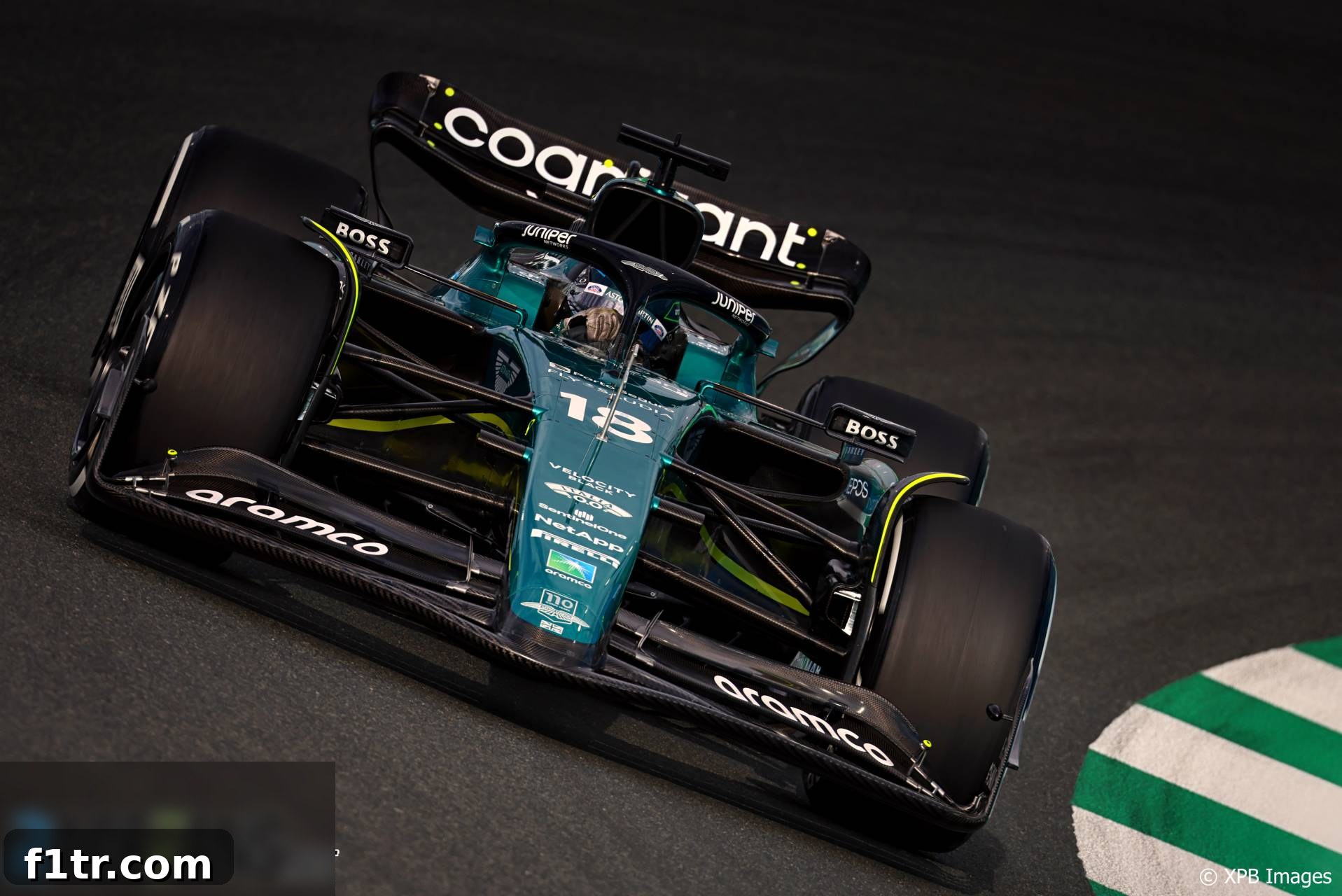
Aston Martin’s ascent has been one of the most compelling narratives of the early 2023 season, validating Wolff’s observation. Their transformation is nothing short of remarkable. Having stunned the paddock with an astounding two-and-a-half second year-on-year gain in Bahrain, they demonstrated continued, albeit slightly less dramatic, progress in Jeddah, picking up a further second and a half compared to their 2022 performance at the same circuit. This consistent improvement across different tracks highlights the fundamental strength of their AMR23 chassis and the effectiveness of their development program. It is important to note, however, that the tightening of Turn 22 at the Jeddah Corniche Circuit, which resulted in a reduction of approximately 40kph in cornering speeds, played a role in limiting the absolute performance gains for all competitors, including Aston Martin. Despite this circuit modification, their substantial year-on-year leap remains a testament to their engineering prowess and ambition, positioning them firmly as a genuine challenger for podiums and potentially even race wins.
The comparative analysis of lap times between the 2022 and 2023 seasons at the Jeddah Corniche Circuit presents an interesting divergence from the trend observed in Bahrain. While the entire field managed to lap the Bahrain International Circuit quicker than the previous year, this weekend’s performance in Jeddah saw the field split into two distinct halves: those who improved their lap times compared to 2022, and those who found themselves slower. Surprisingly, Red Bull, despite their dominant pace, fell into the latter camp. This anomaly, however, can be largely attributed to Verstappen’s Q2 mechanical issue, which prevented him from setting a representative qualifying lap in Q3. Had he been able to complete his run, it is highly probable that Red Bull would have joined the faster contingent. Nevertheless, the fact that the two quickest teams in qualifying recorded slower lap times than they did in the previous year, while a team at the back like Williams managed to gain half a second, indicates a significant compression of the field. As witnessed in Bahrain, the gap from the front of the grid to the very back remained a remarkably tight 1.7 seconds, underscoring the intense competition and the minimal margins separating success from struggle in modern Formula 1.
AlphaTauri, in particular, had significant cause for frustration following the Jeddah qualifying sessions, enduring a deeply disappointing outcome that saw both of their drivers eliminated in Q1. Their struggles were compounded by the fact that they lapped over six-tenths of a second slower than their performance at the same circuit in 2022. This regression starkly contrasts with the pre-season predictions and internal targets set by the team. The underwhelming performance prompted an unusually candid and unhappy response from team principal Franz Tost, who openly expressed his growing distrust in the information being supplied by his engineers. Such public statements from a team principal are rare and signal deep-seated issues within the technical department, potentially stemming from a fundamental misunderstanding of the car’s behavior or a failure to implement effective development strategies. The pressure on AlphaTauri to identify and rectify these problems will be immense as the season progresses, especially given their role as a sister team to the dominant Red Bull operation.
Teams’ Competitive Standing and Year-on-Year Improvement
Analyzing team performance across the initial races offers crucial insights into the competitive landscape of the 2023 Formula 1 season. While Red Bull stands head and shoulders above the rest in terms of raw pace, their nearest contenders are locked in a fascinating battle for supremacy. Ferrari, with their powerful engine and strong straight-line speed, continues to challenge, though perhaps not with the consistent all-around performance needed to truly pressure Red Bull. Mercedes, despite Toto Wolff’s candid remarks, are diligently working to understand and extract more performance from their W14 chassis, which still presents a complex development curve. The clear outlier, and indeed the biggest positive story, is Aston Martin, whose remarkable gains underscore a successful winter development phase and astute leadership. The true measure of these teams will come over multiple races, showcasing their adaptability to diverse circuits and their capacity for in-season development.
The year-on-year improvements, or in some cases regressions, highlight the ever-evolving nature of Formula 1 regulations and car development. The teams that have effectively interpreted and optimized their designs under the current ground-effect aerodynamics are reaping the rewards. Aston Martin’s jump is the most evident example, benefiting from a new technical philosophy. Conversely, teams like AlphaTauri are struggling to find the sweet spot, indicating a potential misstep in their design or development direction. Even for the top teams, maintaining or significantly improving year-on-year performance requires immense effort, as the law of diminishing returns often applies once a mature concept is established. The subtle changes at circuits like Jeddah, such as the modifications to Turn 22, also subtly influence these comparisons, making direct correlations challenging but nonetheless informative.
Field Dynamics and the Battle for Every Tenth
The 2023 season has quickly established a compelling dynamic within the Formula 1 field. The consistency of the 1.7-second gap from the fastest car to the slowest across both Bahrain and Jeddah speaks volumes about the current state of competition. This tight compression means that even small errors in qualifying, minor setup discrepancies, or slight drops in driver performance can have dramatic consequences for grid position. The midfield, in particular, is a crucible of intense rivalry, where teams are separated by mere hundredths of a second. This closeness forces strategists and engineers to push the boundaries of car setup, tire management, and race strategy to gain even a marginal advantage. For fans, this translates into exciting and unpredictable racing, as positions can change rapidly and unexpected heroes can emerge from the pack.
The Jeddah Corniche Circuit, with its unique blend of high-speed sections and tight technical corners, tested this field compression to its limits. Its demanding nature rewards perfectly balanced cars and drivers with unwavering confidence. The fact that Red Bull, Ferrari, and Mercedes occupied the top spots, even with Verstappen’s Q2 mishap, confirms their fundamental strength. Yet, the rapid emergence of Aston Martin suggests that the established order is not impenetrable. As the season progresses, the challenge for all teams will be to understand their car’s strengths and weaknesses across a broader range of tracks, to bring consistent upgrades, and to extract peak performance from their drivers under immense pressure. The early races have set a thrilling tone, promising a season where every point, every position, and every tenth of a second will be fiercely contested.
2023 Saudi Arabian Grand Prix Insights and Further Reading
The 2023 Saudi Arabian Grand Prix provided crucial insights into the evolving competitive landscape of Formula 1. From Red Bull’s continued dominance to Aston Martin’s surprising ascent and AlphaTauri’s struggles, the race weekend offered plenty of talking points. To delve deeper into the events and broader implications, explore these related articles:
- “Total transparency” needed over Ben Sulayem allegations – Russell
- FIA president Ben Sulayem under investigation for interfering in F1 race – report
- Two races, no points: How 2023 compares to McLaren’s worst starts to a season
- Don’t complain about Red Bull dominating F1, they deserve it – Sainz
- Alfa Romeo identify “massive debris” which ruined Bottas’ race
Browse all 2023 Saudi Arabian Grand Prix articles