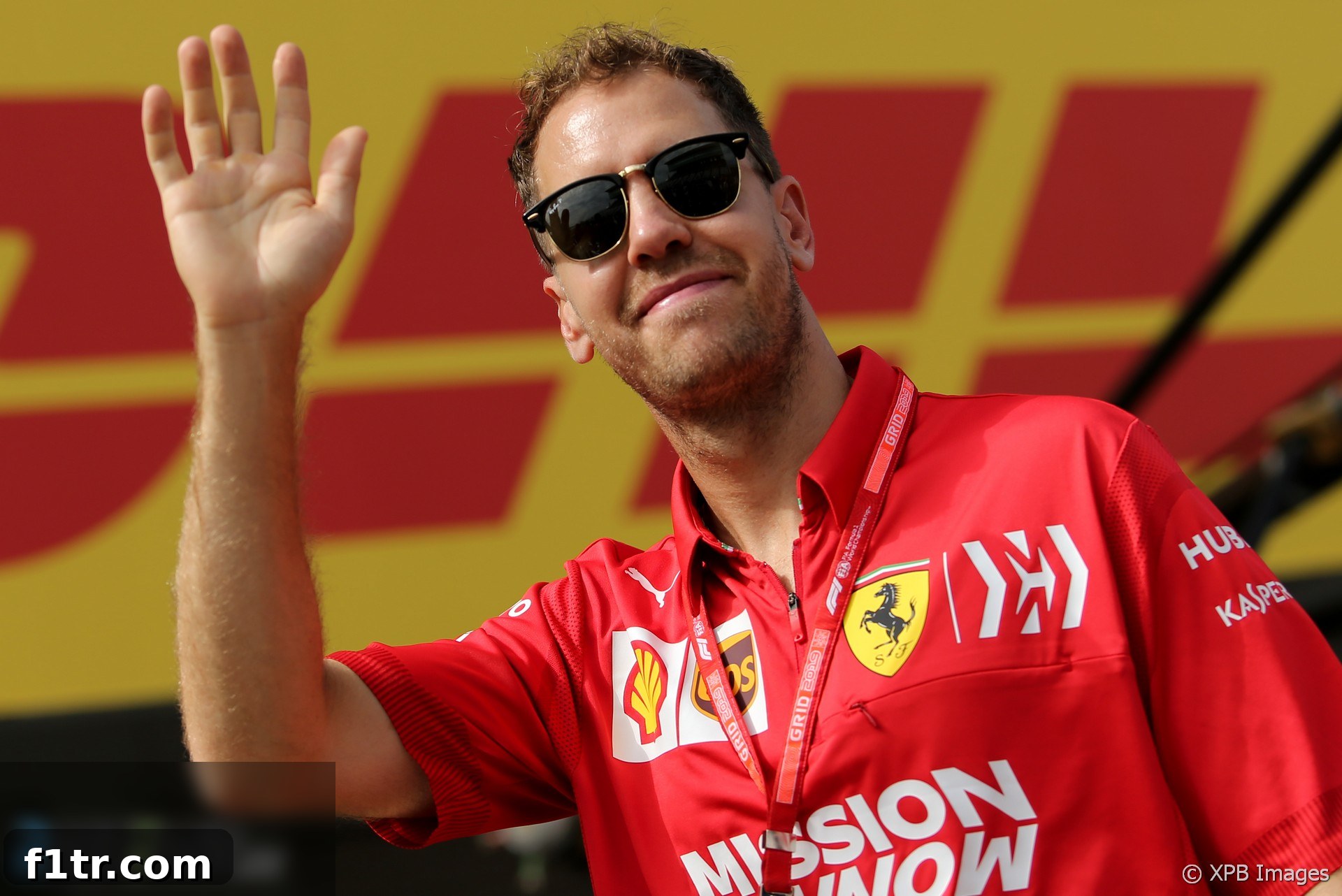
Sebastian Vettel Admits Error in Disobeying Ferrari Team Orders at Russian Grand Prix
In a candid reflection following the contentious 2019 Russian Grand Prix, four-time World Champion Sebastian Vettel openly acknowledged his misjudgment in disregarding Ferrari’s directive to allow his teammate, Charles Leclerc, to overtake him. The incident, which unfolded under the Safety Car period at the Sochi Autodrom, ignited significant debate within the Formula 1 paddock and among fans, casting a spotlight on team dynamics and the ever-present challenge of managing two competitive drivers under the same roof.
Advert | Become a Supporter & go ad-free
The Controversial Race Start and Unheeded Instructions
The sequence of events that led to the team orders saga began shortly after the start of the race. Following a strategic agreement designed to maximize Ferrari’s chances against rival Mercedes driver Lewis Hamilton, Vettel was permitted to slipstream past Leclerc and secure the lead. The understanding was that Vettel would then cede the position back to Leclerc at a later stage, honoring a pre-race team strategy that aimed to give the younger Monegasque driver the benefit of track position. However, as the race unfolded and Ferrari issued repeated instructions—on no fewer than three separate occasions—for Vettel to facilitate the swap, the German driver remained resolute in holding his position.
This refusal to comply immediately sparked internal tension and external speculation. For a team like Ferrari, steeped in history and known for its fiercely competitive drivers, such public dissent from a seasoned champion like Vettel was highly unusual and indicative of underlying pressures. The airwaves crackled with increasingly urgent messages from the pit wall to Vettel, all met with his determined resistance, setting the stage for a dramatic post-race reckoning. The controversy highlighted the perennial challenge for Formula 1 teams: balancing individual driver ambition with overarching team strategy, especially when championship implications are at stake.
Vettel’s Candid Admission and Reflection
Speaking to German media at Suzuka ahead of the Japanese Grand Prix, Vettel addressed the incident directly, albeit without delving into the specific confidential terms of Ferrari’s pre-race agreement. He acknowledged receiving the instructions from the pit wall unequivocally: “I got the message on the radio to change the places and did not do it.” This stark admission was then followed by a critical self-assessment: “That was certainly not right.”
Vettel’s willingness to admit fault publicly is noteworthy. It underscores the immense pressure drivers operate under, where split-second decisions often blur the lines between personal ambition and team directives. While many might argue that a driver, especially a multi-championship winner, should always fight for every inch, the context of team orders—designed for the collective good—adds a layer of complexity. His reflection suggests an understanding of the broader team strategy and the potential ramifications of his actions, even if, in the heat of the moment, competitive instinct took precedence. This public confession not only demonstrated a degree of accountability but also offered a glimpse into the psychological toll such decisions can take on a driver.
Ferrari’s Approach to Conflict Resolution
In the immediate aftermath of the Russian Grand Prix, Team Principal Mattia Binotto took swift action, holding separate discussions with both Vettel and Leclerc. This approach was likely designed to diffuse tension, understand each driver’s perspective, and reiterate the team’s unified goals. Despite the gravity of the situation, Vettel indicated that Ferrari opted against formally codifying new rules or “writing anything in stone” following the Sochi events.
“I don’t think it is necessary,” Vettel commented, expressing his belief in the team’s ability to move forward without rigid new protocols. He added, “Probably [there are] certain things that we could have done better looking back. But in the end, we look forward to this race and the next races, so I’m not worried too much.” This stance suggests a preference for maintaining a flexible, trust-based working relationship rather than imposing strict, potentially constricting, regulations. It also reflects a desire within Ferrari to avoid dwelling on past controversies and instead channel their energy into future performance, a crucial mindset for any competitive racing outfit.
Binotto’s decision not to overreact by implementing harsh new rules could be interpreted as a strategic move to preserve harmony and individual initiative within the team. While team orders are a fundamental aspect of Formula 1, particularly in constructor battles, balancing them with drivers’ natural competitive drives remains one of the most delicate challenges for any team principal. Ferrari’s measured response aimed to reinforce a sense of collective responsibility while allowing their star drivers the freedom to race, albeit within defined boundaries.
Analysing Ferrari’s Pace and Future Optimism
Despite the internal friction, Ferrari’s overall performance in Russia provided a significant morale boost and a basis for genuine optimism for the remaining races of the season. Vettel was particularly encouraged by the team’s outright pace, stating, “I think Russia in a way has been a very positive weekend because it’s been the first weekend where we really had the pace to win.”
This assessment points to a critical turning point for the Scuderia in the 2019 F1 season. In previous races, while Ferrari had secured strong results, Vettel felt they had often benefited from specific circuit characteristics, such as their formidable straight-line speed, or advantageous qualifying positions. For instance, in Singapore, despite a victory, Vettel admitted, “in terms of true race pace, Mercedes was still faster than us.” The Sochi Autodrom, with its long main straight and mix of medium-speed corners, proved to be a track where Ferrari’s SF90 chassis, combined with its powerful engine, truly came alive, allowing them to genuinely challenge the dominant Mercedes team.
The ability to match, and at times even surpass, Mercedes on pure race pace was a significant development. It suggested that Ferrari was making substantial progress in understanding and optimizing their car across a wider range of conditions, moving beyond reliance on specific track layouts. This newfound confidence in their car’s overall performance was a key takeaway from Russia, giving them a strong foundation to build upon. “So in that regard, I think it’s been a very positive weekend and obviously we tried to carry that momentum forward into the next races,” Vettel concluded, highlighting the team’s focus on harnessing this improvement and converting it into consistent victories.
The Dynamic Duo: Vettel vs. Leclerc and the Path Ahead
The 2019 season was marked by an intense, and at times turbulent, rivalry between Sebastian Vettel and Charles Leclerc. The Russian Grand Prix incident was not an isolated event but rather a significant chapter in a season-long narrative of two ambitious drivers vying for supremacy within the same team. Leclerc, in his debut season with Ferrari, had quickly established himself as a formidable talent, challenging Vettel’s long-held status as the team’s undisputed number one. This dynamic created inherent challenges for Ferrari’s management, striving to balance the individual aspirations of their drivers with the collective goal of winning championships.
The handling of team orders, especially when one driver is perceived to be faster or in a better championship position, is always a delicate operation in Formula 1. Ferrari’s decision to manage the aftermath through dialogue rather than strict mandates underscored their belief in the professionalism and mutual respect between Vettel and Leclerc, despite the competitive flare-ups. Moving forward from Sochi, the challenge for Ferrari would be to channel this internal competition constructively, ensuring that both drivers continued to push the limits without compromising the team’s overall objectives. The goal remained clear: to consistently challenge Mercedes for victories and ultimately, the Constructors’ Championship, leveraging the combined talent of their formidable driver pairing.
Advert | Become a RaceFans supporter andgo ad-free
Further Reading: 2019 F1 Season Insights
- Ocon Reflects on Career Low at 2019 Melbourne Grand Prix
- McLaren Racing Reports Reduced £71 Million Loss in 2019
- Kvyat Hails Hockenheim Podium as Career Highlight
- FIA’s Fuel Flow Meter Targets Ferrari’s Suspected ‘Aliasing’ Trick
- Must-See Moments from ‘Drive to Survive’ Season Two
Browse all 2019 F1 season articles