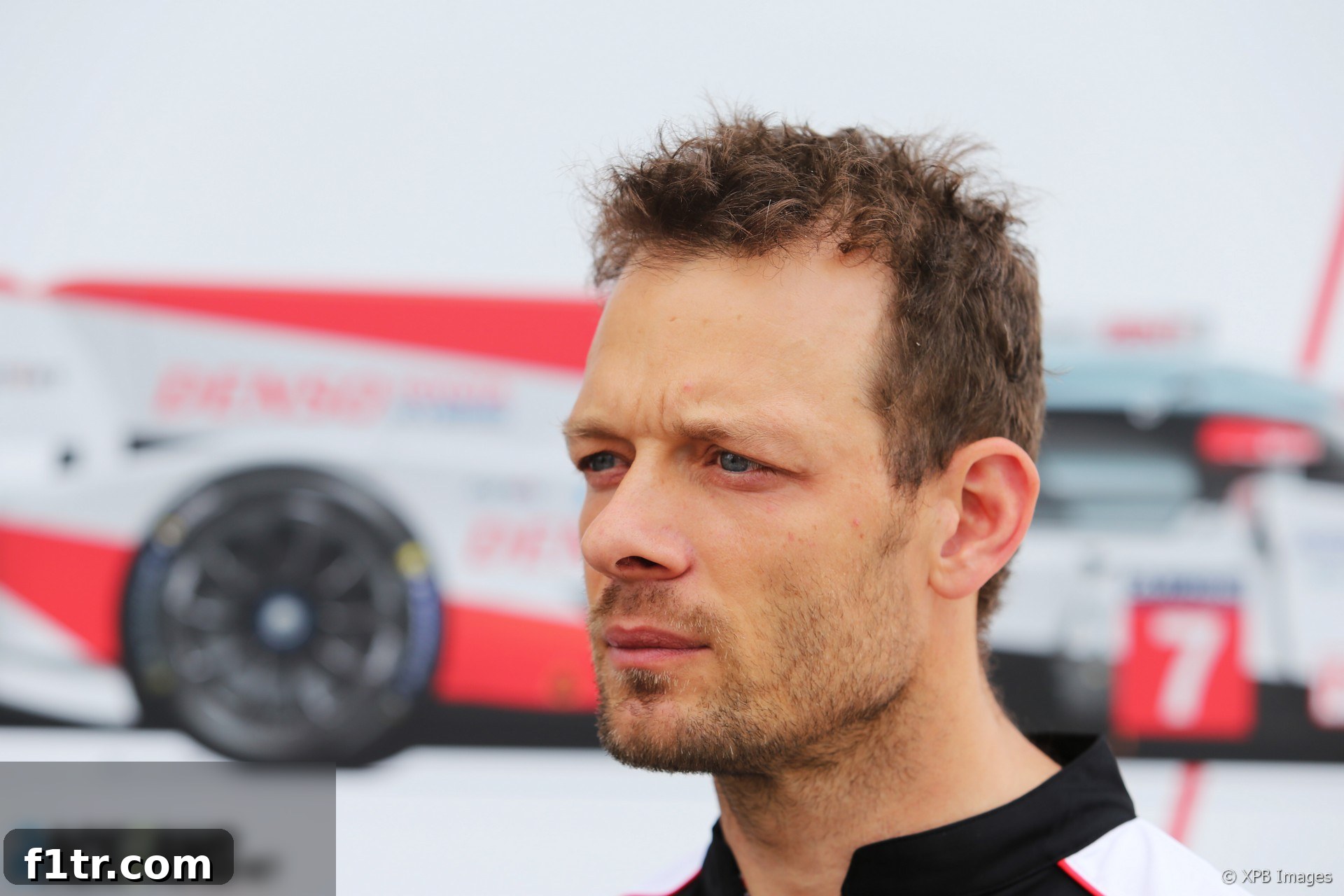
Formula 1, a sport synonymous with pushing the boundaries of human and mechanical performance, is now leveraging its unparalleled expertise in safety and risk management to confront the unprecedented challenges of the COVID-19 pandemic. According to Alexander Wurz, chairman of the Grand Prix Drivers’ Association (GPDA), the sport’s deep-rooted culture of meticulously minimizing threats will be instrumental in enabling a safe return to racing, even if it entails holding events behind closed doors.
The highly anticipated 2020 Formula 1 season aims to commence its postponed schedule in Austria on July 5th. Crucially, the initial rounds of the championship are planned to proceed without spectators, a strategic yet necessary measure designed to drastically reduce the risk of Coronavirus transmission. This proactive approach underscores the championship’s unwavering commitment to prioritizing the health and safety of all participants, from the drivers and team personnel to essential operational staff.
Wurz, a respected figure with a rich history as an F1 driver, eloquently articulated the inherent dangers of motorsport and how the industry has perpetually responded with groundbreaking safety advancements. “Each and every lap, any motor race, we are going to the absolute limit,” he revealed in an exclusive interview with RaceFans. “Yet, we have an average against any other industry, such a low number of injury and fatalities, that we are safety experts for the industry. We know how to deal with threats.” This profound and accumulated knowledge in risk assessment and mitigation is now being meticulously reapplied to the unique complexities of a global public health crisis.
While the COVID-19 pandemic presents a fundamentally distinct type of threat compared to the traditional hazards associated with high-speed racing – such as crashes, mechanical failures, or fire – Wurz firmly believes Formula 1 is exceptionally well-positioned to tackle it effectively. The sport’s ingrained ethos of developing stringent protocols and executing them with unwavering discipline provides a robust framework adaptable to the current health challenges.
Formula 1’s Unmatched Commitment to Safety and Protocol Development
The history of Formula 1 is a testament to its relentless pursuit of enhanced safety. From the rudimentary protection of its nascent years to the sophisticated, life-saving systems of today, the sport has consistently spearheaded innovations in protecting its drivers, marshals, and spectators. Groundbreaking developments such as the HANS (Head and Neck Support) device, advanced chassis designs incorporating deformable crash structures, state-of-the-art medical intervention teams, and the controversial yet effective Halo cockpit protection system all underscore F1’s unwavering commitment to mitigating risk. This deep-seated commitment has cultivated an environment where stringent safety protocols are not merely adhered to, but are continuously reviewed, refined, and enforced – a crucial asset when confronting an invisible threat like a virus.
“This is a new threat. This is not about injuring a spectator, an official or a driver. It’s a new threat, it’s a different thing,” Wurz acknowledged, highlighting the unique nature of the current crisis. “But the way you go about it in the safety protocols and you execute it… no one in this industry needs to be told about safety and respecting it.” The core principles of identifying risks, devising effective mitigation strategies, and diligently adhering to established guidelines are universally applicable, making F1’s existing safety framework remarkably adaptable to emerging public health concerns.
The industry’s proactive and swift response in adapting its operational models has earned Wurz’s commendation. He expressed his admiration, stating, “I think the industry is doing a great move in now investigating ‘how can I adjust my operating model to be in a position to go and operate as soon as governments allow and the global situation allows it?’ I really salute it and with the efforts of the GPDA we also as much as we can help it in order to go back to our life and to our sport.” This spirit of collaboration, integrating the invaluable insights from drivers, teams, Formula 1 management, and the Fédération Internationale de l’Automobile (FIA), ensures a comprehensive and robust approach to safety.
At the very heart of these extensive discussions is an unwavering commitment to global public health. “We are human citizens, we are global citizens, so we have to all put the safety and health of the world in this case first,” Wurz emphasized, articulating a responsibility that transcends the boundaries of sport. However, he quickly added a crucial caveat: “But we wouldn’t go out, or it wouldn’t be Formula 1, if we are not prepared to the maximum.” This vital dual commitment – to societal well-being and to peak operational readiness – illustrates the delicate yet resolute balance Formula 1 seeks to achieve as it meticulously plans its return to the track.
Navigating External Factors and Persistent Uncertainty
Despite Formula 1’s robust internal planning and an evident dedication to safety, the trajectory of the 2020 season remains significantly influenced by external forces. Liberty Media CEO Greg Maffei had previously cautioned about the genuine possibility that no races might be held this year, a cautious sentiment subsequently echoed by F1 chairman and CEO Chase Carey. Wurz candidly acknowledged that even with the most meticulous internal preparations, the ultimate decision to race remains largely beyond the sport’s exclusive control.
“The final influencing factors are from the outside,” he asserted. “If there is a second wave coming, are governments OK to let us travel in and out, that’s still factors which are assessed at the moment by F1 and the FIA. But they have the full support of the GPDA.” This acknowledgement highlights the complex global landscape where national regulations, stringent international travel restrictions, and the unpredictable evolution of the pandemic collectively dictate the practical feasibility of organizing a truly global sport like Formula 1.
The synergistic collaboration between the GPDA, Formula 1 management, and the Fédération Internationale de l’Automobile (FIA) is ongoing and intensive. RaceFans understands that regular teleconference meetings are a standard practice, serving as forums to continually refine strategies for conducting races safely behind closed doors. These critical discussions delve into every conceivable detail, encompassing everything from intricate logistical challenges and personnel movement to on-site health screening and stringent hygiene protocols, all with the overarching goal of establishing a secure, self-contained “biosphere” for all participants.
“We are in the stage of discussing and debating,” Wurz explained, underscoring the dynamic and iterative nature of these critical negotiations. A paramount aspect of these discussions revolves around strictly adhering to social distancing guidelines wherever physically practicable within the inherently close-contact environment of a high-intensity race weekend. This necessitates a fundamental re-evaluation and adaptation of many long-established practices and close-quarter interactions that are typically part of a Grand Prix operation.
Adapting On-Track Operations: A Microcosm of Change and Precaution
The drivers themselves, intimately familiar with the operational realities of a race weekend, have actively contributed practical examples of how customary procedures might need to be altered to minimize health risks. One such area concerns the routine of strapping into their cars before sessions – a task traditionally performed by a dedicated team mechanic, which inherently involves close physical proximity and direct interaction.
“We said OK, if anyone can close the seat belts by themselves, it would maybe be better to do yourself. But definitely you will be covered by helmet and gloves,” Wurz clarified, highlighting a potential self-sufficiency measure. He further elaborated on the specific exposure risks associated with pre-existing practices: “Some drivers in the past, they went into the car without the helmet and gloves [on] and the mechanic who comes very close to you has to talk to you when he puts the seatbelts on, you’re in very close interaction. So you will be exposed to maybe his droplets being thrown up onto you in your eye or mouth.”
The proposed solution, while seemingly a minor adjustment in the grand scheme of a race weekend, signifies a profound and necessary shift in operational mindset. “So in this case everyone should be aware I have to put the helmet, balaclava and gloves on before I go into the car, maybe close the visor so it becomes my protection gear,” Wurz meticulously explained. “It’s one very small example of many throughout an entire race weekend.” This level of meticulous attention to detail, when systematically applied across hundreds of similar routine interactions, forms the crucial bedrock of Formula 1’s overarching strategy to cultivate and maintain a safe working environment amidst the ongoing pandemic.
The Economic Imperative and The Enduring Passion for Sport
While some prominent voices within the motorsport community, including figures like former F1 supremo Bernie Ecclestone, have advocated for the outright cancellation of the 2020 season, Alexander Wurz has robustly defended Formula 1’s determined efforts to stage the championship. His rationale extends far beyond merely the competitive aspect of racing, encompassing the deeply human desire for a semblance of normalcy and acknowledging the profound economic impact of the sport.
“After all these weeks of lockdown now we all understand, OK, it is a SARS virus, it is transmitted in a certain way, it seems to be very easily transmitted,” Wurz observed, reflecting on the collective global learning curve regarding the virus. “But we are all getting our heads around it and that means, by normal human being behaviour, you already start to think OK, but what’s next?” This fundamental question, “what’s next?”, powerfully encapsulates the universal yearning to cautiously and safely move forward from the crisis.
For the multitude of individuals deeply embedded within the sport, the longing for a return to racing is both intensely personal and professionally critical. “How can I go back to the life I enjoyed before? How I can go back, especially, to my job? And, in the case of race drivers, to our passion,” Wurz articulated, perfectly capturing the sentiment of countless individuals whose lives, livelihoods, and identities are inextricably linked with Formula 1. The inherent desire to return to their craft, their passion, is palpable, yet it is always judiciously tempered by the paramount and non-negotiable need for stringent safety.
Wurz further accentuated the immense and far-reaching economic ripple effect generated by Formula 1 on a global scale. “This is not just for the drivers’ sake that we can do our driving and hobby. It is in full awareness that motor sport is a global business,” he emphatically stressed. Formula 1 sustains a vast and intricate ecosystem of diverse industries, spanning from high-tech manufacturing and complex logistics to global hospitality, media broadcasting, and local economies surrounding race venues. Thousands upon thousands of jobs, both direct and indirect, are intrinsically dependent on the continuous operation and economic vitality of the sport.
“A lot of businesses, a lot of families are depending on this income. And therefore we also have our duties to consider the commercial aspects,” Wurz concluded. This candid and pragmatic acknowledgment highlights the complex ethical, social, and economic considerations that fundamentally underpin the decision to resume racing. It represents a meticulously calculated risk, undertaken with extensive, proactive planning and an unparalleled commitment to safety, all aimed at safeguarding countless livelihoods while simultaneously upholding the enduring spirit and competitive essence of Formula 1.
Conclusion: Charting a Prudent Path Forward with Passion and Precaution
Formula 1’s ambitious plan to restart its 2020 season is a powerful testament to its adaptive spirit, its inherent resilience, and its long-standing, unwavering dedication to safety. Under the astute guidance of seasoned professionals like GPDA chairman Alexander Wurz, and through the collaborative, multidisciplinary efforts involving the Grand Prix Drivers’ Association, Formula 1 management, and the Fédération Internationale de l’Automobile (FIA), the sport is meticulously crafting an unprecedented blueprint for safe racing in a post-pandemic world. While the formidable challenges ahead remain significant and external factors continue to wield considerable influence over final decisions, the industry’s proactive approach, its proven expertise in comprehensive risk management, and its profound recognition of both human passion and pressing economic necessity collectively provide a prudent and responsible path forward. The ultimate goal is unequivocally clear: to safely and responsibly bring the electrifying thrill of Formula 1 back to its legions of dedicated fans worldwide, while simultaneously safeguarding the livelihoods of its myriad participants, all without compromise to the highest attainable standards of health and safety.
Further Reading: Key Insights from the 2020 F1 Season and Beyond
- Grosjean to make F1 test return tomorrow for first time since Bahrain horror crash
- Pictures: Wrecked chassis from Grosjean’s Bahrain fireball crash to go on display
- Bottas vs Rosberg: Hamilton’s Mercedes team mates compared after 78 races each
- F1 revenues fell by $877 million in Covid-struck 2020 season
- Hamilton and Mercedes finally announce new deal for 2021 season
Explore all articles related to the 2020 F1 season and its legacy