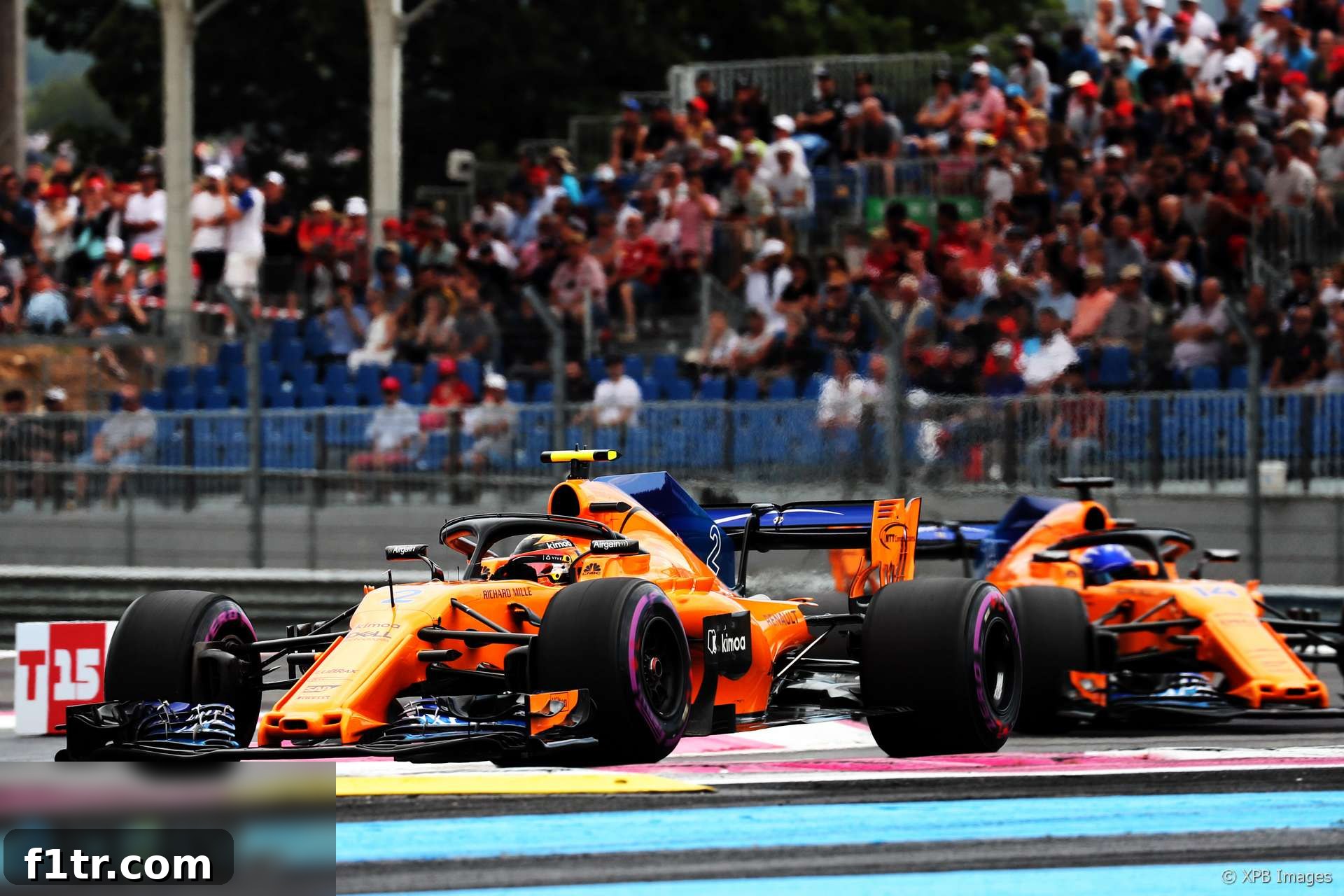
McLaren’s Formula 1 Ambition: The Quest for Works Team Status and Championship Glory
In the dynamic and fiercely competitive world of Formula 1, the relationship between a team and its engine supplier is paramount. For McLaren, a storied name in motorsport, this relationship has been a central theme in its pursuit of championship success. According to McLaren Racing Director Eric Boullier, while race victories might be attainable for a customer team, securing a championship requires the exclusive advantages and deeper integration offered by a works team partnership.
This strategic stance comes at a pivotal time for the Woking-based outfit. McLaren recently concluded a challenging three-year alliance with Honda, during which the team operated as the Japanese manufacturer’s primary works partner. Despite the exclusivity, the collaboration failed to deliver the expected results, prompting McLaren to seek a new direction by adopting a customer engine supply from Renault. This move, however, was swiftly mirrored by a significant shift within the paddock: Red Bull Racing, a long-standing customer of Renault, subsequently announced its intention to transition to Honda, establishing a new works team partnership with the Japanese power unit supplier.
The Customer vs. Works Team Dilemma: A Championship Decider?
The distinction between a customer team and a works team is not merely semantic; it carries profound implications for performance and competitive potential in Formula 1. Eric Boullier succinctly articulated McLaren’s perspective during a recent FIA press conference, highlighting Red Bull’s previous success with Renault as the benchmark for customer team achievement. “I think Christian [Horner, Red Bull team principal] is showing that you can win races as a customer,” Boullier stated. “I think winning a championship is another level; you need to have a works team status.”
A works team enjoys unparalleled access and influence over its engine partner. This typically includes a bespoke engine development program tailored to the team’s chassis, direct involvement in power unit design philosophy, and priority in receiving the latest updates and technological advancements. This intimate collaboration allows for seamless integration of the engine into the car’s overall package, optimizing cooling, aerodynamics, and weight distribution. Furthermore, a works team can often dictate specific performance targets and timelines, ensuring that engine development aligns perfectly with the chassis team’s championship aspirations.
Conversely, customer teams often receive a more standardized engine supply, with less direct input into its development. While they benefit from the manufacturer’s overall progress, their specific needs might take a backseat to those of the works team. This can lead to compromises in chassis design, delayed access to performance upgrades, and a more indirect influence on the power unit’s strategic direction. While customer teams like Red Bull have indeed secured numerous race victories and even championships in the past, often through superior chassis design and strategic acumen, the underlying challenge of not being a direct works partner remains. The argument is that consistent, long-term championship dominance, particularly in an era of complex hybrid power units, fundamentally favors those with bespoke factory backing.
Red Bull’s Strategic Shift: A New Chapter for Honda
Red Bull Racing’s decision to part ways with Renault and forge a works partnership with Honda represents a monumental shift in the Formula 1 landscape. For years, Red Bull had been a prominent customer of Renault, achieving four consecutive drivers’ and constructors’ championships between 2010 and 2013. However, the relationship had become strained in the hybrid era, marked by public criticism from Red Bull regarding Renault’s power unit performance and reliability.
The move to Honda signals a clear intention from Red Bull to emulate the works team model that has historically yielded consistent success for teams like Ferrari and Mercedes. For Honda, it marks a significant validation of their persistent development efforts. After a challenging return to Formula 1 with McLaren, the Japanese manufacturer found a more productive proving ground with Toro Rosso (now Visa Cash App RB), Red Bull’s junior team. This partnership allowed Honda to refine its power unit in a less pressured environment, steadily improving both performance and reliability. The full details of the Red Bull-Honda partnership were still being finalized at the time, with reports indicating only a Memorandum of Understanding had been signed, but the strategic intent was undeniable.
This new alliance brings together two entities known for their aggressive engineering philosophies and unwavering pursuit of excellence. Red Bull’s formidable chassis design capabilities, combined with Honda’s renewed commitment as a full works supplier, could potentially form a championship-contending force. It also underscores the evolving nature of engine supply in F1, where manufacturers are increasingly keen to partner with teams that can provide a strong platform for showcasing their technological prowess and securing top-tier results.
McLaren’s New Journey with Renault: Focused Collaboration
Amidst these engine partner realignments, McLaren embarked on its own “new journey” with Renault. While McLaren now operates as a customer team once again, Eric Boullier expressed optimism regarding the dynamics of this fresh collaboration, particularly in light of Red Bull’s departure from the French manufacturer’s portfolio. “We are starting a new journey with Renault and getting used to working together,” Boullier explained, emphasizing the foundational period of building a robust working relationship.
A key benefit for McLaren, as Boullier highlighted, is the reduced burden on Renault. With one less top-tier team to supply and focus on, Renault can now dedicate more attention and resources to McLaren. “Having obviously a little bit more focus, less distraction for Renault, having one team less to supply and to care about it’s obviously good news for us,” he noted. This increased focus could translate into more tailored support for McLaren, quicker responses to technical issues, and a more collaborative approach to integrating the Renault power unit into the McLaren chassis. Even as a customer, being the primary or most significant customer can confer certain advantages, allowing for a closer working relationship than if Renault were simultaneously catering to multiple front-running teams.
The success of this partnership hinges on effective communication, shared objectives, and a commitment from both sides to maximize the potential of the package. McLaren’s historical engineering excellence, combined with Renault’s proven capabilities as an engine manufacturer, offers a foundation for a competitive future. The objective for McLaren remains clear: leverage this partnership to consistently challenge for podiums and, ultimately, to lay the groundwork for a return to the pinnacle of Formula 1.
Honda’s Resurgence: Lessons Learned and McLaren’s Contribution
The story of Honda’s return to Formula 1 has been one of perseverance and significant learning. After a torrid initial period with McLaren, marked by chronic reliability issues and a significant performance deficit, the Japanese manufacturer has shown remarkable signs of improvement. Their subsequent partnership with Toro Rosso provided a crucial opportunity for Honda to regroup, refine its power unit, and rebuild its confidence away from the intense spotlight that comes with supplying a marquee team like McLaren.
McLaren CEO Zak Brown offered his perspective on Honda’s turnaround, suggesting that McLaren’s previous collaboration, despite its difficulties, might have played a role in Honda’s subsequent advancements. “Clearly Honda’s taken a step forward this year and they’re very intelligent people who are working very hard,” Brown acknowledged, recognizing the inherent talent and dedication within Honda. He further elaborated, “I think they probably learned from the past three years. We collaborated with them a lot, gave them our views on areas that we thought would help with their development.”
Brown’s comments imply that McLaren, through its extensive experience in Formula 1 chassis design and integration, provided valuable feedback and direction to Honda during their initial struggles. This feedback, even if delivered amidst frustration, could have helped Honda identify critical areas for improvement in their power unit project. “I don’t know what they’ve done in the off-season but they’ve clearly taken a step forward,” Brown continued. “I think good companies, good people learn by difficult times and it seems they’ve taken a step forward and maybe we’ve contributed to pointing out some areas that they can get stronger and they’ve embraced that and that’s exactly what they’ve done.” This perspective highlights the often-overlooked aspect of collaborative learning, even in failed partnerships, where insights gained can benefit future endeavors for all parties involved.
Historical Context and The Future of McLaren in F1
McLaren’s history is steeped in championship success achieved with a variety of engine partners, underscoring their enduring quest for the optimal power unit solution. The team enjoyed dominant eras with Honda in the late eighties and early nineties, securing multiple constructors’ and drivers’ titles with iconic figures like Ayrton Senna and Alain Prost. Later, a highly successful partnership with Mercedes in the nineties and noughties brought further championships, most notably with Mika Häkkinen and Lewis Hamilton. These historical precedents undoubtedly shape McLaren’s current philosophy, reinforcing the belief that a close, effective engine partnership – ideally a works status – is the bedrock of championship aspirations.
The evolving landscape of Formula 1 engine regulations and manufacturer involvement means that the “works team” model is more coveted than ever. With power units becoming increasingly complex and crucial to overall performance, the ability to co-develop and integrate the engine seamlessly with the chassis is a significant competitive advantage. For McLaren, their current customer relationship with Renault is a strategic stepping stone, aimed at regaining competitiveness and positioning themselves for a future where they can once again challenge for top honors. The ultimate goal, as expressed by Eric Boullier, remains a return to full works team status to truly unlock their championship potential, echoing the glory days of their illustrious past.
The shifts in engine partnerships across the grid, particularly involving McLaren, Red Bull, Renault, and Honda, signify a broader strategic recalibration within Formula 1. Each team is striving to secure the most advantageous position in the power unit arms race, acknowledging that a championship is a holistic endeavor where chassis, driver, and engine must perform in perfect harmony. McLaren’s journey with Renault is a testament to this ongoing pursuit, as they navigate the complexities of modern F1 in their relentless drive for success.
Related Articles
- F1 feared “death knell” for Drive to Survive after Ferrari and Mercedes snub
- McLaren staff told us we were “totally crazy” to take Honda engines in 2018 – Tost
- ‘It doesn’t matter if we start last’: How Red Bull’s junior team aided Honda’s leap forward
- Honda’s jet division helped F1 engineers solve power unit problem
- McLaren Racing losses rise after Honda split
Browse all 2018 F1 season articles