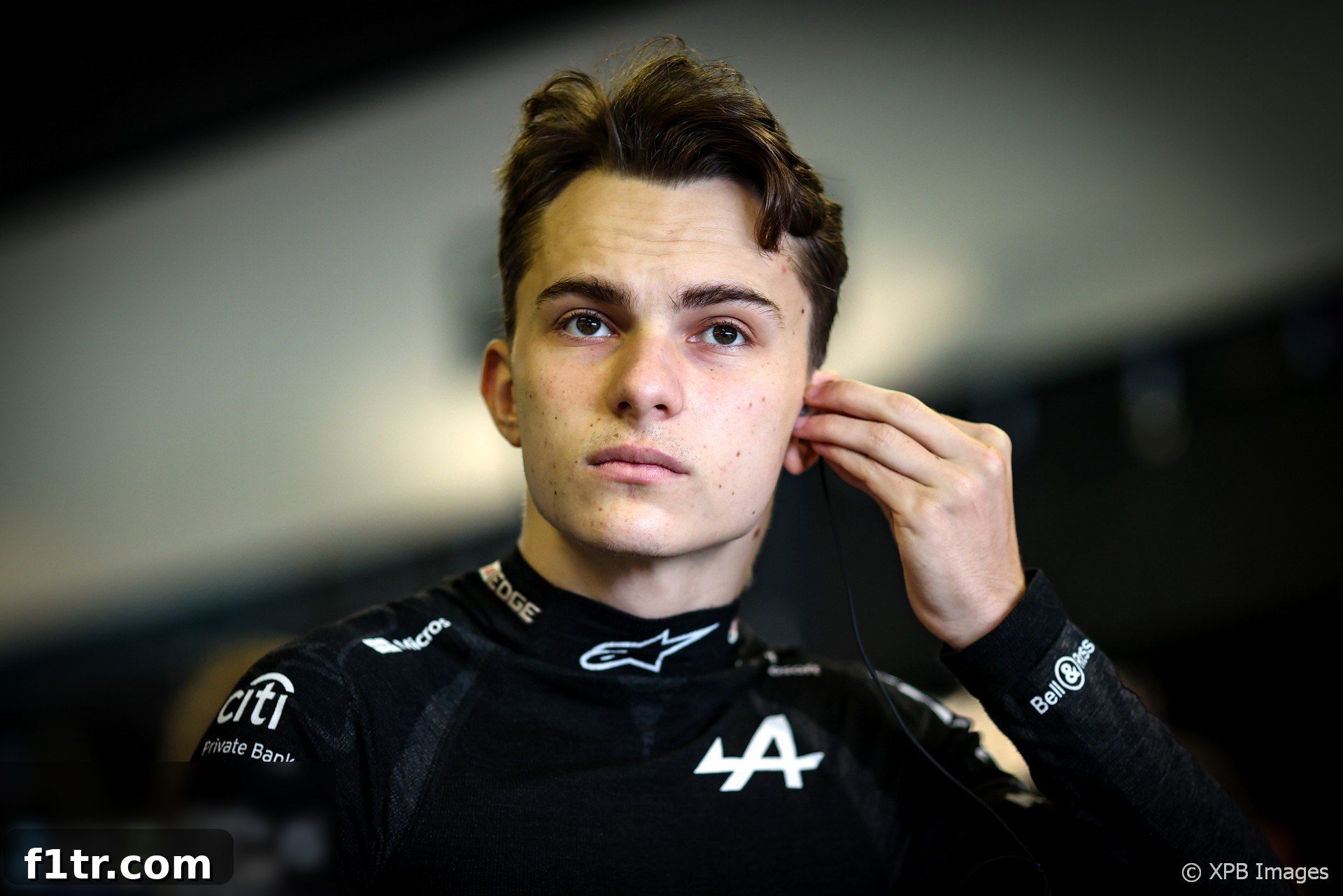
In the latest motorsport insights, Formula 2 champion Oscar Piastri shares his perspective on not securing a Formula 1 race seat this year, expressing gratitude for his extensive testing program. Meanwhile, Red Bull Racing makes headlines with a significant cryptocurrency sponsorship deal, and Williams looks to expand Jenson Button’s ambassadorial role. Formula E also provides updates on its Gen3 car’s design philosophy, reaffirming its commitment to street circuits despite increased power. We delve into these stories and more, offering a comprehensive look at the key developments across the racing world.
Motorsport Brief: Key Developments Across F1, FE, and Beyond
Oscar Piastri: Embracing Alpine’s Comprehensive F1 Development Program
Oscar Piastri, the reigning Formula 2 champion and one of motorsport’s brightest young talents, recently provided an illuminating insight into his multifaceted role with the Alpine F1 team for the 2022 season. Despite his formidable track record, which includes consecutive championship wins in Formula 3 and Formula 2, Piastri finds himself on the sidelines of a race seat this year. However, he views his situation not as a misfortune but as a significant opportunity, highlighting a robust development program designed to prepare him for a future in Formula 1.
Piastri detailed three core elements that define his 2022 commitments with Alpine, following his graduation from their esteemed young driver academy. “The first one is, obviously, being reserve driver,” he explained at a Blackbook Motorsport event. “I’ll be there as a reserve driver in case I’m needed. So I’ll be at every race weekend as far as I’m aware. Certainly all the flyaway races, and I think all of [the others]. So that’s the first aspect.” This role is crucial, requiring his constant presence and readiness to step into either Fernando Alonso’s or Esteban Ocon’s car should the need arise. It offers invaluable exposure to the demanding environment of Grand Prix weekends, from engineering briefings to media engagements, preparing him for the intense pressures of a full-time F1 role.
The second pillar of his program focuses heavily on simulator work. “The second is a lot of work in the sim, so I’m expecting that to get very busy once the car’s been on track in real life and the correlation between the sim and real life begins, I’m expecting my life to be very busy and spending a lot of hours in a dark room, playing very sophisticated video games,” Piastri elaborated. The modern Formula 1 simulator is far more than a game; it’s a sophisticated development tool where drivers provide critical feedback for car setup, aerodynamics, and strategy. This immersive experience allows Piastri to gain an intimate understanding of Alpine’s new A522 challenger, its characteristics, and how it reacts to various changes, without the physical and financial constraints of real-world testing. His contributions will be vital in bridging the gap between virtual development and on-track performance.
Finally, and perhaps most excitingly for Piastri, is an extensive on-track testing schedule. “And then I guess the third avenue,” Piastri continued, “is we’re doing a big testing programme with Alpine in a previous – I think it will be last year’s car. So that’s my driving for the year. Which of course, I’d love to be racing but with the amount of test days I’ve got in an F1 car, I’m certainly luckier than 99.9% of the population and 99% of most racing drivers too.” This dedicated testing program using a previous year’s F1 car (likely the A521) is a rare and highly beneficial opportunity. It allows Piastri to accumulate significant mileage in an F1 machine, hone his skills, understand the nuances of F1 machinery at speed, and build a strong relationship with the engineering team away from the intense pressure of a race weekend. This hands-on experience is invaluable for a driver aspiring to a full-time seat, providing a tangible pathway to a future F1 career that many talented junior drivers never receive.
Red Bull Racing Secures Landmark Cryptocurrency Partnership with ByBit

Red Bull Racing has officially announced a groundbreaking sponsorship deal with ByBit, a prominent cryptocurrency exchange and brokerage platform. This significant partnership underscores the growing trend of digital asset companies investing heavily in global sports, particularly in the high-tech, fast-paced world of Formula 1. The agreement is poised to bring an unprecedented level of digital engagement to Red Bull Racing’s global fanbase, leveraging the innovative capabilities of the blockchain and cryptocurrency space.
Team principal Christian Horner articulated the strategic vision behind this alliance, emphasizing its potential to revolutionize fan interaction. Horner stated that the deal would empower Red Bull to “enliven the fan experience in F1 through digital innovation” in a manner that will forge a “deeper, more immersive and unique connection with fans around the world.” This suggests future initiatives could include exclusive digital content, fan tokens, NFTs, or interactive platforms that utilize ByBit’s expertise to bring supporters closer to the team than ever before. In an era where fan engagement is paramount, this partnership positions Red Bull at the forefront of digital outreach within motorsport.
While the official value of the deal has not been publicly disclosed, industry rumors are circulating that the partnership is worth an astonishing figure, reportedly around $150 million over multiple years. Such a substantial investment highlights the immense commercial appeal of Formula 1 and the growing financial power of the cryptocurrency sector. For Red Bull Racing, this influx of capital provides a significant boost to its operational budget, potentially aiding in research and development, talent retention, and the continuous pursuit of championship success. It also reflects a broader shift in F1 sponsorship away from traditional industries towards dynamic, tech-driven companies eager to reach a global, digitally native audience.
The collaboration with ByBit marks a pivotal moment for Red Bull Racing, not just from a financial perspective, but also in terms of its brand identity in the digital age. By embracing cryptocurrency, the team is signaling its commitment to innovation and its willingness to explore new frontiers in sports marketing. This partnership is expected to open up new avenues for monetization and fan participation, further solidifying Formula 1’s position as a leading global sport attracting cutting-edge technology and investment.
Jenson Button’s Elevated Role at Williams as COVID Restrictions Ease
Williams Racing is set to leverage the experience and global appeal of its senior advisor, Jenson Button, to a much greater extent in 2022, as the world gradually emerges from the shadow of the COVID-19 pandemic. Jost Capito, CEO and Team Principal of Williams, expressed optimism about the team’s ability to maximize Button’s ambassadorial role, which was significantly constrained during the previous season due to stringent health and safety protocols.
Button, the 2009 Formula 1 World Champion, joined Williams – the team with which he began his F1 career – as a senior advisor in early 2021, while also maintaining his prominent presenting role with Sky Sports. However, as Capito explained, the pandemic presented unforeseen challenges: “With Jenson last year, of course, we were limited because of Covid. He couldn’t come to the team and also when he was at the races, he had to be in the Sky bubble, he couldn’t come.” These restrictions meant that Button’s involvement was often remote or confined to his media obligations, limiting his direct interaction with the team and external partners.
With the anticipated easing of COVID-19 restrictions throughout 2022, Williams plans to integrate Button more deeply into their promotional and branding efforts. “We want him more involved in the marketing activities and the various activities we plan if we can do them, after or with – if you can call it after – Covid,” Capito stated. “I think we have quite a lot planned with him on the marketing side, really, not on the development side.” This renewed focus on marketing will see Button play a pivotal role in elevating the Williams brand globally. His charismatic personality, extensive F1 knowledge, and strong public presence make him an ideal figurehead for corporate events, fan engagement initiatives, and media campaigns.
Button’s expertise extends beyond just racing, encompassing a deep understanding of the sport’s commercial landscape. His increased involvement is expected to bring fresh perspectives and heightened visibility to Williams, a team undergoing a significant rebuilding phase under new ownership. While his primary advisory role still provides strategic input, the emphasis on marketing activities underlines Williams’ commitment to strengthening its commercial partnerships and reconnecting with its global fanbase. His presence is not only a nod to the team’s rich heritage but also a forward-looking strategy to attract new sponsors and talent, reaffirming Williams’ ambition to return to competitive form both on and off the track.
Formula E Gen3 Car Designed for Urban Circuits, Not Traditional Tracks
As Formula E prepares to introduce its highly anticipated third-generation (Gen3) car, a common misconception has emerged regarding its intended use. Despite an expected increase in outright speed, capable of exceeding 320 kilometers per hour, the Gen3 car is fundamentally engineered to excel on the series’ signature street circuits, rather than transitioning to traditional permanent racing venues. Lucas di Grassi, a veteran of Formula E and a leading voice in electric motorsport, has been keen to clarify this distinction.
“I think there’s a little bit of a misconception that we’re going to have more power in ‘Gen3’,” Di Grassi explained at the Mexico City Eprix, “but the amount of energy we’re going to have is similar to what we have now.” This crucial point highlights that while the car may boast higher peak power, the fundamental challenge of energy management, which defines Formula E racing, will remain central. The series emphasizes efficiency and strategic energy deployment, elements that are perfectly suited to the stop-start nature of street circuits where regeneration opportunities are abundant.
Di Grassi further elaborated on the car’s design philosophy: “The car will not be made to race in the full circuit like this, the car actually is smaller, shorter, [with a] shorter wheelbase to accommodate better the street circuits.” This engineering decision is a clear reaffirmation of Formula E’s identity as an urban motorsport. A smaller, more agile car with a shorter wheelbase offers enhanced maneuverability through tight chicanes and hairpins, which are characteristic of city center tracks. This design ensures that the racing remains close-quarters and spectacular within the confines of urban environments, a core appeal of the championship.
While acknowledging that some existing circuits, such as Paris, might require minor adjustments due to the Gen3 car’s capabilities, Di Grassi firmly asserted the series’ direction. “You still need to do energy management and you still have a limitation on [size of track] – the car will be made for the circuits that we race now. Of course, in some circuits like Paris, which were already kind of tight for the for the Gen2 car, it needs to go a little bit longer.” He reiterated, “But overall, from my understanding, the car is not made to race in traditional tracks like Silverstone or Mexico or Monza. Although the car can reach over 320kph or more, the ratio, the gearbox, everything else will be made to still race on circuits which are city centre circuits.” This commitment to street racing differentiates Formula E from other motorsport categories, allowing it to bring electric motorsport directly to major global cities and engage with urban audiences. The Gen3 car, therefore, represents an evolution tailored specifically to enhance the unique spectacle of street circuit racing, rather than an aspiration to mimic traditional Grand Prix formats.
Become a RaceFans supporter and go ad-free
Social Media Highlights from the Motorsport World
Catch up on notable posts and discussions from Twitter, Instagram, and other platforms that have captured the attention of the racing community:
|@alex_albon carrying both Red Bull and Mercedes logos in 2022.#F1 pic.twitter.com/EcreFbDj7g
— Keith Collantine (@keithcollantine) February 16, 2022
A curious sight for Formula 1 fans: Alex Albon, returning to the grid with Williams, was seen displaying both Red Bull and Mercedes logos. This unique situation arises from Williams’ engine supply deal with Mercedes, while Albon remains under contract with Red Bull for development roles. This highlights the complex web of partnerships and driver affiliations within the sport, creating a visually intriguing mix on his racing attire.
👀 pic.twitter.com/SEX5DjlfRm
— Mercedes-AMG PETRONAS F1 Team (@MercedesAMGF1) February 16, 2022
The Mercedes-AMG PETRONAS F1 Team teased fans with a cryptic “👀” post, accompanied by an image. Such social media engagement often precedes major announcements, car launches, or significant team news, stirring anticipation among their followers and the wider F1 community. This understated yet effective approach keeps their audience engaged and guessing about upcoming developments.
Kyle Larson on his experience at #F1 finale: “It was real eye-opening that the rest of the world doesn’t car about American racing.”
— Jenna Fryer (@JennaFryer) February 16, 2022
NASCAR champion Kyle Larson’s observation after attending the dramatic F1 season finale provided a candid perspective on the global motorsport landscape. His comment, highlighting that “the rest of the world doesn’t care about American racing,” sparked considerable discussion. It underscores the cultural and geographical divides in motorsport fandom and the global dominance of Formula 1, offering a valuable insight from an outsider looking in.
- For more official F1 accounts and insights, explore the comprehensive F1 Twitter Directory
Essential Motorsport Reading: Featured Links
Here’s a selection of insightful motor racing links from across the web, offering deeper dives into technical regulations, driver interviews, and junior formula news:
Tech Explained: 2022 F1 Technical Regulations (Racecar Engineering)
This in-depth article from Racecar Engineering provides a comprehensive breakdown of the radical changes introduced by the 2022 F1 technical regulations. It explains how, instead of simply reintroducing ground effect floors, the rules meticulously restrict aerodynamic development to prevent excessive “aerodynamic furniture.” The focus is on simplified floor edge wings and a limited number of front fences, aiming for a very flat exit geometry with minimal out-washing. This detailed analysis is crucial for understanding the fundamental design principles that will govern the new era of Formula 1.
Formula 1 star Lando Norris can’t wait to race in Miami (GQ)
GQ features an engaging interview with McLaren’s Lando Norris, where the young British star discusses his excitement for the inaugural Miami Grand Prix. Norris also opens up about his approach to mental well-being and managing the demanding F1 schedule, stating: “I think something I’m quite good at doing is, if I have a weekend off, switching my head, having time to relax, maybe to do other things. I think that’s one of the more important things, is knowing when to actually take some time to relax and do stuff away from Formula 1.” This offers a personal glimpse into the life of a modern F1 driver balancing intense competition with personal downtime.
Larson keeps the door open to future Indy 500 run (Racer)
Racer.com reports on NASCAR Cup Series champion Kyle Larson’s continued interest in competing in the legendary Indy 500. While Larson has previously hinted at this ambition, the article notes that this is the first instance of his current employer giving him the green light for a potential future run. This development is exciting for fans of American motorsport, as it suggests a major cross-discipline challenge could be on the horizon for one of racing’s most versatile talents.
Eduardo Barrichello joins Arden for Formula Regional Europe Return (Formula Scout)
Formula Scout announces that Eduardo Barrichello, son of 11-time Formula 1 Grand Prix winner Rubens Barrichello, will embark on his second season in the Formula Regional European Championship by Alpine. He joins the Arden team, completing their line-up for the year. This move follows his debut season in Europe with JD Motorsport in 2021, after securing a runner-up finish in USF2000 the previous year. The article tracks his continued progression in the competitive junior single-seater ladder.
Villagomez says Van Amersfoort don’t feel like a new team as he backs F3 newcomers for success (Formula 3)
In an interview with Formula 3, driver Rafael Villagomez shares his impressions of the newly entering Van Amersfoort Racing team. Villagomez emphasizes the critical importance of tyre management in the championship, noting: “How to treat the tyres and how to manage them is a big deal in this Championship.” He expresses confidence in the rookie team, stating, “Van Amersfoort are a new team, but I think they dealt with the test well and I think what we can achieve together can be good, it didn’t feel like a new team.” This provides an early assessment of the team’s readiness and potential for impact in their debut F3 season.
We always endeavor to credit original sources. If you have a tip for a link relating to single-seater motorsport to feature in the next RaceFans round-up, please send it in via the contact form.
Become a RaceFans supporter and go ad-free
Comment of the Day: Ferrari’s Defining 2022 Season
Ahead of Ferrari’s highly anticipated 2022 car launch, the expectations and pressures on the Maranello squad are immense. Our featured comment of the day, from Srdjan Mandic, eloquently captures the sentiment that this season represents Ferrari’s most significant opportunity in years – a chance to either reclaim past glory or face renewed scrutiny.
This really is Ferrari’s biggest chance since 2017/18. They focused all their resources on the development of their 2022 car and also had more time in the wind tunnel than Mercedes and Red Bull. If it’s ever gonna happen again, this season is the best opportunity to win the title.
They made a big step on their power unit last season, not only making it more powerful (though still lacking with their ICE), but also very reliable. Now they need to find the final bits of performance to close the gap to the very top. They have the right tools to do it, but they finally need to deliver. They can’t afford to make silly mistakes, like they did in 2017 and ’18.
If they have managed to build a competitive car, then they have the right driver in Charles Leclerc to mount a serious championship challenge.
@srga91
Srdjan’s comment perfectly encapsulates the high stakes for Ferrari. The new technical regulations for 2022 represent a reset for the entire grid, theoretically leveling the playing field. Ferrari, having consciously shifted its development focus to the new regulations earlier than some rivals, along with benefiting from more wind tunnel testing time due to their lower Constructors’ Championship standing in previous years, is in a uniquely advantageous position. The improvements seen in their power unit reliability and performance towards the end of the 2021 season also provide a solid foundation. The onus is now on the team to synthesize these elements into a championship-contending package. With a talent like Charles Leclerc at the helm, supported by Carlos Sainz, the potential for a serious title challenge is undeniable, provided the team executes flawlessly and avoids the strategic and operational missteps that marred their previous strong seasons.
Happy Birthday!
A round of warm wishes to our fellow motorsport enthusiasts! Happy birthday to Steve_P83, Mister Nillionaire, and Roodda! We hope you have a fantastic day celebrating.
On This Day in Motorsport History

- 40 years ago today, on February 16, 1982, the iconic Lotus team unveiled its new 91 chassis at Ketteringham Hall. This groundbreaking car, featuring an innovative carbon fibre monocoque, was a testament to Colin Chapman’s continuous pursuit of aerodynamic and structural innovation. Piloted by the talented duo of Nigel Mansell and Elio de Angelis, the Lotus 91 went on to achieve significant success during the 1982 Formula 1 season. Most notably, Elio de Angelis secured a memorable victory at the Austrian Grand Prix, a poignant moment for the team and a reflection of the car’s competitive spirit in a challenging era of F1. The Lotus 91 stands as a significant milestone in the history of Formula 1 car design and a fitting tribute to its visionary creators.