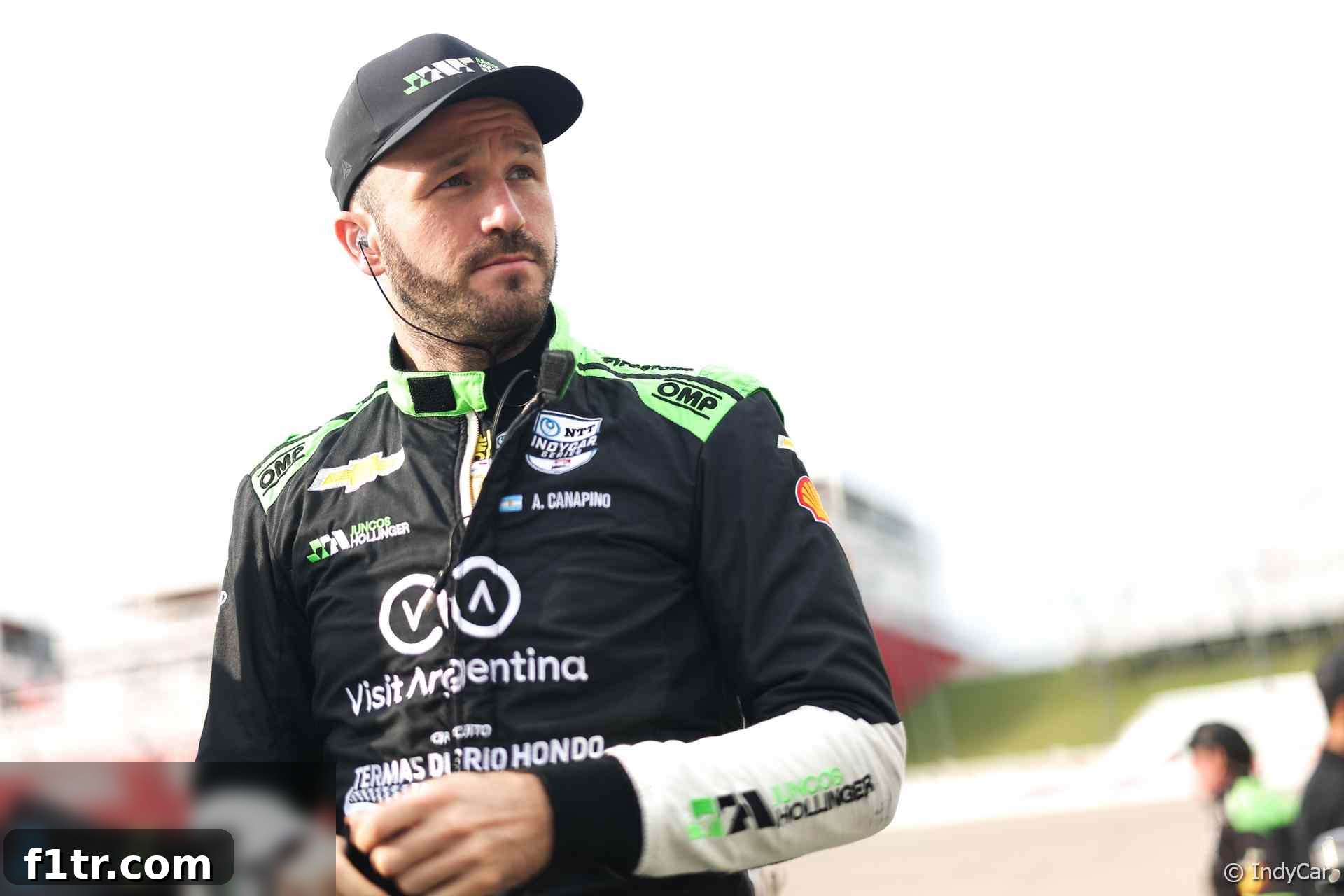
In a significant development for the IndyCar Series, Agustin Canapino has been confirmed to return to the cockpit of his Juncos Hollinger Racing entry for the remainder of the 2024 season. The announcement follows his absence from last weekend’s race at Road America, a decision made by the team amidst a highly publicized social media controversy. Canapino’s return, set to commence at Laguna Seca, marks a pivotal moment for the Argentine driver and underscores the increasing importance of mental well-being in the demanding world of professional motorsport.
The controversy that led to Canapino’s temporary withdrawal began after a racing incident at the Detroit Grand Prix. During the intense competition, Canapino and McLaren driver Théo Pourchaire made contact. While such skirmishes are a common occurrence in the fiercely competitive environment of IndyCar racing, this particular event quickly escalated into a severe online dispute. In the aftermath, Pourchaire publicly reported receiving a barrage of hateful messages and even death threats from a segment of Canapino’s passionate fanbase. This alarming development, which Pourchaire openly discussed on social media, drew widespread condemnation and brought the issue of online harassment directly into the harsh spotlight of the global motorsport community.
The situation further intensified when Agustin Canapino himself addressed the allegations. In an initial statement, he expressed regret over any online abuse but also cast doubt on the veracity or extent of Pourchaire’s claims, specifically regarding the death threats. This stance, perhaps intended to defend his dedicated supporters, inadvertently fueled the fire, leading to further criticism and placing significant strain on his team’s relationships within the paddock. The most immediate and impactful consequence of this escalating row was McLaren Racing’s swift decision to terminate its strategic alliance with Juncos Hollinger. This partnership, designed to foster technical collaboration and driver development, was abruptly severed, signaling the seriousness with which McLaren viewed the situation and the unacceptable nature of the online abuse directed at its driver.
As the scrutiny mounted and the online environment surrounding the incident grew increasingly toxic, the pressure on Canapino became immense. Juncos Hollinger Racing, recognizing the severity of the situation and prioritizing its driver’s health and well-being, made the difficult decision for Canapino to sit out the upcoming race at Road America. In their official statement, the team explicitly cited “the growth of online abuse and harassment resulting from the events of this week” as having created “a very difficult experience for Agustin.” They emphasized their unwavering commitment to “prioritise the mental and physical wellbeing of both our drivers and our competition,” a clear and crucial acknowledgment of the profound toll such controversies can take on an athlete’s mental state.
The team’s unprecedented decision to bench their primary driver for a race weekend, even if temporary, sent a powerful message about the evolving landscape of professional sports, where the pressures extend far beyond the confines of the racetrack. Nolan Siegel, a promising young talent, stepped in to fill Canapino’s seat at Road America, highlighting the rapid adaptations required in such unforeseen circumstances. While Siegel performed commendably under pressure, the broader focus remained largely on Canapino’s delicate situation and the underlying issues it exposed regarding athlete support and digital responsibility.
On Wednesday, Juncos Hollinger Racing officially confirmed Canapino’s imminent return to the series. The team announced that he would be back in action for the Grand Prix of Monterey at Laguna Seca, scheduled for the following week, and would complete the remainder of the 2024 IndyCar season. This confirmation brought a sense of relief to many, indicating that the team had provided the necessary support and space for Canapino to process the challenging events and adequately prepare for his return to competitive racing.
Agustin Canapino himself shared his personal perspective in a candid video statement released on social media, describing his time away from the track as a “leave of absence.” Speaking from Indianapolis, he conveyed a sense of calm and reflection on the tumultuous period. “This past Friday, the team understood that I needed a break and decided it would be best not to race that weekend at Road America,” Canapino explained. “They felt it was not appropriate for me to get in an IndyCar given the unexpected situation I was experiencing and the stress that was affecting me in an unusual context.” His heartfelt words highlighted the significant emotional and psychological impact of the controversy, acknowledging the team’s astute and empathetic decision to remove him from the immediate competitive environment to focus on his well-being.
He expressed profound gratitude to team owners Ricardo Juncos and Brad Hollinger, stating he was “extremely grateful” for their unwavering support and their proactive commitment to his mental and physical health. This acknowledgment underscores the critical role team leadership plays in protecting athletes from external pressures and fostering a truly supportive environment. Canapino also took the opportunity to reiterate his previous plea for responsible online behavior. “I will reiterate, as I clearly stated before, to all fans around the world, that we need to be aware of the damage that an insult or aggression on social media can cause, regardless of where it comes from,” he urged. “I insist that we learn and work together to build a better community.” This powerful message serves as a vital reminder to the global motorsport community about the collective responsibility to cultivate a respectful, constructive, and inclusive online space.
Canapino’s ordeal sheds crucial light on a growing and complex challenge for athletes across all sports: navigating the intricate and often brutal landscape of social media. While these digital platforms offer unparalleled opportunities for engagement between athletes and their dedicated fans, they also present a fertile ground for negativity, misinformation, and targeted harassment. The line between passionate fandom and toxic obsession can easily blur, leading to situations where drivers, like Canapino and Pourchaire, become unwitting targets of intense scrutiny and severe abuse. This incident serves as a stark reminder that the digital realm is not exempt from the fundamental rules of decency and respect that govern interactions in the physical world.
The emphasis placed by Juncos Hollinger Racing on “mental and physical wellbeing” aligns with a broader, overdue conversation happening within professional sports regarding athlete mental health. High-performance environments, characterized by intense competition, constant travel, and relentless public scrutiny, can take a severe toll on individuals. Incidents like this highlight the increasing necessity for teams, governing bodies, and even sponsors to implement robust support systems, including comprehensive mental health resources, to protect their athletes. The courage demonstrated by drivers like Canapino to step back and openly address personal well-being sets a valuable precedent, signaling that taking a break for mental health is not a weakness, but a strength, and an increasingly crucial component of sustainable, long-term performance.
Moreover, the incident forces the entire motorsport community to reflect critically on contemporary fan culture. While passionate support is undeniably the lifeblood of any sport, it must never devolve into harassment, personal attacks, or threats. The digital age provides a degree of anonymity that, unfortunately, emboldens some individuals to cross boundaries they would never consider in a face-to-face interaction. Educating fans about the real-world impact of their online actions, fostering a culture of mutual respect, and holding individuals accountable for egregious behavior are critical steps toward creating a healthier and more positive ecosystem. Teams and drivers, while leveraging social media for engagement, also bear the responsibility of actively fostering a positive fan base and, when necessary, denouncing and distancing themselves from harmful, toxic elements.
For Juncos Hollinger Racing, Canapino’s return is not merely about having their primary driver back in the car; it’s about reaffirming their commitment to their team members and deftly navigating the complexities of modern professional sport. The loss of the strategic McLaren alliance is undoubtedly a setback for future development, but the team’s unwavering support for Canapino during an incredibly challenging period demonstrates a strong internal culture built on compassion and resilience. As Canapino prepares to resume his season at Laguna Seca, the primary focus will undoubtedly shift back to his performance on track, but the profound lessons learned from this episode will likely resonate long after the checkered flag falls on the 2024 season. It’s a powerful testament to personal resilience, the critical importance of team support, and a renewed call for civility and empathy in our increasingly interconnected world.
Ultimately, Agustin Canapino’s journey through this significant controversy and his eventual return serve as a potent case study on the evolving challenges faced by athletes today. It reinforces the notion that success in motorsport, or any high-profile sport, is no longer solely about physical skill, raw talent, and mental fortitude on the track. It also requires an ability to manage intense public scrutiny, navigate the volatile landscape of social media with grace, and prioritize personal well-being above all else. His experience offers valuable insights for teams, fellow competitors, and fans alike, emphasizing the shared responsibility to foster a respectful and supportive environment, both online and off. The road ahead for Canapino and Juncos Hollinger Racing will be closely watched, not just for their on-track results, but also for their continued leadership in advocating for a healthier, more empathetic sporting culture in the digital age.
IndyCar Insights
- Exploring Driver Safety Innovations in IndyCar Racing
- Comparing IndyCar Performance to Other Top-Tier Motorsports
- The Unique Speed and Challenges of IndyCar Circuits
- The Path to Formula 1: Superlicence Points and IndyCar Drivers
- Rising Stars: New Talent and Future Prospects in IndyCar
Browse More IndyCar Articles and Analysis