The Future Pulse of Formula 1: A Call for Advanced Hybrid Power Beyond 2025
As Formula 1 races towards its next major engine regulation overhaul, anticipated for 2025, a critical debate is unfolding within the sport’s highest echelons. At the heart of this discussion is the insistent voice of Mercedes Team Principal Toto Wolff, who advocates for a significantly more potent hybrid component in the sport’s future power units. This vision aligns F1’s technological trajectory with the accelerating shift towards electrification in the global automotive industry, ensuring the pinnacle of motorsport remains relevant, innovative, and sustainable.
The sport initially considered revising its current engine formula for 2021. However, these plans were ultimately shelved, meaning the sophisticated V6 turbo-hybrid power units, first introduced in 2014, are now set to continue powering the grid for an extended period, likely until the end of 2025. This decision provides a crucial window for engineers and strategists to meticulously sculpt the specifications for the next generation of F1 engines. When questioned about his aspirations for these future regulations, Wolff underscored the imperative for Formula 1 to mirror the road car sector’s decisive pivot towards electrification.
Embracing the Electrified Horizon: Toto Wolff’s Vision
“I believe we are currently navigating a profound technological transition, particularly within the road car sector,” Wolff articulated, reflecting on the broader industry landscape. “While many of us undoubtedly cherish the visceral experience of loud, traditional engines, the undeniable reality is that technological advancement and the prevailing perception of sustainability are steering us in a different direction.” His comments highlight a tension between F1’s rich heritage and its future responsibilities.
Wolff further elaborated on the strategic decision to maintain the existing regulations for the immediate term. “We made the correct choice in largely stabilizing the regulations for the upcoming period, as developing an entirely new formula would have demanded a colossal investment in research and development. Moreover, there wasn’t a clear consensus on the precise direction for this next generation of power units.” This measured approach allowed for a period of reflection, ensuring any new direction is well-considered and robust.
Drawing parallels with Mercedes-Benz’s corporate strategy, Wolff offered a compelling insight into the future of automotive propulsion. “Listening to the insights from our chairman at Daimler, our projection is that by 2030, a remarkable 50% of our entire fleet will comprise either hybrid or fully electric vehicles. Given this definitive technological trajectory, I firmly believe that Formula 1 could, and should, adopt an engine format that features a substantially higher hybrid component, harnessing renewable energies or pure electricity.”
Currently, the hybrid contribution to F1’s power output stands at approximately 20%. Wolff envisions a significant escalation of this ratio, potentially reaching 50% or more after 2025. “As long as the resulting engine is exciting and delivers captivating performance, we must certainly address the aspect of sound, and at the very least, engage in serious discussions about it. But my conviction is that the hybrid element will experience a considerable increase post-2025.” This statement acknowledges the emotive power of engine sound while prioritizing technological relevance and efficiency.
Industry Consensus: From Honda to Haas
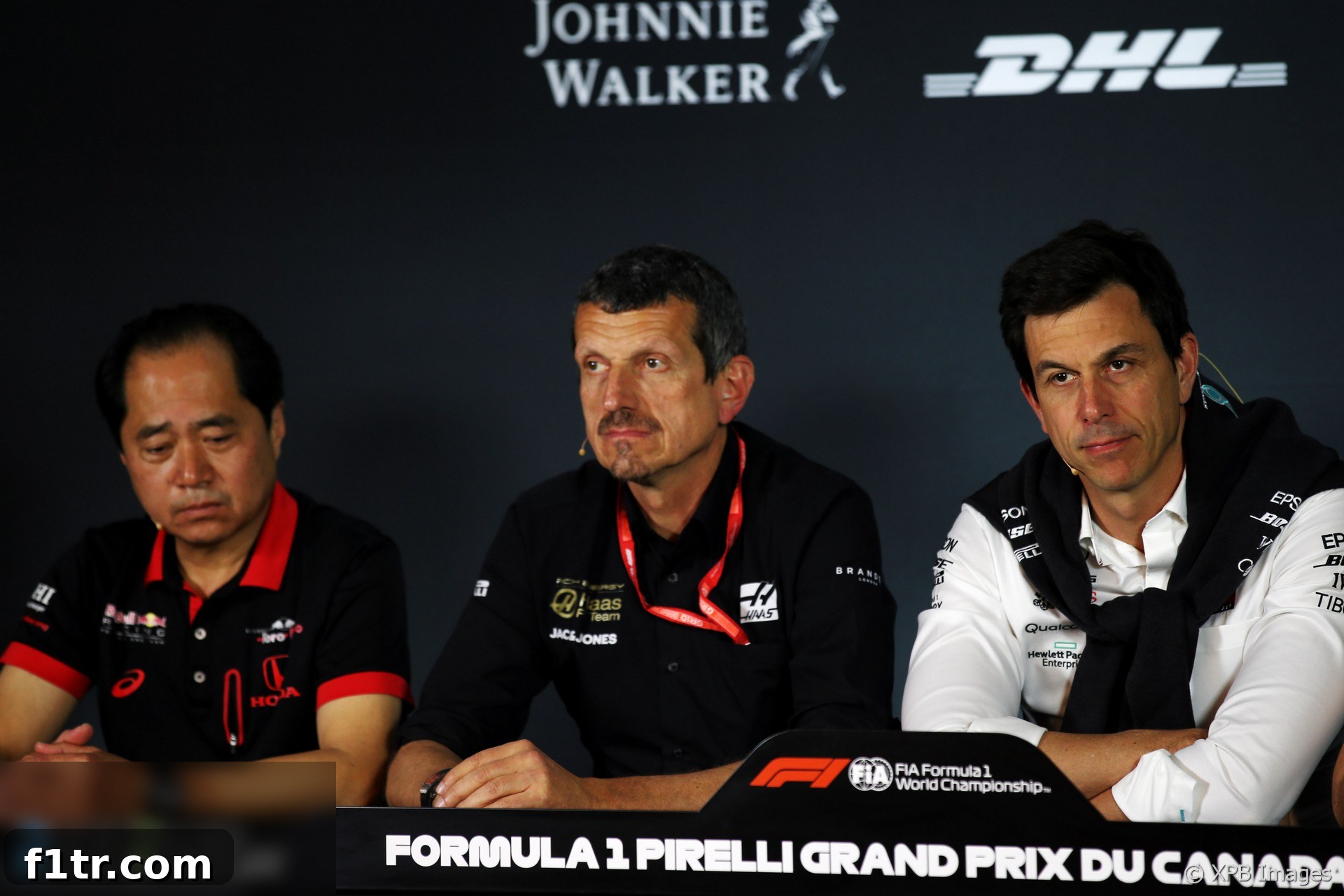
Wolff’s progressive stance is not an isolated one; it resonates deeply within the Formula 1 paddock. Toyoharu Tanabe, the esteemed F1 Technical Director for Honda, echoed Wolff’s sentiments precisely, stating his belief that F1 should unequivocally retain its hybrid engine architecture. This convergence of opinion from two of the sport’s most prominent engine manufacturers signals a strong, shared direction for future development.
The dialogue surrounding F1’s future power unit is, however, not entirely devoid of differing perspectives. Mercedes driver Lewis Hamilton, a multiple world champion, recently voiced a more nostalgic preference, suggesting he would favor a return to the visceral experience of naturally aspirated V12 engines. While such a romanticized view harks back to a bygone era of motorsport, it highlights the constant tension between heritage and progression within F1.
Nevertheless, the prevailing sentiment among team principals leans firmly towards technological advancement. Guenther Steiner, the forthright Team Principal of Haas, underscored the critical necessity for Formula 1 to “stay current with technology.” He candidly admitted, “I don’t possess the foresight to predict the exact technological landscape in 2025. Toto and Tanabe-san, with their deep understanding, are far better equipped to anticipate these developments.”
Steiner continued, reinforcing the pragmatic view: “While we all share an affection for the exhilarating scream of a V10 or V12 engine, in the current global climate, such an approach is simply no longer acceptable. My fervent wish is for Formula 1 to remain at the cutting edge of technology, aligning itself with contemporary advancements. The engine manufacturers are acutely aware of what is required: sustainability must be paramount, incorporating an increasingly significant electric element, exactly as Toto has advocated.” His stance firmly rejects any notion of regressing technologically, advocating for F1 to be a beacon of modern innovation rather than a relic of the past.
“I wholeheartedly support their direction,” Steiner concluded, referring to Wolff and Tanabe. “For me, the fundamental point is that F1 must continually push the boundaries of technology and not retreat to the preferences I held during my youth.” This perspective underscores the responsibility F1 has to lead, not follow, in the automotive world.
Why a Stronger Hybrid Component is Essential for F1’s Future
The arguments for a more robust hybrid system in Formula 1 extend far beyond mere compliance with evolving automotive trends. A highly advanced hybrid component offers a multi-faceted benefit to the sport, cementing its position as a relevant and forward-thinking engineering showcase. Firstly, it enhances the performance envelope. Modern hybrid systems not only provide additional power but also allow for strategic energy deployment, adding a layer of tactical complexity to racing that is both engaging for fans and challenging for engineers and drivers.
Secondly, a greater reliance on electric power significantly improves the overall efficiency of the power unit. This quest for efficiency aligns directly with global sustainability goals and helps to reduce the sport’s environmental footprint. In an era where climate change is a pressing concern, F1 cannot afford to be perceived as technologically stagnant or environmentally irresponsible. By pioneering advanced hybrid solutions, F1 can serve as a proving ground for technologies that eventually trickle down to road cars, contributing to cleaner, more efficient personal transport.
Furthermore, increased electrification makes Formula 1 more attractive to existing and potential new manufacturers. Automotive giants are investing billions in electric and hybrid vehicle development; a Formula 1 platform that reflects and accelerates this research becomes an invaluable marketing and R&D tool. It offers a unique opportunity to test cutting-edge battery technology, energy recovery systems, and power electronics in the most demanding environment imaginable. This relevance is crucial for ensuring the long-term commitment of manufacturer partners, who bring significant investment and technological prowess to the sport.
The integration of advanced hybrid systems also necessitates breakthroughs in material science, cooling systems, and software management, pushing the boundaries of engineering innovation. These challenges, while complex, are precisely what define Formula 1 as the pinnacle of motorsport and a crucible for technological advancement.
Challenges and Considerations for the 2025+ Regulations
While the direction towards greater hybridization seems clear, the path is not without its challenges. The primary hurdles include the immense costs associated with developing entirely new power unit architectures. F1 has been working to control costs, and any new regulations must strike a delicate balance between encouraging innovation and preventing an unsustainable spending spree. Complexity is another factor; while advanced technology is desirable, excessively complicated rules can deter new entrants and make the sport harder for fans to understand.
The issue of engine sound, as acknowledged by Wolff, remains a sensitive topic. The powerful, evocative roar of an F1 engine is a crucial part of its spectacle and heritage. Finding a way to incorporate significant electric power while maintaining an engaging auditory experience will be a key design challenge. Innovations in synthetic fuels also present an exciting avenue, potentially allowing internal combustion engines to remain a viable part of the formula while achieving carbon neutrality, further contributing to F1’s sustainability goals.
Ultimately, the decisions made for the 2025+ engine regulations will shape the very identity of Formula 1 for the next decade. It’s a delicate balance of preserving the sport’s thrilling essence while embracing the future of automotive technology and environmental responsibility.
Formula 1’s Broader Sustainability Commitment
The debate over engine technology is intrinsically linked to Formula 1’s overarching commitment to sustainability. The sport has set ambitious targets, including achieving Net Zero Carbon by 2030. The power unit plays a monumental role in this objective. By developing highly efficient hybrid engines that run on advanced sustainable fuels, F1 can demonstrate its leadership in environmental innovation. This isn’t just about PR; it’s about making tangible contributions to a greener future, using the global platform of Formula 1 to inspire and accelerate technological progress.
The future of Formula 1’s engines represents more than just a technical specification; it’s a strategic choice about the sport’s relevance and impact in a rapidly changing world. The consensus among key figures like Toto Wolff, Toyoharu Tanabe, and Guenther Steiner points towards an electrified future, demonstrating a collective understanding of the need to adapt and innovate. While the allure of the past, as expressed by Lewis Hamilton, remains powerful, the imperative for F1 to be a cutting-edge, sustainable, and technologically relevant spectacle for decades to come is overwhelmingly clear. The journey towards 2025 promises to be one of intense engineering, strategic vision, and critical decisions that will define the very sound and soul of Formula 1.
2019 F1 Season Insights
- Crying in the Melbourne car park at 2019 grand prix was my career low – Ocon
- McLaren Racing reports reduced £71 million loss in 2019
- Kvyat: Hockenheim podium last year was “my biggest achievement” so far
- How the FIA’s new encrypted fuel flow meter targets Ferrari’s suspected ‘aliasing’ trick
- “He smashed my office door”: 23 must-see moments from ‘Drive to Survive’ season two
Browse all 2019 F1 season articles