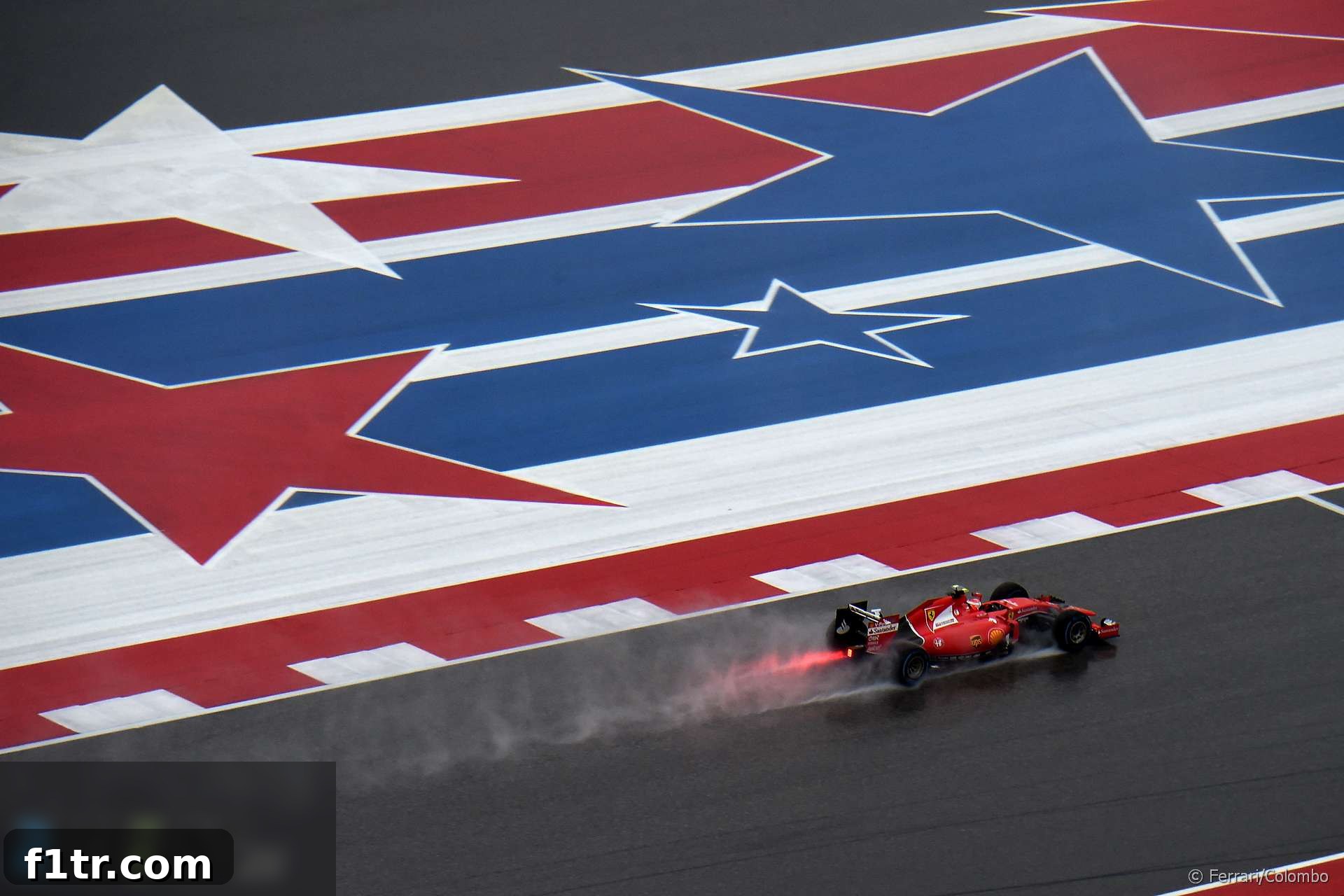
United States Grand Prix Weather Forecast: Navigating a Potentially Wet Weekend at COTA
The highly anticipated United States Grand Prix at the iconic Circuit of the Americas (COTA) in Austin, Texas, is gearing up for what promises to be a challenging and potentially unpredictable weekend. According to the latest meteorological forecasts, Formula 1 teams, drivers, and fans should prepare for the distinct possibility of persistent, and at times heavy, rainfall across much of the event. This impending weather adds a fascinating, yet complex, layer of strategic considerations and heightened risks to one of the sport’s most thrilling stops. The prospect of a rain-soaked COTA sets the stage for a race weekend where adaptability, precision, and a bit of luck will be paramount, potentially leading to dramatic upsets and unforgettable moments.
Navigating the Early Downpour: Friday and Saturday’s Wet Sessions
The weather outlook for the initial days of the Grand Prix weekend, encompassing the crucial Free Practice sessions (FP1, FP2, FP3) and the all-important Qualifying, points towards a consistently high chance of rain. Current models suggest that the Austin area has already experienced substantial rainfall in the days leading up to the event, with flash flood warnings having been issued in surrounding regions. More precipitation is anticipated even before the official track action commences on Thursday, further saturating the ground around the circuit.
This pre-existing and ongoing saturation of the landscape will undoubtedly have a significant impact on the Circuit of the Americas. While COTA is well-equipped with extensive asphalt run-off areas designed to enhance safety and manage water accumulation, there are also considerable grass sections lining the track. These grassy margins, when subjected to prolonged and heavy downpours, are highly susceptible to becoming waterlogged and treacherous. Should cars venture wide onto these saturated areas, the risk of losing control and beaching in soft ground increases significantly, adding another dimension of danger to an already challenging wet-weather scenario.
For the drivers, the Free Practice sessions under these conditions will present immediate and profound challenges. Reduced visibility due to the sheer volume of spray kicked up by the cars, particularly on COTA’s high-speed sections and significant uphill climbs, will be a major concern. Grip levels will be severely compromised, demanding an exquisite touch, immense bravery, and absolute precision from the competitors. Aquaplaning, where tires lose contact with the track surface due to a layer of water, becomes a constant threat, especially through faster corners and under braking.
Teams, meanwhile, will grapple with the difficult task of setting up their cars for optimal performance in wet conditions. This involves finding the perfect balance for intermediate and full wet tires, adjusting suspension, aerodynamics, and even engine mapping to cope with the reduced grip and increased drag. Every lap completed in the wet brings valuable data regarding tire degradation, car balance, and driver feedback, but it also carries an increased risk of incidents. Crashes or mechanical issues in practice could severely limit precious track time, hindering a team’s ability to gather crucial information or even damaging components needed for later sessions.
Qualifying under these potentially treacherous conditions would be an intense spectacle. Drivers will be pushing the limits on the very edge of grip, where a single mistake – a late brake, an overcorrection, or misjudging a wet patch – could cost them valuable grid positions. The unpredictable nature of a wet qualifying session often shuffles the grid, creating unexpected starting orders and potentially altering the entire complexion of the race, making it a must-watch event for fans.
Sunday’s Silver Lining: Hope for a Dry Race Day
Despite the rather gloomy forecast for the initial days of the Grand Prix weekend, there appears to be a significant ray of hope for the main event. Sunday, the day of the United States Grand Prix race, currently presents the lowest chance of rain throughout the entire weekend. This tantalizing possibility suggests that the race itself could unfold on a largely dry track, offering a stark contrast to the preceding days and potentially providing a traditional, high-speed Formula 1 spectacle. This scenario, while a relief for dry-weather specialists, introduces its own set of challenges and strategic dilemmas.
This situation is not entirely unprecedented in the history of Formula 1 at COTA. The 2015 United States Grand Prix serves as a prime and memorable example of such a scenario. That year, heavy rain forced the cancellation of one practice session and significantly disrupted qualifying, leading to a tense and uncertain build-up. Yet, come race day, the track dried out, delivering a memorable and largely uninterrupted race on a predominantly dry surface. This historical precedent offers both encouragement and a cautionary tale for the teams preparing for this weekend’s event.
The parallels to 2015 are highly significant for teams and strategists. That year saw a rollercoaster of emotions and fortunes, as drivers and engineers had to adapt incredibly quickly from treacherous wet conditions to a rapidly evolving dry track. The ability to switch car setups, manage tire strategies across various compounds (from wets to intermediates to slicks), and execute flawless pit stops under such immense pressure proved decisive in the outcome. A similar situation in the upcoming Grand Prix would mean that teams might have very limited, if any, opportunities to fine-tune their cars for optimal dry running before the race itself. This lack of dedicated dry practice could lead to unexpected performance variations across the grid, as teams might have to rely more on simulator data and educated guesses rather than real-world track feedback for their final dry race setups.
Temperature Dynamics and Strategic Imperatives
Adding another layer of complexity to the Austin weather picture are the anticipated air temperatures. Throughout the weekend, conditions are expected to remain on the cooler side, with temperatures unlikely to surpass 20 degrees Celsius. While Sunday isn’t specifically forecast to be significantly warmer, current models indicate that the heaviest of the rain systems should have moved past by Saturday evening, allowing for potential track drying. This combination of cooler ambient temperatures and a potentially drying, or even damp, track presents a unique set of challenges for tire management and car performance.
Cooler ambient temperatures can significantly affect tire warm-up, especially for the dry compounds. Getting the slick tires into their optimal operating window quickly and maintaining their temperature throughout a stint will be crucial for generating grip and achieving peak performance. For drivers, this means a delicate balance of pushing hard to warm the tires without overdriving and causing degradation. Engine performance can also be subtly impacted by cooler air, but the primary focus will remain on the tires and their interaction with the track surface, which may remain cold and potentially damp in shaded areas or parts of the circuit that drain less efficiently.
The strategic implications of this mixed forecast are immense and will test the ingenuity of every team on the pit wall. Teams will need to be incredibly agile, with robust plans ready to switch between wet, intermediate, and dry tire strategies at a moment’s notice. The decision-making process will be paramount, with engineers and strategists constantly monitoring radar imagery, track temperatures, tire degradation rates, and the performance of rival cars. The timing of pit stops, especially if conditions are rapidly changing, could prove to be the ultimate difference between victory and defeat. A perfectly timed switch to dry tires as the track dries, or vice-versa, can gain a driver many seconds and positions.
Drivers will need to demonstrate exceptional adaptability, adjusting their driving style to varying grip levels and visibility throughout the weekend. Overtaking opportunities might be more prevalent in mixed or transitional conditions, as different cars might find grip in different parts of the track, but so too are the chances of costly errors. The ability to read the track and communicate effectively with their engineers will be more critical than ever.
The Driver’s Challenge: Mastering a Treacherous COTA
The Circuit of the Americas is renowned for its challenging and diverse layout, featuring a spectacular mix of high-speed straights, tight hairpin turns, and significant elevation changes, most notably the iconic uphill run into Turn 1. In wet conditions, each of these elements becomes exponentially more demanding, transforming an already formidable circuit into a true test of a driver’s skill, courage, and intuition.
The uphill run into Turn 1, already a tight braking zone that requires pin-point precision on a dry track, will be a true crucible of nerve and control on a slippery surface. Drivers will need to perfectly judge their braking points and modulate their throttle input to avoid locking up or spinning on the steep incline. The complex sequence of esses from Turn 2 to Turn 6, designed for high-speed changes of direction, will demand absolute commitment while managing the ever-present risks of aquaplaning and reduced lateral grip. Maintaining momentum and finding the rhythm through these corners will be incredibly difficult. Even the long back straight, typically a prime DRS zone for overtaking, could see drivers struggling for traction under heavy acceleration, making it harder to pull away from pursuers or close in on competitors.
For the drivers, the United States Grand Prix weekend could easily become one of the most physically and mentally draining of the entire season. Beyond the sheer technical demands of navigating a powerful Formula 1 car on a wet track, the constant uncertainty regarding the weather forecast adds a profound psychological burden. Drivers must remain focused and adaptable, ready to react to changing conditions from one lap to the next. Experience in such treacherous conditions will undoubtedly be invaluable, but even the most seasoned campaigners can be caught out by an unexpected puddle or a momentary lapse in concentration. Rookies, in particular, will face a baptism of fire, needing to quickly adapt to the reduced grip and unpredictable dynamics of their machines on a saturated circuit. The drivers who can best manage these myriad variables, maintain their composure, and seize opportunities amidst the potential chaos are likely to emerge as the weekend’s true stars.
Spectator Experience and Trackside Preparations
For the tens of thousands of dedicated fans making their way to COTA, the volatile weather forecast also necessitates some practical considerations. Spectators should come prepared for all eventualities, packing essential rain gear, waterproof footwear, and plenty of layers to contend with the cool temperatures. Despite the potential for intermittent heavy rain, the vibrant and electric atmosphere of the United States Grand Prix is unlikely to be entirely dampened. The passion of the Formula 1 fan base is a powerful force, and many embrace the added drama that challenging weather brings to the racing.
COTA staff and event organizers will undoubtedly be working diligently behind the scenes to manage drainage across the vast venue and ensure spectator safety and comfort to the best of their ability. From covered viewing areas to efficient transport solutions, every effort will be made to mitigate the impact of the weather. The thrill of Formula 1 racing, particularly when unpredictable weather adds another compelling layer of drama and strategic intrigue, remains a powerful draw, promising an unforgettable experience for those who brave the elements and witness the spectacle unfold.
The Circuit of the Americas, known for its world-class hospitality and exhilarating on-track action, will certainly be tested by Mother Nature this weekend. However, the prospect of a challenging, weather-affected Grand Prix often leads to some of the most memorable and exciting races in Formula 1 history. The potential for unexpected upsets, strategic masterclasses, and heroic driver performances is significantly amplified when the rain arrives, injecting an unparalleled level of excitement into the competition. All eyes will be on Austin to see how teams and drivers navigate these demanding conditions, and whether Sunday’s forecast holds true for a drier, but no less exciting, conclusion to the United States Grand Prix.
Advert | Become a Supporter & go ad-free
Advert | Become a RaceFans supporter andgo ad-free
For continuous updates on track conditions, session reports, and expert commentary throughout the United States Grand Prix weekend, make sure to keep a close eye on RaceFans Live. Additionally, for real-time news, instant reactions, and breaking updates from the circuit, follow the official RaceFans Twitter account.
United States Grand Prix Archive Articles
- Verstappen leaving rivals breathless in Mexican altitude
- Raikkonen ends longest-ever wait between wins
- 300 team radio messages from the United States Grand Prix
- 2018 United States Grand Prix Star Performers
- Top ten pictures from the 2018 United States GP
Browse all 2018 United States Grand Prix articles