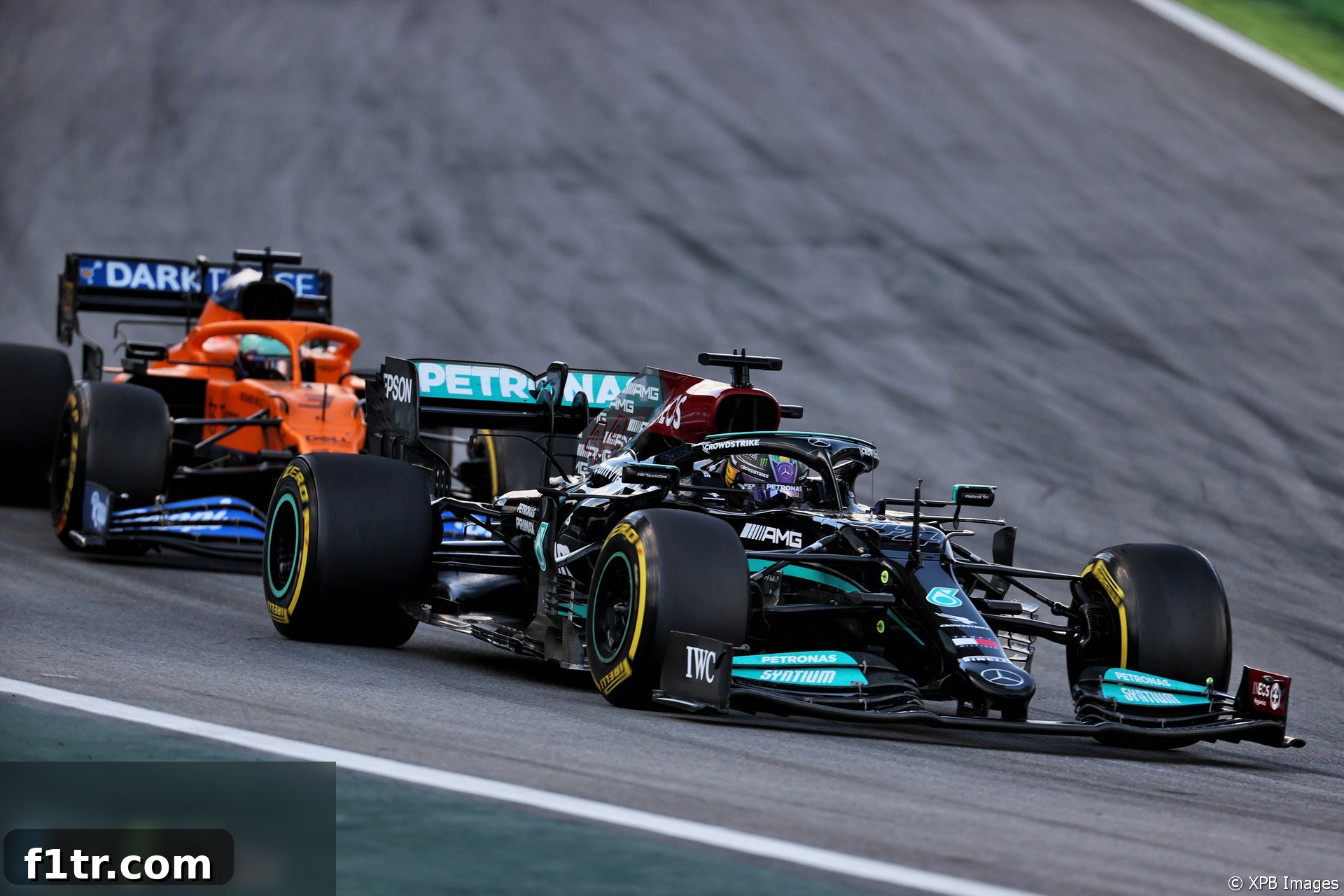
In a turn of events that has ignited the Formula 1 paddock, Lewis Hamilton finds himself facing a significant challenge at the Brazilian Grand Prix. Despite demonstrating blistering pace, he was disqualified from the results of Friday’s qualifying session due to a technical infringement concerning his rear wing, deemed not to comply with DRS regulations. Compounding this setback, Hamilton also incurred a five-place grid penalty for exceeding his season’s allocation of power unit components, a strategic decision by Mercedes to introduce a fresh, powerful engine for the crucial final races of the championship. Consequently, the seven-time world champion will commence the São Paulo Grand Prix from a challenging 10th position on the grid. This combination of penalties would typically be a death knell for a driver’s victory hopes, particularly at a circuit known for its demanding overtaking. However, the unique sprint qualifying format of the weekend has unexpectedly provided Hamilton with a lifeline, setting the stage for what promises to be an enthralling and potentially historic recovery drive.
As critically assessed by Formula 1 Motorsport Director Ross Brawn, the innovative sprint qualifying format introduced for select race weekends has proven to be a providential advantage for Hamilton’s prospects. Brawn highlighted how this structure has significantly amplified Hamilton’s chances to salvage points and position this weekend. In stark contrast, had a similar technical infringement regarding his rear wing occurred during a traditional qualifying session, such as at the Autodromo Hermanos Rodriguez in Mexico the previous week, Hamilton would have faced the daunting task of starting the main Grand Prix from the very back of the grid. The sprint race, however, offered a crucial opportunity for redemption. It allowed Hamilton to harness his unparalleled overtaking prowess and the formidable performance of his newly installed Mercedes power unit. He executed a masterful charge through the field during Saturday’s sprint qualifying race, dispatching an astounding 15 cars with remarkable efficiency and demonstrating the raw speed and strategic acumen that defines his racing legacy. This exceptional performance not only secured him a more favorable starting position for the main event but also sent a clear message to his rivals about his formidable pace and determination.
Hamilton’s sprint race display was nothing short of spectacular. He meticulously navigated the demanding Interlagos circuit, deploying his renowned overtaking skills and leveraging the significant straight-line speed provided by his fresh Mercedes power unit. The ease with which he sliced through the pack, particularly the lower half of the midfield, was striking. Crucially, his progress against more competitive cars, including those known for their robust straight-line speed like the McLarens, was notably smooth. This marked a departure from previous occasions when Hamilton or his teammate, Valtteri Bottas, found themselves battling further down the grid, where progress often proved more arduous. A key element of his success lay in his execution at strategic points on the track, particularly the crucial Junção corner. This sweeping left-hander leads onto the long start-finish straight, providing a prime opportunity to activate the Drag Reduction System (DRS) and set up overtakes into Turn 1. Hamilton consistently maximized his exit from Junção, gaining vital tenths and positioning himself perfectly for subsequent passes. His ability to exploit these tactical advantages underscores the depth of his race craft and the potent package he had beneath him on Saturday.
Prior to the weekend, Hamilton himself had expressed reservations, stressing the inherent difficulties of overtaking at Interlagos and tempering expectations for a rapid ascent through the field. He had even admitted he didn’t believe a charge from last to fifth in just 24 laps was truly possible. However, his extraordinary performance in the sprint race defied these initial apprehensions, showcasing a level of outright speed and strategic execution that few drivers can match. The undeniable pace demonstrated by his Mercedes W12, combined with Hamilton’s aggressive yet precise driving, suggests that his initial caution was perhaps understated. With the main Grand Prix running for significantly longer – almost three times the distance of the sprint qualifying race – and starting from a significantly improved 10th position, the prospect of Hamilton challenging for a podium finish, or even an outright victory, cannot be dismissed. His momentum is palpable, and the conditions are ripe for a truly memorable performance as he aims to reignite his championship challenge.
Hamilton’s remarkable climb through the field was influenced by a confluence of factors, among them the strategic tyre choices made by various competitors. A number of drivers opted for the softer compound tyres at the start of the sprint race, seeking an immediate grip advantage off the line. While this proved to be a highly effective strategy for some, notably Hamilton’s teammate Valtteri Bottas, who capitalized on the softs to claim victory, it simultaneously created opportunities for Hamilton. As the sprint race progressed, the inherent nature of the soft tyres meant that for several drivers, their performance began to degrade significantly towards the latter stages. Hamilton, often managing his tyres expertly, was able to exploit this drop-off in pace from those ahead, further facilitating his rapid progress. This dynamic highlights the intricate balance between initial pace and sustained performance in F1 sprint events.
An even more nuanced aspect influencing Hamilton’s charge was the peculiar incentive structure created by his impending grid penalty for Sunday’s main race. As Hamilton advanced into the top ten, drivers ahead of him often found themselves in a strategic predicament. Ordinarily, they would mount a fierce defense against a driver of Hamilton’s caliber. However, knowing that Hamilton would be demoted by five grid places for the Grand Prix, many were less inclined to fiercely contest positions during the sprint. The logic was simple: by ceding the position to Hamilton, they could save their precious tyre life for the closing laps and, more importantly, for the demanding main race, confident that they would effectively regain the position on Sunday’s starting grid due to Hamilton’s penalty. This tactical concession was openly acknowledged by some, including Lando Norris, who admitted he offered minimal resistance when Hamilton executed a bold move down the inside at Turn 1 on the final lap. This intriguing dynamic, where drivers prioritize the main race over a full-throttle sprint battle against a penalized competitor, significantly aided Hamilton’s ascent. However, it is crucial to note that this strategic leniency will vanish entirely in the Grand Prix. Hamilton can anticipate a far more resolute and unyielding opposition from every rival, as every position gained will be fiercely defended with no future grid benefits to consider.
Rising Temperatures: A New Challenge for Tyre Strategy
Adding another layer of complexity to the São Paulo Grand Prix is the forecast for significantly higher temperatures. The main race is predicted to be considerably hotter than Saturday’s sprint qualifying, with track temperatures potentially soaring to 53 degrees Celsius. This would make for some of the most demanding conditions of the entire weekend, contrasting sharply with Friday qualifying where track temperatures dipped to 24 degrees Celsius. Such extreme heat will profoundly impact tyre performance. The softer compounds, which proved so effective in the sprint, may not maintain their speed or durability over the much longer Grand Prix distance. This shift in conditions will force teams to meticulously reconsider their tyre strategies, potentially favoring harder compounds or necessitating multiple pit stops. Managing tyre degradation effectively will be paramount, and any miscalculation could severely hamper a driver’s race.
The Front-Runner Battle and Starting Tyre Dilemmas
With a free choice of starting tyres available for the main race, the tactical decisions at the very front of the grid will be pivotal. Valtteri Bottas masterfully utilized his soft tyres in the sprint to snatch the lead from pole-winner Max Verstappen at the start, setting the precedent for an aggressive opening. For both Verstappen and his Red Bull teammate, who also starts off the racing line, the temptation to opt for softs and replicate Bottas’s initial advantage will be strong. The allure of winning the race into Turn 1 could be decisive, provided they believe the soft rubber can endure long enough to support a viable one-stop strategy. However, Verstappen, with the championship firmly in his sights, will undoubtedly prioritize the bigger picture: maintaining a lead over Hamilton and maximizing his points haul. Red Bull’s ultimate tyre decision will reflect a calculated gamble between immediate performance and long-term race management, aiming to best meet their championship objective against a rapidly advancing Mercedes.
Strategic Obstacles for Hamilton’s Victory Bid
How quickly the front-runners establish a significant gap will be absolutely crucial to Hamilton’s ultimate chances today. In the sprint race, both Red Bull drivers found themselves battling the Ferraris to regain positions. While Verstappen managed to pass Carlos Sainz relatively early and keep pace with Bottas, Sergio Perez was stuck behind Sainz, falling 19 seconds behind Bottas and Verstappen within just 24 laps. Should a similar scenario unfold in the Grand Prix, with Hamilton having to pick through a congested midfield before reaching the top contenders, it could severely compromise his ability to challenge for the win. A key strategic barrier preventing Hamilton from troubling the leaders is if they can pull far enough ahead to execute a pit stop and emerge back on track still ahead of him. This tactic bears a striking resemblance to the Turkish Grand Prix earlier in the season, where Hamilton took his previous engine change penalty. The moment Verstappen had the necessary gap over Hamilton, Red Bull immediately brought him in for a pit stop, effectively neutralizing Hamilton’s track position advantage and preventing him from getting into clear air to challenge.
The Inevitability of Team Orders
Should Hamilton successfully navigate the field and find himself closing in on his teammate, Valtteri Bottas, who starts ahead of him, a call for team orders from Mercedes seems all but inevitable. In the context of a fiercely contested Drivers’ Championship, with every point vital, Bottas would almost certainly be instructed to allow Hamilton through if he is in a position to challenge for victory or maximize championship points. Bottas has historically demonstrated his compliance with team directives, and the stakes for Mercedes are simply too high to risk preventing Hamilton from securing a crucial result.
Championship Destiny: The Stakes for Brazil
The São Paulo Grand Prix carries immense weight for the entire Formula 1 championship. While sprint qualifying allowed Hamilton to make significant inroads, reducing the impact of his penalties, Max Verstappen still holds the strategic advantage in the title fight. As things currently stand, Verstappen has the opportunity to leave Brazil with the championship destiny largely in his control, potentially able to secure the title even if Hamilton were to sweep the remaining races. The outcome of this evening’s race will therefore be absolutely critical. Whether Verstappen can maintain this commanding position, or if Hamilton can once again conjure the kind of magic and breathtaking performance witnessed on Saturday, will dictate the narrative heading into the final stages of a truly epic championship battle. All eyes will be on Interlagos as the drama unfolds, with the potential for a seismic shift in the fight for the 2021 Formula 1 World Championship.
Quotes: Dieter Rencken
Over to You: Share Your Predictions
What are your expectations for the São Paulo Grand Prix? Do you believe Lewis Hamilton has a realistic chance of winning this race from 10th on the grid? Will any teams or drivers take a significant gamble on using soft tyres for the start, despite the challenging conditions? Share your insights and predictions for what promises to be an electrifying race weekend in the comments section below.
2021 São Paulo Grand Prix Coverage
- Red Bull and Mercedes summoned to FIA hearing on review of Sao Paulo incident
- McLaren must “get back to scoring the results that are on the table” – Seidl
- Hamilton makes his second-biggest climb to victory from 10th on the grid
- F1 releases missing video footage from Verstappen’s car of Hamilton incident
- How Alonso and Ocon “pushed team tactics to the ultimate limit” to delay Gasly
Browse all 2021 São Paulo Grand Prix articles