Formula 1’s Stock Market Sensitivity: Navigating the Tides of Investor Sentiment
Last month, we highlighted the precarious nature of Formula 1’s financial standing, intricately linked to its share price. This valuation, in turn, is significantly influenced by events surrounding the sport and the subsequent analyses of investment experts. What’s often overlooked is that many of these analysts, whose critical assessments profoundly affect stock value, have rarely—if ever—experienced a Grand Prix firsthand, either live or on television.
Advert | Become a Supporter & go ad-free
In essence, market uncertainty instantly drives prices down, while concrete, positive news provides a gradual, albeit often slower, boost. This dynamic underscores the fragile relationship between F1’s operational reality and its public market perception.
We previously pinpointed two crucial dates for Liberty Media, Formula 1’s commercial rights holder: November 8th, when they hosted investor calls regarding Q3 earnings, and November 14th, the Annual Investor Day. On this latter occasion, the results and future prospects of various group entities are traditionally presented to shareholders.
The investment community’s reaction to Formula 1 during these events was notably lukewarm. F1’s share prices—specifically the A Class FWONA and C Class FWONK—experienced a dip during the investor call, followed by even steeper declines once the call concluded. This pattern of negative reaction repeated itself less than a week later, signaling persistent investor apprehension.
Such rapid market movements paint a vivid picture of investors poised to hit ‘sell’ buttons as F1 CEO Chase Carey addressed them. While it’s true that some buyers simultaneously entered the market, they did so at a reduced price, indicating a net negative sentiment. This highlights the immediate, often emotional, response of the market to leadership statements and financial disclosures.
The Ripple Effect: How Automotive Leadership Changes Impact F1 Shares
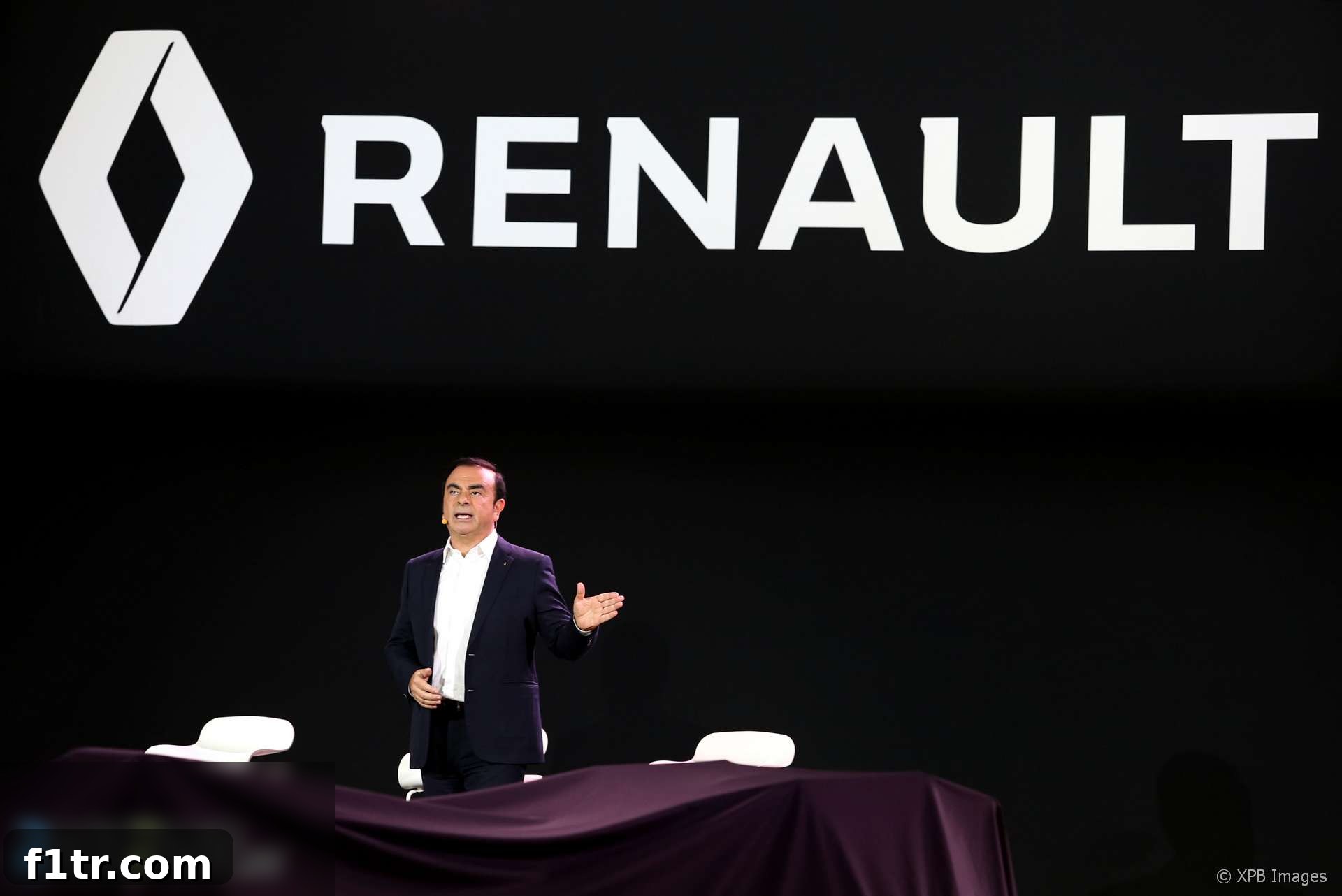
Any significant news concerning Formula 1 – be it positive, negative, or neutral – invariably triggers a reaction in its share prices. A recent example vividly illustrated this earlier this week following the arrest of Nissan chairman Carlos Ghosn in Japan. Ghosn, who also served as Renault’s CEO/chairman, was the mastermind behind the Renault-Nissan-Mitsubishi alliance and, critically, the individual who sanctioned Renault’s last two returns to F1 as a team owner: first in 2001 and again in 2015.
The intertwined motorsport ambitions of Renault and Nissan are undeniable. While the French brand initially competed in both F1 and Formula E, Ghosn dictated that Nissan, as the alliance’s leader in the electric vehicle segment, would become the group’s flagship in the latter championship. This transition was executed seamlessly, demonstrating his strategic influence.
Similarly, when Red Bull Racing sought funding for its customer Renault engines, it secured Nissan’s luxury Infiniti brand as a title partner, covering costs in exchange for prominent engine cover branding. This crucial deal also received Ghosn’s personal endorsement. These instances underscore his pivotal role in shaping the motorsport involvement of both brands.
Regardless of whether Ghosn is ultimately found guilty of breaking the law, the situation undeniably injects uncertainty into the alliance’s future prospects, and by extension, Renault’s involvement in Formula 1. In scenarios where cost-cutting measures become necessary, “nice-to-have” expenditures, such as F1 participation, are often the first to be reconsidered, rather than essential operations.
Ghosn’s Arrest and the Immediate Market Reaction
Almost immediately after news of Ghosn’s arrest broke, both of F1’s share classes were hit. FWONK, for instance, fell from Monday’s opening price of $31.54 to $29.87 by close of business—a drop exceeding five percent. This percentage decline almost mirrored Renault’s own stock dip, demonstrating the direct perceived link. Market stability had not returned even by late Tuesday.
This event pushed prices to six-month lows, trading perilously close to their 12-month floor. This starkly contrasts the high of $39.03 exactly a year prior, representing a 25 percent decrease over 12 months. While global stock indices have experienced broader declines, these have generally been under 10 percent, highlighting F1’s disproportionate vulnerability.
To dismiss these movements as mere coincidence or solely attributable to other factors would be an oversight. Consider the significant drop in mid-July, following news that Ferrari CEO/President Sergio Marchionne had been hospitalized in critical condition. On July 19th, before the German Grand Prix, F1 shares traded at $38.19. A day later, as confirmation of Marchionne’s admission trickled through, the price began to fall.
Advert | Become a RaceFans supporter andgo ad-free
Following Marchionne’s untimely and tragic death on July 25th, the share price had plummeted by 10 percent in less than a week. This underscores the market’s extreme sensitivity to uncertainty, particularly as Ferrari’s future in F1 suddenly became unclear. While Marchionne had previously threatened to withdraw the Scuderia from F1 unless commercial terms improved—a stance that caused barely a ripple—his death put Ferrari’s entire profitability and direction at stake, leading to a much more dramatic market reaction.
For comparison, Ferrari’s own NYSE ticker, RACE, recorded drops from $140 to $118 within a ten-day period after July 19th, sliding further to below $110 by the following Monday. This performance closely mirrored F1’s share movements, begging the question: coincidence or undeniable connection?
Daimler’s Succession and F1’s Interconnected Fate
Let’s extend this analysis to Daimler, the parent company of Mercedes-Benz, and thus the majority owner of the Mercedes-AMG F1 Team and its engine division, Mercedes-AMG High Performance Powertrains. On September 24th, Daimler’s share price hovered at €56. Two days later, the company confirmed that CEO Dieter Zetsche (65) would take a statutory two-year break from 2019 before returning as chairman.
Despite widespread expectations that Ola Källenius would succeed Zetsche—a move largely anticipated in the industry—Daimler’s share price immediately fell, hitting €50 earlier this week. This represents a more than 10 percent drop for what is typically a stable stock, albeit over a two-month period. This demonstrates that even anticipated leadership changes can trigger market anxiety.
It matters little that Källenius, a Swede and the first non-German to lead Daimler, has direct F1 experience, having served as McLaren Operations Director during their partnership in the 2000s. Nor does it seem to factor in that Källenius, a “numbers man” by trade rather than an engineer like his predecessors, subsequently headed HPP for two years. The market, in its immediate reaction, saw uncertainty, and FWONK promptly took a dip.
The Push and Pull: Regulations, Teams, and Venue Dynamics
Conversely, positive news can also cause market shifts, though often less dramatically. F1’s share price rebounded to a six-month high of $38.75 on September 17th, notably the first trading day after Ross Brawn unveiled concepts for the 2021 cars in Singapore. However, as teams increasingly voiced doubts about the feasibility and appeal of such designs gracing the grids, the price stabilized before eventually falling. By the Japanese Grand Prix, just three weeks later, it had shed 10 percent of its value.
Understandably, Liberty Media views these manufacturer teams—all of which have faced or are currently facing changes at their highest echelons, albeit for vastly different reasons—as absolutely crucial to Formula 1’s future. Why else would the commercial rights holder, admittedly in conjunction with the FIA, have capitulated to demands that the sport execute a dramatic U-turn on the previously signed-off 2021 engine regulations, largely retaining the current format? Or agree to a gradual phasing in of budget caps via a glide path stretching through to 2023?
These persistent share price wobbles emphatically illustrate Liberty Media’s acute vulnerability to a mass exodus by a significant block of manufacturers. Recalling the 2008/09 period, when Honda, Toyota, and BMW withdrew en masse, with Renault remaining solely as an engine supplier, serves as a powerful historical precedent. A repeat of such a situation today would leave F1, and its all-important share price, largely at the mercy of a single manufacturer: Honda, the last remaining engine supplier from that era.
Manufacturer Commitments: A Fragile Foundation
It’s vital to consider that, for major automotive corporations, Formula 1 is often a fringe activity. While undeniably an important component of their marketing and product mixes, it remains just one ingredient. Imagine Källenius, now at the helm of Daimler, adopting a strict “bean counter” approach. Or consider Ghosn’s likely replacement, current COO Thierry Bolloré—a figure steeped in automotive component supply and production rather than high-level marketing, and a former leader of Renault’s E-vehicle project. If he develops an aversion to the significant costs of F1, either or both of these leaders could conceivably guide their companies out of the sport.
Yes, Renault ostensibly committed to F1 for 10 years, but what does that truly signify in a rapidly evolving landscape? The sport has transformed out of all proportion since 2015, operating under new commercial owners and still lacking clear, universally accepted plans to level the commercial playing field. Any attempt to strictly enforce legacy contracts could entangle France’s top lawyers in decades of litigation, potentially embarrassing Liberty Media in the process. The impact of such a protracted legal battle on F1’s share price would be catastrophic.
Advert | Become a RaceFans supporter andgo ad-free
The same vulnerability applies to Ferrari. Sergio Marchionne’s successor, Louis Camilleri, had initially expressed no unequivocal commitment to F1, primarily because no concrete future plans had been presented. The tangible impact on FWONK after Marchionne’s passing clearly demonstrated how crucial stable leadership and clear vision are. One can only imagine the financial repercussions of a total withdrawal by Ferrari, a brand intrinsically linked to F1’s identity.
The historical record shows that manufacturers enter and exit the sport regularly: Alfa Romeo (twice), BMW, Jaguar, Maserati, Mercedes (1955), Porsche, Renault (thrice), Toyota. This list excludes specialist or low-volume brands such as Caterham, Lotus, and Matra, plus long-time engine stalwart Ford. Moreover, consider how close Audi reportedly came to an F1 entry before the Dieselgate scandal ultimately scuppered its plans. This cyclical nature underscores the inherent instability of relying solely on manufacturer involvement.
It’s not beyond Ferrari to threaten, or even execute, an exit unless its demands are largely met. One must not forget that Marchionne himself took the company public, and the same analysts who scrutinize FWONK subject RACE to the very same intense treatment. Their decisions are based on data, not sentiment.
The Importance of Independent Teams and Traditional Venues
Given this precarious situation, it makes logical sense for Liberty Media to actively court and support the independent teams, whose very existence is centered on Grand Prix racing. But do the financial markets truly grasp their critical importance to F1’s overall health and stability? For four weeks during a summer break, F1’s shares fluctuated between $34 and $36, eventually rallying to $37. The catalyst? The administration of Force India, a significant independent team, from which it finally emerged at the end of August.
While this swing was nowhere near as marked as the examples involving manufacturers, it is understandable given Force India’s lower ranking in the pecking order. Nevertheless, the markets paid attention. Significantly, questions on this very topic were posed to Chase Carey on November 14th, three months after Force India’s resurrection, demonstrating ongoing investor concern for the stability of the entire grid.
Do circuits and future Grand Prix venues wield similar influence over the share price? Not if the case of Vietnam is any indication. The event, an open secret for many months, was formally announced with great fanfare on November 7th, conveniently—or coincidentally—timed for the Q3 earnings call a day later. Did FWONK move significantly? Only marginally upwards, by $0.38. A fee of $100 million per annum, for instance, would likely have sent the stock soaring.
A week later, during Investor Day, Carey indicated that “unattractive [commercial] races”—those reluctant to pay top dollar for hosting dates—would be replaced by other, more affluent venues. This caused prices to bump slightly before heading south again. While Carey’s comments were delivered amid a myriad of other points, indications suggest that analysts generally prefer traditional, established venues over a strategy of “hop-about” races.
These analysts are far from naive. They have clearly established that new venues face an alarming 50% mortality rate after just five years; indeed, there is already talk that Azerbaijan could exit within two years, which would maintain that grim statistic. In contrast, iconic circuits like Silverstone and Monza resonate deeply with both fans and investors, having been integral to the sport since the 1950s, offering a proven track record of stability and appeal.
Consider this: when Silverstone last year announced it had triggered its exit clause, the stock immediately fell by 10 percent. Compare that to Vietnam’s modest bump. The market clearly values heritage and established presence over the untested promise of new locales.
Liberty Media’s High-Wire Act and Future Challenges
While various other factors can affect prices and perceptions at any given time—and this analysis does not claim to cover every conceivable base—these examples collectively illustrate the high-wire act Liberty Media faces as it meticulously plans for F1’s post-2020 future.
Manufacturer teams are steadfast in their resolve to retain their historical bonuses and various other benefits. Simultaneously, the independent teams are vigorously pushing for more equitable revenues and a stronger voice in the governance process. Meanwhile, traditional venues are unequivocally not prepared to risk financial ruin simply to host a Grand Prix. These divergent interests present a formidable challenge, creating a seemingly irreconcilable chasm.
Liberty Media asserts that it possesses a wealth of options. This is conceivable, but it’s worth noting that thus far, only one new venue (Hanoi) has been added to the calendar—a location first rumored (and allegedly dismissed) in 2016, even before Carey and his team had officially acquired F1’s commercial keys. Consequently, Liberty will undoubtedly face an uphill battle to convince analysts—who have a well-documented history of scrutinizing every facet of F1’s operations—that a viable host of alternatives truly exists.
The fundamental truth is this: where previously the only tangible measure of F1’s success—namely, its ability to generate profits to partially fund teams—was revealed just once a year, the incoming commercial rights holder now faces daily scrutiny from a formidable cohort of analysts. Their job is to meticulously crunch numbers after exhaustively investigating every possible angle and implication of F1’s business model.
This reality became acutely clear when news of Carlos Ghosn’s arrest broke, even though Nissan is not directly represented in F1 as a team, let alone as a brand. The market connects dots far beyond explicit participation.
Equally evident is that analysts react rapidly and sharply to negative news, while responding more gradually to positive developments—certainly as it pertains to FWONK and FWONA. This explains the sharp downward movements but often slower, more tempered rises. Such behavior suggests a discernible lack of strong confidence in F1 stock, and by extension, in Liberty Media’s long-term management of F1. It’s also telling that not a single team took up Liberty’s preferential share offer at the time of listing, indicating an early skepticism from key stakeholders.
In the final analysis, Liberty Media’s stated plan to “play the long game” with teams, circuits, and broadcasters could very well be penalized by investors and analysts. Unless a consistent flow of solid, positive news materializes sooner rather than later, market patience may wear thin. However, as the unfolding Carlos Ghosn saga vividly demonstrates, such events may not always be entirely within Liberty’s control, underscoring the inherent volatility and external dependencies of Formula 1’s financial trajectory.
NB: All share prices quoted are in their applicable stock exchange currencies and have not been converted, as their primary purpose is to illustrate trends rather than provide direct comparison with F1’s specific share pricing. To avoid confusion and eliminate repetition, only FWONK prices are specifically quoted. FWONA generally mirrors the Class C share and, if anything, has historically exhibited greater volatility.
Follow Dieter on Twitter: @RacingLines
Go ad-free for just £1 per month>> Find out more and sign up
RacingLines
- The year of sprints, ‘the show’ – and rising stock: A political review of the 2021 F1 season
- The problems of perception the FIA must address after the Abu Dhabi row
- Why the budget cap could be F1’s next battleground between Mercedes and Red Bull
- Todt defied expectations as president – now he plans to “disappear” from FIA
- Sir Frank Williams: A personal appreciation of a true racer
Browse all RacingLines columns