Audi Confirms Independent Formula 1 Entry for 2026, Distinct from Porsche
The world of Formula 1 is set to welcome a formidable new challenger in 2026: Audi. The German automotive giant has formally announced its highly anticipated entry into the pinnacle of motorsport as a power unit manufacturer. This significant development marks a new chapter for both Audi and Formula 1, underscoring the sport’s growing appeal and its commitment to sustainable innovation. Crucially, Audi has emphasized that its F1 program will operate with complete autonomy and exclusivity, even if fellow Volkswagen Group brand Porsche also decides to join the championship in the same year.
Advert | Become a Supporter & go ad-free
Audi’s confirmed entry for the 2026 season signals a major strategic move, as the brand aims to leverage Formula 1’s global platform to showcase its technological prowess and commitment to future mobility. Rather than establishing an entirely new team from scratch, Audi intends to forge a robust partnership with an existing chassis constructor. This approach is designed to optimize resources, accelerate development, and ensure a more efficient integration into the complex F1 ecosystem.
A Strategic Leap into Formula 1: Audi’s Vision for 2026
Audi’s decision to join Formula 1 is deeply rooted in the sport’s upcoming technical regulations for 2026, which promise a radical shift towards increased electrification and the exclusive use of 100% sustainable fuels. These new rules perfectly align with Audi’s corporate strategy, which places a strong emphasis on sustainability, advanced hybrid technology, and innovation in electric powertrains. For Audi, Formula 1 represents the ultimate proving ground for these cutting-edge technologies, offering unparalleled opportunities for research, development, and brand exposure on a global scale.
The new power unit regulations mandate a significant increase in electrical power output, which will account for approximately 50% of the total powertrain output. This focus on electrical components, coupled with the commitment to fully sustainable fuels, makes Formula 1 an attractive proposition for manufacturers like Audi, who are at the forefront of the automotive industry’s transition towards a greener future. The sport offers a unique blend of high-performance engineering challenges and relevant road-car technology transfer, making it an ideal platform for innovation.
Two Titans, Separate Paths: Audi and Porsche’s Distinct F1 Ambitions
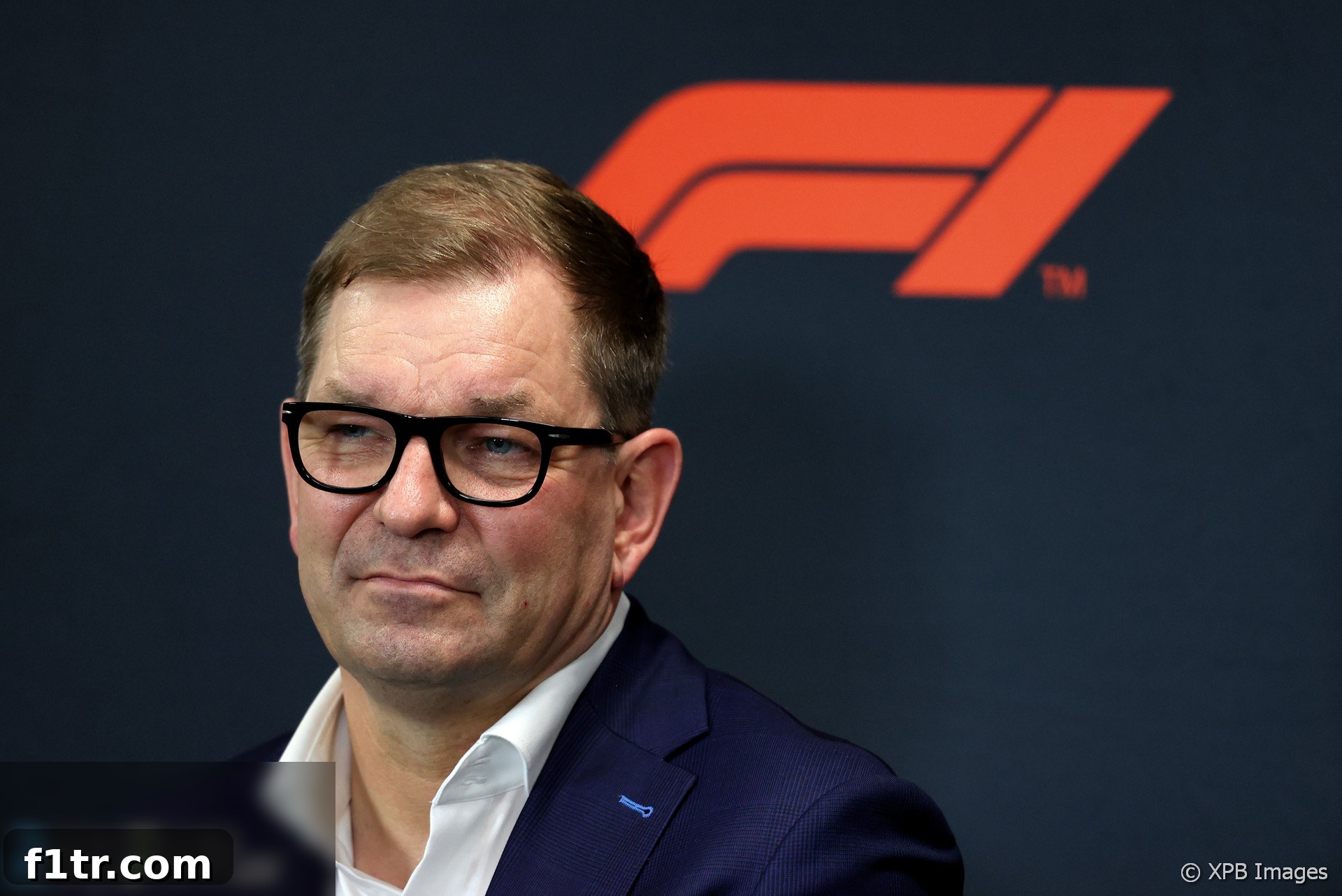
Despite both Audi and Porsche falling under the vast umbrella of the Volkswagen Group, Audi’s chairman, Markus Duesmann, unequivocally stated that their Formula 1 programs would operate with complete independence. This assertion addresses widespread speculation about potential resource sharing or a unified approach from the German automotive conglomerate. Duesmann drew a clear parallel to their past motorsport endeavors, highlighting their successful independent campaigns:
“We raced Porsche in Le Mans with completely separate operations,” Duesmann explained. “And in this case as well, we will have completely separate operations. We will have our operations in Germany and, if Porsche enters, they will have their operations in the UK – completely separate.”
This geographical and operational separation is a strategic decision. Audi’s F1 power unit development will be headquartered in Neuburg an der Donau, Germany, leveraging the brand’s existing motorsport facilities and engineering expertise. Should Porsche proceed with its own F1 entry, it is widely anticipated that their operations would be based in the United Kingdom, potentially through a collaboration with an existing F1 team based there. This distinct geographical footprint further solidifies the commitment to independent development paths, fostering internal competition and maximizing innovation within the VW Group’s motorsport portfolio.
Duesmann further elaborated on the rationale behind this dual-brand strategy, emphasizing the unique identities and strong fan bases that both Audi and Porsche command globally. “Both our brands have a lot of fans and both our brands have said their special character – and that’s why we decided to keep it completely separate and do two operations,” he stated. This approach allows each brand to cultivate its own narrative, engage with its specific demographic, and represent its core values distinctly within the highly competitive F1 arena. It’s a powerful testament to the individual brand strength that the Volkswagen Group seeks to leverage by deploying two of its most prestigious marques in the world’s premier motorsport series.
Engineering Demands and Logistical Necessities: The Rationale for Separation
Beyond brand identity and market differentiation, the decision to separate Audi and Porsche’s F1 power unit programs is also underpinned by critical logistical and engineering considerations. The intricate nature of Formula 1 power unit development, especially under the demanding 2026 regulations, necessitates a highly specialized and focused approach for each individual team and chassis constructor. Markus Duesmann underscored this technical imperative:
“We had several reasons. We will have several different teams. The powertrain has to be designed especially for the chassis and that’s why we decided to split it, because we will have completely different chassis and so completely different powertrains,” he said.
An Formula 1 power unit is not a standalone component; it is an integral part of the overall car package, meticulously designed to integrate seamlessly with the chassis, aerodynamics, and overall vehicle dynamics. Different chassis constructors will have unique design philosophies, packaging requirements, and performance targets. Attempting to develop a single “universal” power unit for multiple distinct chassis would inevitably lead to compromises, hindering optimal performance for both entities. By developing bespoke powertrains for their respective partners, Audi (and potentially Porsche) can ensure maximum integration and performance optimization.
Oliver Hoffman, Audi’s board member for the management of technical development, further highlighted the practical challenges and stringent timelines involved in preparing for an F1 entry. He explained that splitting the programs was essential to “meet the timetable” for 2026:
“The integration work of the electrified side on the powertrain, together with the chassis, it costs time to make it in two cars,” Hoffmann clarified. “So it’s completely different operations and the integration work we will do by ourselves.”
The complexity of the 2026 hybrid power units, with their increased reliance on electrical energy recovery systems and advanced energy management strategies, demands an intensive and dedicated integration effort. Developing, testing, and refining these highly sophisticated systems for even one car is an monumental task. Doubling this effort with a shared program would introduce significant delays, operational complexities, and potential performance setbacks, making independent development a pragmatic and necessary choice for both speed and precision.
Advert | Become a RaceFans supporter andgo ad-free
Wider Implications for Formula 1: A New Era of Competition
The confirmed entry of Audi, and the potential for Porsche, represents a monumental boost for Formula 1. The arrival of such prestigious automotive manufacturers underscores the sport’s robust health, its ability to attract major global brands, and the success of its current leadership in shaping a compelling future. This influx of manufacturer power is expected to elevate the competitive landscape, pushing the boundaries of engineering excellence and bringing fresh perspectives to the grid.
Increased competition among engine suppliers traditionally leads to accelerated innovation and tighter performance differentials, ultimately benefiting the sport and its global fan base. Furthermore, the commitment from brands like Audi to the new sustainable regulations validates F1’s strategic direction, positioning it as a relevant and forward-thinking platform for automotive technology. This will not only attract more talent and investment but also reinforce F1’s position as a leader in motorsport innovation.
Looking Ahead: Audi’s F1 Journey Begins
As Audi embarks on this exciting journey towards its Formula 1 debut in 2026, speculation is rife regarding its potential chassis constructor partner. While no official announcement has been made, the Sauber team (currently competing as Alfa Romeo Racing) has been widely rumored as the most likely candidate, with reports suggesting a progressive acquisition of shares leading up to a full Audi works team. Such a partnership would provide Audi with an established infrastructure, experienced personnel, and immediate access to F1 operational knowledge, easing its transition into the sport.
The challenges for Audi will be immense, as it will be competing against established giants like Mercedes, Ferrari, and Renault (Alpine), who possess decades of F1 experience. However, Audi’s storied history in motorsport, marked by dominance in endurance racing (Le Mans) and rallying, demonstrates its capacity for engineering excellence and competitive success. The brand’s methodical approach, as evidenced by its independent program, suggests a serious long-term commitment to not just participate, but to truly contend for victories and championships in Formula 1.
The 2026 Formula 1 season promises to be a watershed moment, not only for the sport itself with its new technical regulations but also for Audi. Their independent entry, driven by a blend of brand strategy, technical necessity, and an unwavering ambition, sets the stage for a thrilling new era of motorsport. Fans worldwide eagerly anticipate witnessing the four rings take to the track, ushering in a new chapter of innovation, competition, and pure racing spectacle.
2022 F1 season
- Mercedes told me “you’re wrong” about 2022 car’s problems – Hamilton
- FIA confirms all 10 F1 teams complied with 2022 cost cap
- Steiner “not ashamed” of panning “slow” Schumacher in Drive to Survive
- Albon believes year out of F1 improved him as a driver
- Hamilton sees diversity gains in F1 years on from his ‘traumatising’ experience of racism
Browse all 2022 F1 season articles