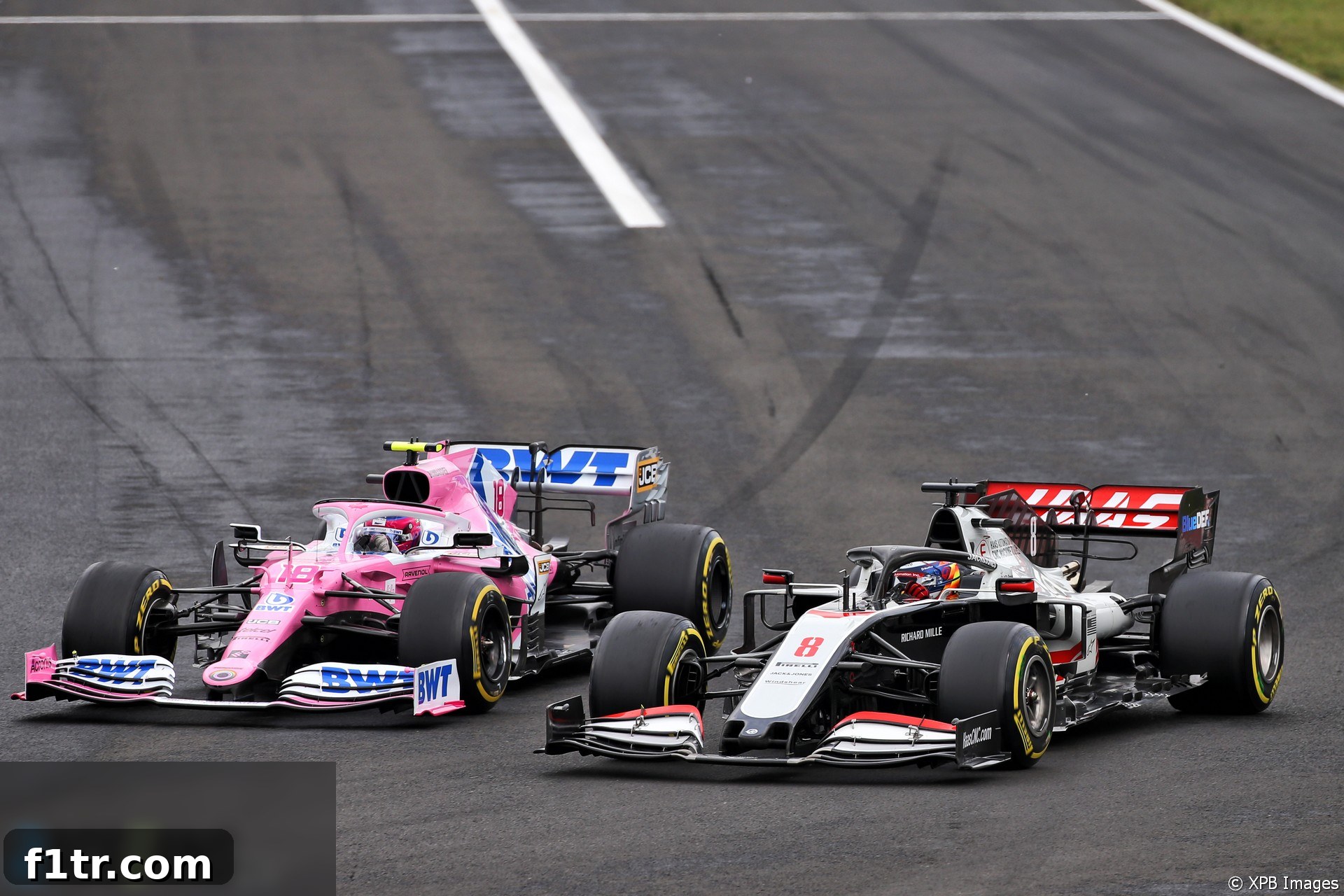
In a significant development that brings an end to a long-standing financial dispute, Formula 1 teams Racing Point and Haas have reached an amicable settlement regarding the distribution of the sport’s coveted prize money. This resolution marks the conclusion of a two-year-old row that centered on the eligibility of Racing Point, formerly Force India, to receive a share of F1’s crucial ‘Column One’ payments following a change in ownership. The agreement, confirmed by both team principals, allows both outfits to now fully concentrate on the competitive challenges on the track, leaving behind a protracted disagreement that had simmered since the close of the 2018 season.
The Genesis of the Dispute: Force India’s Fall and Racing Point’s Rebirth
The roots of this financial contention trace back to the tumultuous middle of the 2018 Formula 1 season. Force India, a respected midfield competitor known for punching above its weight, entered administration due to severe financial difficulties. In a dramatic turn of events, a consortium led by Canadian billionaire Lawrence Stroll, father of driver Lance Stroll, stepped in to purchase the team’s assets. This acquisition effectively saved the outfit from collapse, allowing it to continue competing under the new identity of Racing Point Force India for the remainder of 2018, before officially becoming Racing Point from the 2019 season onwards. The crucial point of contention, however, revolved around the exact nature of this transaction: was Racing Point a direct continuation of Force India, or was it, in essence, a new entity?
Initially, Formula 1’s commercial rights holder, Liberty Media, seemed to regard Racing Point as a legitimate continuation of the previous team. This interpretation was vital because it meant the newly formed Racing Point would theoretically be entitled to continue receiving a share of the sport’s foundational financial distributions, specifically the ‘Column One’ prize money. For any team, particularly one undergoing financial reconstruction, securing this income stream is paramount for stability, operational budgets, and future investment in car development and infrastructure. Without it, a team’s financial viability, and indeed its very existence, would be severely threatened.
Understanding Formula 1’s Prize Money Structure: The Significance of Column One
To fully grasp the magnitude of the dispute, it’s essential to understand the intricate system of Formula 1’s prize money distribution. The sport’s financial model, primarily governed by bilateral agreements between Formula 1 Management (FOM) and the individual teams (historically the Concorde Agreement), allocates revenues generated from broadcasting rights, sponsorship, and race hosting fees. This revenue is then distributed among the participating teams, typically in various tiers or “columns.”
The ‘Column One’ payment is often the most significant and fiercely contested component. It is generally regarded as a foundational sum, primarily awarded to teams that have competed in the Constructors’ Championship for a minimum number of seasons – often defined as two out of the last three, or three out of the last four years, depending on the specific terms of the prevailing agreement. Critically, teams must also have finished within the top ten in the Constructors’ Championship during these qualifying periods to be eligible. This payment is designed to provide a baseline of financial stability, irrespective of current season performance, recognizing a team’s long-term commitment and contribution to the sport. For established teams, Column One money can account for a substantial portion of their annual budget, covering crucial operational costs, staff salaries, and initial research and development for future seasons. Its importance cannot be overstated; it acts as a financial bedrock, enabling teams to plan strategically and invest in their competitive future.
Conversely, ‘Column Two’ payments are typically performance-based, directly correlating with a team’s finishing position in the current season’s Constructors’ Championship. While potentially lucrative for top-performing teams, these payments are inherently variable and cannot be relied upon for consistent long-term financial planning in the same way Column One funds can. The core of the Haas-Racing Point dispute, therefore, wasn’t just about money, but about the fundamental principle of what constitutes a “new” versus “continuing” entry in Formula 1, and the massive financial implications attached to that distinction.
Haas’s Principled Stand: A Matter of Precedent and Fairness
The Haas F1 Team, which made its debut in Formula 1 in 2016, found itself in a unique position to challenge Racing Point’s eligibility. When Haas entered the sport, they did so as a genuinely new constructor, building their team from scratch. As a result, they were not immediately entitled to receive Column One prize money. Instead, they had to wait for several seasons, successfully competing and meeting the eligibility criteria, before qualifying for these historical payments. This experience formed the bedrock of their argument against Racing Point.
Haas contended that Lawrence Stroll’s acquisition was strictly confined to the assets of Force India – its cars, equipment, factory, and personnel – but crucially, not its formal entry to compete in Formula 1. In their view, this meant Racing Point should have been treated as an entirely new team, effectively starting fresh, just as Haas had done. Consequently, Haas argued that Racing Point should not have been eligible to immediately receive the substantial Column One prize money that Force India had previously commanded. Their position was clear: if they, as a genuinely new entrant, had to earn their right to Column One payments over time, then Racing Point, under its new ownership and structure, should be subject to the same rules. This was not merely about a share of money; it was about upholding the principles of fairness, consistency, and the regulatory framework governing new entries into Formula 1.
The Abu Dhabi Protest and the Stewards’ Definitive Ruling
The simmering disagreement reached a critical juncture at the final race of the 2018 season, the Abu Dhabi Grand Prix. Haas proactively sought to establish their interpretation of the rules by formally protesting the eligibility of Force India’s cars. This was a strategic move designed to force an official ruling on the matter. The FIA stewards, the ultimate arbiters of sporting regulations, were tasked with reviewing the complex ownership transfer and its implications under the Formula 1 Sporting Regulations.
After careful consideration of the submissions from all parties, including Racing Point Force India F1 Team itself, the stewards delivered a definitive verdict. Their ruling stated unequivocally: “In relation to the submission by the Racing Point Force India F1 Team that it is not a new team, the stewards decide that the Racing Point Force India F1 Team is indeed a new team.” This judgment was a significant victory for Haas. It legally affirmed their core argument that, despite inheriting assets, the new entity operating as Racing Point was distinct from the original Force India for regulatory purposes. This ruling immediately opened the door for Haas to pursue claims either that they should have received a share of Column One income when they were a new team (to correct a perceived historical injustice) or, more directly, that Racing Point’s Column One income should be withheld or redistributed. The stage was set for a prolonged legal and financial battle, involving not just the two teams but also Formula 1’s commercial rights holders, Liberty Media, who oversee the prize money distribution.
Two Years of Tensions: Behind the Scenes of the F1 Financial Row
The stewards’ ruling in Abu Dhabi did not immediately resolve the financial aspect of the dispute; instead, it laid the groundwork for a protracted and complex negotiation that would span more than two years. The row became a persistent background hum in the paddock, involving high-level discussions between the teams, Formula 1 management, and potentially the FIA. Such financial disagreements, especially those touching upon core revenue streams like Column One payments, are rarely straightforward. They involve considerable sums of money, set precedents for future team entries, and impact the delicate financial ecosystem of the sport. While the public statements remained minimal, behind the scenes, both teams and Liberty Media would have been engaged in intricate legal and commercial deliberations, each side protecting its interests.
The prolonged nature of the dispute undoubtedly added an element of uncertainty for Racing Point, despite the immediate funding injections from Lawrence Stroll. The potential withholding or redirection of significant prize money could have severely hampered their long-term growth and competitiveness. For Haas, the dispute was a matter of principle and perceived fairness, aiming to ensure that all teams operate under consistent financial regulations, preventing any new entrant from gaining an undue financial advantage. This period of contention underscored the high stakes involved in Formula 1’s financial structures and how closely teams guard their share of the sport’s lucrative revenues.
The Resolution: A Collective Sigh of Relief
The long-awaited announcement of a settlement finally came during an FIA press conference, bringing a definitive end to the saga. Racing Point CEO Otmar Szafnauer and Haas team principal Guenther Steiner both confirmed that an agreement had been reached between their respective organizations. Their statements, though brief, conveyed a sense of relief and a desire to move forward.
“We’re pleased that it’s come to a conclusion and now the entire team can focus on what we’re here to do and entertain the fans,” remarked Otmar Szafnauer, highlighting the distraction the dispute had caused. “We’re happy it’s behind us.” When pressed on the specifics of the settlement, particularly whether Racing Point had ultimately received the disputed share of F1’s prize money, Szafnauer remained discreet, stating, “As I said before it’s nice to have settled it and we should just move on and go racing.” This evasiveness is typical in such private settlements, where financial terms are often confidential. Guenther Steiner, representing Haas, echoed a similar sentiment of satisfaction, indicating that his team too was content with the outcome and ready to shift its full attention back to on-track performance. The collective sigh of relief from both camps suggests a mutually agreeable compromise was reached, allowing both teams to close this chapter and look ahead.
Implications for the Future of F1 Finances and Team Entries
While the specific financial terms of the settlement remain undisclosed, its conclusion carries broader implications for Formula 1’s financial landscape and the precedent it sets for future team entries. The dispute itself highlighted a crucial regulatory gray area concerning asset purchases versus formal entries. The FIA stewards’ ruling that Racing Point was indeed a “new team” has likely reinforced the importance of clear distinctions in ownership transfers and their financial consequences.
This settlement, coming at a time when Formula 1 is ushering in new financial regulations, including a budget cap from 2021, underscores the sport’s ongoing efforts to create a more equitable and sustainable environment for all competitors. Future team owners contemplating similar asset acquisitions will now have a clearer understanding of the potential financial hurdles and the importance of securing a formal ‘entry’ rather than just assets, if they wish to immediately qualify for historical prize money distributions like Column One. The resolution of this long-running dispute also contributes to a more stable and predictable financial framework within the paddock, which is beneficial for investor confidence and the overall health of the sport. It reaffirms that while Formula 1 is fiercely competitive on track, there is also a shared understanding among teams and the commercial rights holder that complex financial disagreements can, and should, be resolved to allow the focus to remain on the racing.
Conclusion
The settlement between Racing Point and Haas marks the end of a significant financial dispute that cast a long shadow over both teams and Formula 1 for over two years. By reaching an agreement, both Racing Point and Haas can now fully channel their energy and resources into their primary objective: competing at the pinnacle of motorsport. While the intricate details of the settlement remain private, its conclusion signifies a move towards greater clarity and stability within F1’s complex financial ecosystem. This resolution allows the entire paddock to finally put this chapter behind them and focus wholeheartedly on the thrilling spectacle of Formula 1 racing.