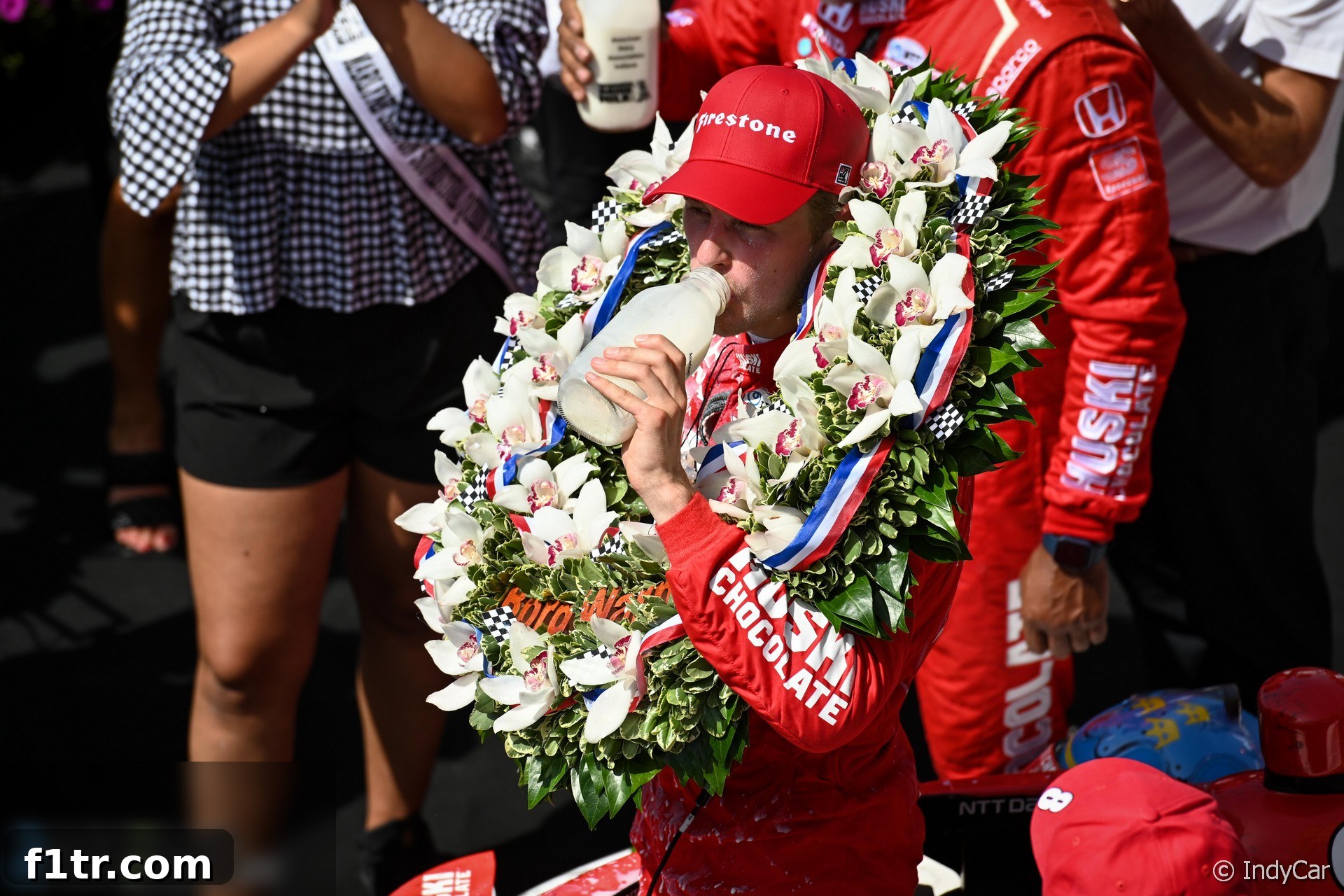
Marcus Ericsson: The Indianapolis 500 Victory That Redefined a Racing Legacy
For dedicated motorsport enthusiasts, Marcus Ericsson’s two victories and compelling performance in the 2021 IndyCar championship served as a clear testament to his talent, proving he was far more capable than the outcomes of his formative Formula One career suggested. Yet, his monumental triumph at the 106th running of the Indianapolis 500 has indelibly etched his name into racing history, forever elevating his status and redefining his entire racing legacy. This victory stands as the ultimate culmination of what Ericsson himself describes as a challenging yet necessary process of self-reinvention following his transition from the pinnacle of Formula One.
From Formula 1 Backmarker to IndyCar Contender: A Journey of Reinvention
Ericsson’s path to IndyCar glory was paved with the hard lessons learned during his five-year tenure in Formula One. Reflecting on those years, he shared, “It’s been tough. I did five years in Formula 1, almost a hundred grands prix, running for small teams, towards the back most of it. You don’t get a lot of credit running in the back in Formula 1. People think you are not very good.” This perception was a heavy burden for a driver who harbored championship aspirations. His career at teams like Caterham and Sauber, while offering invaluable experience at the highest level of motorsport, often saw him battling at the rear of the grid, a position that rarely garners the recognition his underlying skill deserved.
When Ericsson made the bold move to IndyCar in 2019, joining the then Schmidt Peterson Motorsports team (now McLaren SP) before transitioning to Chip Ganassi Racing the following year, the skepticism followed him. “I came over here, and people probably didn’t think much of that,” he admitted. The transition was not just a change of scenery; it was a fundamental shift in racing philosophy and technique. American open-wheel racing, with its diverse tracks, close-quarters action, and unique oval challenges, required a complete relearning process. It demanded unwavering dedication, and Ericsson committed fully to this new chapter. “I had to work my way here as well, learning American racing. I moved here, put my whole life into trying to become an IndyCar and Indianapolis 500 champion.” This unwavering commitment, relocating his life and career across continents, underscored his deep-seated ambition and refusal to be defined by past results.
His early career, particularly in F1, had been significantly bolstered by substantial financial backing and sponsors from Sweden, which helped secure his seat for five seasons. This support, while crucial for his participation, unfortunately contributed to the enduring label of a ‘pay driver’ in the eyes of many critics. Even his move to the prestigious Ganassi team saw another prominent Swedish sponsor join, doing little to silence these persistent whispers. However, his hard work and dedication in IndyCar began to chip away at that perception. His two wins in the 2021 season, at Detroit and Nashville, were strong indicators of his burgeoning capabilities and a sign that his true potential was finally being realized away from the F1 spotlight.
The Indianapolis 500 victory, his third and by far the most significant IndyCar win of his career, definitively shattered that narrative. With a triumphant grin, Ericsson quipped, “Winning the Indy 500, it’s not bad for a pay driver!” This statement, delivered in victory lane, encapsulated the profound sense of vindication and achievement that washed over him. It was a moment of profound personal and professional validation, silencing critics and rewriting his story from a driver whose career was paid for to a champion who earned his place through sheer talent and relentless effort.
The Greatest Spectacle in Racing: A Victory Earned Against All Odds
The 106th running of the Indianapolis 500 was a race etched with drama, strategy, and sheer grit. Speaking from victory lane, still processing the magnitude of his achievement, Ericsson exclaimed, “It’s going to take a while to take that in. It’s just incredible. I worked so hard for a moment like this, and to win ‘The Greatest Spectacle in Racing,’ the biggest race in the world, with all of my family here, my girlfriend, my backers… it couldn’t be better!” His words conveyed not just the joy of victory but the immense emotional weight of years of struggle and sacrifice finally paying off on motorsport’s grandest stage.
The race itself was a testament to Ericsson’s composure and the strategic prowess of the Chip Ganassi Racing team. “We had a really good race car, and we had some bad luck in the middle of the race with our pit stop,” Ericsson recounted. A crucial round of yellow flag pit stops, triggered by a crash involving his former F1 colleague Romain Grosjean, saw Ericsson drop back dramatically. “I was just trying to be running up front, and wait ’til the end, because I knew we had a car to win. But then we dropped back to eighth with that mishap in the pits.” Falling eight positions from a promising front-running position could have been a demoralizing blow, but Ericsson’s belief in his car and his team remained unshaken. “I still knew we had a chance, and was sort of working my way there. The strategy guys and girls did a great job around that last pit stop, and I pushed like crazy around there to make sure we could get a good sequence.” This incident highlighted his mental resilience and his ability to execute under pressure.
Fortune, however, soon favored Ericsson. His earlier pit lane misfortunes were dramatically reversed after his final stop on lap 177. In a pivotal moment, his team mate and race leader, Scott Dixon, was caught exceeding the pit lane speed limit and had to serve a costly drive-through penalty. This opened the door for Ericsson, who, as Ganassi’s last remaining front-runner, seized the opportunity with both hands. His charge to the lead was electrifying. “I managed to overtake both of the McLarens, and then the Honda power was just blowing me away!” he vividly described, detailing his decisive moves to gain track position and ultimately take control of the race.
But the Indy 500 is notorious for its unpredictability, and victory is never truly secured until the checkered flag waves. Just as Ericsson appeared to be cruising towards victory with a three-second lead over Pato O’Ward, another twist emerged. Team mate Jimmie Johnson’s crash in the dying laps brought out a red flag, neutralizing the race and erasing Ericsson’s hard-won advantage. This set up a nail-biting, two-lap sprint to the finish, a sudden-death shootout for the most coveted trophy in open-wheel racing. “I was just praying for that yellow not to come, because I knew it was a big risk in the end. I couldn’t believe it when the yellow came because I had to do it all over again,” he recalled, emphasizing the immense pressure of restarting the race with O’Ward right on his tail.
In those final two laps, Ericsson demonstrated supreme skill and nerve. Weaving strategically from side to side, he masterfully defended his position, doing everything within the bounds of sporting decency to keep O’Ward at bay. The McLaren SP driver mounted a fierce challenge, attempting an outside pass as the final lap commenced, but Ericsson held his nerve, driving a faultless defensive line to seal the biggest win of his life. “That’s why we do it,” Ericsson reflected. “It’s not supposed to be easy. We made it.” This final act of defiance and control against a formidable challenger cemented his performance as one of the most memorable in recent Indy 500 history.
A Champion’s Endorsement: Kenny Bräck’s Praise and Prophecy
The celebration continued into the post-race press conference, where Ericsson received an emotional and fitting surprise. He was joined by none other than Kenny Bräck, the only other Swedish racing driver to have won the Indianapolis 500, a feat he accomplished in 1999. Bräck had been an influential figure in Ericsson’s early career, providing mentorship and guidance during his junior formula days in the UK and Japan. This reunion of Swedish Indy 500 champions was a powerful symbol of legacy and continuity.
Speaking via video call, Bräck offered heartfelt praise: “Marcus has done a great job. I helped him in the beginning. I think I did a little bit to help him along the way with tips and driving and so forth.” Addressing Ericsson directly, Bräck added words of profound admiration and foresight: “You’ve obviously honed your skills in a big way since then, so it’s good to see that it pays off – all the hard work you must have done. It’s great to see. So a big congratulations.” Bräck’s final words were a prophecy, hinting at the enduring impact of this victory: “I don’t think you realise yet what this means for your career, but you will find out in time.”
Kenny Bräck’s endorsement underscored the magnitude of Ericsson’s achievement, not just for his personal career but for Swedish motorsport. It signified a passing of the torch and cemented Ericsson’s place among the elite. This win transcended mere competition; it became a story of perseverance, resilience, and the ultimate triumph of a driver who refused to be constrained by preconceived notions or past disappointments.
The Enduring Legacy of an Indy 500 Champion
Marcus Ericsson’s victory at the Indianapolis 500 is more than just a race win; it is a powerful narrative of redemption and transformation. It validated his decision to leave Formula 1, proved his critics wrong, and established him as a genuine force in the world of IndyCar racing. His journey from a perceived ‘pay driver’ to an Indianapolis 500 champion is an inspiring testament to the power of hard work, unwavering belief, and the courage to redefine one’s own path. This win has not only secured his place in history but has also set the stage for an even more exciting future in motorsport, forever marking him as a champion of the Greatest Spectacle in Racing.
IndyCar News and Features
- IndyCar driver McLaughlin cleared of injury after crashing through barrier at Barber
- Schumacher says his IndyCar feels like ‘an F2 car, just with better tyres’
- IndyCar “way faster than Formula 1” in some corners, says Grosjean
- FIA to award more F1 superlicence points to IndyCar drivers from 2026
- Schumacher to race full-time in IndyCar with RLL in 2026
Browse all IndyCar articles