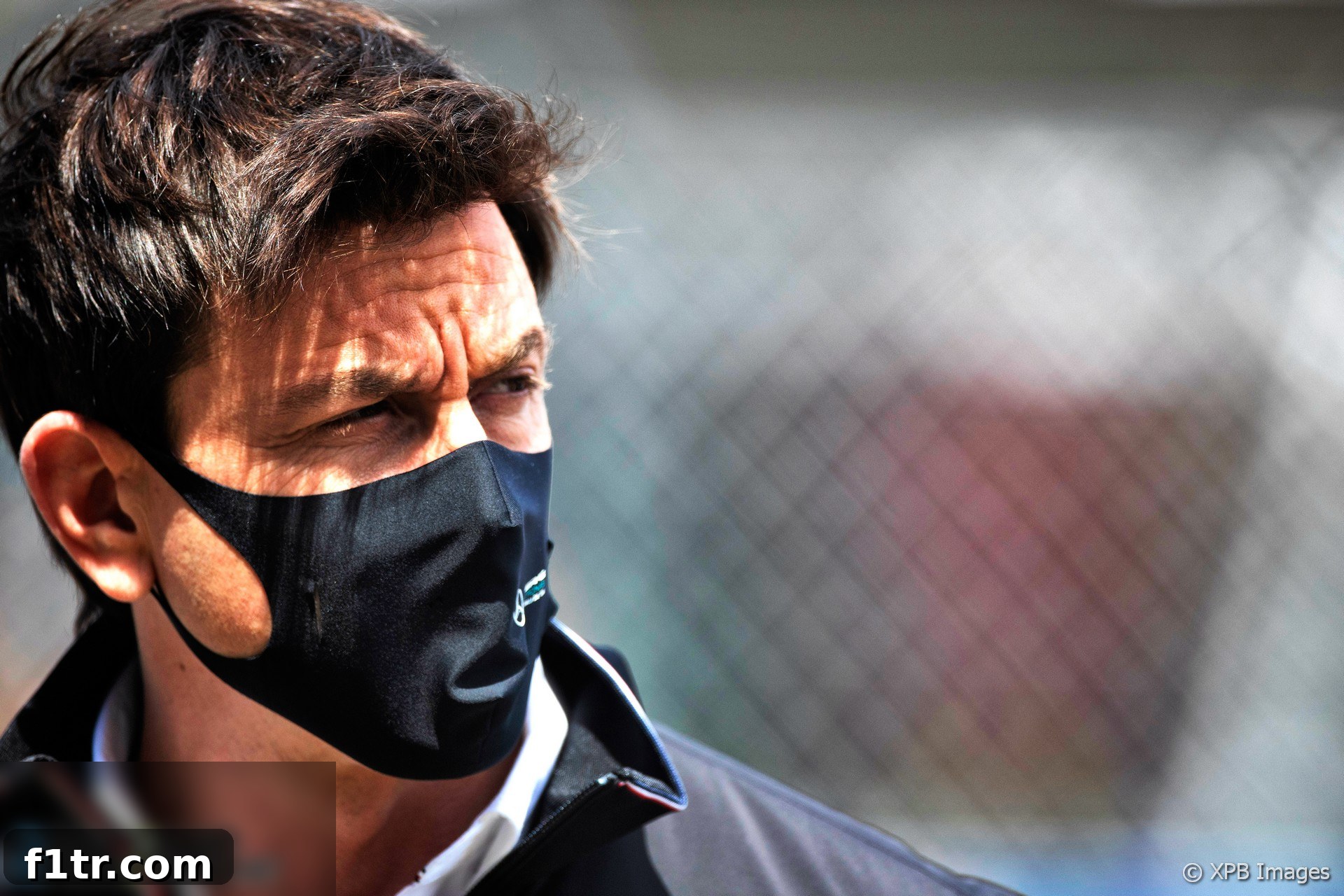
In the relentless pursuit of Formula 1 supremacy, the battle extends far beyond the racetrack and into the highly competitive realm of engineering talent. A recent revelation from Mercedes CEO Toto Wolff has shed light on an aggressive recruitment drive by rival team Red Bull, aiming to bolster its nascent power unit facility by targeting no less than 100 skilled personnel from Mercedes-Benz High Performance Powertrains (HPP). This strategic move underscores the intense technical arms race that defines modern Formula 1, where the expertise of engineers is as crucial as the prowess of drivers and the performance of the cars themselves.
Red Bull Powertrains (RBPF), established at the team’s Milton Keynes base, represents a monumental undertaking. Its creation follows Honda’s decision to withdraw as a power unit supplier at the end of the current season, leaving Red Bull with the critical challenge of bringing engine development in-house. This strategic pivot aims to grant the Austrian team complete control over its destiny, integrating the power unit division seamlessly with the chassis side. However, building a competitive F1 power unit from the ground up, especially against established giants like Mercedes and Ferrari, is often likened to scaling Mount Everest – a challenge that demands not only immense financial investment but also an unparalleled pool of engineering talent.
Mercedes-Benz High Performance Powertrains, based in Brixworth, England, stands as the undisputed benchmark in the hybrid era of Formula 1. Since the introduction of the V6 turbo-hybrid regulations in 2014, HPP has been instrumental in Mercedes’ unprecedented string of constructor and driver championships. Their relentless innovation, sophisticated design, and manufacturing capabilities have set the standard for power, efficiency, and reliability. With a workforce exceeding 900 highly specialized employees, HPP represents a formidable concentration of knowledge and experience in cutting-edge powertrain technology. It is precisely this expertise that makes HPP staff such attractive targets for any competitor seeking to establish or improve their own engine program, highlighting the strategic importance of talent acquisition in this technologically advanced sport.
Wolff’s candid disclosure confirmed the scale of Red Bull’s ambition. He stated that Red Bull had “approached 100 people or and they got 15, maybe.” While Red Bull officially confirmed the acquisition of five engineers with Mercedes experience, including Mercedes’ former head of mechanical engineering, Ben Hodgkinson, who will serve as the technical director for the Red Bull Powertrains project, the full scope of their recruitment efforts appears to be far wider. This significant hiring spree signals Red Bull’s serious commitment to their independent engine program. Hodgkinson’s move, in particular, sends a clear message about Red Bull’s intent to not merely run Honda’s intellectual property but to develop a truly competitive engine for the future, leveraging the deep expertise from a rival that has dominated the sport for nearly a decade.
The Mercedes CEO further elaborated on the nature of Red Bull’s recruitment focus. “They went mainly after manufacturing staff so it’s not really [for] performance. I guess they want to build up the company.” This distinction is crucial, suggesting that Red Bull’s initial priority might be establishing robust manufacturing processes and infrastructure rather than immediately targeting core performance development roles. However, in Formula 1, every aspect, from design to manufacturing quality, contributes to overall performance, making even manufacturing specialists highly valuable. Wolff’s assessment, while downplaying the immediate performance threat, nonetheless acknowledges the significant foundational work Red Bull is undertaking to become a self-sufficient power unit manufacturer, recognizing the immense challenge they face in a notoriously complex and competitive domain.
The intense talent battle also led to speculation about countermeasures. Red Bull motorsport advisor Helmut Marko claimed that Toto Wolff had offered to double the salaries of his staff to prevent them from moving. Wolff did not deny these claims, offering a nuanced perspective on the financial incentives at play. “Doubling the salaries is one thing but if you triple them, at a certain stage, you’re not going to compete anymore, even for loyal people.” This statement hints at the aggressive financial packages Red Bull might be offering, underscoring the high cost of securing top-tier engineering talent in Formula 1. It also reflects the delicate balance team principals must maintain between retaining valuable personnel and managing an economically sustainable operation. Wolff’s pragmatic view highlights the cut-throat nature of F1, where talent is a premium commodity, and competition for it can escalate rapidly.
The creation of Red Bull Powertrains and its aggressive talent acquisition strategy introduces a fascinating new dynamic to the sport. For years, Red Bull has relied on external engine suppliers, culminating in a highly successful partnership with Honda. Now, embarking on an independent path, they face the daunting task of establishing an entirely new, highly sophisticated department from scratch. Wolff himself acknowledged the magnitude of this challenge: “Credit to the project, it’s a Mount Everest to climb and I’d like to have a fight with Red Bull power units.” This declaration encapsulates the competitive spirit inherent in Formula 1, where rivalries drive innovation and push the boundaries of engineering excellence. The prospect of a full-fledged engine battle between Mercedes and a Red Bull-developed power unit in the future promises an even more thrilling era for the sport.
This intense competition for engineering talent is not unique to this specific incident but is a recurring theme in Formula 1’s history. Teams constantly strive to gain a competitive edge by attracting the brightest minds and the most experienced hands. The movement of key personnel between rival teams is a testament to the sport’s high-stakes environment, where intellectual property and human capital are invaluable assets. While seemingly a behind-the-scenes drama, these talent wars have profound implications for the performance on track, shaping the future technological landscape and potentially influencing the balance of power for years to come. Every defection and every new hire represents a strategic gain or loss, adding another layer of complexity to the already intricate chess game played out between the sport’s leading constructors.
In conclusion, Red Bull’s ambitious venture into independent power unit manufacturing, spearheaded by its recruitment efforts targeting Mercedes HPP, marks a pivotal moment in Formula 1. While the immediate impact of these personnel changes remains to be seen, the long-term implications for the competitive landscape are undeniable. Toto Wolff’s frank commentary reveals not just the scale of Red Bull’s approach but also the measures Mercedes is willing to take to protect its intellectual capital and maintain its competitive advantage. As Formula 1 moves towards its next generation of power unit regulations, the battle for engineering talent will undoubtedly intensify, ensuring that the fight for supremacy remains fierce, not only on the circuit but also in the laboratories and workshops where the sport’s future is meticulously crafted. The “retaliation time has not yet come,” as Wolff put it, hinting at an ongoing saga of strategic moves and counter-moves in the ultimate technological sport.
2021 Spanish Grand Prix
- Two reasons why Catalunya may not predict the championship – at least this year
- McLaren to keep “drip-feeding” updates onto 2021 car
- Working group tackling F1’s track limits problem
- ‘We’ll discuss what went wrong’: Hamilton and Verstappen team radio transcript analysis
- 2021 Spanish Grand Prix Star Performers
Browse all 2021 Spanish Grand Prix articles