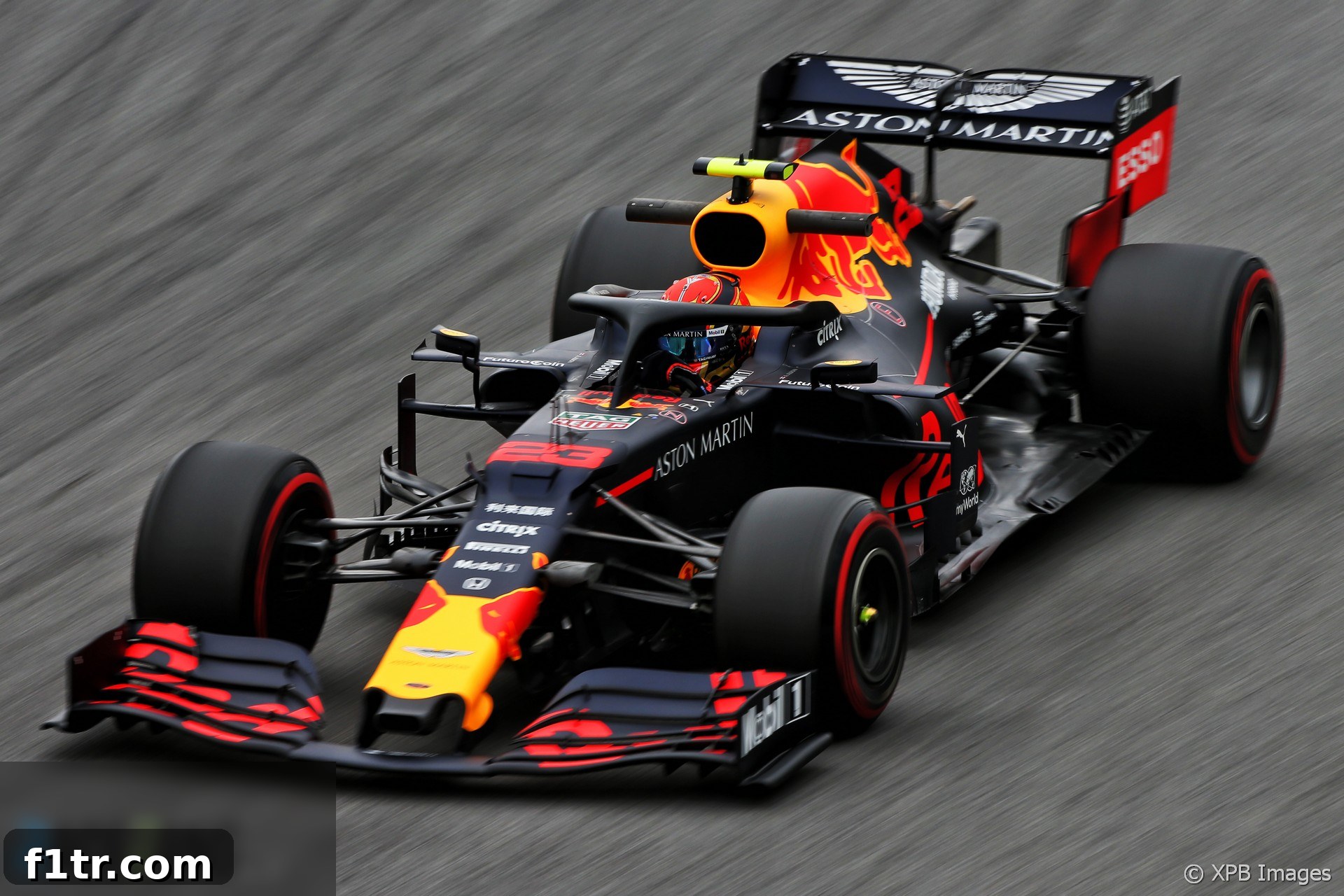
As the Formula 1 season draws to a close, all eyes turn to the dazzling Yas Marina Circuit for the much-anticipated Abu Dhabi Grand Prix. Beyond the glitz and glamour of the season finale, a critical factor often dictates the outcome of the race: tyre strategy. In the high-stakes world of Formula 1, where milliseconds define success, a well-executed tyre choice can elevate a team to victory, while a misstep can send aspirations spiraling. For the upcoming Abu Dhabi race, teams have meticulously made their tyre selections, and Red Bull Racing, fresh off their triumph at the Brazilian Grand Prix, appears to be adopting an assertive approach, opting for a higher number of soft compound tyres compared to their rivals.
The Yas Marina Circuit, renowned for its challenging layout and spectacular setting, presents a unique set of demands on the Pirelli tyres. F1’s official tyre supplier has allocated its three softest compounds for this event: the C3 (Hard), C4 (Medium), and C5 (Soft). These selections are notably softer than the compounds utilized at Interlagos just last weekend, signaling Pirelli’s expectation for high grip and potentially higher degradation on Abu Dhabi’s smooth asphalt. Understanding the characteristics of these compounds is paramount. The C5, being the softest, offers maximum grip and fastest lap times but at the cost of rapid degradation. The C4 provides a balanced compromise, while the C3, the hardest compound for this weekend, offers durability for longer stints but less outright pace.
Red Bull’s Aggressive Stance: Banking on Softs
Red Bull Racing, riding a wave of momentum after their Brazilian Grand Prix victory, has made a bold statement with their tyre strategy for both Max Verstappen and Alexander Albon. Each Red Bull driver will have an impressive nine sets of the softest C5 compound tyres at their disposal. This choice signifies a strong commitment to maximizing qualifying performance and maintaining an aggressive race pace. By selecting one more set of softs than Mercedes and Ferrari, Red Bull is clearly indicating their intent to push the boundaries, potentially running multiple stints on the fastest compound or having extra sets for crucial qualifying runs and practice fine-tuning.
The decision to load up on soft tyres for the Yas Marina circuit is a calculated gamble. The smooth surface of the circuit generally leads to lower tyre degradation compared to rougher tracks, which could play into Red Bull’s hands, allowing the C5s to last longer than anticipated. However, the track’s many acceleration and braking zones, coupled with the rising and falling ambient temperatures during the twilight race, can still pose significant challenges for tyre management. Red Bull’s confidence in their car’s ability to manage tyre wear, especially with Verstappen’s renowned tyre preservation skills, seems to be a key factor in this aggressive strategy. It could enable them to have a significant pace advantage in critical phases of the race, potentially allowing for more flexibility in their pit stop windows or executing an undercut.
Mercedes and Ferrari: A Calculated Balance
In contrast to Red Bull’s assertive strategy, championship contenders Mercedes and Ferrari have adopted a more balanced approach for their lead drivers. Both teams have opted for eight sets of the C5 soft tyres for their respective drivers. While this is still a substantial number, their deviation from Red Bull’s choice lies in their selection of the harder compounds. Lewis Hamilton of Mercedes and Charles Leclerc of Ferrari will each have an additional set of the C3 hard tyres, bringing their total to two sets, as opposed to the single mandatory set chosen by Verstappen and Albon.
This strategic decision by Mercedes and Ferrari offers enhanced flexibility. An extra set of hard tyres allows their drivers to extensively evaluate the C3 compound during free practice sessions without compromising their race allocation. This could prove invaluable for understanding its performance over long runs, especially considering the varied track conditions from day to night. Having a fresh set of hard tyres for the race provides a crucial strategic fallback. It offers the option for a much longer first or second stint, better enabling a one-stop strategy or providing crucial resilience in the event of an early safety car. This approach speaks to a preference for strategic robustness and adaptability, aiming to cover a wider range of potential race scenarios rather than solely focusing on outright speed with the softest compound. Valtteri Bottas and Sebastian Vettel, meanwhile, have aligned with the more standard choice of one hard set, three medium, and eight softs, suggesting a slight variation in individual driver preference or team allocation within their garages.
Midfield Dynamics and Diverse Approaches
The tyre selection data reveals interesting trends across the rest of the grid. Interestingly, Toro Rosso and Williams are the only other teams to mirror Red Bull’s strategy, opting for nine sets of soft tyres for each of their drivers. For Toro Rosso, this could be a reflection of their close technical ties with Red Bull and potentially a similar philosophy regarding tyre management, especially given Daniil Kvyat’s and Pierre Gasly’s strong performances at various points in the season. For Williams, who often operate with different constraints, this could represent a daring attempt to maximize qualifying performance and seize any opportunity in the race, banking on their car’s specific characteristics on the smooth Yas Marina surface.
Most of the other midfield teams, including Renault, Haas, McLaren, Racing Point, and Alfa Romeo, have largely converged on a similar strategy to Mercedes and Ferrari for at least one of their drivers: one hard, four medium, and eight soft sets, or two hard, three medium, and eight softs. This signifies a widely accepted balance between speed and durability. Teams like Renault, McLaren, and Racing Point, who are often locked in tight battles for championship positions, prioritize strategic options. The choice between an extra medium or an extra hard typically comes down to confidence in the car’s ability to extract performance from the harder compounds, or a desire for a more versatile stint length. These varied choices across the grid promise a fascinating strategic battle, as each team attempts to leverage their specific tyre allocations to gain an advantage.
2019 Abu Dhabi Grand Prix tyre selections
| Driver | Team | Hard (C3) | Medium (C4) | Soft (C5) |
|---|---|---|---|---|
| Lewis Hamilton | Mercedes | 2 | 3 | 8 |
| Valtteri Bottas | Mercedes | 1 | 4 | 8 |
| Sebastian Vettel | Ferrari | 1 | 4 | 8 |
| Charles Leclerc | Ferrari | 2 | 3 | 8 |
| Max Verstappen | Red Bull | 1 | 3 | 9 |
| Alexander Albon | Red Bull | 1 | 3 | 9 |
| Daniel Ricciardo | Renault | 1 | 4 | 8 |
| Nico Hulkenberg | Renault | 2 | 3 | 8 |
| Kevin Magnussen | Haas | 1 | 4 | 8 |
| Romain Grosjean | Haas | 2 | 3 | 8 |
| Carlos Sainz Jnr | McLaren | 1 | 4 | 8 |
| Lando Norris | McLaren | 2 | 3 | 8 |
| Sergio Perez | Racing Point | 2 | 3 | 8 |
| Lance Stroll | Racing Point | 2 | 3 | 8 |
| Kimi Raikkonen | Alfa Romeo | 1 | 4 | 8 |
| Antonio Giovinazzi | Alfa Romeo | 2 | 3 | 8 |
| Daniil Kvyat | Toro Rosso | 1 | 3 | 9 |
| Pierre Gasly | Toro Rosso | 2 | 2 | 9 |
| George Russell | Williams | 2 | 2 | 9 |
| Robert Kubica | Williams | 1 | 3 | 9 |
Strategic Outlook and Race Scenarios
The strategic permutations arising from these tyre choices are numerous. A dominant Red Bull, with its plethora of soft tyres, might aim for a two-stop strategy, maximizing performance in shorter, faster stints. This could allow them to run aggressive qualifying laps and maintain a blistering pace in the race. Conversely, Mercedes and Ferrari, with their additional hard tyres, have greater flexibility for a one-stop strategy, which is often favored at circuits where track position is critical and overtakes are challenging, as can be the case at Yas Marina. The hard tyre could also be a lifesaver in the event of an unexpected early safety car, allowing them to extend their first stint significantly.
The medium C4 compound should not be underestimated either. While not as soft as the C5, it offers a superb balance of pace and longevity, making it an ideal race tyre for many teams. Drivers like Valtteri Bottas and Sebastian Vettel, with their four sets of mediums, could leverage this compound for a strong second stint, or even to start the race if track conditions demand it. Ultimately, the success of any strategy will hinge on several factors: tyre degradation rates throughout the race, the timing of safety car periods, the accuracy of pit stop calls, and the drivers’ ability to manage their tyres effectively under pressure. The unique day-to-night transition at Abu Dhabi also plays a role, with falling track temperatures potentially altering tyre performance and degradation as the race progresses.
Conclusion: The Final Tyre Battle of the Season
As the curtains prepare to fall on the 2019 Formula 1 season, the Abu Dhabi Grand Prix promises to be a captivating spectacle, not least because of the intriguing tyre strategies laid bare. Red Bull’s aggressive soft tyre allocation hints at their ambition to finish the season on a high, pushing for outright speed. Mercedes and Ferrari, meanwhile, demonstrate a more measured approach, prioritizing strategic flexibility and robustness. The diverse choices across the grid underscore the complex art and science of F1 tyre strategy, where every compound and every set can contribute to the ultimate outcome. All eyes will be on Yas Marina to see which team masterfully navigates the strategic chessboard and emerges victorious in the final tyre battle of the year.
2019 F1 season
- Crying in the Melbourne car park at 2019 grand prix was my career low – Ocon
- McLaren Racing reports reduced £71 million loss in 2019
- Kvyat: Hockenheim podium last year was “my biggest achievement” so far
- How the FIA’s new encrypted fuel flow meter targets Ferrari’s suspected ‘aliasing’ trick
- “He smashed my office door”: 23 must-see moments from ‘Drive to Survive’ season two
Browse all 2019 F1 season articles