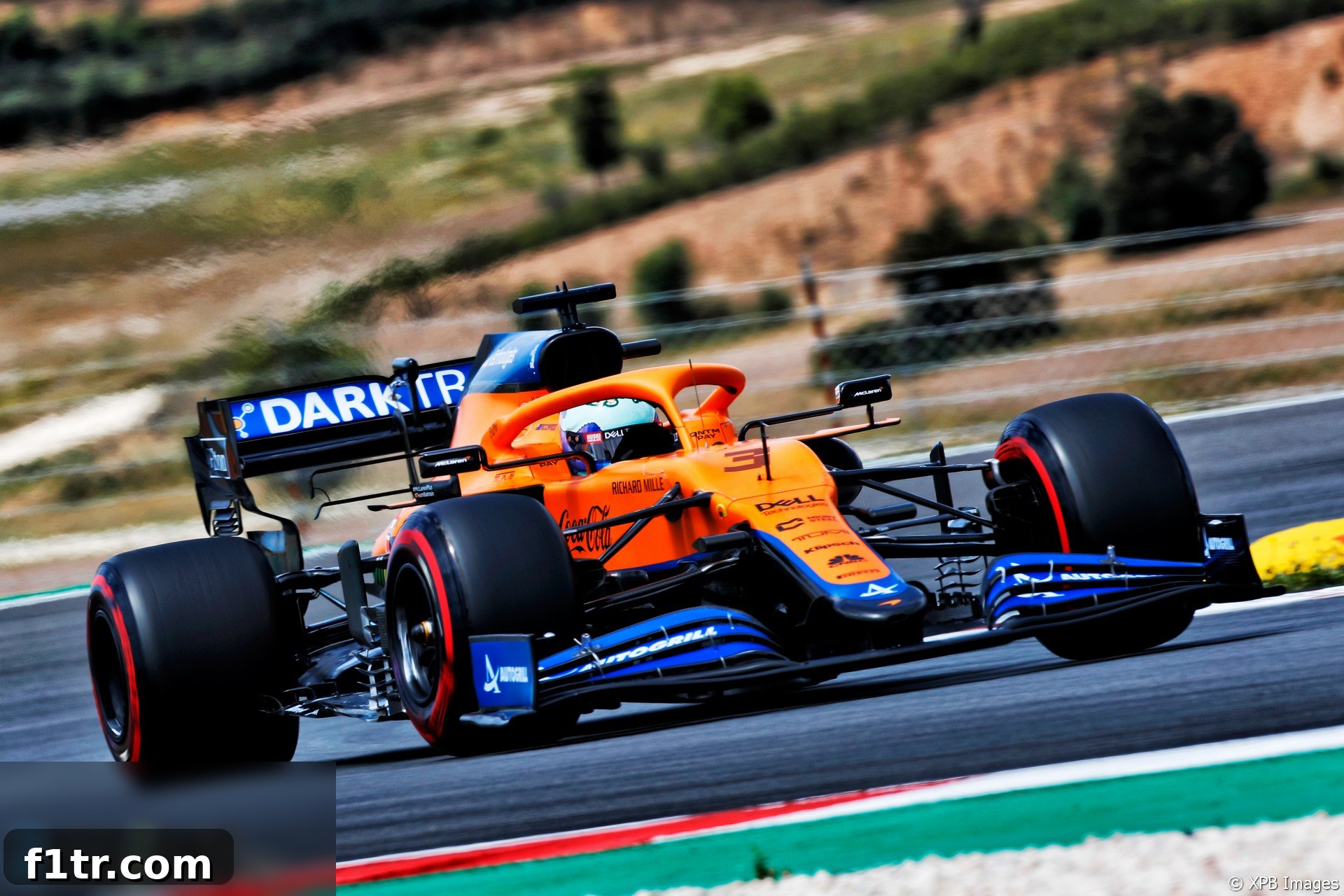
Welcome to part two of our comprehensive mid-season rankings, where we meticulously evaluate the performance of all 20 Formula 1 drivers in the current campaign. This segment delves into a crucial part of the grid, focusing on drivers who have faced significant challenges, delivered unexpected surprises, and navigated the intense pressures of the world’s premier motorsport. From a highly-touted McLaren recruit grappling with adaptation to the veteran presence and promising upswings within the Alfa Romeo squad, we analyze their journeys through the lens of data, on-track incidents, and crucial comparisons with their teammates. These rankings are more than just numbers; they offer a deeper insight into the nuanced struggles, strategic triumphs, and often unseen battles that define an F1 season, providing a holistic view of each driver’s contribution and trajectory so far.
16. Lance Stroll
Lance Stroll |
|
|---|---|
| Beat team mate in qualifying | 4/10 |
| Beat team mate in race | 5/8 |
| Races finished | 9/11 |
| Laps spent ahead of team mate | 329/584 |
| Qualifying margin | +0.01s |
| Points | 18 |
Lance Stroll has long been regarded as a driver capable of flashes of brilliance, often punctuated by one or two truly exceptional performances each season, reminiscent of his pole position heroics at Istanbul Park. However, his 2021 campaign has, to date, noticeably lacked such defining moments, instead being characterized by a series of costly errors and a struggle for consistent form. This inconsistency has arguably hindered Aston Martin’s progress in the fiercely competitive midfield battle.
The season began with Stroll accumulating a series of regrettable incidents. At Imola, he incurred a penalty for an illegal overtake on Gasly, an infraction that arguably should have been repeated in Spain for a similar move on Alonso, though he escaped sanction. Baku saw him crash out during qualifying, compromising his starting position. Further mishaps included a pit lane speeding penalty in Austria, followed by a significant collision with Leclerc’s Ferrari in the most recent outing, demonstrating a pattern of misjudgment and costly mistakes that have prevented him from maximizing his potential and the car’s performance. These errors collectively underscore a season where Stroll has not yet found the rhythm and precision required to consistently convert opportunities into solid points finishes.
A key benchmark for Stroll this year has been his pairing with four-time world champion Sebastian Vettel. While both drivers have openly admitted to struggling with one-lap pace in recent seasons, the dynamic has shifted significantly as Vettel has become more acclimatized to the Aston Martin AMR21. The head-to-head qualifying score of 6-4 in Vettel’s favor might suggest a close contest, but a closer look reveals a worrying trend for Stroll: he has only managed to out-qualify his esteemed teammate once in their last seven direct comparisons. This significant shift indicates that while Vettel initially took time to find his footing, he has since established a clear performance advantage over Stroll, particularly on Saturdays, which is crucial for track position and points in modern Formula 1.
Despite these challenges, Stroll has delivered a few commendable performances. His drive at the Styrian Grand Prix stands out, where he adeptly led a tightly packed midfield battle involving Alpine, AlphaTauri, and Alfa Romeo, ultimately securing one of his four eighth-place finishes this year. Such results demonstrate his capability when he avoids incidents and maintains clean racing. However, his overall points haul of 18 remains a point of concern. Had it not been for Vettel’s unfortunate disqualification in Hungary, Stroll’s contribution to Aston Martin’s constructor’s tally would be strikingly low, perhaps even comparable to the struggles of rookie Yuki Tsunoda. This highlights a critical area for improvement for Stroll in the second half of the season, needing to convert his potential into more consistent and substantial points for the team.
15. Daniel Ricciardo
Daniel Ricciardo |
|
|---|---|
| Beat team mate in qualifying | 3/11 |
| Beat team mate in race | 1/10 |
| Races finished | 11/11 |
| Laps spent ahead of team mate | 131/626 |
| Qualifying margin | +0.33s |
| Points | 50 |
Without a doubt, one of the most unexpected narratives of the 2021 Formula 1 season has been the prolonged and arduous adaptation period experienced by Daniel Ricciardo at McLaren. Arriving with a reputation as a proven race winner and one of the grid’s most charismatic talents, expectations were sky-high for the Australian to seamlessly integrate and consistently challenge at the sharp end of the midfield. Yet, 11 races into his tenure, significant progress has been agonizingly slow, leaving many puzzled by the stark contrast between his previous form and his current struggles in the MCL35M.
A discernible pattern has emerged regarding Ricciardo’s performance this year, closely linked to the specific characteristics of various circuits. It appears that the greater the emphasis on heavy braking zones for optimizing lap time, the more Ricciardo has struggled to extract pace from the McLaren. Conversely, at circuits featuring more medium-to-high speed corners, such as the flowing Circuit de Catalunya and the iconic Silverstone, he has demonstrated a much closer proximity to his highly-rated teammate, Lando Norris. This suggests a fundamental mismatch in how Ricciardo prefers to drive – typically a late-breaker known for his aggressive entry speeds – and how the McLaren demands to be driven, requiring a different approach to braking and corner entry.
In other scenarios, the performance gap between Ricciardo and Norris has been inexplicably wide, reaching levels that defy simple explanation. This has been particularly perplexing as Ricciardo himself has often reported feeling close to maximizing the MCL35M’s potential after sessions, only for the timing sheets to tell a different story. There have been several occasions where this gap has exceeded a full second, perhaps most strikingly at the Autodromo do Algarve, where he astonishingly failed to advance beyond Q1. Such instances underscore the deep-seated challenges he faces in consistently unlocking the car’s ultimate performance, especially in qualifying where margins are razor-thin.
Advert | Become a Supporter & go ad-free
To his credit, Ricciardo’s mental fortitude has remained impressive, refusing to let a crushingly disappointing debut season with his new team derail his spirit. Despite the qualifying woes, he has frequently demonstrated his race craft and ability to navigate the car through the field, often bringing it into the points on Sundays. Out of 11 races, he has only recorded three non-scores. Crucially, he was only solely responsible for one of these, at Monaco, where a poor weekend saw him finish well outside the points. His other non-scores were attributable to an untimely technical fault at the Styrian Grand Prix and being an innocent victim of Lance Stroll’s collision in Hungary, highlighting that his race day efforts are often productive even if the starting position isn’t ideal.
The distinctive “last-of-the-late-breakers” style that defined Ricciardo’s past success has been conspicuously absent for much of the season. While flashes of his old brilliance have been rare, he has delivered several solid midfield performances. In Spain, for example, starting from seventh on the grid, he expertly gained two positions at the start and then held off the challenges from Esteban Ocon and Carlos Sainz for a considerable period, only eventually succumbing to the superior pace of Sergio Perez’s Red Bull. These moments showcase that the raw talent and race intelligence are still there, but are not consistently translating into front-running pace.
Ultimately, the substantial performance gap between Daniel Ricciardo and his teammate Lando Norris continues to be a critical factor, and it has severely impacted McLaren’s standing in the Constructors’ Championship. After the Hungarian Grand Prix, McLaren found themselves tied on points with Ferrari, a direct consequence of Ricciardo’s struggles. The colossal 63-point deficit between him and Norris is the primary reason why McLaren isn’t significantly further ahead in the championship battle. As the season progresses, McLaren will be hoping for a breakthrough from Ricciardo, as his consistent performance at the expected level is vital for their ambitions to secure third place in the constructor standings and challenge the top teams more regularly.
Advert | Become a RaceFans supporter andgo ad-free
14. Antonio Giovinazzi
Antonio Giovinazzi |
|
|---|---|
| Beat team mate in qualifying | 8/10 |
| Beat team mate in race | 4/10 |
| Races finished | 11/11 |
| Laps spent ahead of team mate | 181/623 |
| Qualifying margin | -0.32s |
| Points | 1 |
Antonio Giovinazzi has undoubtedly elevated his game in one crucial area during the off-season, making a compelling case for his place in Formula 1. He has transformed into Alfa Romeo’s standout qualifier this year, consistently delivering strong Saturday performances and establishing an impressive 8-2 lead over his vastly experienced teammate, Kimi Raikkonen. This marked improvement in one-lap pace is significant, particularly for a midfield team like Alfa Romeo, as securing better grid positions is often key to unlocking points-scoring opportunities in races where overtakes are challenging.
Despite his dominant qualifying record against Raikkonen, Giovinazzi has managed to secure only a single point so far this season. However, this statistic doesn’t fully reflect his potential, as he can credibly point to a series of unfortunate incidents and team errors that have deprived him of further points finishes. Early in the season, a sluggish pit stop in Bahrain cost him track position, dropping him behind Raikkonen. At Imola, debris lodged in his brake ducts severely compromised his race, preventing a potential ninth-place finish. His Spanish Grand Prix was marred by a bizarre double misfortune: the team fitted a deflated tire to his car during a pit stop, and a subsequent error on his dash display meant he failed to rejoin the queue of quicker cars behind a Safety Car, effectively ruining his race and any chance of points.
While external factors have played a significant role in his meager points tally, it would be misleading to suggest Giovinazzi has only missed out due to his team’s mistakes or bad luck. A recurring theme in his races has been the tendency to lose ground to Raikkonen in the early stages, often allowing his veteran teammate to establish himself as the lead Alfa Romeo driver. This suggests a need for greater consistency in race management and perhaps more aggressive early-lap defense to capitalize on his superior qualifying positions. Converting strong Saturdays into strong Sundays remains the next critical step in his development as a Formula 1 driver.
That said, Giovinazzi’s solitary point of the season, achieved at Monaco, provided a glimpse of his potential, albeit in a race where his team did suffer a minor slip-up. After executing an opportunistic first-lap pass on Esteban Ocon, he unfortunately fell back behind the Alpine driver during the pit stop phase. Nevertheless, securing a point in the principality, a circuit where track position is paramount, was a commendable effort and provided a much-needed boost. While two points were realistically possible that day, it highlighted his ability to be in the right place at the right time and extract performance when the car allows, reinforcing the belief that with fewer misfortunes and more consistent race pace, Giovinazzi can become a more regular points contender.
Advert | Become a RaceFans supporter andgo ad-free
13. Kimi Raikkonen
Kimi Raikkonen |
|
|---|---|
| Beat team mate in qualifying | 2/10 |
| Beat team mate in race | 6/10 |
| Races finished | 10/11 |
| Laps spent ahead of team mate | 442/623 |
| Qualifying margin | +0.32s |
| Points | 2 |
One-lap pace has arguably never been the strongest facet of Kimi Raikkonen’s formidable driving repertoire, even in his prime. However, at this advanced stage of his illustrious career, this aspect appears to have become an increasingly pronounced weakness. While his teammate Antonio Giovinazzi has demonstrated significant improvement in qualifying, Raikkonen has struggled to match him, having only lined up ahead of Giovinazzi on three occasions this year. Even in these instances, there were mitigating circumstances: in Baku, Giovinazzi crashed, while at Imola, he was impeded by Mazepin. His closest qualifying effort against his teammate came in Hungary, where he was a mere 0.019 seconds faster, a slim margin that underscores his general deficit. On average, Raikkonen has been almost a third of a second slower than Giovinazzi over a single qualifying lap, a significant difference in the cut-throat world of Formula 1 qualifying.
Despite his struggles on Saturdays, Kimi Raikkonen impressively finds himself as the leading Alfa Romeo driver in the points standings, a testament to his enduring race craft and tactical acumen. This isn’t solely due to Giovinazzi’s string of bad luck; Raikkonen himself can count himself unfortunate to have missed out on two points at Imola, where he received a penalty for a procedural error during a Safety Car restart, a rare misstep for the experienced Finn. His ability to consistently bring the car home and capitalize on opportunities during the race has often offset his qualifying disadvantage, highlighting his value as a seasoned racer in the midfield battle.
A particular forte for Raikkonen this season has been his exceptional performance at standing starts. From an average grid position of 15th, he has consistently gained at least two places on average in every race, and on several occasions, he has surged forward by as many as five positions in the opening lap alone. This uncanny ability to navigate the chaotic opening moments of a Grand Prix and gain crucial track position makes a compelling argument that if F1’s new, two-race sprint event format was devised for any specific driver, it would surely be Kimi Raikkonen. His immediate pace and awareness in close-quarters racing are invaluable assets.
Raikkonen’s Spanish Grand Prix start serves as an especially impressive example of his starting prowess. Despite only making up three places, this achievement was amplified by the fact that he was starting on medium compound tires against a grid of drivers who had opted for the grippier softs. Notably, one of the drivers he masterfully passed in the opening phase was his own teammate, Giovinazzi, further emphasizing his exceptional race start capabilities and understanding of tire management from the very first moments.
The contrasting strengths of the Alfa Romeo pairing – Giovinazzi’s strong Saturday qualifying performances and Raikkonen’s superior race pace – often place them on a converging path during Sunday’s Grand Prix. This dynamic has, on occasion, led to unavoidable close encounters. Light contact between the two occurred at Imola, a minor incident but indicative of their different racing lines. A potentially more serious clash unfolded in Portugal, where Raikkonen momentarily wandered into Giovinazzi’s path on the straight. While he only damaged his own car on that occasion, the incident underscored the risks associated with their differing approaches to racing. If they continue on their current trajectories, it would be no surprise to see further intra-team meetings on Sundays, as both drivers push to maximize performance in a tightly contested midfield.
2021 F1 season
- Masi ‘basically gifted the championship’ to Verstappen says 2021 FIA steward Sullivan
- Las Vegas race backers looking to extend F1 deal beyond 2025
- Why Mercedes put ‘a reminder of joy and pain’ on display in their factory lobby
- Verdict on error in GT race suggests Mercedes would have lost 2021 Abu Dhabi GP appeal
- Title ‘stolen’ from Mercedes made us ‘underdogs people cheer for’ – Wolff
Browse all 2021 F1 season articles