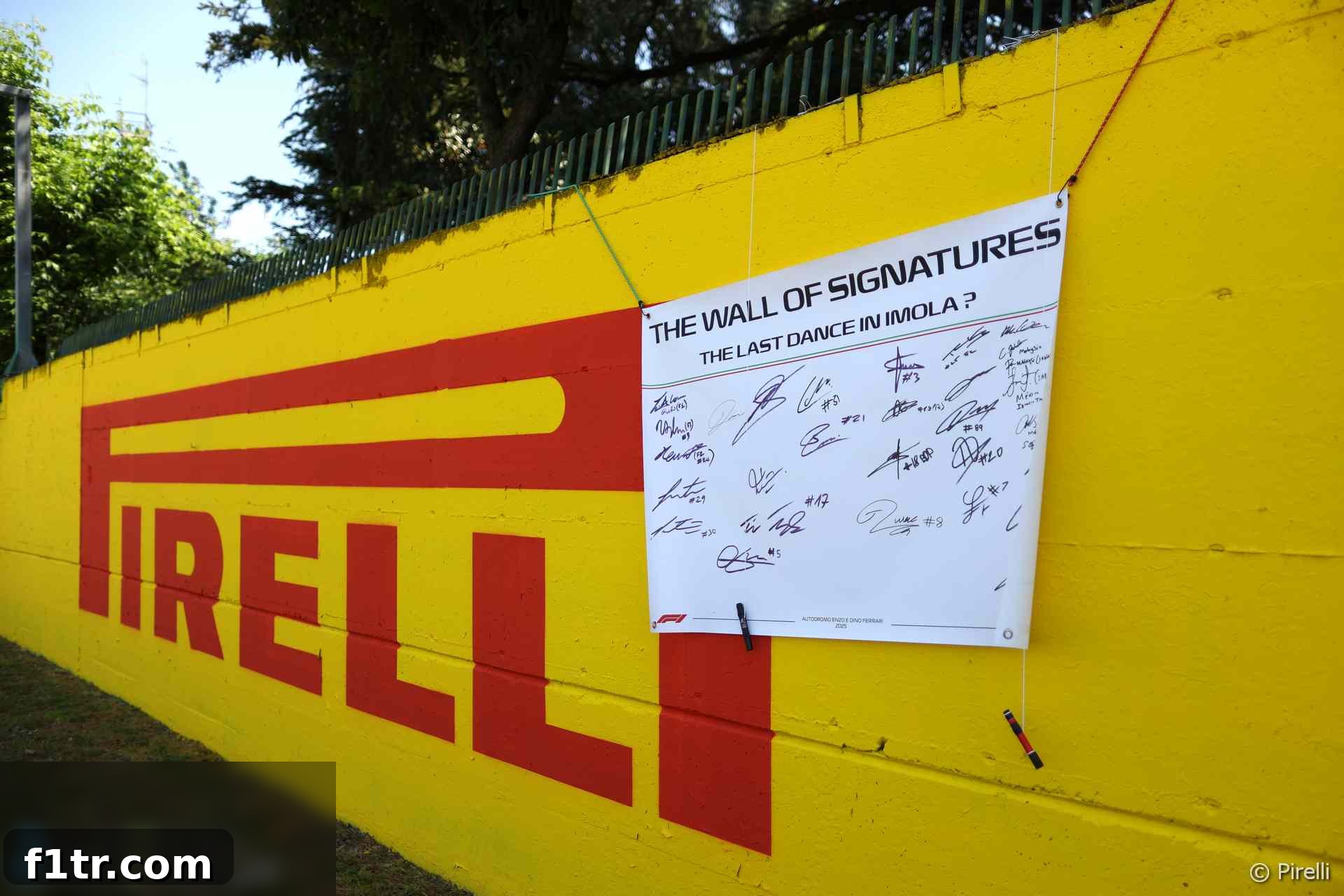
Formula 1 faces a poignant moment as the motorsport world descends upon Imola for the Emilia-Romagna Grand Prix, a race drivers and fans alike fear could be their last visit to this iconic circuit for the foreseeable future. Despite its triumphant return to the F1 calendar during the unprecedented circumstances of the COVID-19 pandemic five years ago, the Autodromo Internazionale Enzo e Dino Ferrari currently lacks a contract beyond the end of the current season. With the relentless expansion of the Formula 1 schedule and the imminent arrival of a new street race in Madrid for the 2026 F1 calendar, Imola appears increasingly likely to be squeezed out, leaving a void that many feel will be difficult to fill.
Advert | Become a Supporter & go ad-free
Imola’s Uncertain Future: A Looming Farewell for a Beloved Circuit
The prospect of bidding farewell to Imola has resonated deeply within the Formula 1 paddock. Championship leader Oscar Piastri is among the many drivers who will lament the circuit’s potential absence. The McLaren driver, despite having raced at Imola only once, has already placed it high on his list of preferred venues. “It’s a great circuit,” Piastri stated, emphasizing its unique challenges and rewarding nature for drivers. “I’ve only raced here once, but it’s definitely towards the top end of my favourites.” This sentiment underscores the special place Imola holds, even for newcomers to the sport, who quickly appreciate its classic layout and rich history.
The calendar pressures facing Imola are not isolated incidents. Formula 1, under its current ownership, has been actively pursuing global expansion, seeking new markets and lucrative hosting fees. This strategy inevitably places traditional European races under immense scrutiny. Piastri highlighted the increasing difficulty of accommodating two races within the same country, especially given the fierce competition from new bidders worldwide. “I think having two races in the same country, with how many bids we have from around the world, maybe doesn’t make that much sense anymore,” he reflected. For Italy, this creates a dilemma between Imola and the revered Italian Grand Prix at Monza, often dubbed the “Temple of Speed.” Piastri acknowledged the immense attachment to Monza, asserting, “And when you have Monza as your second race in Italy, it’s pretty hard not to go to Monza. I think there’d be some riots if we didn’t!”
Drivers’ Deep Connection: Imola as a Pure Racing Experience
The emotional connection drivers have with circuits like Imola extends beyond mere nostalgia; it’s about the pure driving challenge and the unique atmosphere. George Russell, Mercedes driver and a director of the Grand Prix Drivers Association, articulated this sentiment, emphasizing that F1’s essence is rooted in its fans and the circuits that cultivate their passion. “Ultimately Formula 1 is what it is because of the fans,” Russell asserted. “They are what make it so special. So having races like Imola, Monza, Silverstone – everyone’s always excited to come here.” He further elaborated on the distinctive allure of Imola, particularly its final sector, where “people’s houses overlook the track, that’s just awesome.” This unique blend of a challenging circuit and an intimate, community-driven atmosphere sets Imola apart, offering an authentic racing experience that resonates deeply with both participants and spectators.
Even the reigning world champion, Max Verstappen, who is chasing a fourth consecutive victory at Imola this year, expressed his doubts about future opportunities to race there. “I always enjoyed driving here, even back in F3 we raced here,” he recalled, highlighting his long-standing appreciation for the track. Verstappen described Imola as a “very, very special track. A real driver’s track with the kerbs that you have to take, there’s lap time to be gained.” His words underscore the technicality and reward that Imola offers to skilled drivers, where precise execution can yield significant performance advantages. While acknowledging the tough reality of the F1 calendar and the unlikelihood of two Italian Grands Prix, Verstappen concluded, “But first I think I’m just going to enjoy the moment,” a sentiment that undoubtedly echoes among many of his colleagues.
Advert | Become a RaceFans supporter andgo ad-free
Preserving Heritage: The Tug-of-War Between Tradition and Expansion
The potential loss of Imola is not an isolated incident but rather a symptom of a broader trend affecting several iconic European circuits. The Dutch Grand Prix, which returned to Zandvoort with much fanfare, is set to conclude next year. Similarly, the Belgian Grand Prix at Spa-Francorchamps, another historically significant and immensely popular venue, will transition to a rotational basis after 2027, meaning it will only feature every other season. These developments have prompted calls from within the sport to protect its heritage. Oscar Piastri issued a stern warning: F1 should “be careful to preserve the history.” He voiced his personal disappointment, stating, “Zandvoort is going, Spa is going to be on rotation, which I’m not the happiest about.”
Piastri elaborated on the intrinsic value of these classic circuits, even acknowledging their potential shortcomings in modern racing dynamics. “We just need to be careful not to lose these historical tracks,” he stressed. “Okay, maybe it’s not the best track to race on — not the best for overtaking — but in terms of the ultimate experience of driving an F1 car, this is at the top of the list. We need to be mindful of that.” This highlights a crucial debate within Formula 1: the balance between creating spectacle through modern, overtaking-friendly layouts and preserving the raw, challenging, and historically rich circuits that truly test a driver’s skill and offer an unparalleled driving experience. The unique characteristics of tracks like Imola, with their narrow confines, undulating terrain, and unforgiving kerbs, provide a level of immersion and challenge that modern, purpose-built circuits sometimes struggle to replicate.
Advert | Become a RaceFans supporter andgo ad-free
The Italian Grand Prix Dilemma: Monza vs. Imola
The discussion surrounding Italy’s two Grands Prix brings into sharp focus the commercial realities of contemporary Formula 1. While Italy boasts a profound motorsport legacy, the global demand for hosting races has skyrocketed, making it increasingly difficult for F1 management to justify two events in a single country. Monza, with its unparalleled history, high-speed layout, and fervent Tifosi, has a seemingly unassailable position on the calendar. Its status as the home of the Italian Grand Prix is deeply entrenched, not just in F1 lore but in the national identity of motorsport. Imola, while also steeped in history and offering a thrilling challenge, often finds itself in the shadow of Monza’s enduring presence when it comes to calendar negotiations.
The economic considerations are paramount. Hosting an F1 race is an incredibly expensive undertaking, and the sport’s commercial rights holders, Liberty Media, are naturally inclined to maximize revenue through new markets and higher hosting fees. This commercial imperative often clashes with the romantic ideal of preserving every historical venue. The addition of a new race in Madrid, a high-profile European capital, further intensifies the pressure on existing races. For a country like Italy, maintaining two slots becomes a luxury that Formula 1, in its pursuit of global reach and profitability, may no longer be willing to afford. This pragmatic approach, while understandable from a business perspective, often leads to heartache for fans and drivers who cherish the traditional circuits.
Looking Ahead: Navigating F1’s Evolving Calendar
As the Formula 1 circus contemplates a potential farewell to Imola, the wider implications for the sport’s calendar and identity come into sharp focus. The current trend suggests a shift towards expanding into new territories, often favoring modern facilities or high-profile street circuits that offer significant commercial benefits and exposure. While this expansion undoubtedly brings F1 to new audiences and generates substantial revenue, it poses a critical question about the balance between innovation and tradition. The emotional responses from drivers like Piastri, Russell, and Verstappen serve as a poignant reminder that while new venues offer excitement, the soul of Formula 1 remains intertwined with the challenging, characterful circuits that have defined its history.
The debate over Imola’s future is a microcosm of a larger discussion: how can Formula 1 continue to grow and evolve globally without sacrificing the very heritage that has made it one of the world’s most compelling sports? Finding a sustainable balance that respects both commercial imperatives and the deep-seated value of historical tracks will be crucial for the long-term health and appeal of Formula 1. For now, the motorsport world will embrace the Emilia-Romagna Grand Prix, savoring every moment on a circuit that epitomizes the raw, unadulterated thrill of Formula 1 racing, hoping that this isn’t truly the last chapter in its illustrious F1 story.
Miss nothing from RaceFans
Get a daily email with all our latest stories – and nothing else. No marketing, no ads. Sign up here:
2025 Emilia Romagna Grand Prix
- Antonelli was tiring from home race at Imola attention by Friday – Wolff
- Ferrari struggling to recreate set-up which “worked well” in Shanghai – Hamilton
- Verstappen told Red Bull to use Tsunoda before “hold him up” call
- ‘Saturdays have been mine for years but for some reason it’s drifted away’ – Norris
- “Plan C?”: Why McLaren only got their strategy right for one driver at Imola
Browse all 2025 Emilia Romagna Grand Prix articles