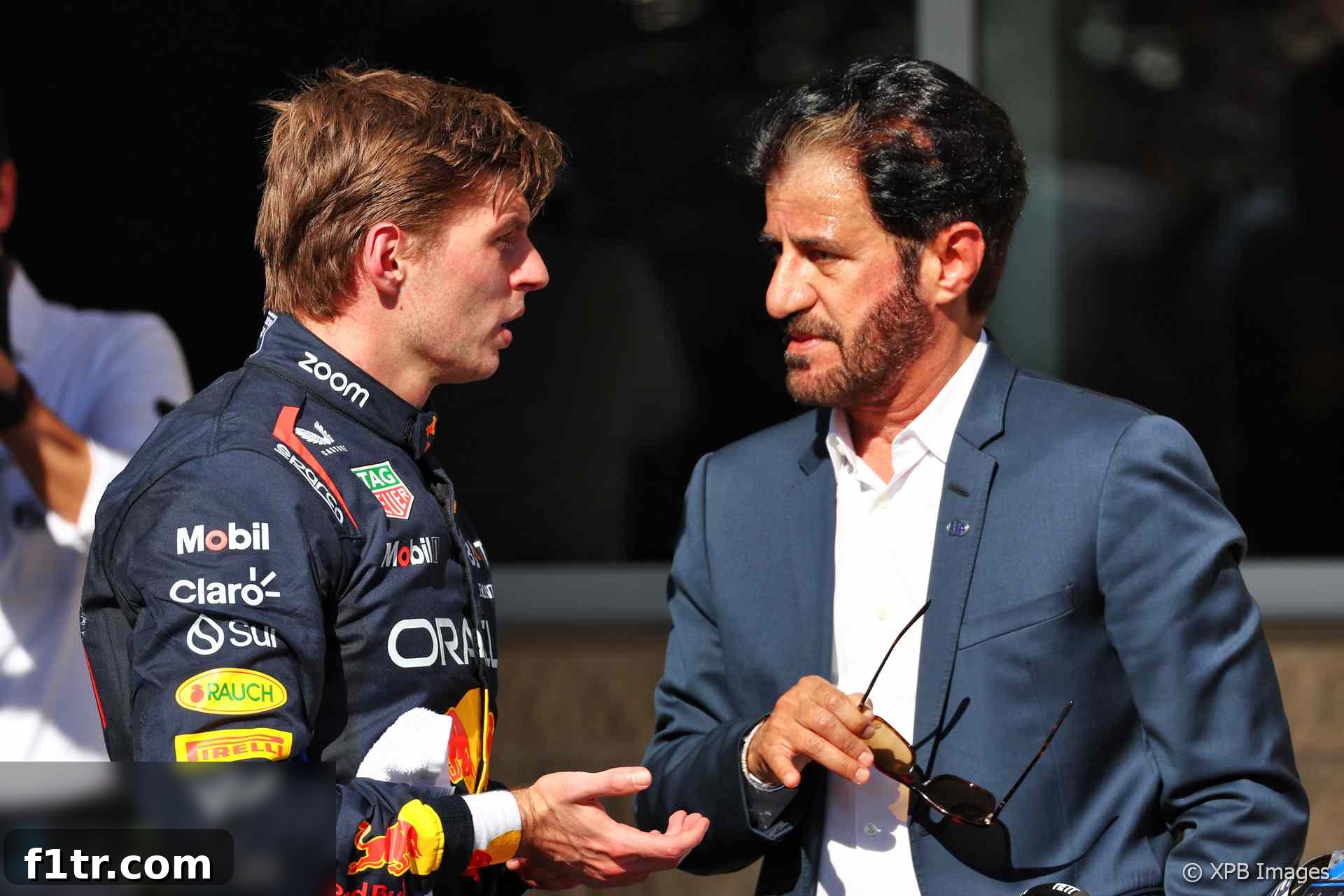
F1 Drivers Challenge FIA President: A Call for Transparency and Mutual Respect
Formula 1 drivers have collectively voiced strong criticism against FIA President Mohammed Ben Sulayem, challenging his directives on driver conduct and demanding clear accountability regarding the substantial fines imposed by the sport’s governing body. The Grand Prix Drivers Association (GPDA), representing the elite athletes of motorsport, has taken a firm stand, highlighting a growing tension between the drivers and the FIA’s leadership.
The latest dispute centers on several key issues that have generated considerable debate within the Formula 1 paddock. These include President Ben Sulayem’s recent calls for drivers to moderate their language, particularly in public and during races, as well as the FIA’s renewed enforcement of regulations concerning driver apparel, such as the wearing of jewelry and the compliance with fireproof underwear standards. These directives, which gained prominence following Ben Sulayem’s election at the end of 2021, have been met with a combination of frustration and a demand for a more professional and transparent dialogue.
The Nuance of Language: Distinguishing Casual Swearing from Insults
One of the central points of contention revolves around the use of language. The GPDA statement, issued on Thursday, articulated the drivers’ perspective on what constitutes acceptable and unacceptable speech. They argue that there is a significant distinction between profanity used in moments of intense frustration or as a descriptor of challenging situations, and language intended to insult or disrespect others.
“There is a difference between swearing intended to insult others and more casual swearing, such as you might use to describe bad weather, or indeed an inanimate object such as a Formula 1 car, or a driving situation,” the GPDA statement clarified.
This nuanced view suggests that drivers, operating in an environment of extreme pressure and high stakes, often resort to expletives not out of malice, but as a natural, visceral reaction to the demanding nature of their sport. Stifling such spontaneous expressions, many argue, could detract from the authenticity and human element of Formula 1. Moments of raw emotion, whether joy or frustration, are often what connect fans to the drivers on a deeper level, making the sport more relatable and engaging.
Recent incidents have underscored the FIA’s stricter stance on driver language. Charles Leclerc, the acclaimed Ferrari driver, faced a €5,000 fine during the Brazilian Grand Prix weekend after using profanity in an official FIA press conference at the preceding event. Similarly, Max Verstappen, the reigning world champion, was ordered to perform an act of public service for the FIA following his use of an expletive during a pre-race press conference at the Singapore Grand Prix. These instances highlight the FIA’s commitment to upholding certain standards, but drivers argue that the application of these rules lacks understanding of context and human behavior in high-pressure situations.
Beyond Language: The “Trivial” Matters of Jewelry and Underwear
In addition to the language debate, drivers have expressed considerable unhappiness with the FIA’s firm stance on regulations perceived as less critical, such as the ban on wearing jewelry during races and the strict enforcement of fireproof underwear rules. While these regulations are rooted in driver safety protocols, their communication and emphasis have led to a sense of exasperation among the F1 elite.
The GPDA conveyed their collective sentiment regarding these issues, suggesting that the manner in which these instructions are delivered is as problematic as the rules themselves. Drivers, who are adults and highly successful professionals, feel that being admonished via the media on “matters as trivial as the wearing of jewelry and underpants” undermines their professionalism and maturity.
“Further, our members are adults, they do not need to be given instructions via the media, about matters as trivial as the wearing of jewellery and underpants,” the drivers asserted.
This highlights a communication breakdown and a perceived lack of respect from the governing body towards its primary athletes. While safety is paramount, drivers believe there are more constructive and direct ways to address compliance rather than public pronouncements that can feel paternalistic or condescending. The consistent media-based communication, rather than direct dialogue, has exacerbated the tension, leading to a feeling among drivers that their professionalism is being questioned unnecessarily.
A Call for Mutual Respect: The FIA President’s Tone
The drivers’ grievances extend beyond specific regulations to include the tone and manner in which President Ben Sulayem communicates with and about them. The GPDA explicitly urged the FIA President to consider his own language and demeanor when engaging with member drivers, whether in public forums or private discussions.
This request for mutual respect underscores a deeper issue of the relationship dynamic between the drivers and the FIA. In a sport that thrives on passion, professionalism, and intense competition, drivers expect to be treated as partners in its success, not merely as subordinates. The demand for the FIA President to “consider his own tone and language” suggests that current communication styles are contributing to an adversarial atmosphere, rather than fostering a collaborative one. A healthy working relationship between the governing body and its athletes is crucial for the sport’s overall harmony and continued growth.
Financial Transparency: Where Do F1 Fines Go?
Perhaps the most significant and long-standing point of contention articulated by the drivers is the pressing demand for transparency regarding the allocation and expenditure of money raised from fines. The FIA notably increased the maximum fine it can issue to drivers and teams to an astounding €1 million this year, a figure that has raised eyebrows across the motorsport community.
The GPDA has consistently argued that monetary fines, particularly those of such magnitude, are not an appropriate form of punishment within Formula 1. For the past three years, the association has actively called upon the FIA President to provide detailed information and a strategic plan outlining how these substantial financial penalties are allocated and precisely where the funds are spent. This repeated request highlights a deep-seated concern about accountability and the ethical implications of collecting significant sums without clear disclosure.
“The GPDA has, on countless occasions, expressed its view that driver monetary fines are not appropriate for our sport,” the drivers reiterated. “For the past three years, we have called upon the FIA president to share the details and strategy regarding how the FIA’s financial fines are allocated and where the funds are spent.”
The drivers argue that the lack of transparency not only creates a negative image for the sport but also fosters mistrust. With fines potentially reaching €1 million, the question of where this money goes becomes critical. Is it invested back into safety initiatives, grassroots motorsport development, environmental programs, or other areas that directly benefit the sport and its wider community? Without clear answers, drivers and fans alike are left to speculate, which can damage the integrity and reputation of the FIA.
The GPDA’s demand is unequivocal: they want direct, open dialogue with the FIA President to jointly determine how and where these funds should be spent for the maximum benefit of Formula 1. They believe that all key stakeholders – including the FIA, Formula 1 commercial rights holders, the teams, and the GPDA – should collaboratively decide on the strategic use of these funds. Such an approach would not only ensure accountability but also strengthen the bond between the governing body and those who make the sport what it is.
The GPDA’s Vision: Collaboration for the Sport’s Future
The Grand Prix Drivers Association views these challenges not as a permanent rift but as an opportunity for constructive collaboration. In their statement, they emphasized their role as professional drivers, often referred to as the “gladiators” of motorsport, who deliver an incredible show for fans every racing weekend. They understand the need to abide by rules and respect decisions, but they also advocate for a system that values their input and treats them with dignity.
The GPDA’s ultimate goal is to work proactively and constructively with all stakeholders, including the FIA President, to promote and enhance Formula 1 for everyone involved – from those who work behind the scenes, to the fans who passionately follow every race, and indeed, to everyone who loves the sport. They seek a partnership based on mutual respect, clear communication, and financial transparency, believing that such a foundation is essential for the continued health and growth of international motorsport.
This open challenge from the drivers signals a pivotal moment in the relationship between the athletes and the governing body. It underscores the drivers’ increasing willingness to use their collective voice to advocate for what they believe is right, not just for themselves, but for the fundamental values of Formula 1. The coming months will reveal whether this call for greater transparency and mutual respect will lead to meaningful dialogue and tangible changes, ultimately shaping the future governance of the pinnacle of motorsport.
Further Formula 1 Insights
Explore more in-depth analyses and perspectives on the world of Formula 1:
- One of F1’s greatest races happened 15 years ago today. Or did it?
- “Overtaking is overtaking”: Domenicali denies F1’s yo-yo racing is “artificial”
- The crashes F1 is trying to prevent may be rare – but the danger is obvious
- F1 returning to India soon after 2027 sounds like wishful thinking
- Verstappen loathes F1’s new generation of cars – but what do his rivals reckon?
Browse all Formula 1 articles