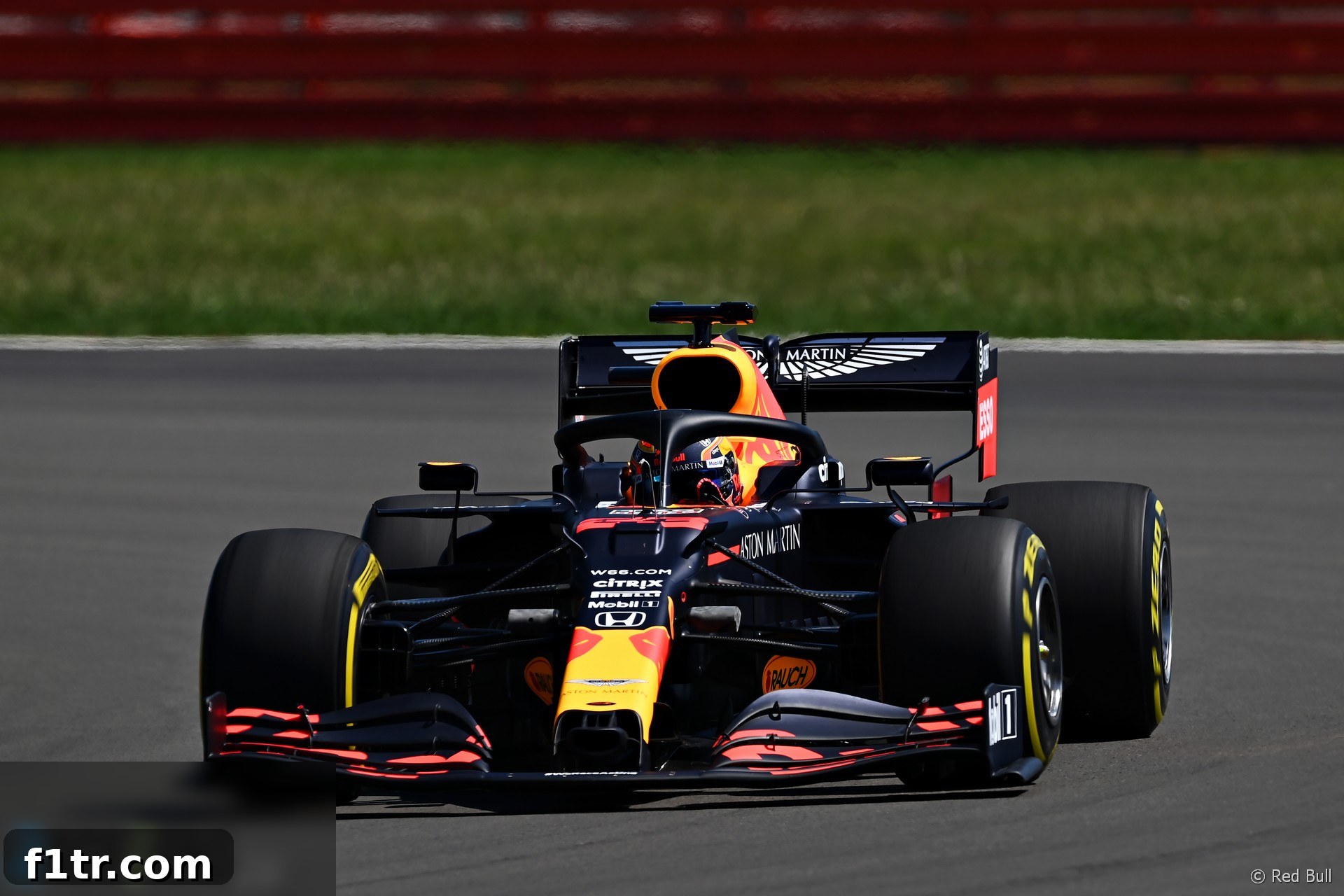
McLaren Racing CEO Zak Brown has offered a candid assessment of the Formula 1 landscape heading into the new season, suggesting a significant shift in the competitive order among the sport’s top contenders. Brown believes that Red Bull Racing has demonstrably surpassed Scuderia Ferrari to emerge as the primary challenger to the dominant Mercedes-AMG Petronas F1 Team during the off-season preparations. This declaration underscores a potential rebalancing of power at the front of the grid, setting the stage for an intriguing championship battle.
Advert | Become a Supporter & go ad-free
However, despite Red Bull’s perceived gains, Brown conveyed his skepticism to the official F1 website regarding their capacity to mount a sustained, season-long challenge against the reigning world champions. Mercedes’ unbroken streak of constructors’ and drivers’ titles has cemented their position as the benchmark in Formula 1, and overcoming such a formidable adversary requires more than just an initial burst of pace; it demands relentless development, unwavering consistency, and strategic brilliance across the entire calendar.
Reflecting on the immediate future of the sport, Brown articulated his expectations for the upcoming campaigns. “I think ’20 and ’21 are going to be kind of more of the same of what we saw in ’19,” said Brown, hinting at a continuation of the prevailing competitive dynamics. This outlook suggests that radical shifts in the pecking order at the very top might be limited, particularly given the stability of the technical regulations across these seasons. For Formula 1 enthusiasts, this translates into potentially predictable front-running battles, yet the inherent drama of motorsport always leaves room for surprises and exceptional performances.
Brown elaborated on the anticipated stability, emphasizing the implications of the existing rulebook. “I think the midfield will be even closer,” he added, indicating that while the top might remain somewhat static, the battle for positions behind the leading teams is set to intensify dramatically. This “best of the rest” fight is often where the most compelling on-track action unfolds, with multiple teams vying for crucial points and bragging rights. The stakes in the midfield are considerable, impacting everything from team morale and sponsorship appeal to vital championship standings and prize money distribution.
Analyzing the performance observed during winter testing, Brown’s conviction about Mercedes’ continued dominance was unwavering. “It looks to us from winter testing that Mercedes is going to be the dominant team again in ’20,” he asserted. This perspective is rooted in Mercedes’ consistent excellence and the fact that, under the prevailing technical regulations, teams are not permitted extensive modifications to their cars. Such restrictions inherently favor the outfits that have already mastered the current rule set. Consequently, Brown confidently projected, “and because of the rules – we’re [not] allowed to modify the cars that much – I would anticipate Mercedes will be looking pretty good in ’20 and ’21.” This highlights the strategic advantage held by teams with a stable, high-performing platform entering a period of regulatory continuity.
Turning his attention to the competitive landscape behind Mercedes, Brown acknowledged the progress made by Red Bull Racing. “It looks like Red Bull took a step forward, so I think they’ll be chomping at their heels,” he commented. The partnership between Red Bull and Honda had been showing increasing promise, with significant improvements in power unit performance and reliability. This upward trajectory certainly positions Red Bull as a formidable opponent, capable of challenging Mercedes on individual race weekends. However, Brown tempered expectations for a sustained title bid: “But I’m not sure they can catch them over a season.” This reflects the immense challenge of not just matching, but consistently outperforming, a team as finely tuned and resource-rich as Mercedes across an entire championship campaign.
Ferrari, typically a perennial front-runner, presented a more ambiguous picture according to Brown’s observations. “Ferrari was a bit tricky to read. People seemed to think they may not quite have the pace. Unknown, I think that will become clear soon,” he stated. This uncertainty surrounding the Scuderia’s performance after testing often fuels intense speculation among fans and pundits. Ferrari’s pre-season form can sometimes be deceptive, either deliberately conservative or genuinely indicative of underlying challenges. The pressure on the Maranello-based team to deliver results is always immense, and any perceived lack of pace would be a significant talking point heading into the early rounds of the championship, where their true competitiveness would ultimately be revealed.
Beyond the top three, Brown articulated specific concerns about the emerging threat from Racing Point. The team’s new car, nicknamed the “pink Mercedes” due to its striking resemblance to the previous year’s championship-winning Mercedes W10, clearly caught Brown’s attention. This design philosophy, leveraging components and aerodynamic concepts from the sport’s dominant team, allowed Racing Point to make an unprecedented leap in performance. McLaren, as a direct competitor in the fiercely contested midfield, would naturally be wary of such a rapid ascent up the competitive order, understanding the implications for their own championship aspirations and positioning within the constructors’ standings.
Advert | Become a RaceFans supporter andgo ad-free
Reflecting on McLaren’s own preparations, Brown expressed satisfaction. “We’re happy with the progress we made,” he said, acknowledging the team’s diligent efforts to improve their package. However, the emergence of Racing Point presented a new variable. “Clearly Racing Point, as everyone calls it the pink Mercedes, they’ve become extremely competitive overnight which one would if you were using effectively the championship [winning] car from last season,” Brown explained. This sudden surge in performance from a direct competitor significantly altered the dynamics of the midfield. He further predicted, “That midfield battle will be even tighter and I think that’ll roll into ’21,” indicating that the fight for “best of the rest” was set to become one of the most compelling narratives of the season, extending into the following year due to the stable regulations.
Looking ahead to a significant strategic move for McLaren, Brown confirmed the team’s plan to switch to Mercedes power units in the subsequent season. This change was anticipated to bring a substantial “benefit” for the team, aligning them with what is widely considered the strongest engine supplier on the grid. The decision to move away from Renault engines, while acknowledging their strength, was driven by the pursuit of absolute performance and the desire to leverage the proven reliability and power of the Mercedes unit, which has been integral to the German manufacturer’s unparalleled success in the hybrid era of Formula 1.
However, this strategic advantage comes with its own set of challenges, specifically concerning the sport’s development regulations. “But that comes to the detriment of how much upgrades we can do to the car, because with this token system that’s been created, we’re having to use some of our tokens to adapt our chassis for the Mercedes engine,” Brown revealed. The token system, a mechanism designed to control development and costs, meant that McLaren would be forced to allocate a portion of their limited upgrade allowance purely for the integration of the new power unit. This mechanical adaptation is a complex process, requiring significant engineering resources and impacting other areas of car development. The trade-off is clear: gain a superior engine, but at the cost of restricting other potential performance enhancements to the chassis or aerodynamics.
Expanding on this complex decision, Brown offered a comparative analysis of the engine suppliers. “So we’ll have the benefit of what we think will be more competitive power unit. We think the Renault engine is very strong but I think all people recognise Mercedes as the strongest,” he reiterated, underscoring the perceived hierarchy among engine manufacturers. The challenge for McLaren would then be to manage the implications of the token system. “But we’ll be limited on what other development we can do. Depending on how strong our car is, that may or may not hurt us,” Brown acknowledged, highlighting the uncertainty inherent in such a strategic gamble. The success of the engine switch would depend not only on the raw power of the Mercedes unit but also on how effectively McLaren could integrate it without compromising the development of other critical areas of their car.
Ultimately, Brown’s long-term view of Formula 1’s competitive order points towards a much anticipated reset in the sport. “So I think ’22 is when, if there is a shake-up of the order, I think ’22 is when that comes,” he concluded. The 2022 season was slated to introduce a revolutionary new set of technical regulations, specifically designed to promote closer racing, greater parity, and a more level playing field across the grid. These fundamental changes, encompassing everything from aerodynamics to budget caps, are widely expected to re-shuffle the established pecking order, offering an unprecedented opportunity for teams to challenge for supremacy and potentially altering the landscape of Formula 1 for years to come. For teams like McLaren, this presents a genuine chance to make significant gains and compete at the very pinnacle of the sport.
Advert | Become a RaceFans supporter andgo ad-free
2020 F1 season
- Grosjean to make F1 test return tomorrow for first time since Bahrain horror crash
- Pictures: Wrecked chassis from Grosjean’s Bahrain fireball crash to go on display
- Bottas vs Rosberg: Hamilton’s Mercedes team mates compared after 78 races each
- F1 revenues fell by $877 million in Covid-struck 2020 season
- Hamilton and Mercedes finally announce new deal for 2021 season
Browse all 2020 F1 season articles