Sebastian Vettel’s Bahrain Nightmare: Unpacking Ferrari’s 2019 Handling Woes and the Critical Spin
The 2019 Formula 1 season promised an enthralling battle, with Ferrari, spearheaded by four-time world champion Sebastian Vettel, seen as a formidable contender. However, the Bahrain Grand Prix, the second race of the season, quickly proved to be a challenging turning point for Vettel and the Scuderia. What began with the glimmer of a strong start soon descended into a race plagued by significant handling issues, culminating in a critical spin that severely impacted his performance and left him finishing a disappointing fifth.
The Illusive Lead: A Promising Start Derailed by Handling Problems
From the moment the lights went out at the Sakhir circuit, Sebastian Vettel showcased his characteristic race craft, seizing the lead in the early stages of the Bahrain Grand Prix. This aggressive start immediately put Ferrari in a strong position, igniting hopes among fans and within the team that they could convert their raw pace into a decisive victory. Yet, this initial triumph was short-lived. Vettel himself quickly became aware of profound underlying issues with his SF90 challenger. As the laps progressed, the German driver found his car increasingly difficult to manage, a problem that would define his entire race.
Vettel articulated his frustration clearly after the event, stating, “It was very difficult. I realised after more or less half a lap after the start that it would be very difficult. The car was extremely difficult to drive for me.” This candid admission underscored the severity of the problem. In the cutthroat world of Formula 1, even marginal imperfections in car balance and responsiveness can have monumental consequences. A car that feels “difficult to drive” translates directly to a lack of confidence for the driver, forcing them to push below the absolute limit to avoid mistakes. This inevitably leads to slower lap times and leaves a driver vulnerable to rivals who are operating with a more predictable and compliant machine. For a driver of Vettel’s caliber, renowned for his precision and ability to extract maximum performance, such fundamental handling woes were both surprising and profoundly detrimental.
Internal Dynamics: Leclerc’s Ascent Amidst Vettel’s Struggles
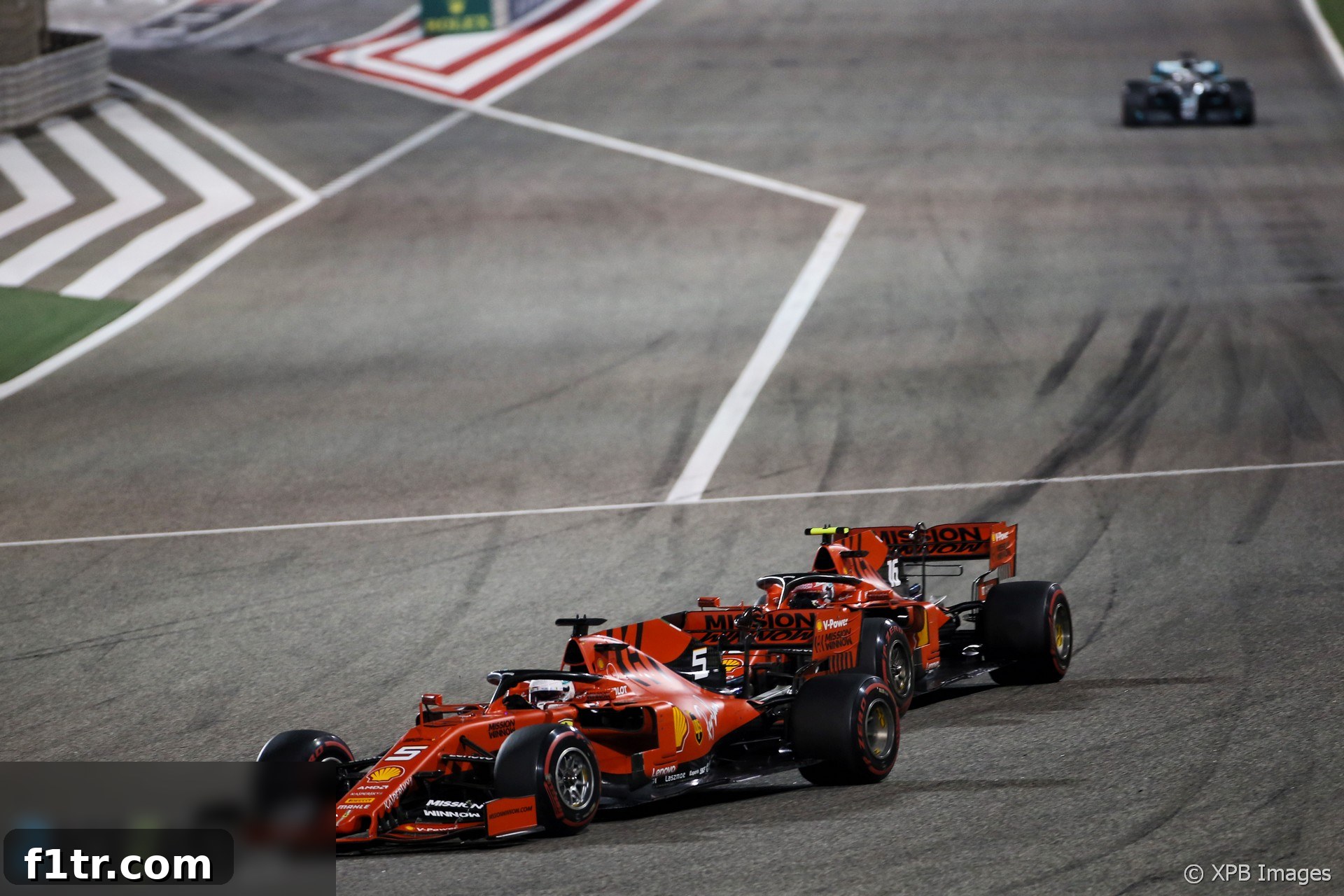
Adding another layer of complexity to Vettel’s challenging afternoon was the burgeoning talent of his new teammate, Charles Leclerc. The young Monegasque driver, in only his second race for the illustrious Italian team, demonstrated remarkable composure and speed. While Vettel wrestled with his recalcitrant Ferrari, Leclerc appeared to encounter far fewer difficulties, showcasing the car’s potential when it was more cooperative. This disparity in performance was evident as Leclerc not only managed to keep pace with Vettel but swiftly found a way past him, asserting his own authority on track.
Vettel acknowledged this internal dynamic, noting, “I think Charles [Leclerc] struggled less and he had no difficult to follow and pass me. It was quite tricky.” This moment was particularly significant, highlighting the contrasting fortunes within the Ferrari garage and signaling a potential shift in the team’s internal hierarchy. Leclerc’s ability to navigate the Bahrain circuit with greater ease, even while his more experienced teammate battled the car, sent a clear message about his adaptability and raw speed. For Vettel, being overtaken by his teammate, especially under circumstances where he felt hampered by the car’s behavior, undoubtedly added to the pressure and frustration he was experiencing. The subsequent switch to medium tyres for the second stint provided some momentary respite, but as Vettel confirmed, “overall not the pace that we should have had today.” The underlying performance deficit was a persistent shadow over his race.
The Critical Turn 4 Incident: Duel with Hamilton and the Costly Spin
As Sebastian Vettel continued his struggle with the Ferrari’s unpredictable handling, the race intensified with the formidable presence of Mercedes’ Lewis Hamilton. The reigning world champion, sensing Vettel’s vulnerability, mounted a relentless attack. The ensuing battle between two of Formula 1’s most decorated drivers captivated audiences, but it was a battle that Vettel was increasingly ill-equipped to win given his car’s limitations. The decisive moment arrived at Turn 4, a corner that proved particularly challenging for Vettel throughout the Grand Prix.
Hamilton executed a masterful overtake on the outside of Turn 4, a bold and high-risk maneuver that required immense precision. As Hamilton completed the move, Vettel found himself attempting to recover his position, pushing the limits in an effort to regain track advantage. It was during this critical moment that the car’s instability, which had plagued him since the start, manifested catastrophically. The Ferrari driver spun, losing control of the rear end in a sudden and dramatic fashion. The incident was not just a loss of position; it triggered a cascade of further problems.
Vettel, with commendable honesty, accepted full responsibility for the spin. “Obviously it was very close,” he explained. “I tried to get back on the inside just like the lap before. I think Turn 4 was one of the trickiest corners. It was my mistake, I lost the rear, then I spun.” His acknowledgment underlined the fine margins at play in Formula 1 and how quickly even the slightest misjudgment, exacerbated by a difficult car, can unravel a race. The immediate consequence of the spin was the damage sustained to his car, specifically the front wing. The extreme forces exerted during the rotation, combined with potential contact, caused significant damage, necessitating an unscheduled pit stop. Vettel deduced the sequence of events, stating, “I think during the spin I damaged the tyres so much that I had quite a lot of vibrations which then I think led on to the failure of the front wing.” This not only cost him valuable time in the pits but also dropped him further down the order, effectively ending any realistic hope of a strong podium finish or a victory.
Aftermath and Broader Implications for Ferrari’s 2019 Season
The Bahrain Grand Prix proved to be a microcosm of the challenges that Sebastian Vettel and Ferrari would face throughout the 2019 Formula 1 season. Finishing fifth, a result significantly below the team’s aspirations, underscored the gap that still existed between them and the dominant Mercedes outfit. For Vettel, the incident at Turn 4 was more than just a racing mistake; it was a moment that encapsulated the mounting pressure and the struggle to consistently perform at the absolute peak when the car was not responding as desired. Such public errors, especially when battling directly with a championship rival like Lewis Hamilton, can have a profound psychological impact on a driver, potentially eroding confidence and attracting increased scrutiny.
Ferrari’s 2019 season was ultimately a mixed bag. Despite flashes of brilliance and a few victories, they were unable to mount a sustained championship challenge. The SF90, while possessing formidable straight-line speed at times, often proved to be a handful in corners, exhibiting the very handling instabilities that Vettel experienced so acutely in Bahrain. This inconsistency in performance, coupled with strategic missteps and individual driver errors, prevented Ferrari from truly capitalizing on their potential. The Bahrain Grand Prix, in particular, highlighted the team’s internal complexities – the emergence of Charles Leclerc as a front-runner and the struggles of Sebastian Vettel to adapt and master a sometimes-unpredictable machine.
The incident served as a stark reminder of the unforgiving nature of Formula 1, where every detail, from car setup to driver execution, must be perfect. For Sebastian Vettel, the 2019 Bahrain Grand Prix became an indelible chapter in a season that was rich in drama, internal team dynamics, and the relentless pursuit of perfection on the global stage. It was a race that began with promise but ultimately illuminated the intricate challenges faced by a four-time world champion battling both formidable rivals and an uncooperative car, leaving a lasting impression of what could have been.
2019 F1 season
- Crying in the Melbourne car park at 2019 grand prix was my career low – Ocon
- McLaren Racing reports reduced £71 million loss in 2019
- Kvyat: Hockenheim podium last year was “my biggest achievement” so far
- How the FIA’s new encrypted fuel flow meter targets Ferrari’s suspected ‘aliasing’ trick
- “He smashed my office door”: 23 must-see moments from ‘Drive to Survive’ season two
Browse all 2019 F1 season articles