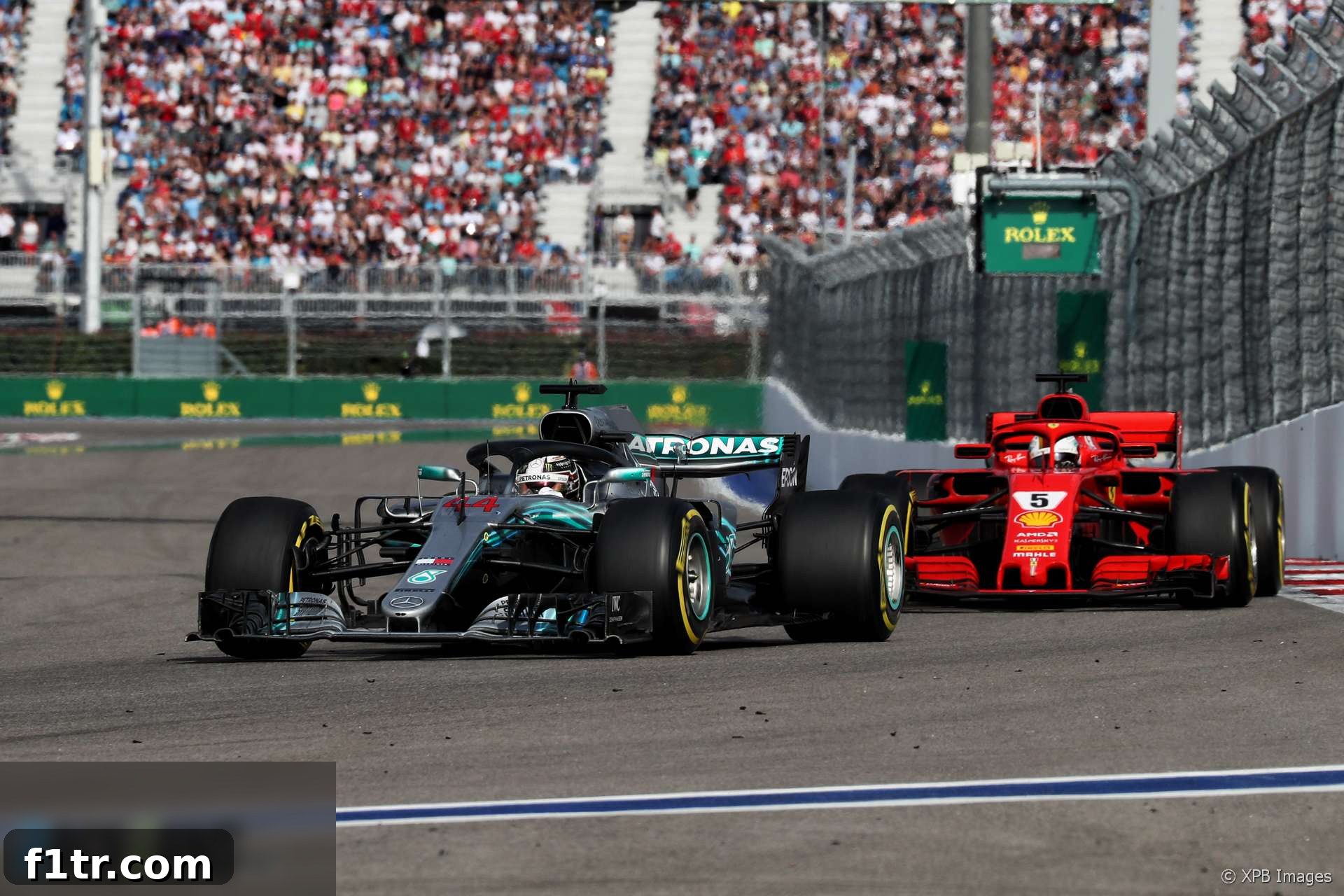
Formula 1, often dubbed the pinnacle of motorsport, is a sport where every decision, every strategic call, can mean the difference between victory and defeat, or even a world championship. In the intensely competitive 2018 season, the battle between Mercedes and Ferrari reached fever pitch, with championship contenders Lewis Hamilton and Sebastian Vettel locked in a relentless duel for supremacy. Amidst this high-stakes environment, Hamilton, the reigning world champion, voiced his genuine astonishment regarding Ferrari’s tactical choices, particularly their apparent reluctance to deploy strategic team orders to maximize their championship potential. His observations highlighted a stark contrast in philosophies between the two front-running teams, bringing the always-contentious topic of team tactics back into the spotlight. Hamilton’s surprise stemmed from instances where Ferrari seemingly missed opportune moments to leverage their two-car advantage, leaving valuable points on the table in crucial races, a strategy that many pundits and fans found perplexing given the tightness of the championship race. This inconsistency in Ferrari’s approach raised questions about their internal dynamics and overall championship strategy, especially when compared to the decisive actions seen from their rivals.
The discussion surrounding team tactics gained significant traction following the highly controversial Russian Grand Prix, where Mercedes took a bold and decisive step. During the race, Valtteri Bottas, who had secured pole position and was leading comfortably, was controversially instructed to yield his position to Lewis Hamilton. This explicit team order ultimately handed victory to Hamilton, significantly boosting his championship lead over Sebastian Vettel. While the move was met with considerable criticism from sections of the media and fan base, Mercedes’ rationale was clear: to consolidate Hamilton’s position in the drivers’ championship, prioritizing the ultimate goal of securing the world title. The team defended their decision by emphasizing the critical stage of the season and the need to maximize points for their lead driver. This incident served as a powerful example of a team making a difficult but strategically sound decision for the greater championship objective, demonstrating a willingness to navigate the emotional and ethical complexities of team orders for a tangible competitive advantage. The backlash underscored the sensitive nature of such interventions, yet for Mercedes, the championship stakes outweighed the public relations challenge.
Advert | Become a Supporter & go ad-free
Both teams, undoubtedly, employ various tactical maneuvers over a season. However, while Mercedes demonstrated a clear, albeit controversial, strategy in Russia, Ferrari’s approach throughout the season appeared notably inconsistent, leading to Hamilton’s surprise regarding their strategic decisions. Ferrari’s hesitations in deploying overt team strategies at critical junctures became a recurring theme, often hindering their championship aspirations when compared to the precise execution of their rivals.
A prime example occurred at the German Grand Prix, a pivotal race for Sebastian Vettel on home soil. Despite being Ferrari’s primary championship contender, Vettel found himself frustrated for multiple laps, vocally complaining about being held up behind his teammate, Kimi Raikkonen. This internal delay potentially cost Vettel valuable time and track position, hindering his ability to challenge for the win or at least secure a stronger points haul. The lack of an immediate, decisive instruction from the pit wall to allow Vettel through was seen by many as a significant strategic oversight, especially considering the intense championship pressure and the need to maximize points for their leading driver. The prolonged battle between the two Ferrari cars inadvertently benefited their competitors, rather than solidifying their own track position and championship advantage.
Another critical missed opportunity unfolded at the Italian Grand Prix in Monza, Ferrari’s home race, where the team aimed for a dominant one-two finish. In qualifying, Raikkonen strategically utilized Vettel’s slipstream to out-qualify him for pole position, an individual triumph for Raikkonen but one that complicated Ferrari’s race strategy from the outset. Crucially, at the race start, instead of working in tandem to fend off the charging Mercedes of Hamilton, the two Ferrari drivers became embroiled in their own battle. This internal squabble, combined with Hamilton’s aggressive driving, created an opening. Hamilton capitalized on their lack of cohesion, successfully passing Vettel, and eventually Raikkonen, to win the race. These incidents highlighted a recurring pattern where Ferrari’s individual driver aspirations or a perceived policy of ‘letting them race’ overshadowed the collective team objective in crucial moments, ultimately costing them valuable points and championship momentum. The contrast with Mercedes’ focused approach couldn’t have been starker, leaving many to wonder about the internal decision-making processes within the Scuderia.
Reflecting on Mercedes’ strategy, Hamilton was quick to clarify that while the Russian Grand Prix involved an explicit team order, Mercedes had consistently operated with a strong sense of teamwork in other races, albeit through more subtle and widely accepted tactical plays. He emphasized, “we’ve only had team orders in that one race,” underscoring the rarity of such direct interventions. However, he elaborated on the numerous instances where Mercedes drivers worked in concert, stating, “we’ve worked as a team in others.” This often manifested through strategic pit stop timings, where one driver might be brought in early to cover an opponent, thereby dictating the pace and strategy of rivals. Hamilton pointed out that Ferrari themselves had employed similar sophisticated team tactics during the season, particularly when both their cars were positioned favorably against Mercedes.
He observed, “There have been times when Valtteri’s not, for example, been in the top five and there’s been me and the Ferraris, and the Ferraris have worked together. The way they do that is they’ll stop one car which means then I’ll have to stop.” This highlights a standard strategic chess match in F1, where teams use their cars to cover rivals and manage race flow. Yet, Hamilton’s core point of contention remained Ferrari’s inconsistency. Despite demonstrating an understanding of strategic team play, they failed to deploy it at the most “crucial points like Monza,” where direct intervention could have yielded maximum points for Vettel and the team’s championship bid. This inconsistency was the source of his bewilderment: “Is that a surprise? Yeah I think they’ve done that in the past. Why they’ve changed I don’t know.” His comments suggested a perceived shift in Ferrari’s long-standing operational philosophy, or at least a notable deviation from what was expected in a championship-defining season, leading to speculation about internal pressures or conflicting strategies within the Maranello outfit. This disparity in tactical execution added another layer of intrigue to the already captivating championship battle.
When questioned about Ferrari’s seemingly inconsistent tactical approach during a subsequent FIA press conference, Sebastian Vettel remained notably guarded, choosing to offer a measured and somewhat evasive response. His reluctance to delve into the specifics underscored the inherent sensitivity surrounding the topic of team orders, especially in the wake of the public scrutiny Mercedes faced after the Russian Grand Prix. Vettel acknowledged the delicate nature of the subject, stating, “Generally, I think it is a sensitive topic or subject, obviously for the reasons that we have seen after last weekend.” This comment implicitly referenced the widespread debate and criticism that follow any explicit team intervention, suggesting that Ferrari might have been trying to avoid a similar public relations challenge, even at the potential cost of on-track performance.
Furthermore, Vettel skillfully deflected the responsibility for such strategic decisions, positioning it firmly within the team’s domain rather than the drivers’. He elaborated, “I don’t think we have been in the same position as they have, probably, during the race, so I think it is more a question for the team and not for me.” This response, while diplomatic, revealed little about the internal discussions or directives within Ferrari. It could indicate a mandate from team management for drivers not to openly discuss strategic shortcomings, or perhaps a genuine lack of clarity from the drivers’ perspective on why certain tactical calls were not made. For a driver leading the championship charge for Ferrari, his inability or unwillingness to shed light on these critical strategic decisions left many observers pondering the true level of coordination and unified championship focus within the Scuderia. The ambiguity surrounding Ferrari’s tactical principles only served to deepen the mystery behind their often-puzzling choices during a season where every point was paramount.
The contrasting approaches to team tactics displayed by Mercedes and Ferrari in the 2018 Formula 1 season offer a fascinating study in championship strategy. While Mercedes, under immense pressure, made a bold and ultimately successful strategic call in Russia, Ferrari’s inconsistent application of team orders at crucial moments raised eyebrows, particularly from rivals like Lewis Hamilton. The incidents at the German and Italian Grands Prix serve as poignant examples of opportunities potentially squandered due to a perceived reluctance to prioritize the lead driver’s championship aspirations through coordinated team play. Whether this was a conscious policy to promote ‘pure racing,’ a result of internal communication breakdowns, or a misjudgment of championship dynamics remains a subject of debate among fans and pundits alike. Ultimately, in a sport where marginal gains dictate success, the strategic use of both cars as a cohesive unit can be as vital as individual driver talent or raw car pace. Ferrari’s approach, or lack thereof, in key situations undoubtedly played a role in the unfolding championship narrative, prompting reflection on the balance between individual performance and collective strategic objectives in the relentless pursuit of Formula 1 glory. The season’s strategic nuances highlighted how the subtle art of team management can be just as impactful as any horsepower upgrade or aerodynamic innovation in determining the ultimate victor.
Advert | Become a RaceFans supporter andgo ad-free
2018 F1 season
- F1 feared “death knell” for Drive to Survive after Ferrari and Mercedes snub
- McLaren staff told us we were “totally crazy” to take Honda engines in 2018 – Tost
- ‘It doesn’t matter if we start last’: How Red Bull’s junior team aided Honda’s leap forward
- Honda’s jet division helped F1 engineers solve power unit problem
- McLaren Racing losses rise after Honda split
Browse all 2018 F1 season articles