Welcome to our comprehensive Formula 1 round-up, where we delve into the most compelling narratives and significant moments from the recent Miami Grand Prix weekend and beyond. This edition features discussions on driver reactions, team criticisms, regulatory decisions, and the ever-evolving landscape of motorsport culture. From the roar of the engines to the buzz of fan engagement, Formula 1 continues to deliver unparalleled drama and excitement, both on and off the track.
Key Highlights from the Grand Prix Weekend
The Miami Grand Prix weekend offered a mix of high-octane racing and intriguing off-track stories. As the Formula 1 circus descended upon the vibrant city, drivers, teams, and fans brought their unique energies, creating a memorable event filled with talking points. We cover the main incidents and statements that shaped the narrative, providing deeper context to the headlines.
Max Verstappen’s Unflappable Response to Fan Booing
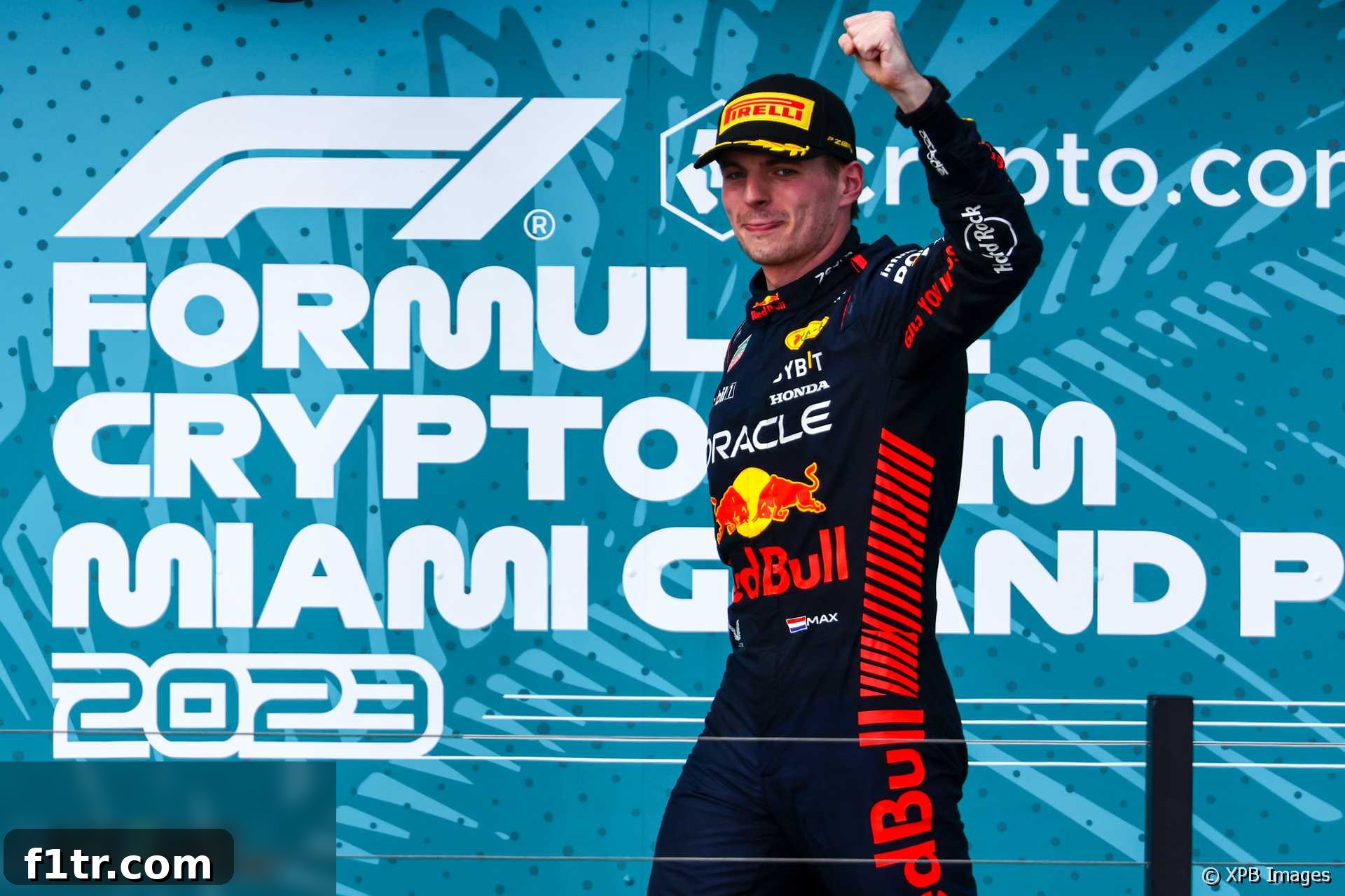
Max Verstappen, the reigning world champion, once again demonstrated his formidable prowess on track, securing a dominant victory at the Miami Grand Prix. However, his triumph was met with a chorus of boos from certain sections of the crowd, both before the race began and during the podium ceremony. Such reactions, while not uncommon in sports, often spark debate about fan etiquette and the nature of sporting rivalries. Despite the audible disapproval, the Red Bull driver remained remarkably unbothered, showcasing the mental fortitude that defines top-tier athletes.
Addressing the situation with characteristic candor, Verstappen reflected on the phenomenon, stating, “I think if I would be driving in the back, nobody would be even doing anything in terms of reaction, right? I think it’s normal when you are winning and they don’t like who is winning.” His comments highlight a fundamental aspect of competitive sports: success often breeds a polarizing response. While some fans celebrate dominance, others yearn for varied outcomes, leading to passionate, sometimes vocal, expressions of discontent. Verstappen’s philosophy is clear and pragmatic: “So this is something for me which is absolutely fine as long I stand on the top that’s for me, the most important. I take the trophy home and they go back to their houses and they can have a nice evening.” This unwavering focus on performance and results underscores his champion’s mentality, allowing him to filter out external noise and concentrate solely on his objectives. In an era where social media amplifies every reaction, Verstappen’s ability to remain composed in the face of public scrutiny serves as a testament to his mental resilience and dedication to the sport.
Sergio Perez Reprimanded for Driver Parade Lateness
Advert | Become a Supporter & go ad-free
Sergio Perez, Verstappen’s teammate at Red Bull, found himself on the receiving end of a formal, non-driving reprimand from the stewards. His offense: failing to show up on time for the mandatory pre-race drivers’ parade. This might seem like a minor infringement, but Formula 1 regulations are meticulously designed to ensure the smooth operation and public presentation of events. The stewards’ decision underscores the importance of every driver’s commitment to both on-track performance and off-track responsibilities.
The official stewards’ report detailed the reason for the lateness: “the reason for the lateness was the team’s media and other commercial commitments that the driver had to satisfy before turning up for the parade. We considered that this was not a valid reason for the lateness. A driver turning up late for such events can have undesirable resultant consequences for the event and should be avoided at all times.” This explanation sheds light on the increasing demands placed on modern F1 drivers, who juggle intense training and racing schedules with a multitude of media and commercial obligations. While these commitments are vital for team sponsors and the sport’s global appeal, the stewards’ ruling clearly prioritizes the integrity and schedule of the official race weekend events. Punctuality for such high-profile public appearances is crucial, not only for fan engagement but also for maintaining the professional image of Formula 1. It serves as a reminder that even the smallest deviations from protocol can lead to formal sanctions, with a cumulative five reprimands during a season resulting in an automatic 10-place grid penalty, a significant blow to any driver’s championship aspirations.
Laurent Rossi Critiques Alpine’s Early Season Performances
Alpine CEO Laurent Rossi did not mince words when assessing his team’s performance following a challenging start to the 2023 Formula 1 season. His pointed criticisms came after a particularly troubled Grand Prix in Bahrain and another disappointing showing in Baku, highlighting a growing frustration within the French outfit regarding operational efficiency and on-track results. Rossi’s public statements reflect the immense pressure on team management to deliver competitive performances in the highly demanding world of F1.
The season opener in Bahrain was marred by a series of operational errors that led to Esteban Ocon receiving a trio of penalties, undermining any potential for a strong points finish. Rossi expressed his profound dissatisfaction with these missteps, stating, “I didn’t like the first grand prix because there were a lot of – I’m sorry to say – amateurism which led to a result which was not right.” As he told Canal Plus ahead of qualifying for the next race, the performance was “mediocre, bad.” This direct and blunt assessment underscores the high standards expected in Formula 1, where even minor operational flaws can have significant consequences. Such a public condemnation from the CEO signals a clear demand for improvement and accountability within the team.
The race in Baku proved to be similarly unimpressive, prompting Rossi to label the performance as “unacceptable.” He elaborated on his philosophy regarding mistakes and learning: “It is acceptable to make mistakes, it is a basic principle, it is in mistakes that we learn. On the other hand, we [should] learn, and when we make the same mistakes twice it is that one did not learn and that one does not take responsibilities. And that is not acceptable.” This statement lays bare the core issue: a perceived failure to learn from past errors. In the ultra-competitive environment of Formula 1, repeating mistakes is a cardinal sin, indicating a deeper systemic problem rather than isolated incidents. Rossi’s words serve as a stark warning to the Alpine team, emphasizing that operational excellence, continuous improvement, and a culture of responsibility are non-negotiable for achieving success at the pinnacle of motorsport. The coming races will be crucial for Alpine to demonstrate that they have internalized this message and are capable of turning their fortunes around, or the pressure on leadership will only intensify.
Advert | Become a RaceFans supporter andgo ad-free
Further Insights: Exploring Diverse Perspectives in Motorsport
Beyond the immediate race results, the world of Formula 1 is a rich tapestry of stories, technological advancements, and cultural impact. We bring you a selection of interesting links that dive deeper into various aspects of the sport, from team analyses to discussions on social issues and gaming innovations.
Race Recap: Haas F1 Team Reflects on Miami Performance
The Haas F1 Team provides its official race recap from the Miami Grand Prix, offering an insider’s perspective on their weekend. Despite the fierce competition, the team managed to score points, a commendable achievement for a midfield contender. As their statement highlights, “We scored points again, three times out of five this year and that’s good, but it’s a tough crowd out there. We’re there or about and if nothing happens at the front then we’re fighting for the last points which are leftover, and we got them this weekend after a very good qualifying.” This candid reflection underscores the challenges and triumphs of competing in Formula 1’s midfield, where every point is hard-earned and strategic qualifying performances are vital for race day success. It illustrates the relentless pursuit of performance and the competitive spirit that drives even the smallest teams in F1.
F1 23 Game Preview: Enhancements to the Virtual Racing Experience
The highly anticipated F1 23 game, available on platforms like PlayStation 5, promises to revolutionize the virtual racing experience for fans worldwide. This preview details some of its exciting new features, focusing on competitive multiplayer. “Revamped ranked multiplayer F1 World introduces the revamped ranked multiplayer mode with a new division-based ranking system, F1 23’s Esports series, and a new goals system that makes Podium Pass progress more efficient. Play to earn points, rise up the ranks from bronze to elite with weekly promotions, and earn prizes and upgrades you can apply to your Tech Level.” These innovations aim to create a more engaging, rewarding, and competitive environment for gamers, bridging the gap between virtual and real-world F1 excitement and nurturing the next generation of esports champions.
‘Sunshine and Tan Lines’: Lando Norris on Race Day Rituals and Music (Rolling Stone)
Rolling Stone offers a unique glimpse into the pre-race routine and personal interests of McLaren driver Lando Norris, highlighting the blend of intense focus and human touch that defines F1 drivers. Beyond the engine noises and technical briefings, Norris finds solace and motivation in music, revealing insights into his race day playlist. He shares a quirky superstition: “When we’ve just listened to the national anthem, the first thing I do is I always just touch my number four. There are these little plaques on the ground to tell you where you should stand. I always just tap that with my foot before I leave.” Such personal anecdotes humanize the drivers, offering fans a deeper connection to their heroes and showcasing the diverse personalities that contribute to F1’s growing appeal, particularly in the American market.
Advert | Become a Supporter & go ad-free
Naomi Schiff: ‘It’s sad to think that skin colour is what you are judged on’ (The Guardian)
The Guardian features an impactful interview with Naomi Schiff, a former racing driver and current F1 analyst, who shares her experiences and perspectives on diversity in motorsport. Her candid reflections shed light on the challenges faced by underrepresented groups in the sport. Schiff states, “When Lewis (Hamilton) entered F1 in 2007 it was my first competitive year in karts. Me being one of the very few girls on track and the only black female, Lewis was an obvious target for me to look up to.” This powerful testimony underscores the importance of role models like Lewis Hamilton in inspiring future generations and highlights the ongoing need for greater inclusivity and equitable opportunities in motorsport, where talent and dedication should always be the sole criteria for success, irrespective of background.
Formula 1’s Stance on Social Issues: Lewis Hamilton and Florida Legislation (The New York Times)
The New York Times reports on the intersection of Formula 1 and contemporary social issues, specifically focusing on the debate surrounding gender-transition care legislation in Florida. This article highlights how prominent figures in the sport, such as seven-time world champion Lewis Hamilton, are using their platforms to advocate for social justice. It mentions, “Dwyane Wade, the former star of the NBA’s Miami Heat, recently revealed that he moved out of the state because his family ‘would not be accepted or feel comfortable there.’ His teenage daughter is transgender. And Lewis Hamilton, the seven-time Formula 1 champion, said on Thursday that he would race in the Miami Grand Prix on Sunday with a rainbow on his helmet to protest the state’s measures.” Hamilton’s choice to display a rainbow on his helmet symbolizes solidarity and protest, affirming F1’s evolving role as a platform for social commentary and human rights advocacy, reflecting a broader commitment to diversity and inclusion within the global sporting community.
Rethinking Motorsport’s Environmental Impact: A Call for Innovation (Daily Sportscar)
Daily Sportscar presents a thoughtful piece on the crucial topic of sustainability in motorsport, urging a fresh approach to the “greening” of the sport. The article posits that environmental challenges should be viewed as opportunities for innovation rather than mere compliance. It suggests, “‘A challenge to tackle one, or a number, of environmentally-themed targets or issues, quickly, economically, and with transportable and resilient technology that would surely find applications far beyond a racing paddock.” This perspective advocates for motorsport to leverage its engineering prowess and rapid development cycles to create sustainable solutions that could benefit broader society, reinforcing F1’s commitment to reducing its carbon footprint and pioneering eco-friendly technologies for a more sustainable future.
We always endeavour to credit original sources. If you have a tip for a link relating to single-seater motorsport to feature in the next RaceFans round-up please send it to us via the contact form.
Advert | Become a RaceFans supporter andgo ad-free
Social Media Pulse: Reactions and Observations from Miami
Social media platforms serve as a vibrant real-time barometer of public sentiment and immediate reactions during Formula 1 weekends. Here’s a selection of notable posts from Twitter and Instagram, capturing the diverse conversations surrounding the Miami Grand Prix, from aesthetic observations to passionate critiques of the event’s spectacle.
The Miami GP winner’s trophy – complete with a Hard Rock Stadium design on the top #MiamiGP #F1 pic.twitter.com/XZSkV3Uyko
— Luke Smith (@LukeSmithF1) May 7, 2023
Journalist Luke Smith shared a close-up of the distinctive Miami Grand Prix trophy, noting its unique design incorporating elements of the Hard Rock Stadium. This post highlights the local flavor and bespoke aesthetics that host cities often bring to Formula 1 events, making each race weekend visually distinct and memorable for fans and participants alike.
#MiamiGP broke an even 90K every day for a published attendance of 270,000 people over all three days – up from last year even when it’s no longer the only American F1 temporary circuit around.
— RJオコンネル 💙💜🩷 (@rjoconnell) May 7, 2023
RJ O’Connell tweeted about the impressive attendance figures for the Miami Grand Prix, revealing that the event attracted 90,000 spectators daily, totaling 270,000 over three days. This significant increase from the previous year, despite other American F1 circuits emerging, underscores the surging popularity of Formula 1 in the United States and the success of events designed to appeal to a broad audience, blending sport with entertainment.
Former @HaasF1Team team mates reunited in the paddock. #F1 #MiamiGP #RaceFans pic.twitter.com/Zf2CGZdjh2
— RaceFans (@racefansdotnet) May 7, 2023
RaceFans shared a nostalgic image of former Haas F1 Team teammates reuniting in the paddock. These moments of camaraderie and connection between drivers, even after moving to different teams or roles, highlight the close-knit community within Formula 1, offering fans a glimpse into the personal relationships that form amidst intense competition. Such posts resonate with long-time followers of the sport who appreciate its rich history and evolving cast of characters.
LOL they’re not even letting Jackie Stewart in among the celebrities. This is insanity.
— Tony DiZinno (@tonydizinno) May 7, 2023
Had the misfortune to turn Sky ok n 30 mins before the start of the race in Miami. It’s embarrassingly awful!
— ian phillips (@ian_845846) May 7, 2023
I’m not sure about this driver intro . . .
— Bernie Collins (@bernie_collins1) May 7, 2023
Completely understand that Liberty want to ramp up “the show” for US audiences, but this driver intro thing is just mind numbingly bad on TV. #MiamiGrandPrix #F1
— Tom Webb (@TW_UKATX) May 7, 2023
For what it is worth, I like the introductions to the drivers.
— Ben Hunt (@benjhunt) May 7, 2023
The Miami Grand Prix’s pre-race show and driver introductions generated considerable debate on social media. Tweets from Tony DiZinno, Ian Phillips, Bernie Collins, and Tom Webb voiced strong criticism, particularly concerning the perceived commercialization and excessive spectacle, with some expressing disbelief that even legendary figures like Jackie Stewart faced access issues. Many felt the “driver intro thing” was “embarrassingly awful” and “mind numbingly bad on TV,” suggesting that Liberty Media’s efforts to “ramp up ‘the show’ for US audiences” might have missed the mark for traditional F1 fans. Conversely, Ben Hunt offered a contrasting opinion, stating, “For what it is worth, I like the introductions to the drivers,” highlighting the divergence in fan and media opinions regarding the entertainment balance of modern F1 events. This illustrates the ongoing tension between retaining F1’s sporting purity and expanding its appeal as a global entertainment spectacle, especially in newer markets.
The penalty for speeding in pit lane is only 5 seconds?!?! I’m speechless @F1
— Alexander Rossi (@AlexanderRossi) May 7, 2023
IndyCar driver Alexander Rossi expressed his surprise and frustration regarding the penalty for speeding in the pit lane, tweeting, “The penalty for speeding in pit lane is only 5 seconds?!?! I’m speechless.” His comment reflects a broader debate among motorsport enthusiasts and professionals about the consistency and severity of penalties in Formula 1. Comparisons are often drawn to other racing series where such infractions might incur harsher sanctions, prompting discussions on whether F1 penalties adequately deter rule-breaking and maintain a level playing field, especially for safety-critical zones like the pit lane.
Advert | Become a RaceFans supporter andgo ad-free
- Find more official F1 accounts to follow in the F1 Twitter Directory
Comment of the Day: The Enduring Debate on DRS in Formula 1
The Drag Reduction System (DRS) has been a constant source of discussion and debate among Formula 1 fans, drivers, and pundits since its introduction in 2011. Designed to enhance overtaking opportunities and inject more excitement into races, its implementation has always walked a fine line between providing genuine racing and creating artificial passes. Our comment of the day encapsulates the ongoing skepticism surrounding its effectiveness and necessity in its current form.
Back in 2011 when they were selling DRS to a sceptic audience, there was a lot of talk about the evolution DRS would go through to dial it in just right.
In reality, it’s been way overpowered from day one. Now that the FIA is at long last making tiny adjustments the drivers of all people (!) are complaining. At least 18 people on the grid aren’t going to be world champion anyway, probably 19. So… race! Make it exciting for yourself and the fans. Don’t ask for more DRS.
MichaelN
MichaelN’s insightful comment highlights a pervasive sentiment among many long-time F1 followers: DRS, while intended to improve the racing spectacle, has often felt “overpowered” since its inception. The initial promise was that DRS zones and activation rules would be finely tuned over time to create an optimal balance, promoting overtaking without making it too easy. However, the reality, as MichaelN suggests, has often been a system that allows drivers to breeze past competitors with minimal effort, diminishing the skill and bravery traditionally associated with overtakes.
The irony of drivers complaining about recent, subtle adjustments to DRS zones or effectiveness is also a key point. If DRS makes overtaking too straightforward, some argue, it reduces the challenge for drivers, potentially leading to less exciting racing from a purist’s perspective. The call to “race!” and “make it exciting for yourself and the fans” without relying on an artificial aid like DRS resonates with those who advocate for more fundamental changes to car design or track layouts that naturally promote closer, harder-fought battles. While DRS undeniably increases the number of overtakes, the quality and excitement of those passes remain a contentious issue. As Formula 1 continues to evolve its technical regulations, the role and future of DRS will undoubtedly remain a central topic of discussion, seeking a delicate balance between generating action and preserving the integrity of wheel-to-wheel racing.
Happy Birthday! Celebrating Motorsport Personalities
Wishing a very happy birthday to several notable individuals within the motorsport community! Today, we celebrate Miguel, Tororosso, Paul Stilwell, and Lowell Reed. May their day be filled with joy and fond memories, surrounded by friends and family.
On This Day in Motorsport History
- 30 years ago today, the legendary Alain Prost showcased his mastery by securing pole position for the Spanish Grand Prix. Driving the iconic Williams-Renault FW15C, Prost demonstrated the formidable combination of his driving skill and the technological superiority of his machine, laying the groundwork for what would be another dominant performance in his illustrious career. The FW15C is often regarded as one of the most technologically advanced and successful Formula 1 cars of its era, marking a pinnacle in active suspension and electronic driver aids.