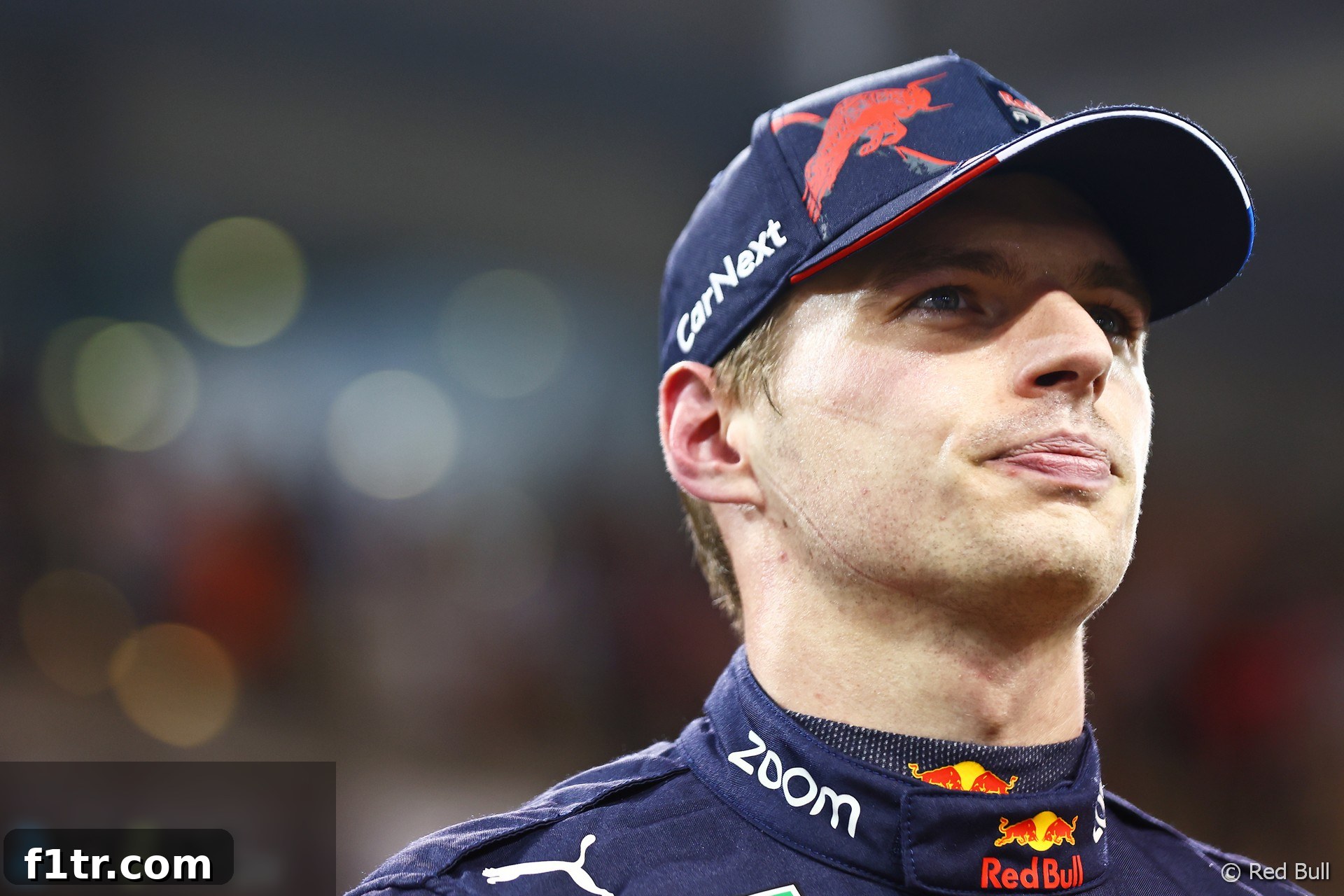
Max Verstappen entered the 2022 Formula 1 season not just as a reigning world champion, but as a driver with a target firmly etched on his back. Sporting the coveted number one on his Red Bull car, the Dutchman faced a unique kind of pressure. Despite being unequivocally blameless for the controversial circumstances that defined his maiden title victory in 2021, a vocal segment of fans questioned his legitimacy, casting a shadow of doubt over his hard-won achievement. Moreover, the entire grid of elite racing drivers harbored ambitions of their own, each eager to dethrone the young champion and stake their claim to Formula 1 supremacy. The stage was set for a season of intense scrutiny and fierce competition, a true test of Verstappen’s mettle and his ability to silence the critics.
Yet, as the vibrant hues of the setting sun marked the close of the 2022 season, any lingering debates, questions, or doubts had been emphatically extinguished. Max Verstappen didn’t merely defend his title; he redefined what it meant to be a dominant force in Formula 1. By season’s end, he had doubled his championship tally and secured more than double the race victories of all his rivals combined. His performance was not just exceptional; it was a masterclass in consistency, speed, and strategic brilliance, cementing his status as undeniably deserving of the 2022 world championship and, without a shadow of a doubt, the standout driver in Formula 1 that year.
A Challenging Start: Early Battles with Ferrari
The initial phase of the 2022 championship would ultimately prove to be the most demanding for Verstappen, largely due to circumstances beyond his direct control. After an epic, season-long duel with Mercedes in 2021, Verstappen’s primary challenger in the new campaign emerged not in a silver arrow, but a vibrant red Scuderia Ferrari. The Prancing Horse, with the immensely talented Charles Leclerc at its helm, burst onto the scene with electrifying pace, securing the first pole position of the season in Bahrain.
The season opener treated fans to a truly thrilling head-to-head battle between Verstappen and Leclerc. The two young titans exchanged the lead multiple times in a captivating display of wheel-to-wheel racing. However, despite Red Bull’s raw speed, Verstappen’s car struggled to maintain its advantage once ahead. His relentless pursuit of the Ferrari continued almost until the very end, but with just a handful of laps remaining, disaster struck. A sudden loss of power, later confirmed as a fuel pump failure, forced Verstappen to retire. This mechanical setback meant he left the opening weekend with zero points, while Leclerc savored a maximum haul of 26, immediately establishing an early championship lead.
Fortunately for Verstappen, the opportunity for redemption arrived swiftly, with less than seven days separating him from the Jeddah Grand Prix. However, the Saudi Arabian weekend presented its own set of challenges. Verstappen struggled significantly with tyre management during qualifying, relegating him to a modest fourth place on the grid, a stark contrast to his teammate Sergio Perez, who brilliantly secured pole position. Undeterred, Verstappen quickly moved past Carlos Sainz Jnr at the start, once again finding himself chasing Leclerc. Their duel for second place soon escalated into a fight for the lead following a timely Safety Car intervention. After a tense, multi-lap battle marked by strategic DRS usage, Verstappen ultimately prevailed, clinching his first victory of the season and putting points on the board.
The momentum proved fleeting, however, as Leclerc regained the upper hand in Melbourne. Verstappen found himself unable to mount a serious challenge against the dominant Ferrari driver. Adding insult to injury, a second fuel system problem in just three races forced him into another frustrating retirement. Verstappen could only watch from the sidelines as Leclerc cruised to an effortless victory, extending his championship lead to a commanding 46 points over the reigning champion. At this point, many wondered if Ferrari and Leclerc were truly unstoppable. Yet, this significant lead would ultimately mark the furthest ahead Leclerc would ever get from Verstappen throughout the entire season. It was a pivotal moment, a turning point that, while appearing bleak, would soon usher in an era of unprecedented Red Bull dominance.
Building Unstoppable Momentum: The Turning Point
The historic circuit of Imola provided the perfect backdrop for Max Verstappen to emphatically reassert his authority. In a wet qualifying session, he brilliantly secured his first pole position of the year, demonstrating exceptional car control even while easing off under a yellow flag. The Sprint Race saw him temporarily lose the lead to Leclerc off the line, but Verstappen’s relentless pursuit paid off as he hunted down and magnificently passed the Ferrari, securing pole position for the main Grand Prix. The following day, in front of the passionate Tifosi, Verstappen delivered a flawless performance, achieving a grand slam victory (pole, fastest lap, led every lap, win) and spearheading a dominant one-two finish for Red Bull. This pivotal weekend saw him slash 19 points off Leclerc’s lead, signaling a significant shift in the championship narrative.
The momentum continued in Miami, where despite losing out on pole position to both Ferraris, Verstappen executed a superb start, slipping past Sainz before Turn 1 and then clinically overtaking Leclerc in the early laps. Even under sustained pressure from the Monegasque driver, Verstappen displayed immense composure and skill, holding onto the lead to claim his third victory from just five rounds – an impressive statistic highlighting that he had won every single race he had managed to finish. Win number four swiftly followed in Barcelona, though not without drama. A rare early mistake saw him run wide off the circuit, but through a combination of superior pace and, some speculated, team orders facilitating a pass on Perez, Verstappen emerged victorious. The truth was, on that particular Sunday, Verstappen was clearly the faster Red Bull driver, destined for the top step of the podium.
Monaco, however, presented a different challenge. Verstappen expressed his frustration at qualifying only fourth, even harboring suspicions about his teammate’s Q3 spin which had secured Perez a prime starting position. In the race, once all the leaders had switched to slick tyres, there was little Verstappen could do to improve his third-place standing. He had to concede victory to his teammate, marking a brief pause in his personal winning streak but still a crucial win for Red Bull. Yet, his fifth victory quickly materialized in Baku. Both Ferraris dramatically self-destructed early in the race, clearing the path for Verstappen. He then comfortably cruised to a dominant win, finishing more than 20 seconds ahead of Perez, a clear statement of who was truly in command at Red Bull Racing.
The Mid-Season Surge and Unprecedented Dominance
By this point, Max Verstappen had firmly established himself at the summit of the Drivers’ Championship. He further extended his advantage in Montreal, masterfully navigating a wet qualifying session to take pole position before leading the vast majority of the race. He successfully resisted intense late pressure from Sainz to secure his sixth victory of the season. At Silverstone, another wet qualifying session offered the prospect of back-to-back poles, but an uncharacteristic mistake from Leclerc on his final flying lap thwarted that opportunity. In the Grand Prix, Verstappen inherited the lead when Sainz ran wide at Chapel, but his luck turned sour when he ran over debris from a collision involving the AlphaTauris. This unfortunate incident severely compromised his car’s pace for the remainder of the race, relegating him to a seventh-place finish – a rare off-day.
The Sprint weekend at the Red Bull Ring appeared to validate Verstappen’s setup choices, as he seized pole on Friday and triumphed in Saturday’s Sprint Race. However, Sunday’s main event saw Ferrari demonstrate superior race pace. Verstappen found no answer to Leclerc, who executed three decisive overtakes over the course of the race. He was even fortunate to avoid being beaten by Sainz, saved only by another debilitating Ferrari failure in the closing laps. Paul Ricard then promised another intense battle with Leclerc, but any challenge for Verstappen dramatically evaporated when the Ferrari driver made a costly error, crashing into the tyre barriers and throwing away a clear chance of victory. This presented Verstappen with a straightforward win, further amplifying his rapidly growing championship lead with a dominant display.
The two rounds sandwiching the traditional summer break served not only to solidify the championship as an all-but-decided affair but also showcased Verstappen’s most crushing performances of the entire season. At the Hungaroring, a power unit problem in Q3 left him starting from an unusually low tenth place on the grid. Undeterred, Verstappen delivered a breathtaking performance, scything through the field with remarkable precision and picking up the lead during the pit cycle. He ultimately won by almost eight seconds, despite an impressive 360-degree spin along the way – a testament to his recovery drive and the raw speed of the RB18.
However, it was at the iconic Spa-Francorchamps circuit that Max Verstappen delivered arguably his most emphatic and truly jaw-dropping victory. With Red Bull no longer able to postpone an inevitable power unit penalty, Verstappen was destined to start from the ‘back of the grid’ regardless of his qualifying performance. Naturally, he still placed his car on ‘pole’ in qualifying, which translated to a 14th-place start after penalties. But in the race, Verstappen transcended the competition, appearing to operate in an entirely different formula to the rest of the field. His superior pace was so overwhelming that he surged from 14th to claim the lead in an astonishingly short 14 laps. He crossed the chequered flag 30 laps later, a colossal 18 seconds ahead of his teammate Sergio Perez, despite starting 12 places behind him on the grid. It was not merely a win; it was an unequivocal statement, widely regarded as the most dominant victory of Verstappen’s already illustrious career, a performance that will be etched into Formula 1 history.
Sealing the Championship and Setting New Records
By the time the Formula 1 circus arrived at Zandvoort, the championship was virtually a foregone conclusion. Verstappen, electrifying his devoted home crowd, secured pole position and then masterfully held off both Mercedes cars en route to his tenth victory of the season. His eleventh win followed swiftly at Monza, where he effortlessly overcame a five-place power unit grid penalty to once again secure an easy triumph. Singapore should have marked his fifth pole of the season, but a crucial fuel mix-up in qualifying regrettably forced Red Bull to abort his would-be pole lap before completion. In a chaotic wet race, Verstappen was uncharacteristically off-form, losing multiple places at the start and even locking up into an escape road, ultimately salvaging a modest seventh-place finish – a rare blip in his otherwise flawless campaign.
In a rain-disrupted race at the legendary Suzuka circuit, Max Verstappen was once more utterly untouchable. After securing pole, he briefly appeared under pressure from Leclerc at the start, but swiftly swept past into the lead at the very first corner. From that moment, he expertly controlled the rain-shortened race, winning by almost half a minute. Following a contentious post-race penalty for Leclerc – and a significant period of confusion regarding points allocation – it was finally confirmed that Verstappen’s lead in the championship had become unassailable. He was officially crowned World Champion for a second successive season, a title clinched with four races still remaining on the calendar, highlighting the sheer scale of his dominance.
Winning the title did absolutely nothing to encourage Verstappen to ease his relentless foot off the accelerator. He went on to equal the all-time record for wins in a single season, held by legendary figures Sebastian Vettel and Michael Schumacher, with his 13th victory in Austin. This race saw him masterfully chase down Lewis Hamilton in a battle that evoked memories of their epic 2021 season. Then, in Mexico, he broke new ground entirely, securing an unprecedented 14th win, once again triumphing over Hamilton in a commanding display.
The Brazilian Grand Prix proved to be an exception to his winning streak. Red Bull pursued an unsuccessful setup direction on Friday, leaving Verstappen vulnerable in the Sprint Race. He lost ground to George Russell, Sainz, and Hamilton, ultimately qualifying fourth, which became third after Sainz’s penalty. In the main Grand Prix, he controversially clashed with Hamilton early on – an incident that further harked back to their intense rivalry – and was forced to battle his way back through the field. Towards the end, he was controversially allowed to pass teammate Perez to attack Fernando Alonso, only to then defiantly refuse to return the position to his teammate at the finish, sparking significant intra-team tensions.
But as he had demonstrated at every pivotal moment throughout 2022, Verstappen swiftly followed disappointment with a resounding victory in the final round of the season. In Abu Dhabi, he secured his seventh pole position of the year – still fewer than Leclerc’s overall tally, but indicative of his strategic focus on race pace. He never looked in any danger of losing the lead in the race, crossing the finish line amidst a spectacular shower of sparks. The pyrotechnics not only heralded the conclusion of the season but also marked the end of one of the most dominant, relentless, and truly spectacular championship campaigns the sport of Formula 1 had ever witnessed from a single driver.
Max Verstappen’s Legacy: The Undisputed King of F1
While Max Verstappen’s triumphant 2021 season undeniably made him a Formula 1 World Champion, his extraordinary 2022 campaign unequivocally established him as the undisputed driver at the pinnacle of his sport. He ascended to the status of the “final boss” of Formula 1, setting a new benchmark for excellence. In a truly record-breaking year where his performances were nothing short of exceptional, there’s every chance that this season could stand as the absolute pinnacle of Verstappen’s F1 career, a benchmark against which all future achievements will be measured. However, even if the competition for the championship intensifies dramatically in 2023, it will still demand nothing short of absolute brilliance, unwavering consistency, and perhaps a touch of luck, for any rival to even contemplate dethroning the now firmly established, two-time World Champion.
2022 F1 season review
- Records smashed and winning runs wrecked: The 2022 F1 season in stats
- Helmet rows, hot mics and more forgotten motorsport stories from 2022
- The RaceFans Caption Competition winners of 2022
- Verstappen voted 2022 Driver of the Year by RaceFans readers
- 22 telling stats on every driver to race in the 2022 F1 season
Browse all 2022 F1 season review articles