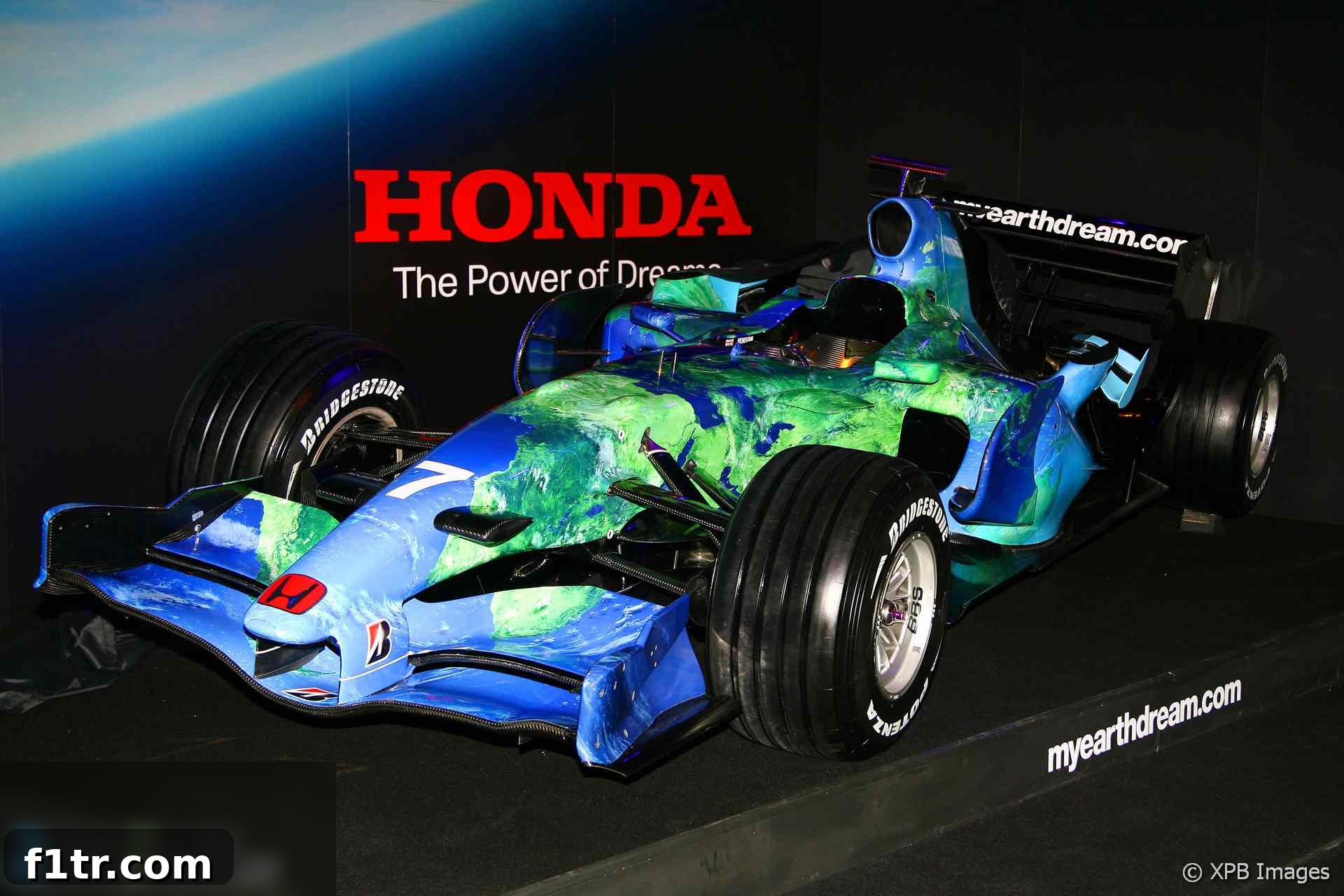
The dawn of the 2007 Formula 1 season brought with it an unprecedented reveal from Honda Racing F1, capturing the attention of motorsport enthusiasts and environmental advocates alike. Shaking up the traditional landscape of high-stakes sponsorship, Honda unveiled the RA107, not just as a new racing machine, but as a bold statement adorned with a truly revolutionary livery. Gone were the conventional corporate logos that typically dominated F1 car designs; in their place, a striking image of the Earth’s globe, conceptualized under the ambitious ‘Earthdreams’ campaign. This marked a pivotal moment, intertwining the adrenaline-fueled world of Formula 1 with a profound message of environmental responsibility.
Honda RA107 ‘Earthdreams’ Livery: A Groundbreaking Environmental Statement in Formula 1
The anticipation leading up to the 2007 season was palpable, not least due to intense speculation surrounding Honda’s approach to their car’s aesthetic. In an era where commercial sponsorships dictated the visual identity of F1 teams, Honda dared to be different. Instead of selling prime real estate on their car to a handful of major corporations, they embarked on a radical, community-driven initiative. The entire RA107 chassis became a canvas, transforming into a visual representation of our planet, specifically a meticulously detailed satellite image of the Earth.
The Vision Behind ‘Earthdreams’: Motorsport Meets Environmental Activism
At the heart of Honda’s pioneering initiative was the ‘Earthdreams’ concept, a daring departure from traditional motorsport branding. The team proposed a unique sponsorship model: instead of large corporate entities, individuals and smaller organizations could “buy” pixels on the car’s livery. Each pixel contributed to the overall image of the Earth, symbolizing a collective commitment to environmental stewardship. This wasn’t merely a transactional exchange; participants in the ‘My Earthdreams’ scheme were encouraged, and indeed pledged, to make tangible ‘lifestyle changes’ aimed at reducing their environmental footprint. These pledges ranged from simple acts like recycling more diligently to more significant commitments such as reducing energy consumption or opting for sustainable transportation.
This innovative approach aimed to harness the global reach and passion of Formula 1 to raise awareness about pressing environmental issues, encouraging a worldwide audience to reflect on their impact on the planet. The digital dimension of the campaign was equally crucial. Those who signed up could visit the dedicated Honda F1 website, a digital hub where they could view their purchased ‘adverts’—their names or messages subtly integrated into the Earth livery—and share their personal environmental pledges. This interactive element fostered a sense of community and direct engagement, making fans and participants feel like an integral part of the team’s mission, rather than just passive observers.
Unveiling the RA107: A Global Icon on Wheels
The official unveiling of the Honda RA107 and its ‘Earthdreams’ livery was a highly anticipated event. Held at the prestigious Natural History Museum in London, the location itself underscored the environmental theme. The reveal showcased a car unlike any other seen on the grid, devoid of traditional sponsor logos save for Honda’s own. The prominent globe design, rendered in stunning detail, immediately sparked conversation. Team Principal Nick Fry, alongside drivers Jenson Button and Rubens Barrichello, presented the car, emphasizing the team’s commitment to both competitive racing and global responsibility.
The livery featured swathes of blue and green, depicting continents and oceans, and was designed to be instantly recognizable and memorable. It wasn’t just paint; it was a powerful visual metaphor. The message was clear: in a sport often criticized for its environmental impact, Honda was taking a stand, using its platform to advocate for a healthier planet. This move positioned Honda not just as a participant in Formula 1, but as a thought leader seeking to inspire change within and beyond the sport.
Drivers and the ‘Earthdreams’ Mission
For the 2007 season, Honda Racing F1 boasted a formidable driver line-up with British star Jenson Button and Brazilian veteran Rubens Barrichello. Both drivers embraced the ‘Earthdreams’ campaign, becoming ambassadors for the environmental message. They actively participated in promotional events, discussing the importance of sustainability and encouraging fans to join the initiative. Their visible support lent credibility and a human face to the campaign, connecting the abstract concept of environmental pledges with the tangible reality of competitive motorsport.
Button and Barrichello drove the RA107 throughout the season, literally carrying the ‘Earthdreams’ message around the world to every Grand Prix circuit. While the team’s on-track performance in 2007 proved challenging, the livery itself remained a talking point, frequently highlighted by commentators and media as a unique and commendable effort. Their involvement transcended typical driver duties, making them advocates for a cause larger than mere race victories.
The Impact and Legacy of a Trailblazing Livery
Honda’s ‘Earthdreams’ livery garnered significant media attention and sparked widespread debate. Some lauded it as a stroke of genius – a courageous and forward-thinking marketing strategy that put purpose before profit. It demonstrated that a major global brand could leverage its sporting involvement for a greater good, attracting a new demographic of environmentally conscious fans to Formula 1. This radical approach challenged conventional sponsorship models, proving that brand identity could be built not just on commercial partnerships, but on shared values and collective action.
However, the concept also faced its share of criticism. Some viewed it as a PR stunt, questioning the true environmental impact of a racing team whose very existence contributed to carbon emissions. Critics pondered whether the ‘pixel’ sales truly translated into substantial funds for environmental projects or if the primary benefit was public relations. Regardless of the varying opinions, what remained undeniable was the livery’s ability to ignite conversation. It forced Formula 1 to confront its environmental responsibilities head-on and laid groundwork for future sustainability initiatives within the sport.
In retrospect, the Honda RA107 ‘Earthdreams’ livery stands as one of the most distinctive and conceptually ambitious designs in Formula 1 history. It underscored Honda’s brand values of innovation and social responsibility, leaving an indelible mark on the sport’s visual and philosophical landscape. While the RA107 might not have achieved championship glory, its livery secured its place in the annals of F1 as a powerful, pioneering statement that transcended the boundaries of pure racing, advocating for a global cause. It exemplified how motorsport, a platform of high technology and global reach, could be utilized to send a powerful message about the future of our planet, inspiring both participants and viewers to consider their role in environmental preservation. This unique endeavor paved the way for future discussions and advancements in sustainability within Formula 1, proving that the sport could indeed embrace a greener future.
Related Formula 1 Car Launches & Previews from 2007
- Official 2007 Scuderia Toro Rosso STR2 pictures
- Official 2007 Red Bull RBR3 pictures
- More spy shots: Williams FW29 livery
- Official 2007 Honda RA107 pictures
- Official 2007 Renault R27 pictures
- 2007 Renault R27 spy photos
- Ferrari’s subtle Marlboro branding (and F1 car) revealed