F1 Budget Cap Fallout: How Ferrari’s Alliance with Haas is Shaping the Future of Formula 1
Formula 1 has entered a transformative era with the introduction of a stringent annual budget cap, set at $145 million (£107.8m). While designed to level the playing field, this new financial regulation disproportionately affects the sport’s traditional heavyweights: Mercedes and Ferrari. These teams, accustomed to operating with virtually limitless resources, now face the monumental task of streamlining their operations to comply with the new limits. In contrast, Red Bull Racing, historically managing leaner budgets, possesses an inherent structural advantage that allows it to absorb reductions within its broader corporate family, minimizing the impact of the cap. Teams like McLaren and Alpine (formerly Renault) require only relatively minor adjustments, already operating closer to the new financial parameters.
For the majority of the grid, the budget cap presents fewer immediate challenges, as their expenditures already fall well within the prescribed limits. It is crucial to understand that the cap applies specifically to performance-related spending, with several key exclusions. Marketing, hospitality, and general administration costs are exempt, as are, for now, driver salaries and the compensation of the top three executive personnel. Additionally, the vital engine divisions, responsible for power unit research and development, operate outside the cap’s scope. This means that while teams must adhere to the $145 million limit for chassis and race operations, their overall spending can, and often will, significantly exceed this figure. The Financial Regulations, however, are backed by severe penalties for non-compliance, underscoring the FIA’s commitment to enforce this new financial discipline.
Strategic Responses to the Budget Cap: Alliances and Diversification
Leading teams have explored diverse strategies to navigate the new financial landscape. Red Bull, for instance, leverages its extensive corporate ecosystem, collaborating closely with its sister team, AlphaTauri. Furthermore, it channels resources through its specialized divisions: Red Bull Technologies, which focuses on automotive applications, and Red Bull Advanced Technologies, dedicated to other cutting-edge projects. This vertical integration allows Red Bull to redeploy personnel and expertise efficiently, ensuring talent remains within the broader organization.
Mercedes has also adopted a multi-faceted approach. Their well-documented relationship with Racing Point (now Aston Martin) saw the former customer team benefit significantly from Mercedes-supplied components and technical collaboration – famously exemplified by the “pink Mercedes” that won the Sakhir Grand Prix. Beyond motorsport, Mercedes has proactively diversified into applied sciences, creating alternative avenues for its highly skilled engineering workforce. These strategies are not merely about cost-cutting; they are about intelligently managing talent and resources within a constrained environment.
Indeed, such diversified activities are not novel concepts within Formula 1. McLaren has successfully operated its Advanced Technologies division for nearly three decades, pioneering the application of motorsport expertise to various industries. Similarly, Williams Advanced Engineering, established in 2010, has been instrumental in carrying its parent company through financially challenging F1 seasons. Crucially, these ventures have enabled both companies to redeploy staff internally, retaining invaluable skills and institutional knowledge, rather than losing them to other sectors. This ‘in-house’ retention of talent is a significant competitive advantage that the budget cap now compels all top teams to emulate.
Ferrari’s Unique Predicament and the Search for Solutions
Amidst these evolving strategies, Ferrari finds itself in a particularly challenging position. Unlike its primary rivals, the Scuderia lacks similarly close team alliances or a robust, diversified applied technologies division. Furthermore, its New York Stock Exchange listing has somewhat isolated it from its former parent company, Fiat Chrysler Automobiles (FCA), which is currently undergoing a merger with PSA (Peugeot/Citroen/Opel) to form Stellantis. This lack of a clear internal ecosystem leaves Ferrari vulnerable, particularly regarding its highly skilled workforce. Italian labor laws, renowned for their rigidity, make staff retrenchments a notoriously laborious, expensive, and often politically sensitive process, further compounding Ferrari’s challenge.
Recognizing the unique difficulties posed by these circumstances, the FIA granted all teams a six-month “soft-landing” window to adjust to the new financial regulations. However, even this transitional period might prove insufficient for Ferrari. The Italian government’s Covid-19 support packages included a temporary ban on retrenchments until March 2021, directly impeding Ferrari’s ability to restructure its workforce. One hypothetical option considered was diversification into categories like the World Endurance Championship (WEC) or IndyCar. However, campaigns in both series, primarily specification categories focused heavily on engine supply, are unlikely to absorb sufficient surplus F1 personnel. The budget cap applies directly to chassis and race operations, not engine divisions, meaning that the “wrong” engineers – those specializing in chassis design and aerodynamics – would be redeployed to unsuitable roles.
Moreover, the most talented engineers are often fiercely loyal to the cutting-edge environment of F1 design and development. Being moved to a less demanding or specialized category could lead them to leave Formula 1 entirely, seeking new challenges elsewhere. Such a brain drain would have the unfortunate long-term effect of diminishing the overall talent pool within the sport, a consequence the FIA and teams are keen to avoid. Therefore, for Ferrari, the obvious and most viable solution lies in forging a formal alliance with a customer team, mirroring the successful models established by Mercedes with Racing Point and Red Bull with AlphaTauri.
The Evolution of Regulations and the Inevitability of Alliances
The regulatory framework itself is evolving to actively encourage cooperation between teams. Forthcoming changes to parts classifications, effective from 2022, will expand from a simple binary choice of “listed” (team-owned designs) and “non-listed” (open-source) parts to no fewer than five distinct categories. These new classifications include: Listed (as before, proprietary designs), Standard (single supplier via tender), Prescribed Design (free supply to a set specification), Transferable (shared between teams), and Open Source (self-explanatory, accessible to all). This granular classification system provides clear pathways and incentives for teams to share resources, technology, and expertise, making alliances not just a pragmatic choice but a regulatory-backed strategic imperative.
Ferrari and Haas: A Strategic Partnership Takes Shape
Given this evolving landscape, the critical question for Ferrari is not whether to enter into a formal alliance, but with which team. The answer increasingly points to Haas F1 Team. The American-owned outfit is not only a long-standing customer for Ferrari powertrains and non-listed parts but also leverages Ferrari’s state-of-the-art wind tunnel for aerodynamic development, fully compliant with the aerodynamic testing regulations (ATR). Crucially, Haas operates without its own extensive manufacturing facilities, relying on Dallara for chassis production and various services and parts not supplied by Ferrari. This inherent dependency and established relationship make Haas a natural and logical partner for Ferrari’s strategic realignment.
The synergy between Ferrari and Haas is further amplified by recent regulatory changes. With 2020 cars largely carried over to 2021, and F1’s “new era” regulations delayed by a year due to the Covid-19 pandemic, a unique opportunity has emerged. Dallara continues its development of the current Haas car, a design in which it played a significant role. Simultaneously, Ferrari is now in a position to design Haas’s replacement car for the 2022 season. This creates an unprecedented scenario where, unlike other teams that might have the same engineers working on two successive car designs, Haas will effectively benefit from two dedicated design teams—one from Dallara for the immediate future, and another spearheaded by Ferrari for the upcoming regulatory cycle. This “joining the dots” creates a natural breakpoint and a streamlined transition for Haas.
Whispers of these plans first surfaced when an insider suggested that Haas’s contract with Dallara would be extended for only a single year for 2021, hinting at a new direction thereafter. Subsequently, a Ferrari insider confirmed the possibility of establishing a “Ferrari customer technical services division,” emphatically stressing that any such venture would be in full compliance with all F1 regulations – technical, sporting, and financial. While the FIA has refrained from official comment, the governing body is understood to have reviewed Ferrari’s proposals and given a preliminary “green light,” subject to several crucial provisos. These stipulations include the absolute necessity of entirely separate premises and independent systems to prevent any inadvertent “coffee machine discussions” where confidential information might be exchanged. Furthermore, staff seconded to the Haas project would effectively become Haas employees, albeit paid by Ferrari to maintain benefits and company perks, ensuring no direct financial advantage for Haas.
Another critical condition set by the FIA is that Ferrari staff seconded to the project must be placed on Haas’s performance bonus structure, rather than Ferrari’s. This ensures competitive fairness and prevents any undue influence through financial incentives. The FIA also plans stringent monitoring of car design under the revised “photocopier” regulations, specifically to ensure that no aerodynamic surfaces are illegally copied or unduly similar. While concerns about illegal cooperation are inevitable, given the geographical proximity between Ferrari and its satellite operation, it is worth remembering that the bases of Mercedes and Racing Point are separated by a mere 10 miles, yet their operations remain distinct and compliant.
Lessons from History: Past Protests and Evolving Scrutiny
The history of such alliances is not without its controversies. Following a protest from Mercedes in November 2015 regarding the then-emerging Ferrari/Haas relationship, ahead of Haas’s official F1 debut in 2016, the regulations were promptly amended. These changes were specifically designed to prevent any suspicious sharing of parts and the back-and-forth transfer of personnel between teams. Stewards made it unequivocally clear that sharing information gained during aerodynamic testing was illegal. They also stipulated that teams could not share or swap staff without acceptable periods of “gardening leave,” could not acquire aerodynamic surfaces from external sources unless testing was conducted under the team’s own ATR quota, and had to implement robust “firewalls” to prevent the leakage of wind tunnel and other sensitive data.
Ferrari’s status as a publicly listed company (tracking stock: RACE) presents both challenges and safeguards. While it complicates the formation of a completely separate entity within the Ferrari N.V. corporate structure, its public nature provides a significant impediment to any underhanded dealings. The potential negative reaction from shareholders, should the customer division be found guilty of cheating, particularly under the financial regulations, is a powerful deterrent. As a poignant example, when Ferrari’s confidential fuel flow settlement with the FIA emerged at the end of February, the company’s share price immediately reacted negatively. Although the full impact was difficult to quantify given the simultaneous onset of the Covid-19 pandemic, the stock fell by $50, from $180 to $130, before a gradual rebound. It currently trades at an all-time high of $215, underscoring the market’s sensitivity to regulatory compliance and brand reputation.
Simone Resta’s Secondment: A Clear Indicator
While Ferrari has yet to officially confirm the establishment of this customer division, the language used in a recent press release strongly hints at its formation. The announcement regarding Simone Resta, the highly respected head of Scuderia Ferrari’s chassis engineering department, moving to lead Haas’s technical effort from next year, is particularly telling. Ferrari team principal Mattia Binotto spoke of Resta “relinquishing his position as head of the department” to “strengthen the technical operation at the Haas F1 Team.” Ferrari’s official website referred to Resta’s “move to Haas,” implying a resignation, when in fact, industry insiders understand the move to be a strategic secondment – a subtle but crucial semantic distinction in the best Ferrari tradition.
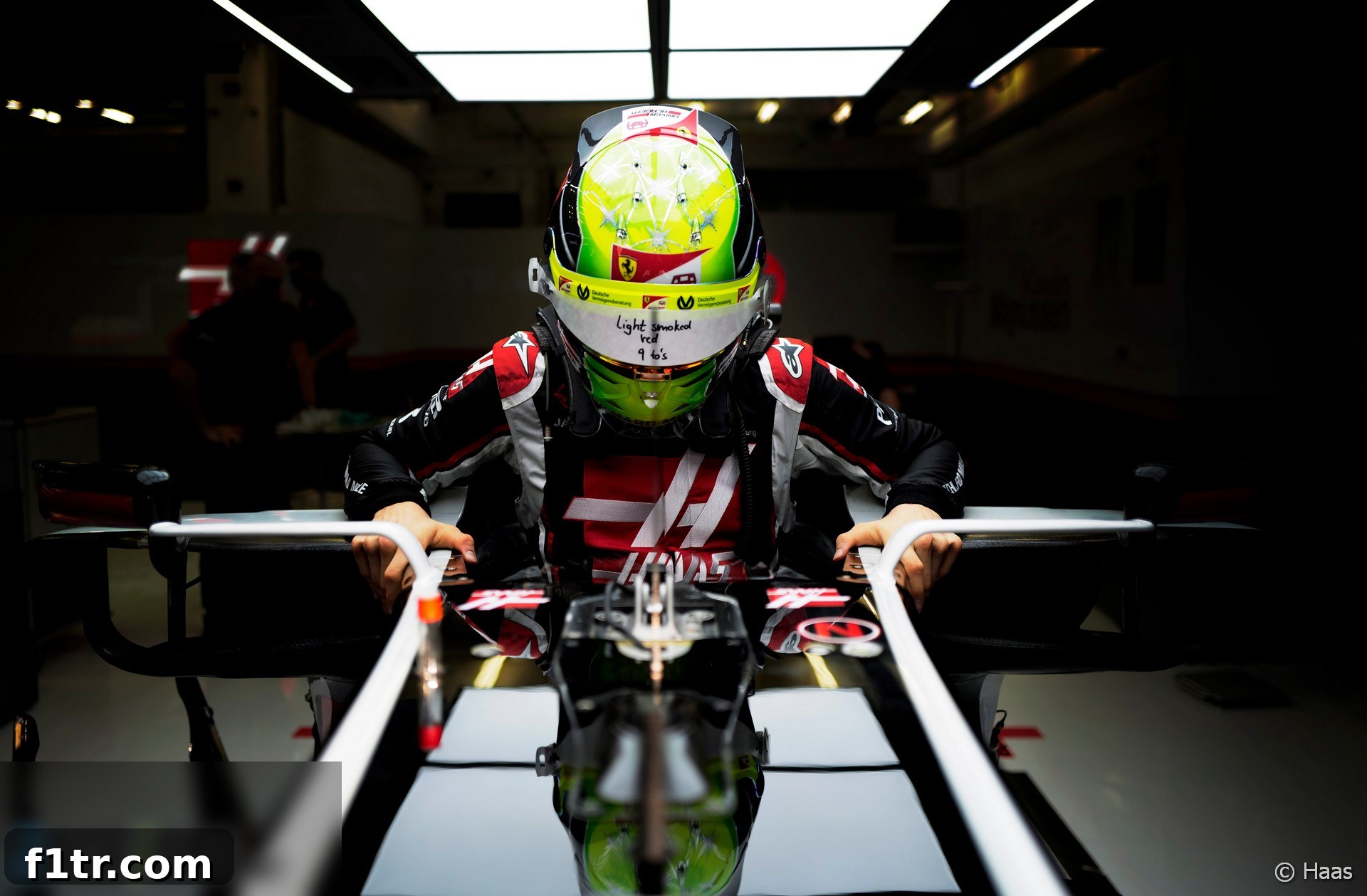
Furthermore, the same press release alluded to “our long-term relationship with Haas, dating back to when it first came into Formula 1, [which] should be the basis for both parties to benefit from any possible synergy, consistent with what is defined in the FIA regulations.” This statement explicitly outlines the intention to deepen their collaboration. While Haas, which had also briefly sounded out Renault over a potential alliance from 2022, maintains that its decision to recruit Mick Schumacher for next year is unrelated to this technical project, Binotto made specific reference to the German’s signing. He stated, “[Haas] has just strengthened an already very close relationship with the Scuderia by taking on Ferrari Driver Academy driver Mick Schumacher.” Such a direct correlation from Binotto suggests a far deeper interconnectedness than Haas publicly acknowledges. Significantly, Haas did not comment on Ferrari’s press release, nor did they formally welcome Resta to their ranks – as would typically be expected for a new, high-profile recruitment. This absence of a conventional announcement provides further compelling evidence that Resta is not joining the US team on a formal, independent basis, but rather undertaking contract work specifically for Haas on behalf of Ferrari, within the framework of the new customer technical services division.
Gardening Leave and Enhanced FIA Oversight
It is important to note that Resta, and any other Ferrari employees who may follow him to Haas, will not be able to return to full-time Ferrari duties overnight at the conclusion of their contract period. The FIA is expected to impose mandatory periods of gardening leave, commensurate with their levels of insider knowledge. Six months is the current norm for senior employees transitioning between teams, with shorter periods for more junior individuals. These guidelines are anticipated to apply rigorously to ensure fair play and prevent the immediate transfer of sensitive information. Questions will undoubtedly be asked about any gardening leave undertaken prior to joining the Haas project. However, given that Ferrari has not yet commenced advanced design work on its 2022 car – still being in the concept stage as regulations are subject to further refinement – such impositions are unlikely to apply to employees transferring during these formative stages. This situation, however, is expected to change significantly as design work progresses and specific intellectual property begins to take shape.
To ensure strict adherence to all statutory provisions, particularly concerning the budget cap which formally begins next year, the FIA recently appointed a dedicated, full-time F1 inspector. This inspector will undoubtedly undertake rigorous, random inspections to monitor all aspects of compliance, including any work specifically undertaken by Dallara and Ferrari for Haas. Furthermore, compliance with Aerodynamic Testing Regulations (ATRs) and Computational Fluid Dynamics (CFD) equivalents will also fall under the FIA’s microscopic scrutiny. Such audits will be regularly conducted across all teams, with a particular focus on team alliances. These partnerships are precisely where regulatory grey areas are most likely to exist, as vividly demonstrated by Racing Point’s infamous “photocopy engineering” case. That controversy ultimately resulted in a further tightening of the regulations, and ironically, Ferrari was among the teams that pushed hardest for those changes, highlighting the ongoing tension between innovation, cost-efficiency, and competitive integrity.
The Future of Alfa Romeo and Other Potential Alliances
This evolving landscape naturally raises the question: what about Sauber, or Alfa Romeo as the team is currently known? While the Swiss outfit’s cooperation with Ferrari is more confined to powertrain, electronics, and hydraulics – not reaching the same comprehensive level as the developing Haas alliance – their deal was forged during the tenure of the late Sergio Marchionne, who simultaneously served as president and CEO of both Ferrari and FCA. This historic connection explains the prominent Alfa Romeo branding and their past hiring of Ferrari-backed drivers like Antonio Giovinazzi.
However, the current deal expires at the end of 2021. Its renewal hinges significantly on the future strategic direction of Alfa Romeo under the newly formed Stellantis giant, the world’s fourth-largest auto company. Regardless of Stellantis’s decision, Sauber will need to carefully consider its options: continue as a self-sufficient independent entity, or enter into a similar, deeper alliance with Ferrari, or, failing that, explore a partnership with Renault, which is also actively seeking a customer team. The ultimate decision regarding Alfa Romeo’s post-2021 future, and consequently the fate of Sauber, rests with John Elkann, the influential chairman of the Italian industrial conglomerate Exor, a major shareholder in Ferrari, FCA, and soon, Stellantis. Should Alfa Romeo remain in F1, a Haas-type project becomes a distinct possibility. If not, Sauber might well pursue a deal with Stellantis’s rival, Renault (rebranding as Alpine from 2021). The outcome of these negotiations will be a fascinating development to watch.
Conclusion: The Inevitability of Collaboration in Modern F1
When this topic was first broached with Ferrari, the question of such a project being in the offing, or why not, was met with responses that, while not direct confirmations, strongly suggested a deeper investigation was warranted. The subsequent announcement regarding Simone Resta served as compelling evidence. While the desirability of extensive team alliances remains a point of debate among purists, the undeniable fact is that Formula 1’s aggressive cost-cutting drive has rendered them an inevitable and essential aspect of modern competition.
Ferrari’s customer technology department – or whatever designation the company ultimately chooses for Resta’s new domain – will undoubtedly operate with distinct characteristics compared to the Red Bull and Mercedes models. It effectively slots between these established models, perhaps offering a more integrated, yet distinct, form of collaboration. Crucially, its fundamental design ensures full compliance with all FIA regulations, technical, sporting, and financial, just as the models employed by its rivals do. The budget cap, far from limiting innovation, is reshaping the very structure of team interaction and technological dissemination within the pinnacle of motorsport.
The final, intriguing question that emerges from this evolving landscape is: when will Renault follow suit, and with whom will they forge their strategic alliance? Could we see a resurgent Sauber-Renault partnership, or perhaps a nostalgic return to a Williams-Renault collaboration? The latter, indeed, carries a rather evocative ring to it, promising another compelling chapter in Formula 1’s collaborative future.